


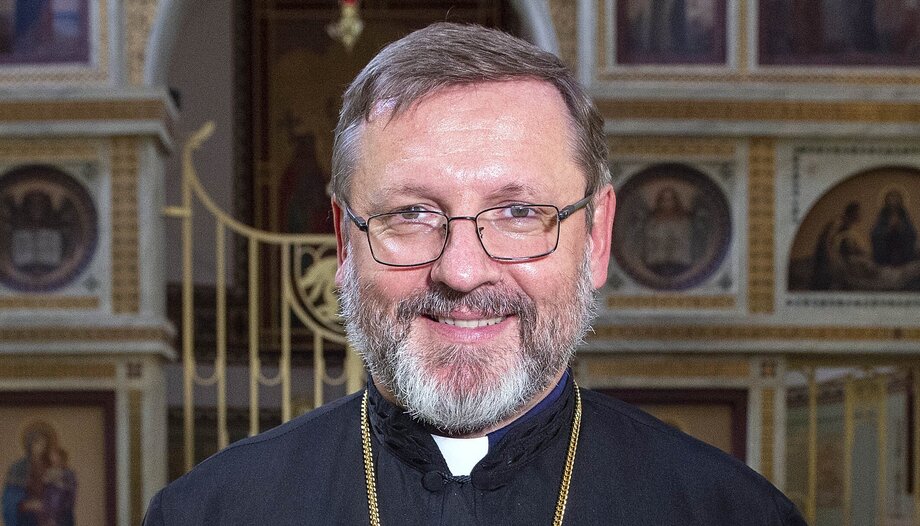
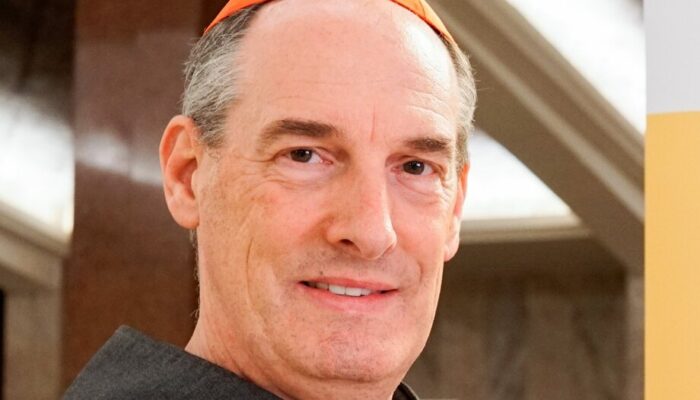
When anti-aircraft sirens broke the silence of Kiev in the early morning of February 24, 2022, His Beatitude Sviatoslav Shevchuk did not leave the city. He stayed in the crypt of the Resurrection Cathedral, converted overnight into a bunker for thousands of civilians. Today, after years of a full-scale invasion that has left deep scars on the soul of Ukraine, The Primate of the Ukrainian Greek Catholic Church shares his testimony of what he defines as a «miracle of resistance» and a «new Holodomor».
Born in Stryi (Lviv region) in 1970, Shevchuk was formed in the seminary during the clandestinity of his Church under the Soviet regime, his vocation is both spiritual and scientific: he is a medical doctor by training and has a doctorate in Moral Theology from the Pontifical University of St. Thomas Aquinas in Rome.
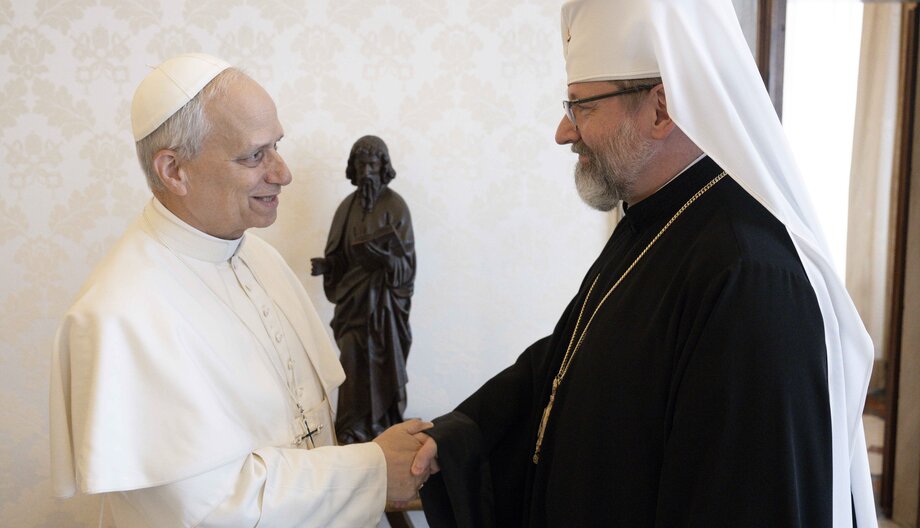
After a stint as a bishop in Argentina-where he forged a close friendship with then-Cardinal Jorge Mario Bergoglio-he was elected in 2011, at just 40 years of age, as the youngest head of his Church. It is this combination of clinical rigor and pastoral compassion that he uses today to diagnose the state of a nation that, in his words, has learned to «overcome fear with hope.» In this interview with Omnes, Shevchuk discusses the upsurge in Russian attacks on civilians, the heroic role of Ukrainian mothers and the power of the word in a besieged city.
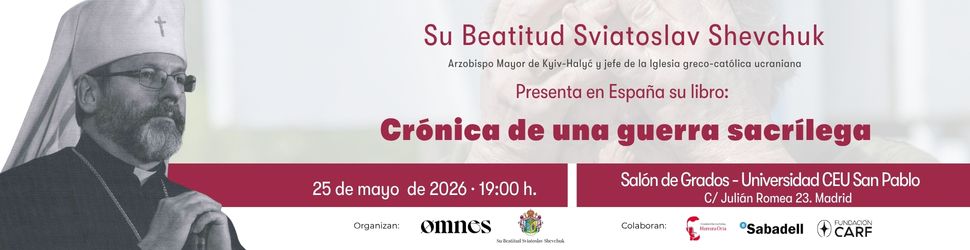
On May 25, His Beatitude Sviatoslav Shevchuk will present his “Chronicle of a sacrilegious war”, with Omnes in the Salón de Grados of the CEU San Pablo University in a unique meeting.
On February 24, 2022 Ukraine woke up invaded, what do you remember about those first hours?
-Yes, that's right. We have been going on for almost 5 years now what we call full-scale war. Actually the conflict began in 2014, with the annexation of Crimea and the occupation of the territory of Dombas by Russia.
But it was on February 24, 2022 that a full-scale war really began. That means that more than 200,000 Russian troops invaded the country. The target was Kiev. Russia wanted a quick attack, to destroy the country. Destroy the country as a subject of international law. To occupy the capital and then to dominate the whole territory.
We woke up that day with a completely different reality, which we are still living. Every day, on the Ukrainian side we receive news of the fallen of the Russian troops. About a thousand a day. This means that the Russian troops have not been able to defeat Ukraine. We survived and that was a miracle. I can testify to that. The Russians thought they were going to conquer a territory and they found a nation. Ukraine is really a great country.
At that time, in Ukraine There were about 36 million people living in the country. Such an attack was not expected. There was no diplomatic dialogue. Our government also did not believe that Russia would carry out such a military invasion.
I remember the great perplexity that the attack produced because, in a few hours, the city of Kiev was surrounded by the Russians. There was only a small way out of the city. I stayed, obviously. But it was really a mass exodus.
Kiev had about 4 million inhabitants. And after these first days, it was down to 800,000. The city became a desert.
... and the church became a makeshift shelter.
-From the very beginning, churches became the main refuge of the people. Our cathedral is located on the left side of the Dnieper River. With the attacks, the bridges were closed. The Russians were advancing from the eastern side and the river itself was a natural barrier.
We were in the “pass”, as if in a trap, and almost 3,000 people came to take refuge in the cathedral. We could hear the Russian helicopters flying over the cathedral; the earth was shaking.
I remember how I saw, from the stairs of the cathedral, the burning city on the other side of the Dnieper River (where, for example, the Orthodox Cathedral of St. Sophia in Kiev or the seat of government are located) and I had the feeling of seeing what Jeremiah saw when he had the vision of Jerusalem razed to the ground by the Babylonians.
I asked myself, ”Lord, why? why did you bring me here from Buenos Aires? why did you elect me head of the Church in Buenos Aires? UkraineYou put me here to see this, what's the meaning of it all? But we were able to resist!
We have saved so many lives..., and we have lost so many others. We still don't know for sure how many people have lost their lives over the years. There is talk of millions. Not only military but also civilians.
The war in Ukraine no longer occupies foreign front pages, what is the situation like today?
-In the last eight months the situation has been getting worse. We live in a paradox: the more there is talk that the United States is negotiating with Russia, the worse we are. The front line is more or less stable, although the intensity of the confrontation is very high. The worst is being suffered by the civilian population, systematically hit by Russia.
According to UN monitoring, in the year 2025, just when there was a lot of talk about peace in Ukraine, the number of civilian casualties increased by 35% compared to the previous year. Not a single day goes by without shelling of major cities: not only Kiev, but also Kharkov and Odessa, or further south, Dnipro, Donetsk or Zaporiyia. These are attacks that do not have military targets but hit apartment blocks, civilians.
This winter in Ukraine we have experienced a very difficult, very hard winter. The year the war started, the river did not freeze. It was a miracle. But this year it did not. On the contrary, the ice layer on the river measured more than 25 centimeters. Temperatures dropped below minus 20 degrees Celsius....
The Russians then began a systematic destruction of the heating structure, turning the city of Kiev into a cold trap to freeze and kill people. I can testify to this because I live here. Every neighborhood in the city of Kiev has a heating system that starts from a central plant that sends hot water to the houses.
These plants were built in Soviet times. Moscow holds all the cards. Imagine the situation. At minus 25 degrees Celsius, they destroyed heating plants, and within hours the whole neighborhood was freezing. Moreover, when water freezes in these pipes, they burst. That means that now the entire heating system has to be rebuilt in many places.
It has truly been a humanitarian disaster. We call it a new holodomor, Like that artificial famine that Stalin caused in Ukraine that killed 12 million people. Now people are being killed by the cold. In this context, the Church became again the center of salvation for many people. Despite the situation, there was no great exodus.
How has the population been able to survive an increasingly complicated situation?
-I tell you two stories so you can see how they have survived. A boy about five years old came to the cathedral. He was wearing a very heavy coat, very fat. I asked him, “Is it very cold in your house?” and he answered, "Yes, it is very cold. But I am going to beat the cold, and Ukraine is going to beat it". I will never forget this image, of this child who was cold, but who was proud to have the courage to overcome it.
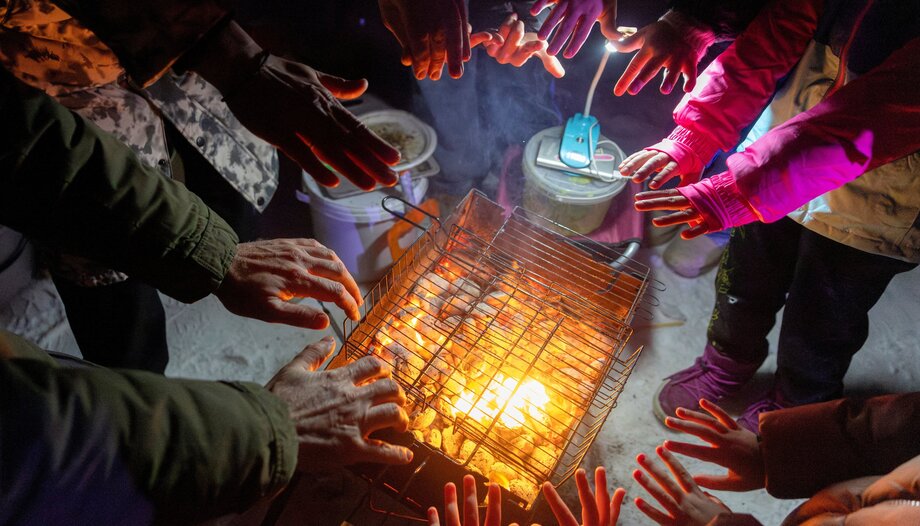
Another of the images we have lived in the resistance centers: some camps that have been set up in front of these buildings in which the pipes have burst and are frozen. There, with generators, we were able to offer slightly warmer places and people came to have tea, to recharge their cell phones....
There, we have experienced many times, that people started to sing, to dance.
Russia wanted to destroy the spirit, the spirit of the Ukrainians, and it did not succeed.
At this time, as a pastor, what do you find the hardest?
-As a pastor, as a bishop, I have to say that the most difficult thing is to bury new victims. Every day we cry with so many mothers who are losing their children. We are discovering a new kind of pastoral care of the Church: the pastoral care of mourning, or bereavement.
I am a doctor and I remember that the pastoral care of bereaved people was the work of hospital chaplains: the priests had to know the psychology, the state of mind, in order to offer an adequate pastoral care to these people. Today, this type of pastoral care touches all of us: whether in parishes, in monasteries, in cities, in small towns. We are a suffering and long-suffering nation. But we are a believing people. Faith gives us hope, and hope gives us strength.
How does one live this time of trial in faith?
-According to recent statistics, 52 % of the Ukrainian population professes to be Orthodox. Among the Orthodox in Ukraine, there are two confessions: the Ukrainian Autocephalous Church and another group belonging to the Orthodox Church of the Moscow Patriarchate. We Catholics are a minority. Within the Catholics we are the Byzantine rite Catholics, who are the majority of Ukrainians, the Greek Catholics, 12 % of the population, and on the other hand, the Latin rite Catholics who are about 1 %.
There is also the presence of Protestant groups: Baptists, Pentecostals..., among the Christians. We also have a significant Jewish population and Islamic groups in the south, especially. So, when we talk about the role of the Church in Ukraine, we always talk about interfaith and interreligious cooperation. Today, the Church is playing a key role in Ukraine's resistance and care for the victims of the war. where international organizations do not reach, the Church reaches.
I want to emphasize that these moments of pain are also moments of conversion. The churches, especially those in the eastern part, which experienced communism the hardest, are full of people. Why? Because the pain makes the great questions emerge. And they are finding the answer in the Word of God transmitted to them by their priests.
I have been a priest since 1994. And I must say that, until now, I have never experienced so strongly the power of the Word of God. It is not simply concepts, nor is it a human ideology, it is the power of God that saves you.
In Crónica de una guerra sacrílega, you collected the messages that, almost daily, you sent by video, how were these messages born?
-When the war started, faced with the sight of a burning city, the screams..., the last thing you could think of was to write something. However, after one of the first attacks on Kiev, the cell phone kept ringing with the same question “How are you?”. I didn't have time to answer them all. I told my secretary that we had to record a video to tell people how we were doing. A kind of “proof of life”.
We could not compromise our safety or that of the people who were taking refuge with us, so we chose a very “neutral” background, a curtain. In front of it we recorded all the messages that make up the book. The “success” of the video was impressive: millions of people around the world shared those words. The next day they asked for another one; and another one,... That is how this service of the Word, of the testimony, of saying that we are alive, began.
I became the voice of life speaking to the world from a city under siege.
After about two weeks I thought about quitting. But then I went to visit the community in a town about 100 kilometers from Kiev. There, an elderly lady grabbed me by the hand and said, “Monsignor, we are terrified, we are very afraid but thank you for those videos.” I said, “I don't know what else to say, what can I say?” and she replied, “The important thing is that he speaks to us. Not so much what he tells us”.
I then recalled an event that happened to me when I was a practicing physician: a man was admitted after being hit by a train. We had to amputate both his legs and we did not have the necessary painkillers for his pain. His wife came in and he begged her, “Maria, talk to me.” She picked up a book and began to read it. And that beloved voice became a painkiller for that man's pain.
I understood that the Church had to speak to those people who were suffering. And I began, every day, to transmit the Gospel through these messages. The book shows how these messages were, at the same time, a diary of pain and a word of hope. I explained the whole Catechism of the Catholic Church. I also spoke about ecology, because Ukraine is experiencing an ecological catastrophe with the war.
In his messages, he often refers to those priests who live the war with their communities and encourage them.
-The presence of the priest for the people meant the living and visible presence of God. If they saw that a priest began to prepare to flee, the people left the city. For us it meant a painful and complicated question “What should we do?”.
One third of my diocese was occupied, but I am very proud that none of my pastors abandoned their faithful. They have suffered, also psychologically, but they have been with their people.
He also speaks frequently of the role of women, of mothers, in these times.
-In these years I have been able to witness the heroic motherhood of many Ukrainian women. In the subway, turned into a shelter, you saw so many mothers protecting, trying to feed their children.
I tell you a story. One of our priests, who is married (in the Greek Catholic rite there are married priests), lives in an area near Chernobyl, about 20 kilometers from Belarus. This area was quickly besieged because, being almost unpopulated, the Russian troops encountered hardly any resistance.
I knew that this priest was expecting his third child soon after. I called him to “encourage” him to evacuate the city with his family and he told me: “In front of my parish I have 40 women with small children. We are cooking for those children because these young mothers stopped producing milk because of the stress of the war.”.
His wife did not want to leave these girls. She gave birth on the fifth day of occupation, in a hospital where there was no electricity, the doctors lit with candles. I was able to visit this family soon after and I hugged this woman and told her “you are really the image of heroic motherhood”.
In the context of the greatest death, mothers continue to be sources of life. With their courage they protect their children. We have come across so many corpses of mothers who had tried to cover their children with their bodies in the rubble!
Most of the people who have left Ukraine are women with young children. The young mother is today the face of the Ukrainian emigrant.
Do you see the end of the war near?
-It is a difficult question. The Ukrainian war will end as it did when that giant with feet of clay, the USSR, fell. The war will end, but we don't know when. But there is a feeling, a spiritual feeling that the war will end when we least “expect” it.
Ukraine's victory is resistance. We resist because we have no other way to act. It is very easy to say “agreements must be made”, but the truth is this, the war can end in two minutes, when the Russians stop killing us. Because then Ukraine will stop its defense.
In a way, it is an ascetic experience of the monastic life. How can we overcome the devil when he attacks us? Because we cannot defeat him totally, but we can resist his attacks. If one resists evil, evil eventually flees. I think that is going to be an image of our victory.





 Español
  English
  Italiano