


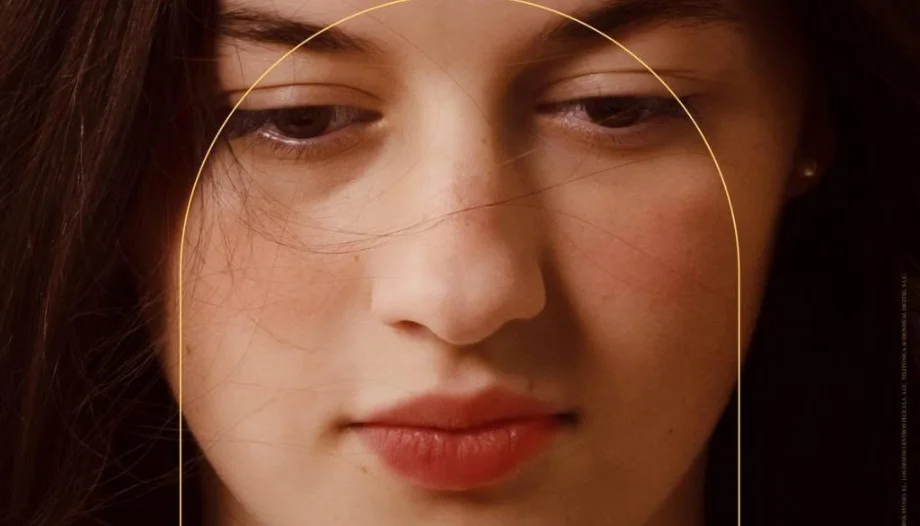
There has been a lot of commotion surrounding Alauda Ruiz de Azúa's recent remarks at the Forqué Awards. Meanwhile, her film Sundays continues to spark interesting debates and has surpassed 500,000 viewers. Not bad for a Spanish film that tackles religious themes.
We all knew that it wasn't a film that pandered to anyone, that it was respectful and honest towards both sides of the story—believers and non-believers—just as we knew that Alauda belongs to the group of non-believers and that he set out to overcome his biases and prejudices when making this film, which makes his achievement even more valuable.
I believe that Sundays It is a film that transcends its own author, as demonstrated, among other things, by the remarkable public conversation it has generated, not only in the country's mainstream media, but also within families and work environments. Alauda has her own personal opinions about what she narrates, and she is fully entitled to them, but she has been able to set them aside and engage in an admirable exercise of listening to others. Something we should all do more often.
In my opinion, what those somewhat clumsy and hasty words from the other day speak of is a regrettable reality: the lack of freedom in the prevailing culture, in which faith is viewed with suspicion and rejection, and in which many do not forgive Alauda for her refusal to take a clear stand against religion and the Church. One only had to follow that public conversation to notice it. Thus, it seems that the director has felt compelled to declare that, of course, she considers religion to be “indoctrination,” which has baffled and disappointed many of her viewers.
Ah, but is Aunt Maite—who opposes Ainara's decision—a person free of beliefs or doctrines? “She believes in God like you believe in climate change,” her husband retorts in one of the scenes in the film. We all have beliefs, even those who are staunch atheists based on a firm “non-belief.” The key is the nature of each faith and who we choose to believe in. And, of course, everyone's freedom to do so.
No one forces Ainara to end up in the convent, contrary to what her aunt Maite wants the girl's father to do: not let her go. The disbelief of our prevailing culture prevents him from opening up to the possibility of the transcendent: he closes himself off to the supernatural, to that which is invisible to the eyes of the body but essential to the spirit. This is one of the great hits of our present. I found the film to be a dialogue between these two worlds that coexist today, and it revolves around a question that is latent in every frame: Does God exist?
If it doesn't exist, Ainara and those “four old women” are crazy. If it does exist, it will be Aunt Maite and the materialistic atheist world who are crazy, for closing themselves off hermetically to a reality that seems to give meaning and fulfillment to human life.
My brother pointed this out to me when we watched the film together. There is a moment of great cinematic beauty and symbolism in which there is a final “look” between the two protagonists, each in their own space: one dressed in white, joyful, surrounded by her blood family and her chosen family, secure in the certainty of an “incomparable” love, a word used by Alauda herself., in an interview on ABC, to describe the love that these young women with a vocation claim to find. The other, Aunt Maite, descends the dark staircase of a notary's office, overcome by a certain resentment, to meet her family (broken?) on the street. Something seems to stir her in the midst of “uncertainty,” a word also used by Alauda in the program. Movies on SER, to describe the world in which Aunt Maite and she herself live; “in which most of us live,” she concludes.
The two protagonists look back in the final seconds, a very significant detail, which another great film-loving friend of mine pointed out to me, and which complements Alauda's words. Aunt Maite seems to encounter these uncertainties, and perhaps some certainties, within her own family, which is the other major theme of this film and one that we have not discussed here. Ainara looks at Sister Isabel, who closes the door. The fact is that we all have moments of uncertainty, even believers in the realm of faith. In his book Introduction to Christianity, Ratzinger compared us to shipwrecked sailors clinging to a plank in the middle of a stormy sea, where each person chooses whether or not to hold on to the wood that can help them reach Life, but we are all traveling across the same sea.
Alauda, honest as she has been in listening to that other side, and clever—very clever—as she is, has faithfully portrayed, with greater or lesser awareness, the life that each of them chooses; and it is there, in seeing them, that the audience also chooses what to believe, with all its consequences. That is why the film speaks so differently to each of its viewers; it is like life itself, and the achievement of reflecting this is what we call Art.
This is one of the great things about Alauda and her film, something that not everyone achieves, and which has been viewed with suspicion by certain sectors. That is perhaps why she has had to “qualify” it now. And perhaps also because of a Goya award that we all hope she will win and which could be jeopardized if she doesn't? Anyway, I don't want to think badly of her, I admire her too much for the honesty she shows in all her work.
It seems that Alauda has been able to be freer in his art than in his words. This tells us a lot about the world we live in, where there seem to be more dogmas than those defended by the Catholic Church.
In the meantime... Long live Alauda and its cinema! It not only amazes us, but also makes us think and talk.
Professor at the University of Valladolid and film critic.





 Español
  English
  Italiano
  Français
  Deutsch
  Polski
  简体中文
简体中文