


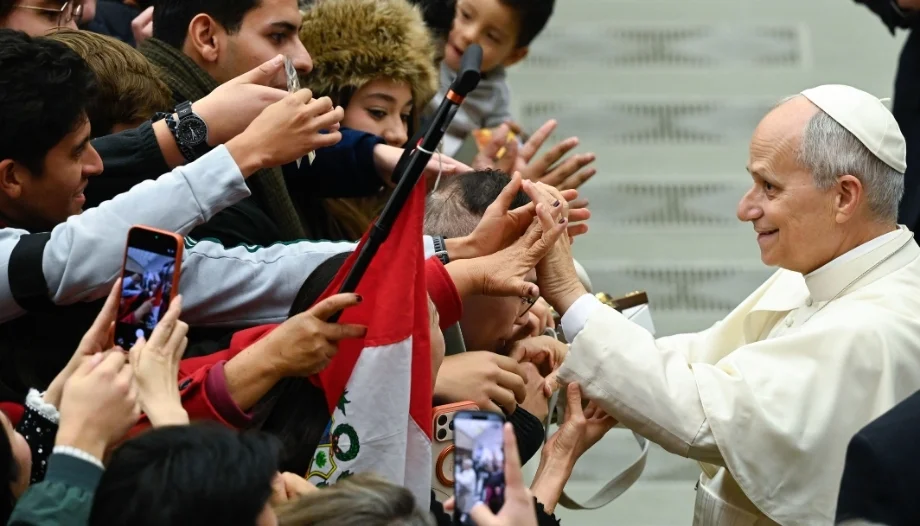
Leo XIV dedicated this morning's Audience to deepening and commenting on the Dogmatic Constitution Dei Verbum of the Second Vatican Council on divine revelation. In his catechesis, he affirmed that “the conciliar document reminds us of a fundamental point of the Christian faith: Jesus Christ radically transforms the relationship of the human being with God. Our bond with him consists in a dialogical relationship of friendship, whose only condition is love.
The Pope then recalled that this text “also reminds us of this: God speaks to us (...) God reveals himself to us as an Ally who invites us to friendship with him”.
From this perspective, the first attitude to cultivate is listening, the Holy Father continued, “so that the divine Word can penetrate our minds and hearts. At the same time, we are called to speak with God, not to communicate to Him what He already knows, but to reveal ourselves to Him”.
Need for prayer
Hence “the need for prayer, in which we are called to live and cultivate friendship with the Lord. This is realized, first of all, in liturgical and community prayer, in which it is not we who decide what to listen to from the Word of God, but it is He Himself who speaks to us through the Church”.
Moreover, it is fulfilled in “personal prayer, which takes place in the interior of the heart and mind. During the Christian's day and week, time dedicated to prayer, meditation and reflection cannot be lacking. Only when we speak with God we can also talk about from Him.”.
If Jesus calls us to be his friends, Leo XIV invited us to be his friends in the Audience, Let us try not to ignore his call. Let us accept it, let us take care of this relationship, and we will discover that friendship with God is our salvation“.
St. Augustine: grace can make us friends of God
Commenting on this passage from the fourth Gospel (“I no longer call you servants, because the servant does not know what his master is doing; I call you friends”), “St. Augustine insists on the perspective of grace, which alone can make us friends of God in his Son” (Commentary on the Gospel of John, Homily 86), the Pope added. “We are not equal to God, but God himself makes us similar to him in his Son.”.
“With the coming of the Son in human flesh, the Covenant opens to its ultimate end: in Jesus, God makes us sons and calls us to become like him in spite of our fragile humanity. Our likeness to God, then, is not attained through transgression and sin, as the serpent suggested to Eve (cf. Gen 3:5), but in the relationship with the Son made man”.
In the silence and intimacy of the heart
In his greeting to the Romans and pilgrims, the Pope encouraged them “to cultivate friendship with the Lord, who is the source of joy and salvation, dedicating serene moments of prayer and meditation on the Word, to listen to him and speak with him in the silence and intimacy of the heart. May God bless you. Thank you very much.






 Español
  English
  Italiano
  Français
  Deutsch
  Polski
  简体中文
简体中文