


 “The good of the Venezuelan people must prevail,” says Pope Leo XIVVenezuelan people react to the arrest of Maduro
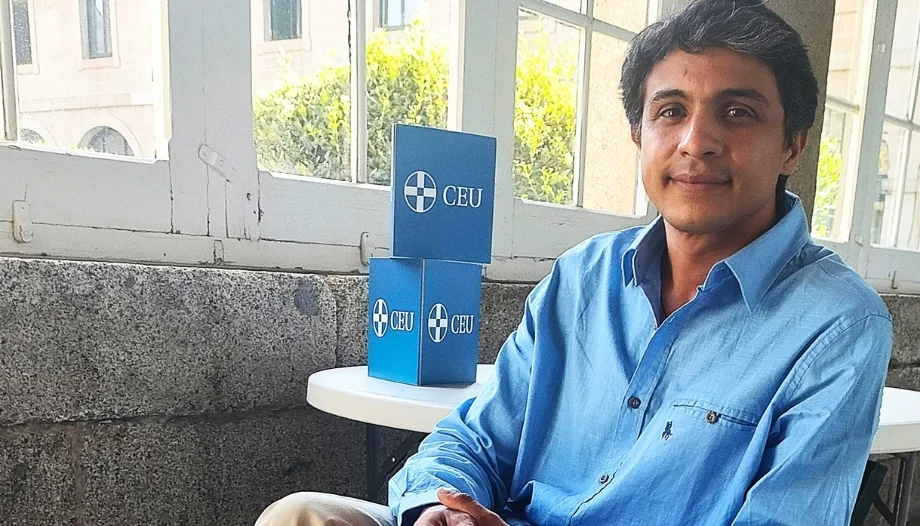
The world is debating with conflicting opinions after the intervention of the United States in Venezuela. Last January 9, in his speech to the Diplomatic Corps, Pope Leo XIV asked “that the will of the Venezuelan people be respected and that they work for the protection of the human and civil rights of all and for the construction of a future of stability and harmony”. A few days later, Lorent Saleh, winner of the European Parliament's Sakharov Prize, currently exiled in Spain, called for a “real democratic transition” and, as a priority, the release of political prisoners.
According to The New York Times, official sources said that 166 people had been released so far, although as of Tuesday afternoon, the Penal Forum, Venezuela's main human rights organization, had only confirmed 56 releases.
Lorent Saleh and his trajectory as an activist
Lorent Saleh (Lorent Enrique Gómez Saleh, San Cristobal, Táchira, (Venezuela, 1988) spent four years in La Tumba and El Helicoide, the worst prisons of the Chavista regime. He began his activism for human rights as a university leader, in front of Chávez, in 2007. His activity earned him the Sakharov Prize, awarded by the European Parliament in 2017. This allowed him to leave Venezuela, where he had been detained since 2014.
Now, after the intervention of the United States, he understands that “today more than ever, we must be mobilized, organized and coordinated to continue pressing for a real democratic transition”.
Demands for a democratic transition
For the activist, this transition must have “concrete and humane objectives”. And, for this, he asks for a series of points:
-The release of all political prisoners and the definitive closure of torture centers.
-The immediate cessation of all forms of persecution of dissidents.
-The safe return of exiles, persecuted and released political prisoners to their homes.
-The call for democratic, free and verifiable elections.
Saleh assures in a statement to which Omnes has had access, that “today, when the country and its pain are at the center of global attention, what Venezuela needs is not to be explained from Eurocentrism and that petty intellectual arrogance (typical of the colonial thinking that so many have criticized), but to look at it head on, with truth and humanity, without ideological biases”.
Appeal to the international community
In this sense, Saleh has stated that “while in Europe narratives are discussed as if real life were a Cold War pamphlet, in Venezuela there are more than eight hundred people kidnapped by the regime, hostages in torture centers denounced by the International Criminal Court and the main human rights organizations in the world”. Among them are journalists, activists, social leaders, indigenous leaders, trade unionists, military, teachers, minors and senior citizens. “All imprisoned and tortured for the same thing: thinking differently,” he says.
According to Saleh, “crimes against humanity in Venezuela have been documented, filed and prosecuted for years before international organizations. This process has cost the lives and freedom of many human rights defenders”. That is why he asks: “we cannot forget the essential: the only correct side is that of the victims. Never on the side of the perpetrators.
For Saleh, it is necessary to focus the debate. “Enough of forcing us to look at the world from binary logics of left or right, as if human dignity and complexity could be included in the slogans. The center of the debate is not oil, it should be the people, the hostages, those who today have no voice.”.
Therefore, he asks: “A direct message to those who preach from studies and ideological tribunes: Do you expect victims to feel guilt for seeing their executioner handcuffed in front of a court? Guilt for celebrating justice and dreaming of the possibility of returning home and being reunited with our families and friends? The human rights activist clarifies: ”Guilt is to remain silent in the face of torture. Guilt is to make up tyrants from the comfort of the free world. Guilt is abandoning those who cannot speak“.
He ends his statements with a call: “On the side of the victims. Always. That is why I ask you to help me raise my voice for the release of the hostages in Venezuela. This must be our center of debate, our social mission, our task and responsibility”.
Immediate priorities
In a statement made to Albert Castillon's program on January 12, Lorent Saleh insisted on the priority of “the release of all political prisoners”. And then, “the complete cessation of persecution and the return of all those exiled and persecuted, and finally, the holding of free and democratic elections where everyone can participate”.
“The least that Venezuelans are worried about is oil. It is ridiculous when they mention that to us because we have never enjoyed that oil and the little that was done with the oil was precisely when Chavismo had not arrived and more US companies were there. So, our dream is to free the political prisoners. The day they close La Tumba and El Helicoide, I will be able to sleep peacefully. If Trump does that, which is not to my liking, I will be eternally grateful to him because he will have done what not even the entire international community did during all these years”.
The Church's role in the Venezuelan crisis
A few months ago, Saleh spoke about the role of the Church in his country, in an interview in Mundo Cristiano: “Pope Francis wanted to prevent the Church in Venezuela from ending up like in Nicaragua, expelled, completely persecuted. There were many expectations of what Pope Francis could have done. I am very respectful with the Church and I also believe that he has done very important things that are not very public, but he has contributed to help and protect many people in my country”.





 Español
  English
  Italiano
  Français
  Deutsch
  Polski