


A few years ago, the work of a well-known American author called “the Benedictine option” was translated into Spanish and disseminated among Spanish Christians. After an analysis of the situation of believers in the United States, he recommended the “Benedictine option”, that is, to act as in the Middle Ages when the life of Christian communities was organized around the Benedictine monasteries scattered throughout the world.
In Spain, this option of enclosure in the Christian truth, which facilitates self-referentiality and segregation from other families, cultures and mentalities, did not succeed. It is necessary that Christian families mix with other pagan families and stimulate and evangelize them. To enclose ourselves in a small world denatures us, because we have to be leaven in the mass.
The Cardinal of Rabat, Clemente Lopez, commented that when Pope Francis visited them in 2019, on the last day, before boarding the plane that would take him back to Rome, he told him that it did not matter whether the Christians in Morocco were many or few, whether they had much or no influence; the important thing was that the “salt did not become insipid”.
Opening
In Spain there are still enough Christian roots to be able to create with our friends and neighbors a culture and a civilization full of Christian and human values with which to develop our homeland with values without the need to encapsulate ourselves.
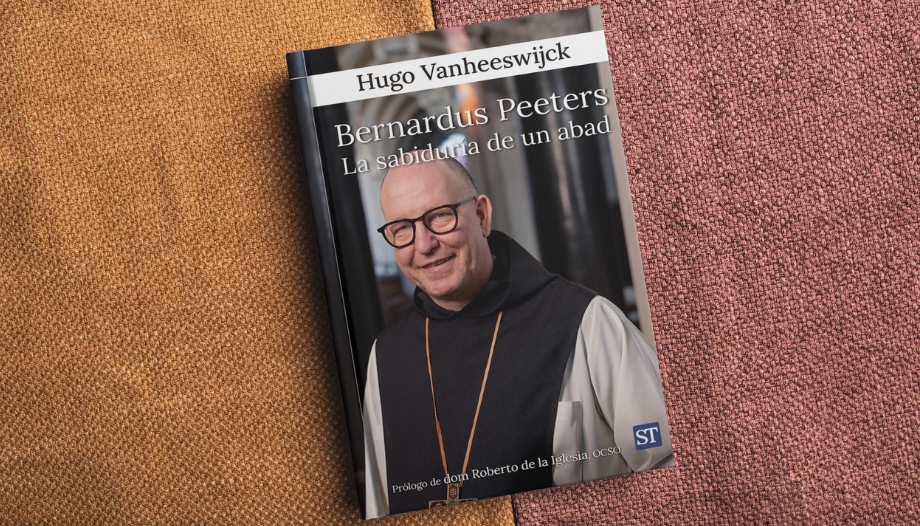
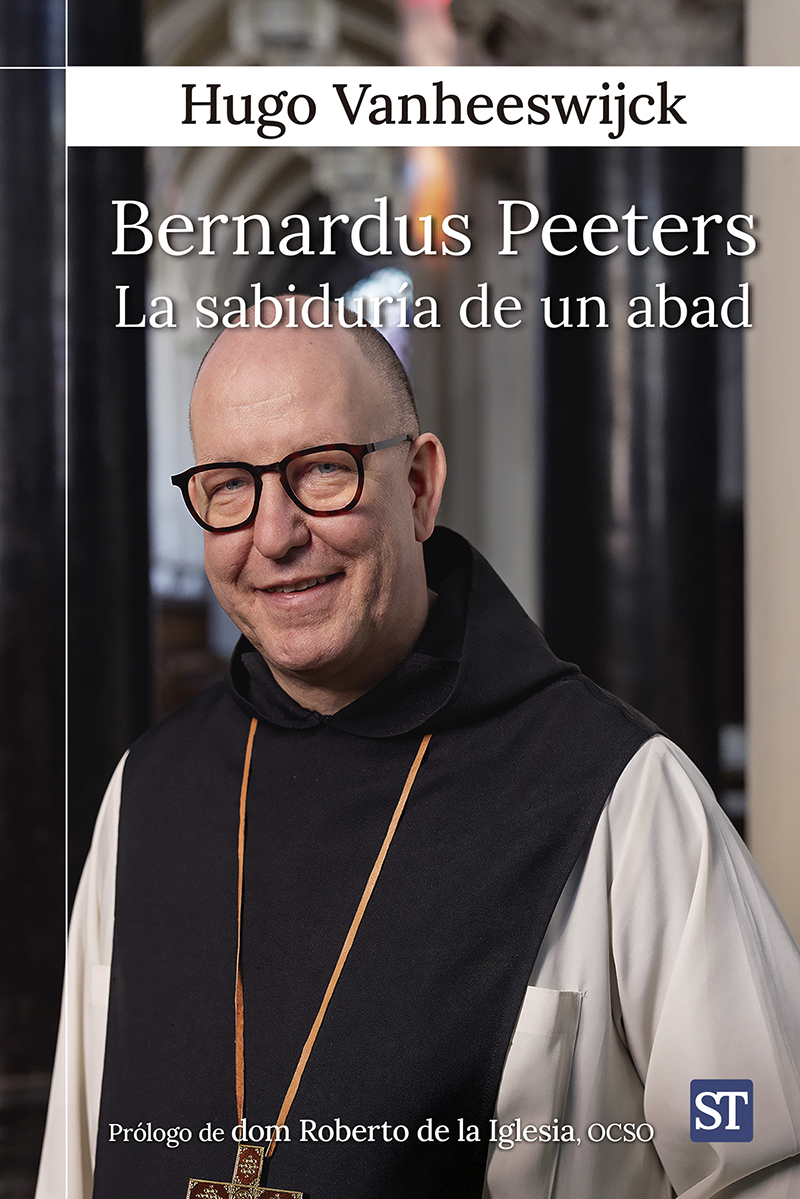
This is the essence of the book published by “Sal Terrae”, the fruit of three years of conversations between the Dutch journalist Hugo Vanheeswiijck “and Abbot Peeters (Simpelveld, 1968) of the Abbey of Our Lady of Koningshoeven in Tiburg in the Netherlands and, since February 11, 2022, Abbot General of the Cistercian Order of the Strict Observance (OCSO) also called “Trappist” religious: 150 abbeys around the world fell into his heart (20).
Indeed, Abbot Peeters will expose in these conversations a proposal of Christian life that would be the Trappist life, with all its depth and profundity, so that we see how this distinguished institution remains faithful, in the end, to the rule of St. Benedict of the fourth century and, at the same time, is perfectly adapted to the mentality of a monk of the twenty-first century. Moreover, Bernardis Peeters himself chose as his motto in 2005, when he became abbot of Koningshoeven Abbey, these words: “Seek God and live” (16:134).
A charisma to learn from
Undoubtedly, and this is the secret of this book, the wisdom that God the Holy Spirit grants to these religious not only envelops them in an unfathomable richness of the Spirit that leads them to a full life of grace, but from their holiness of life the whole universal Church is enriched by the communion of saints and by the fruits of holiness and Christian ideas that will cross the walls and reach the farthest corners of the earth.
Indeed, we are before a true treatise on spiritual life, contemplation and holiness, as in the 16th century when they were called treatises on “asceticism and mysticism”, which helped members of the regular and secular clergy to nourish their own spiritual life and enkindle the Christian people in their mission to enlighten the world from within.
God in everyday life
Perhaps the first conclusion of this work is its brevity. It is a matter of transmitting the wisdom of an abbot to the contemporary world, and ideas such as wisdom are more intense than extensive and do not require many speeches but the personal reverberation of one's own personal contemplation.
The task remains that of the Holy Spirit and also continues to require, as the Council of Trent and subsequent Councils up to Vatican II made clear, the cooperation of freedom: holiness and contemplation are the fruit of the conjunction of God's grace and the personal freedom of each Christian. As the author of this book explains: “to involve God in the concrete life of each day” (16).
Charity is also important: “When Christ speaks of denying myself, he does not at all say that I must abandon myself. However, I must renounce myself in order to belong to a community, to give myself to the community, to be there for others” (91).
Trust
The second conclusion of this work is the climate of trust with which we Christians must treat each other in order to activate the communion of saints. In the Church, as is clear from the New Testament, everything rests on trust. We are a universal family united with the Pope and our bishops and priests who are moving towards the same goal: to live with Jesus on earth and in heaven in a family climate of mutual trust: “Authentic prayer is rooted in silence and simplicity; but it extends to the whole of creation and therefore emphasizes solidarity” (106).
Trust is that which God places in us by giving us his grace in ordinary circumstances. Thus our abbot will say: “a school of love is a way of life that transforms the human being through the combination of prayer (heart), reading (intellect) and work (body). It teaches you how to love and why to love” (111).
Immediately, we will talk about personal prayer, liturgy, family life, community life, the universal Church, getting to know each other, loving each other and respecting the ways of thinking of others. Unity and variety. It is very interesting that the monks encounter in their prayer the same difficulties as ordinary Christians in the street: “Often people do not stop running. We monks do too. It is important to stop the whirlwind inside us. We must be silent in the presence of God” (121).
The goal is the same for all Christians of every class and condition: intimacy with Jesus Christ and living in charity with one's neighbor. The word holiness is used again and again as friendship with Jesus Christ and the desire to know and love him. The word struggle, in this work, means falling in love and the illusion of loving more and better: “Jesus who lives in me also prays in me. I just have to join in that prayer. It was clear to me what Paul means when he says that it is the Spirit who prays in us, that it is he who says ‘Abba, Father’” (125).
Bernardus Peeters. The wisdom of an abbot






 Español
  English
  Italiano
  Français
  Deutsch
  Polski