



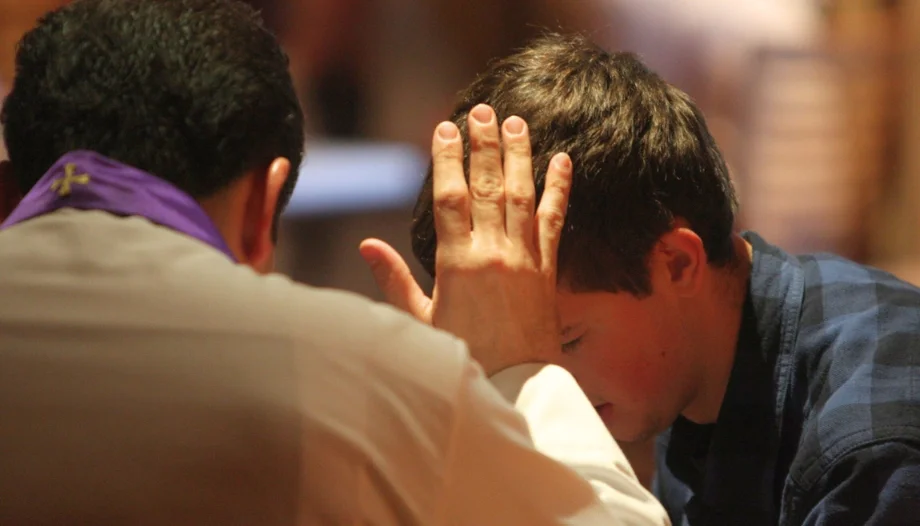
The experience of God's forgiveness in the sacrament of Reconciliation does not depend solely on the confessor. It is also profoundly influenced by the personal characteristics and history of the penitent, and by psychology, which until now has paid little attention to forgiveness when it refers to God.
The study presented here is part of an international project of the John Templeton Foundation, led by Francis Fincham (Florida State University), which seeks to understand the psychological dimension of the experience of divine forgiveness.
Ten research teams: Harvard, Baylor, Navarra, etc.
The project coordinates ten independent research teams, dozens of researchers from different universities (Harvard, Baylor University or Navarra) and from different continents (South America, Australia, Italy, USA and Spain).
One of these ten teams has focused on the experience of forgiveness in Catholics through confession, with psychologists, philosophers and theologians such as Martiño Rodríguez-González, María Calatrava or José María Pardo, who have led the project from the University of Navarra, María Pilar Martínez (Comillas Pontifical University), Juan de Dios Larrú (San Dámaso Ecclesiastical University) and Joan D.A. Juanola (CEU-Abat Oliba University).
Twenty-five priests with a wide and diverse pastoral experience, coming from different countries and close to different ecclesial realities, were interviewed in the research, reports the study, entitled ‘Practical Guide for Confessors. Psychological and pastoral keys for the Sacrament of Reconciliation’, hereinafter the guide.
Scheme
The general summary of the study includes pastoral keys for the confessor, keys or aspects for the penitent, which we will now see in synthesis, sins that he calls “difficult and delicate situations”, and some outlines of the “psychological dimension of the sacrament”, which will be dealt with in the near future.
Penitent factors influencing the experience of forgiveness
Self-concept and identity. Negative self-image.
Some penitents present a negative self-image, the authors point out, going so far as to merge with their sins, as if these define their identity: “I am bad”. This distorted view can make it difficult for them to open themselves to forgiveness and to separate their identity from their mistakes.
Several factors contribute to this negative self-image. These can be personal and family history, not going to confession for long periods of one's life, which can reinforce identification with sin, making it difficult to experience God's mercy. As will be seen in the guide or advice for confessors, to accompany these people, the first and most essential thing is to offer an unconditional welcome.
Remembering that the saints knew themselves to be sinners, and that we all are sinners, can help to normalize the experience of confession. Also, directing our gaze more towards God and less towards sin helps to break the spiral of self-centeredness.
Useful resource: ‘Broken Gods. The Seven Longings of the Human Heart’, Gregory K. Popcak, a book that explores how human desires, even the darkest ones, can be transformed into means of sanctification.
2. Image of God
The distorted representation of God is linked in many cases to previous life experiences, especially those given by attachment figures from our childhood and adolescence (parents or caregivers in the family of origin), which can be unconsciously projected onto the relationship with God. The penitent sees himself as guilty before an implacable judge, which hinders reconciliation.
However, confession can become a liberating experience when the penitent discovers that God is not first and foremost a judge, but a close and merciful Father, always ready to welcome and forgive. The warm and unconditional welcome of the confessor plays a decisive role here, the guide points out.
3. Some internal dynamics or psychological wounds
Certain psychological traits have a decisive influence on how the penitent experiences confession. Some of them act as obstacles that make it difficult to accept mercy. Among the most frequent are:
- perfectionism and self-demanding.
- scruples or the tendency to self-flagellation (circle of fear and distrust).
- victimhood reduces the identity of the person to the wound suffered.
- frivolity or narcissistic traits, which make it difficult to recognize one's own mistakes and the damage caused.
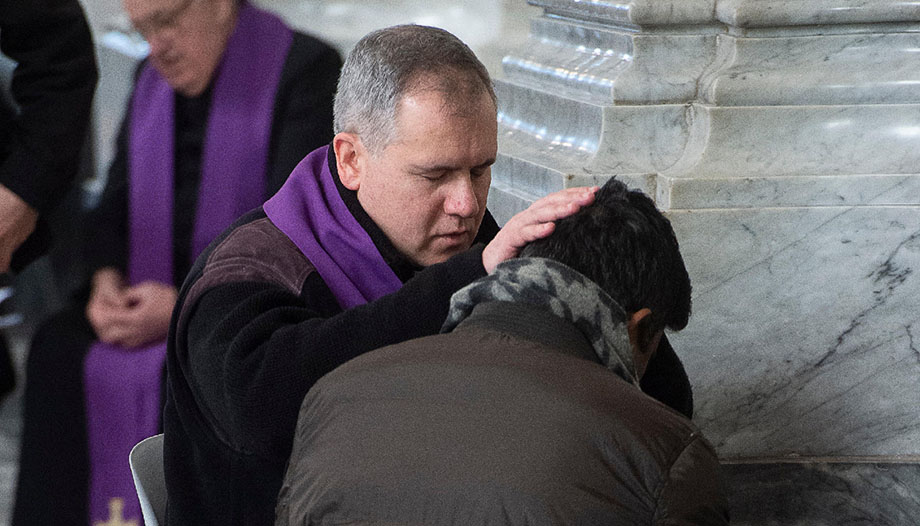
4. Significant life circumstances and experiences
Moments of rupture, grief or crisis - such as the loss of a loved one, serious illness, deep disappointments or the sensation of “hitting rock bottom” - generate a vulnerability that can favor the action of grace and predispose the person to confession. Experiences of unconditional love received throughout life also open the person to forgiveness.
The desire for spiritual growth or to respond to a vocation acts as a powerful motivation to approach the sacrament of Reconciliation. The environment and community also play an important role. The “joy of the penitent” has a contagious effect.
Key moments or “strong times” can be pilgrimages, retreats, preparation for certain sacraments (first Communion, marriage, anointing of the sick), or liturgical periods such as Advent and Lent.
5. Formation and spirituality
A consolidated spirituality, with constant practice and experience of grace, allows one to approach the sacrament with greater openness and awareness, say the priests. “A person with a superficial spirituality is not the same as a person with a life of adoration, with an experience of grace in his or her life. That influences.”.
Likewise, “understanding the meaning of confession-what a priest is and what his mission is, etc.-facilitates a more conscious and meaningful experience”.
6. Frequency: accompaniment for discernment
Approaching the sacrament on a regular basis allows confession to become a true path of conversion, favoring a deeper relationship with God.
The priests emphasize, according to the guide, that there is no single frequency suitable for all penitents; each person has his or her own spiritual rhythm. Typical frequencies include weekly, monthly or irregular/annual confession (usually in Lent).
Some recommend adjusting it every fifteen days or once a month, according to the reality of each penitent. They consider fundamental the accompaniment of the priest to discern this personal rhythm, avoiding both the obsession for frequency - as can occur in cases of scrupulosity - and the imposition of a rigid calendar.
7. Past experiences of confession
Confession after long periods without approaching the sacrament can generate a surprise effect and an intense joy for the forgiveness received. They recommend focusing on the joy of God and on the penitent's return to communion with Him, rather than on the time elapsed without confession.
The memory of severe encounters or of confessors who instilled fear accentuated guilt more than reconciliation. The confidence and security transmitted by the priest help to “pave the way” for the penitent to go back to confession, they emphasize.






 Español
  English
  Italiano
  Français
  Deutsch
  Polski
  简体中文
简体中文