


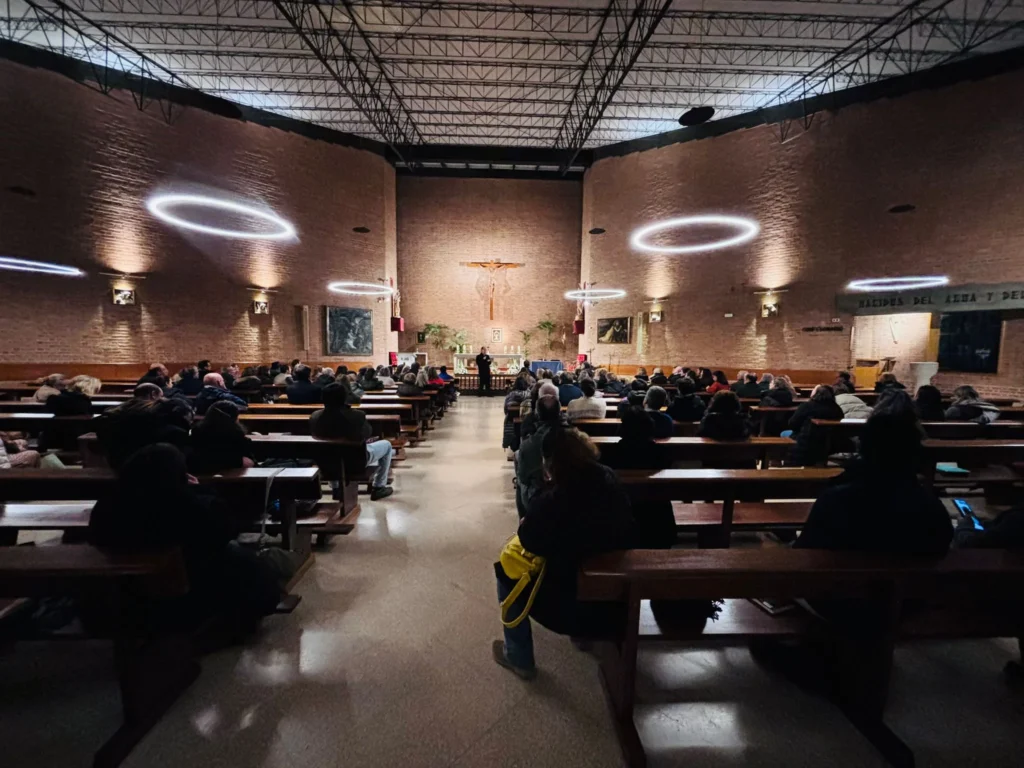
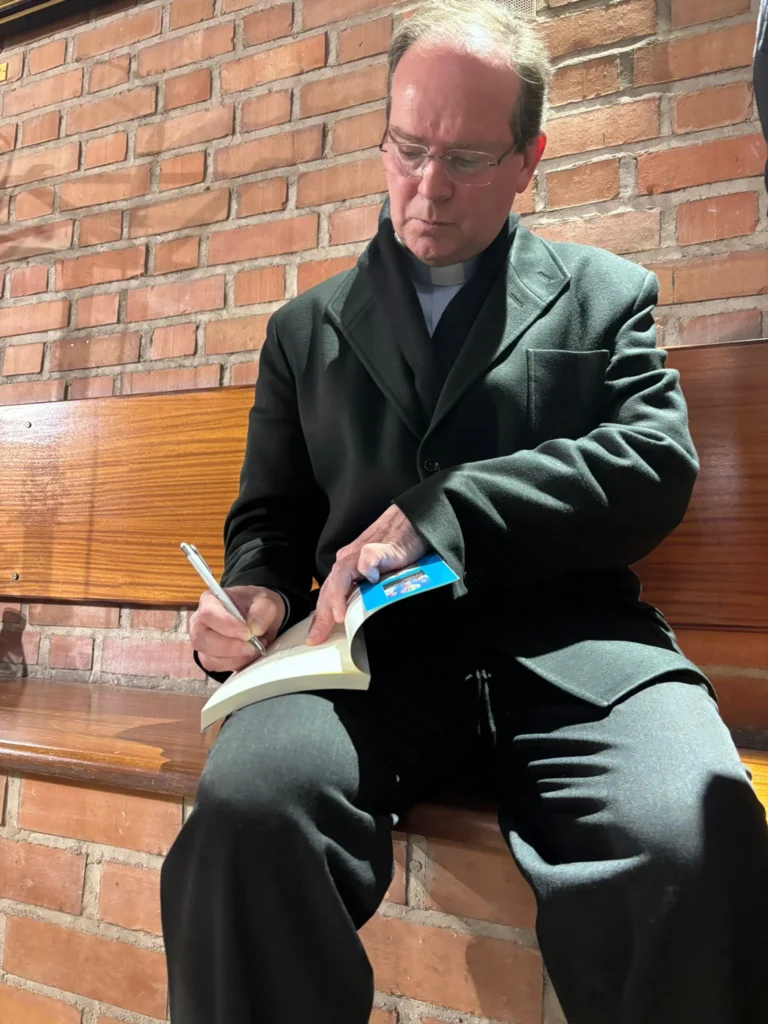
The priest José Miguel Granados, of the Archdiocese of Madrid and professor at the University San Dámaso, presented yesterday, January 21, his new book The value of the body and sexuality, published by EUNSA, in the parish of Santa María Magdalena in Madrid.
The book offers a profound and accessible reflection on the human body and sexuality in the light of the Christian faith, in dialogue with the great contemporary cultural challenges. The author draws especially on the theology of the body of St. John Paul II, as well as the teachings of subsequent popes, to emphasize the inseparable unity of soul and body and the vocation to love understood as self-giving, fidelity and openness to life.
Central theme
During the presentation, Granados explained that the book responds to decisive questions of our time: whether the body is only an object or a personal reality, whether sexuality is mere pleasure or the language of love, and whether the human body has a transcendent meaning. Against reductive or utilitarian views, he defended an understanding of the body as mystery, gift and sign of divine love, with an inviolable dignity from conception to natural death.
The starting point of the book is a cultural observation: our society lives a profound ambiguity regarding the body: are we the owners of a body that we can use and redefine at will, or are we corporeal persons called to discover meaning in it? Granados examines these dilemmas -pleasure or gift, object or mystery, technique or ethics- and shows how not only personal decisions, but also the course of social life depend on the answer.
The work is based in a special way on the theology of the body of St. John Paul II, as well as on the magisterium of subsequent popes. From this framework, the author presents the body as an expression of the person and as a place where love is made visible: a language capable of communion, self-giving and fruitfulness. Sexuality thus appears neither as a simple biological impulse nor as a suspicious reality, but as a constitutive dimension of the vocation to love, inscribed in masculinity and femininity and open to responsible self-giving.
Other issues
One of the most suggestive axes of the book is the sacramental understanding of the body. Granados stresses that the materiality of the human body is capable of revealing the invisible and referring to the divine mystery, especially in the light of the Incarnation. The fact that the Word became flesh gives the body an unprecedented dignity and allows us to understand human eros as a wounded force that is called to be healed and elevated by true love.
From this perspective, the author addresses with clarity and depth concrete issues such as modesty and nudity, affective commitment, responsible procreation, the value of celibacy, suffering and fragility, the dignity of the embryo, the end of life or the approaches of gender ideology.
Prose and poetry
One of the originalities of the work is its dialogue with literature and poetry: each of the 22 chapters opens with an example taken from a great novel and concludes with poems that synthesize the content reflected, showing how human experience has intuited, also from art, the deep meaning of the body and love.
Granados concluded the presentation by affirming that the mystery of the human body can only be fully understood in the light of Jesus Christ, the incarnate Word, in whom the desire for beauty, love and fullness finds its definitive answer.





 Español
  English
  Italiano
  Français
  Deutsch
  Polski