


The election of Leo XIV as pope has once again brought to the forefront a topic that concerns him closely, already from the name he chose for his pontificate: the social doctrine of the Church. Leo also experienced an important event in Nicaea, Turkey: the anniversary of the great Council of 325.
And between Nicaea and Leo stands a very important figure, Hilaire Belloc: let's see why.
A great intellectual
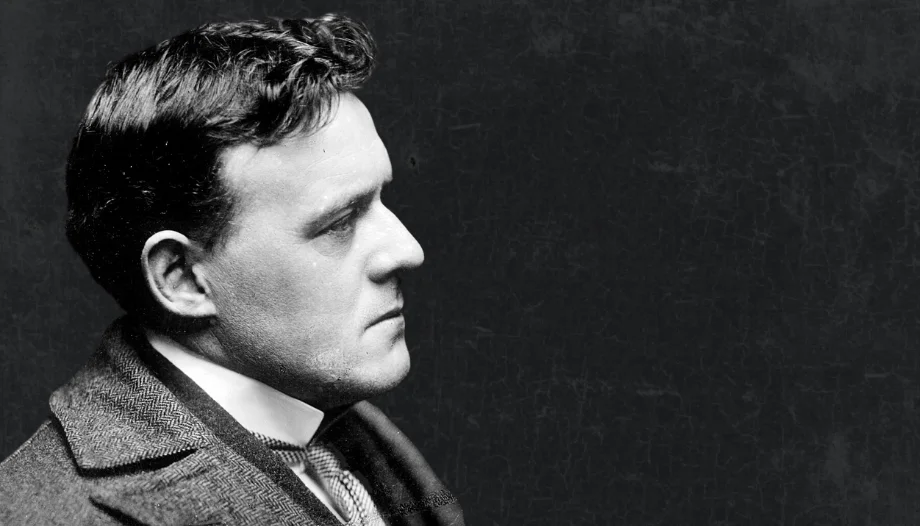
Hilaire Belloc (1870-1953) was a great Franco-British intellectual and author, famous, along with his friend Gilbert Keith Chesterton, for debates on issues related to Christian faith and culture. Among his most famous essays are: The Servile State (1912) and Europe and Faith (1920).
A characteristic feature of Belloc's thought is the idea that Western civilization and the very concept of modern Europe are born of the combination of Christian spiritual principles and Greco-Roman thought. Therefore, any crisis facing the Western world (and, consequently, the whole world, since Western thought has spread across the globe) has its causes and solutions only within this system.
The challenge of thought: the great heresies
Another very important work by Belloc is The Great Heresies, 1936, in which he presents five great heresies of Christianity that would have produced the worst evils in the history of mankind.
But what is a heresy? The term (from the Greek αἵρεσις) means «to choose,» «to separate,» or «to take away.» Therefore, a heretic is not someone who professes a truth totally different from the «official» one, but someone who only questions a part of it. Heresy, therefore, does not destroy the whole structure of a truth, but divides it into pieces like a cake and, removing one portion, replaces it with another which, however, comes from a different cake. Pardon the culinary comparison!
Arianism
The first of the five heresies is Arianism, which «rationalizes» and simplifies the fundamental mystery of Christianity: the incarnation and divinity of Christ.
Belloc defines it as an «attack on the mystery of mysteries», since it aims to lower it to the level of the human intellect, which is limited.
The Council of Nicaea (325), in reaction to Arius and his ideas, elaborated a «symbol», a dogmatic definition according to which Christ is ὁμοοούσιος (homooùsios): consubstantial with the Father, literally «of the same substance».
The «Nicene Symbol» is therefore opposed to the thought of Arius, who, instead, proclaimed the creation of the Son by the Father and denied both the divinity of Christ and the transmission of the divine attributes of the Father to the Son and, therefore, to the mystical body of the Son, that is, the Church and its members.
Manichaeism
The second heresy is Manichaeism, which is against matter and everything related to the body (the Albigensians are an example of this). The flesh is considered something impure, whose desires must be systematically repressed.
The Protestant Reformation
The Protestant Reformation is the third heresy: an attack on the unity and authority of the Church, rather than on the doctrine itself, but whose effect is also the destruction of the unity of the European continent.
Until then, in fact, Western Europe had been the Res Publica Christiana (according to the expression coined by Frederick II), the fruit of the interpenetration of Greco-Roman thought and Christian faith, a corpus united by the following factors:
- the Empire as a political institution;
- Roman law (jus) as a common rule;
- Latin as a language of culture and supranational communication;
- (Catholic) Christianity as a religion.
With the Reformation, however, all reference to universality and catholicity was replaced by the criteria of nation and ethnicity (cuius regio, eius religio), with catastrophic consequences such as National Socialism.
Modernism
It is the most complex heresy with many names: modernism or allogos. Belloc defines it as such because it does not recognize any absolute truth that is not empirically demonstrable and measurable.
There always arises the denial of the Mystery of mysteries, the divinity of Christ, impossible to define empirically, but it goes further, accepting as real or positive only those concepts that are scientifically demonstrable (hence another term: «positivism»).
According to Belloc, it is also an attack on the «trinary» roots of the West, and by trinary we do not mean the Trinity, but the indissoluble link that for the Greeks exists between truth, beauty and goodness. If this link exists, whoever questions, for example, the principle of truth, also harms those of beauty and goodness.
Effects of the first four heresies
In Belloc's analysis, the first four heresies have factors in common: they were born within the Catholic Church; their heretics were baptized Catholics; they were almost completely extinguished within a few centuries (the Protestant Churches still exist, but, except for the Pentecostal one, they are in a great crisis). However, its effects persist over time, in a subtle way, within the Western system of thought, mentality, social and economic policies, in the very vision of man and his social relations.
Let us think of certain effects of Arianism and Manichaeism on certain theological currents, or others more related to the Reformation, such as the constant attack on the central authority and universality of the Church. How can we not also think of the extreme consequences of Calvinism, including the denial of free will and of the responsibility of human actions before God, or unbridled capitalism?
Islam
As for others (first of all, John Damascene), so for Belloc Islam is a Christian heresy, indeed, the most particular one, and it is born along the lines of Docetism and Arianism, simplifying and rationalizing to the maximum (according to human criteria) the mystery of the incarnation. In this way, it produces the degradation of human nature, which is no longer linked in any way to the divine. Like Calvinism (although later), it tends to attribute a character predetermined by God to human actions.
However, if the Islamic «revelation» is born as a Christian heresy, it is soon transformed, inexplicably, into a new religion that lasts over time, a kind of «post heresy».
Islam, among other things, is distinguished from other heresies because it was not born in the Christian world, nor from a baptized founder, but from a pagan, who made monotheistic ideas his own (a mixture of heterodox Jewish and Christian doctrine with pagan elements already present in Arabia) and spread them. From Judaism and Christianity, Islam takes divine attributes such as personal nature, supreme goodness, timelessness, providence, creative power at the origin of all things; but also other concepts such as the existence of spirits and angels, of demons rebelling against God with Satan at the head, of the immortality of the soul and the resurrection of the flesh, of punishment and punishment after death.
The challenge of social and economic life
Belloc was also a great exponent of distributism, a socioeconomic theory inspired by the principles of the Benedictine experience (ora et labora) and the social doctrine of the Catholic Church as expressed first by Pope Leo XIII (the inspiration for the current Pope Leo XIV) in the encyclical Rerum Novarum and then by Pius XI in Quadragesimo Anno.
For distributism, ownership of the means of production should be distributed as widely as possible among the entire population, rather than being concentrated in the hands of the state (socialism) or a few rich people (capitalism).
According to Belloc, both socialism and capitalism, products of modern Western societies, claim to liberate man, but instead have enslaved him even more. They are two antithetical models, but with one element in common: they deprive the citizen of his freedom. Socialism does this by enslaving him to the State (on which he depends for his subsistence and guaranteed well-being); capitalism enslaves him to material goods presented as necessary, when they are not, and which, on the contrary, like drugs, create dependence: man always wants more and, in fact, becomes the slave of large private supranational corporations (just think of Amazon, Tesla, Microsoft, etc.).
Although elaborated between the 19th and 20th centuries, all the themes analyzed by Belloc are more than topical and represent some of the greatest challenges facing contemporary Christianity.






 Español
  English
  Italiano