


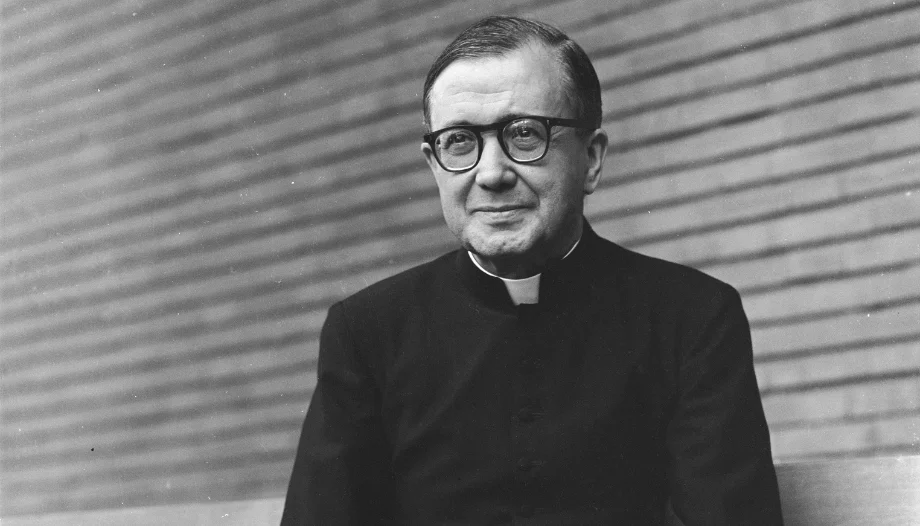
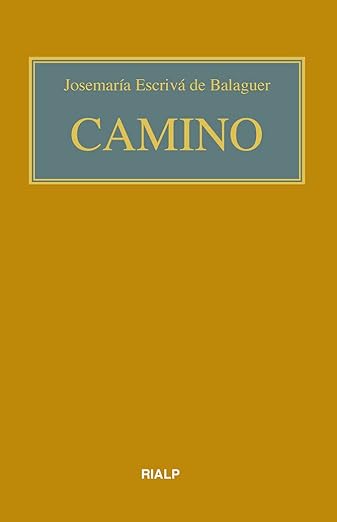
In these first weeks of the new year, Rialp Editions has launched the centenary edition of “The Way,” the famous text of St. Josemaría Escrivá (1902-1975), which has spread throughout the world.
It is truly impressive to consider that when St. Josemaría sent to press in Valencia in 1939, at the end of the Spanish Civil War, the 999 Points of The Way, he never thought that it would spread so widely in space and time and that it would become a classic treatise on spirituality.
“Notary” of the lights of the Spirit
In all honesty, we must make it clear from the outset that The Way was written by the Holy Spirit and that all St. Josemaría did was to become the notary of those inspirations, to write them down, group them together and draw up an index, which was the true work of the Founder of Opus Dei.
What we have just narrated succinctly is the true story of The Way. From a very young age, St. Josemaría was accustomed to noting down the lights he received from the Holy Spirit: the new Mediterraneans that opened up before his eyes, when he read a book, celebrated Mass or recited the Liturgy of the Hours, and also when he spoke with others.
The lights of the Holy Spirit would burst forth at any moment, because even sleep can be prayer. St. Josemaría had learned from his mother, like everyone else, to love God and others, and therefore he habitually practiced what he called “prayer of complicity.
The prayer of complicity in ordinary life
That is what led him to holiness in the midst of the world through the ordinary chores of life: to keep alive the thread of prayer, but the prayer of complicity. It is very important, therefore, to involve God in our life and to involve ourselves in dialogue with God.
When he preached or when he spoke personally with those university students or professionals who came to his confessional, he always brought out in his conversation sparkling memories, anecdotes, lights that he had received in his prayer or in any moment of prayer during the day.
One day, those kids started asking him to write down those anecdotes so that they could relive the moments when they had heard them in the media or in personal conversations he had with them.
The Way: a lay spirituality
Cardinal Luciani, Patriarch of Venice, Blessed John Paul I, described very graphically in the summer of 1978, a few months before he was elected Pope, the difference between St. Francis de Sales and St. Josemaría Escrivá in the following way: the former, St. Francis, provided formation for the laity and St. Josemaría imparted a lay formation. Indeed, the meditative reading of the points of The Way will eventually convert us, with God's grace, into discerning souls to be good children of God in the midst of the world in our ordinary activities.
In fact, at any time of the day, we can recollect ourselves interiorly and spend some time in prayer: in the tabernacle of our parish, in a chapel or cathedral or in the subway, in a corner of our own home and raise our hearts in complicity of friendship with God and read a point of The Way to relive those divine lights and make them our own or to converse confidently with Jesus about our things.
I remember one morning in the bar of the Faculty of Geological Sciences of the Complutense University of Madrid, when the thirty students of the class met there for a mid-morning drink with some of our professors and one of us took a spoon with coffee and deposited a lump of white sugar on that spoon and the coffee began to impregnate the sugar cube with black color and, at that moment, we all exclaimed happily: “magmatic undermining”. It was the jubilant cry of those of us who were happy to study minerals, rocks and crystals and could exult with our classmates without fear of being considered mad scientist crackpots as had happened to us before we enrolled.
At that moment the Holy Spirit enlightened me and made me realize that with my times of prayer meditating on the points of the Way, by raising my heart in love to God while working, by getting together with my friends and helping each other in their needs, my soul was being transformed into a magmatic undermining and God was making me a saint: in love with the Love of loves.
Bridging heaven and earth: a path for the world
The key to The Way is that it is a lay and secular instrument for converting everyday life into personal, daily encounters with Jesus Christ and with others. Some professors at the University of Navarra have published a book with the one hundred points of the Way that speak directly of the “love of God”. In other words, a 10% of the Way speaks directly of God's Love, like yeast in the dough. And, we will soon discover that the remaining 90% are also expressions of God's love, which is the main issue.
This uniting of heaven and earth, or this illumination of the world from within with the love of God, is the background to all the points of The Way. As St. Josemaría affirmed in another well-known text: “On the horizon, my children, heaven and earth seem to be united, but no, it is in your hearts that you live your ordinary life in a holy way” (Conversations, no. 116). (Conversations, no. 116).
I would like to end by commenting on a memory of one of the first priests of Opus Dei, Father Joseph L. Muzquiz, who was sent by St. Josemaría to begin the work of Opus Dei in the United States, Japan and other parts of the world.
He noted in his memories that when they arrived in a new country with St. Josemaría's blessing, an image of our Lady and little else, they always did so trusting in God's grace and full of joy. Immediately, he added, the first thing they did was to look for a job, a house and begin to make friends and be very close to each other and to the hierarchy of the country and to all the Christians in their new country, whom they had to love and become one of them.
Finally he added: “We were preparing an edition of The Way to teach how to pray and we were looking for a big house to put up a student residence and we were living in good spirits what we had learned from St. Josemaría.
The Way





 Español
  English
  Italiano
  Français
  Deutsch
  Polski
  简体中文
简体中文