


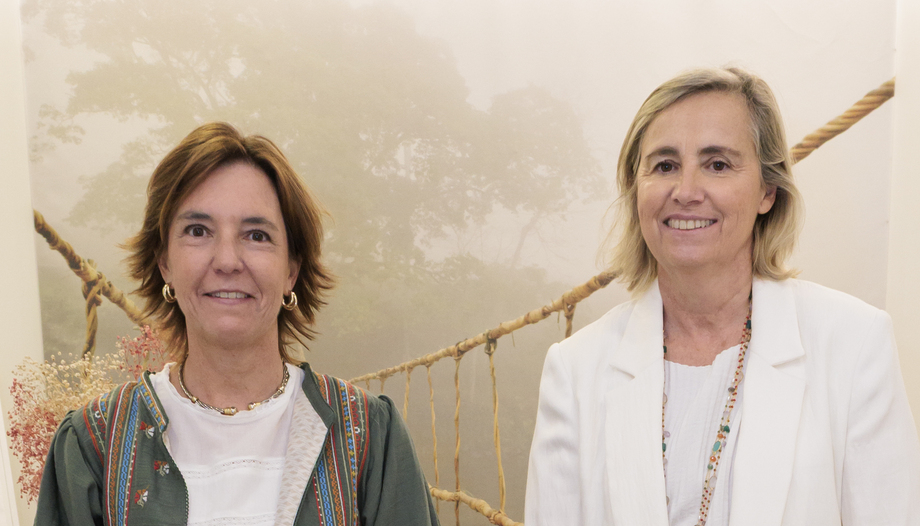
María Álvarez de las Asturias and Mercedes Honrubia have been accompanying couples and engaged couples on their relationship journey for more than 25 years.
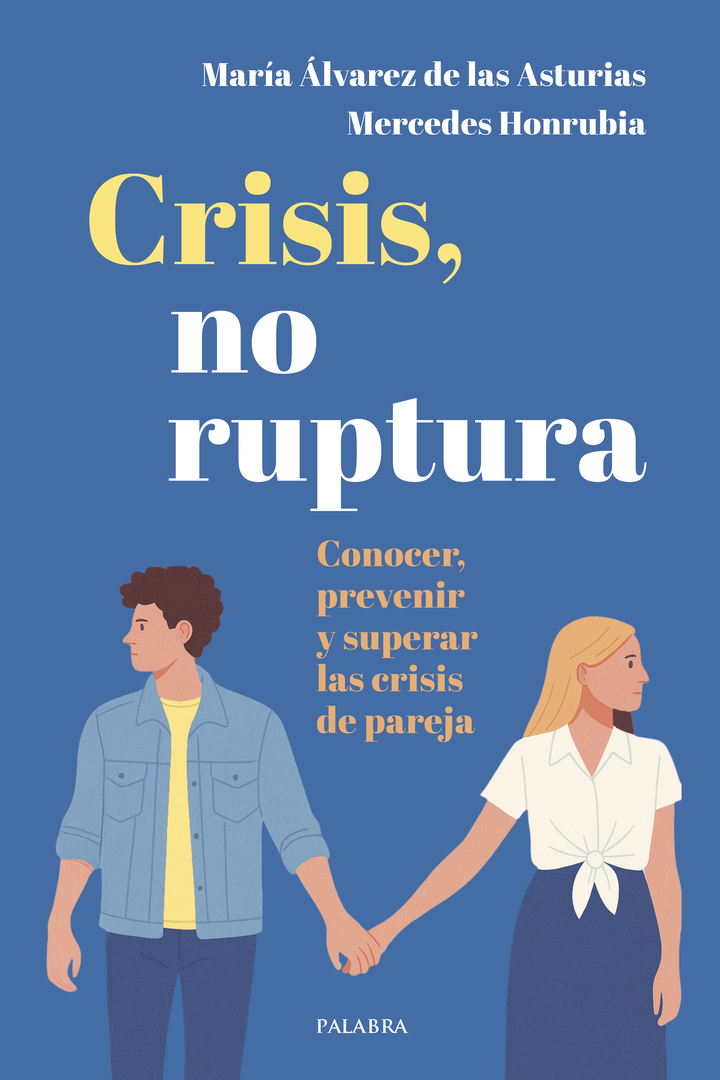
As a result of this experience, these experts have published «Crisis, not rupture», a book published by Palabra, in which the basic foundations for a healthy marital relationship and key lines to prevent and face possible crises during marriage are collected.
A useful and realistic book, aimed at engaged couples and married couples at any point in their relationship and in which the authors have wanted to emphasize the need for communication in the couple, honesty, the need to ask for help or advice before «going through a bump» and the awareness that crises are not always a synonym of a breakup, but an opportunity for growth.
Against this backdrop, Omnes spoke with the authors about marriage, dating, key issues and how to detect early that «snowball» that may be forming in a relationship.
At a time when terminology is badly flawed, what differentiates marriage from any other love relationship?
M.A.A. -What differentiates marriage from other types of unions is that it is a commitment to live love forever. That commitment, which is often frightening because we think it takes away our freedom or that we won't be able to keep it, is actually a help.
Commitment gathers the elements of love: “how comfortable we are together” and, as we are comfortable together, we spend time together to see what we think about life, about love, about marriage, about family, about work..., about everything. When the two things fit together, -I am comfortable together and I am discovering more things that make me more comfortable with you- then we decide if this is what we always want to live: commitment.
Commitment is a compass. I have decided this, I will go in this direction, and the difficulties that may come we will overcome them together. That is commitment and that is marriage.
So..., what is courtship?
M.A.A. -Dating is a relationship that has to end somehow. A good courtship is the one that ends either in marriage or in the thoughtful and meditated decision of “this has no future”. That is a courtship.
Choosing the person if the other person does not want to be chosen. uh
Well, if the other person does not want to be chosen, you can only respect the other person's freedom, you cannot impose yourself. Therefore, you have to move away from that person. And be careful, falling out of love is not automatic. It takes time, you have to go through a mourning process to get that person out of your heart and that place can be occupied by another person. This always, obviously, when we talk about courtship. The case of marriage is completely different.
Crisis, not rupture
Is it possible to promise love “forever” - are we not being idealistic?
M.H. - What a good question! I think the longing we all have is to love and be loved. That to love and be loved is something one longs for forever. Circumstances change, just as people change.
It is not about staying in the butterflies of the beginnings, but it is a free choice where I update that yes, every day. Updating that yes every day, -in the present-, implies building a future. If I get to know the other person and I get to know myself, I accept my circumstances and I accept the circumstances of the other person, it is from there that I can update that yes. That is why it is a yes forever.
When we hear “marriage counseling”, it seems that we always think of “marriage problems”, is that so?
M.A.A. -The personal accompaniments, The professional family and marriage counseling programs have arisen because there are people who have asked for them. Until a relatively short time ago, in families, more or less, there was a unity of thought on important issues.
Now we find that there are many people who have a way of seeing family and marriage that they do not share with the rest of their environment. And, when they have a small doubt or a difficulty that is not very serious, they do not find someone with their values and principles to turn to within this close environment. We have been approached by people who have asked us for this accompaniment because they know that we share their way of understanding life, love and marriage.
Many times, couples do not come because they have a difficulty, but also to reaffirm themselves in the path they have chosen, to lay a good foundation before marriage or because they have already laid that foundation and want to expand their knowledge and the way to put it into practice.
Saying things in front of a neutral third party is much easier. First of all, because you can say things objectively and see if it was really important or not. In addition, the pact of the coaching session is to listen to the other.
Many times, when these things that were kept quiet are manifested, in front of a third party, the other person is surprised because “he/she had no idea about this”. That is why the accompaniment is not necessarily for the moments when you are thinking about a breakup, but much earlier, to avoid these ruptures.
When there is something that is getting stuck, something that is getting stuck in a couple, an accompaniment session is requested and these little knots are untied.
How to distinguish an insurmountable situation from a “growth” crisis in the relationship?
M.H. -This is a subject we dealt with in “Crisis, not rupture”. It is important to know that there are evolutionary crises: just as the person is changing, the marriage is also evolving, growing and maturing.
Knowing those moments, those stages of life, places you in a perspective from which, when you see the crisis appear, it does not scare you, because you know that it is part of your own growth. Knowing gives you the security to be able to overcome.
Another thing is the circumstances that do not depend on one, but come and we do not know how to deal with them. That is where two positions can be adopted.
The first is to consider that it is a crisis, but not in a negative sense, but it can allow me to know myself better in order to overcome this difficulty.
The second, on the contrary, is that in a couple, when faced with this situation, one of the partners does not want to work on the relationship and this implies a breakup.
Sometimes, we encounter situations like this, in which one of the parties does not want to and, no matter how much the other is committed, it cannot be overcome. In the book we also talk about those situations in which you can no longer have control, for example in the face of a pathology, or an illness or alcohol dependence, and in which you may have to opt for a separation.
There are stages in which marriages have many fronts open at the same time: raising children, professional deployment, parents are getting older... So it is very good to keep in mind that marriage is a long-distance race.
There are stages that are like a succession of hurdles in the race, but we have to be aware that this is temporary, but that our union is definitive. That it is a long-distance race and that we have a lot of time to continue working on what is ours.
What key issues do we need to be clear about already in the courtship?
M.A.A. -When, in courtship, we think of “a life together”, it is about choosing the person and what kind of love relationship I want to live with him/her. To choose the person, I have to get to know him or her. That's why we talk a lot about time dating relationship. We can't go too fast, because you don't meet people overnight.
We need to spend time in courtship to know how the other is, what he thinks, what illusions he has, what fears, what hurts, what things he likes, what things he worries about in all this. Once it is clear to you that this is the person, whom you know with his or her positive and negative aspects, then you have to talk about what type of relationship we want.
If we choose the marriage, This is the foundation on which we build. We cannot later “remove” elements of the relationship we have chosen. That is, if we go to a de facto union, we can later add the commitment forever. But if we choose a union forever, it is not fair play to remove the element of commitment. And this is immutable.
Everything else, -which comes around this union of the two of us and which we have called “family project” to distinguish it-, does not depend on us. We cannot foresee everything because, maybe we wanted children and they don't come, or one of us is out of work, or the parents are suddenly not there.
It is in all this, which is changing, that crises will occur, because they are alterations of the reality we are living that we cannot control. As we cannot control them, it is a matter of knowing them together, facing them together, solving them together.
In courtship, we can talk about “what we would like”, but these are not decisions we can make. a priori. Talking about “what we would like”, we know a lot about each other.
That is why, in courtship, we have to know the person, the type of relationship we want and the elements of the family project that each of us likes. Because, if they are radically incompatible, surely that will make me decide that this is not the person I can commit to.
In your latest book you touch on two painful and complicated topics, what you call the “sudden death” of marriage and infidelity. How do you deal with such complex realities?
M.H. -In the book we have a separate chapter where we deal with both infidelity and the sudden death of marriage. These are two different issues.
Perhaps in the sudden death there may even be infidelity, which is what leads to that decision and the other person is faced with it without seeing it coming.
Many times, the sudden death What it implies is having been silent for a long time, not having said what one needed to say. Then, the other person believes that everything is going well, it continues to work because he/she believes that everything is going well.
Sometimes, people do not speak to avoid a conflict, because of wounds or circumstances that have accumulated from the past and that prevent them from having that assertive communication. That is why in the book we talk a lot about the importance of communication. When someone says “it's over”, they have already gone through a grieving process to make that decision, and many times it is irreversible.
Infidelity is a different matter. There are different types of infidelity and I believe that none is justifiable. Infidelity is a betrayal. A betrayal of the person, whether male or female, and a betrayal of the relationship. There you are really hitting the waterline of commitment.
It is true that it is possible to overcome an infidelity, but the wound of betrayal is very difficult to heal. It requires a lot of time and to recover a trust that is absolutely devastated. For that it is necessary, not only that the person who has been betrayed wants to work on that relationship and wants to work on forgiveness towards the other, but also that the person who has committed that infidelity also needs to work on recovering trust and, above all, to work on being a team, because there we are both committed.
Many questions will arise, many doubts, many issues of which, perhaps at a given moment the person who has been unfaithful already wants to turn the page because he has asked for forgiveness and it seems that everything is already restructured and, however, the person who has been unfaithful needs to constantly ensure that the other person is really here.
Sometimes, infidelity is not the cause but can be “the consequence”. It is usually the consequence of poor communication within the relationship: not trusting the other, not being able to say how I am at a given moment, what I need from you..., can cause us to put our heart in a person who is not the one we have chosen.
It is never justifiable and can be worked through, it can be forgiven, but it is a wound that is difficult to heal.
The wound of infidelity strikes at the waterline of self-esteem. It is necessary to work a lot on that self-esteem and that way of communicating. Everything that sometimes needs to be said, even if it hurts, so that the other person also puts all the meat on the grill.
That hackneyed phrase from the world of celebritiesIs it true: “Our love has worn out from using it so much”..., is it real?
M.A.A. -The love really grows when it is used. What happens is that you have to take care of it. We talk a lot about gestures of affection. Love, not “butterflies”.
On the one hand, we receive queries from people who say, “I don't feel those butterflies”. It seems to me that we have greatly exaggerated the effervescence of falling in love.
Falling in love, more than an effervescence, is a warmth of the heart that you have with one person and you do not have with another. And this warmth of the heart must be maintained throughout the life of love.
And how is this done? With gestures of affection, with a little note, with a WhatsApp, with a handshake..., with all the gestures of courtship. If the courtship has been well used, it has gone slowly and all the steps that can be taken have been taken, we will have learned to value these small gestures.
Then, we have to know that, if there are moments in which we are both very tired, -because many times more than wear and tear in the relationship, what we have is a lot of tiredness-, then we have to accept it and talk about what we can do -realistically- to continue reviving this.
We also say that, from the union of the heart we go to the union of the body, and from the union of the body the union of the heart resurfaces, that is why we ask couples who come “worn out”: How long has it been since you have been together? That you don't talk? That you don't have half an hour for yourselves? When they recover those moments to reconnect, love is used again and not worn out.






 Español
  English
  Italiano