


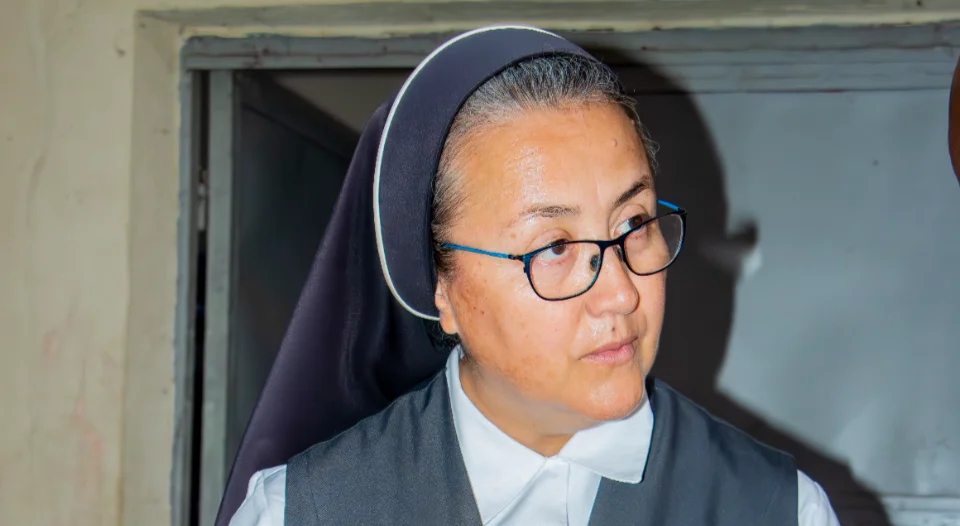
Sister Sandra works in Sierra Leone and is currently in Spain to publicize the Manos Unidas campaign “Declare War on Hunger”, an initiative that seeks to raise awareness of the reality of the poorest countries and mobilize support for development and education projects.
For the past eight years, she has been working in Sierra Leone, one of the countries with the lowest per capita income in the world, where her congregation develops educational and social projects aimed especially at women and young people in vulnerable situations.
A missionary between Mexico and Africa
Born in Mexico, Sister Sandra belongs to the congregation of the Poor Clare Missionaries of the Blessed Sacrament, a Franciscan-inspired branch founded by a former Poor Clare during the religious persecution in Mexico in the 1920s.
Before entering religious life in 1995, Sandra graduated in industrial chemistry and worked in a company dedicated to the manufacture of dyes and pigments. “I have always been a person eager to learn,” she explains, an attitude that today she defines as key to living Christian discipleship with an “open mind and docile to the Spirit.”.
After missionary experiences in different countries, she arrived in Sierra Leone in 2018, where she currently coordinates several educational projects of great social impact.
Training for underprivileged women and youth
Sister Sandra is responsible for a technical-vocational school for vulnerable women, mostly single mothers who dropped out of basic education. There they receive training in trades such as sewing, hairdressing or cooking, which gives them access to employment and enables them to improve their living conditions in a real way.
At the same time, the congregation offers vocational training in computer and administrative areas for young people who have finished high school but cannot access university. “Training, especially in computers, opens more doors for them in a country where job opportunities are very limited,” he says.
Some of the women trained have found employment in companies that provide services to the iron and bauxite mines, especially in industrial canteens that serve thousands of workers. “Having a stable salary changes their lives,” she says.
Key support from Manos Unidas
The educational work of the Poor Clare Missionary Sisters is largely supported by international cooperation. In this context, Sister Sandra underlines the fundamental role of Manos Unidas, which has been supporting the congregation's projects in Sierra Leone for decades.
In recent years, the NGO has financed the rehabilitation of school buildings at the Nuestra Señora de Guadalupe school, which is home to about a thousand female students. “The state subsidy is a mere 2.60 euros per student per semester. With that it is impossible to maintain infrastructure or improve the quality of education,” he explains.
The difficulties are compounded by the tropical climate, with long periods of heavy rains that quickly deteriorate the buildings. “Without the help of Manos Unidas, we would not be able to continue offering a decent, quality education,” he adds.
Faith and mission in a majority Muslim country
Sierra Leone has a majority Muslim population (95%), which poses a particular challenge to missionary work. For Sister Sandra, this reality demands “to proclaim the faith with respect, but also with freedom”.
“The first conversion is that of the missionary herself,” she says, convinced that daily experience among the poorest people constantly renews faith. She recalls moments of profound spiritual experience, such as community prayer with the sick and poor children, which made her feel that she was “inside a page of the Gospel”.
Although baptisms are few -five or six a year-, the nun emphasizes that evangelization is advancing silently and steadily. “The Holy Spirit works slowly, but does not stop.”.
A mission sustained with few means
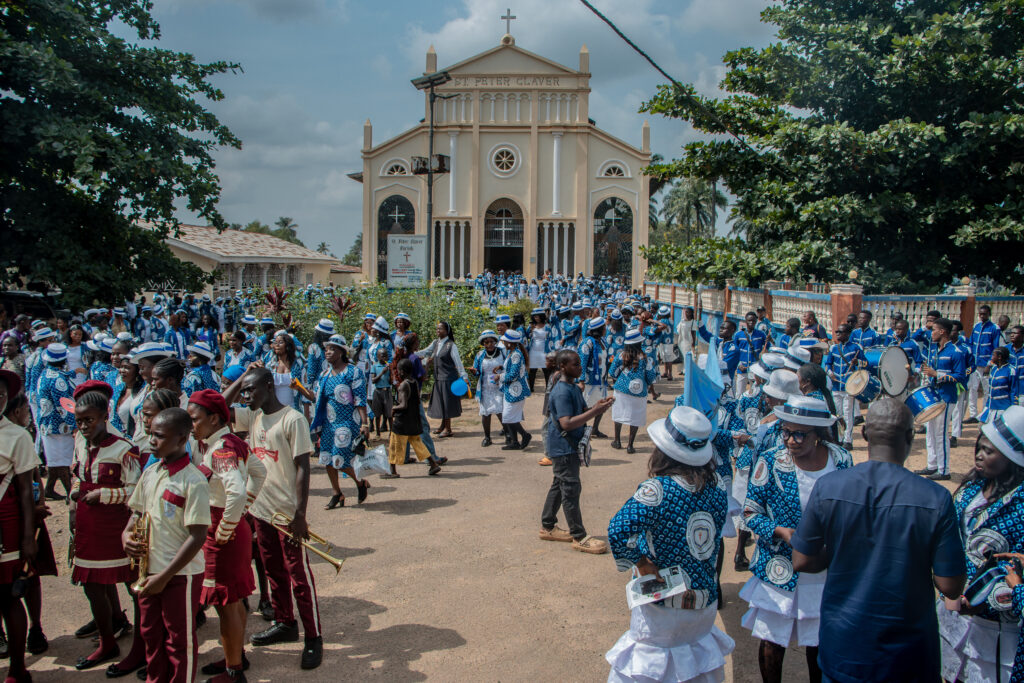
Currently, 27 sisters of the congregation work in Sierra Leone, eleven of them in the Lunsar area, attending five schools with more than 3,000 students. In addition, they run a small dispensary that treats more than 1,000 sick people a year.
“We are few and with limited resources, but we keep going,” concludes Sister Sandra. “We firmly believe that education is the basis for real social transformation, even if it is slow. That's why we are here.”.





 Español
  English
  Italiano
  Français
  Deutsch
  Polski
  简体中文
简体中文