


As pro-abortion campaigns gain ground across Europe, many Catholics have begun asking whether the continent’s pro-life movement still exists at grassroots level.
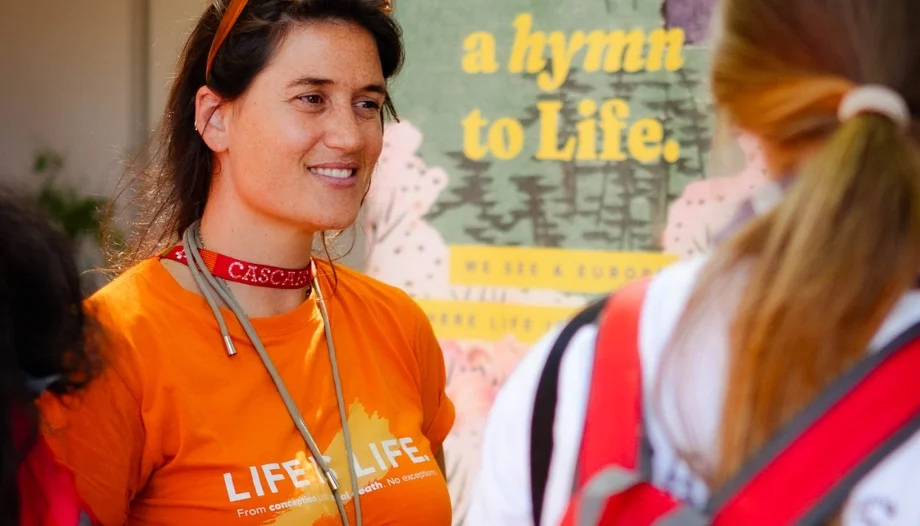
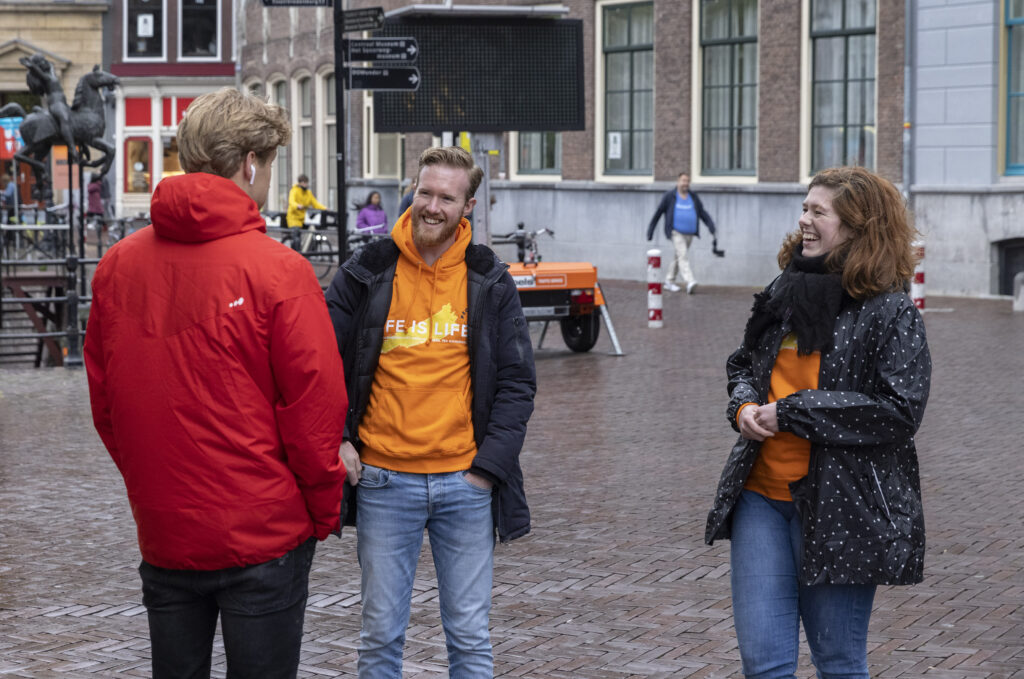
In that context Omnes interviewed Maria Czernin, the president of ProLife Europe, a student-focused organisation headquartered in Weißenhorn, Germany. They have spent the past six years building a campus-based model of pro-life outreach, focused on calm, one-to-one dialogue in parks, universities and public spaces. They also provide free online training that coach young people to make the case for life using ethical, philosophical and biological arguments rather than party politics.
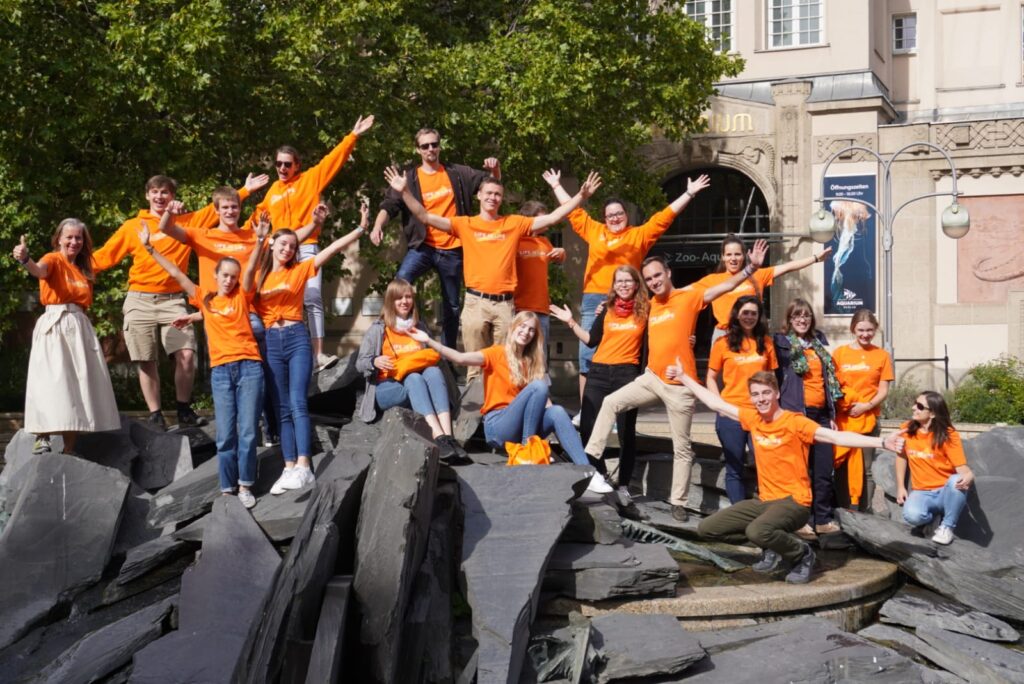
Now operating through local groups in Germany, Austria, the Netherlands, Portugal, Poland, Lithuania and Switzerland, the network says its aim is not to win protests but to form persuaders, equip local leaders and plant what it calls “seeds” for a long-lasting culture of life.
What led to the creation of Pro-Life Europe?
ProLife Europe grew out of a gradual realization rather than a single dramatic moment. While working in communication and culture, I became aware of how abortion was no longer treated as a tragedy, but as a neutral, even responsible, solution to a problem. What struck me most was not hostility toward life, but indifference toward vulnerability. Together with friends, we sensed that political arguments alone were insufficient, because the deeper issue was how people understood the human person. ProLife Europe was founded to work at that cultural level, where ideas, language and conscience are formed long before decisions are made. It began as a desire to resist resignation and to offer an alternative vision of responsibility, dignity and care.
Many people encounter the pro-life movement only through political headlines or social media arguments. What is something about this work that outsiders almost always misunderstand?
What is most often misunderstood is that pro-life work is not primarily about winning arguments or imposing rules. Much of this work is quiet, relational and slow. It unfolds in conversations with people wrestling with fear, pressure and conflicting values, while also offering resistance to ideologies of deadly indifference disguised as ‘freedom.’
Outsiders often assume certainty where there is actually a great deal of attentiveness to complexity and human suffering. Another misunderstanding is the belief that pro-life engagement ignores women’s realities. Many of the people we encounter are not ideologues, but thoughtful individuals who have simply never been invited to think differently. Our work is less about confrontation and more about reopening moral imagination.
Many people associate pro-life advocacy with slogans and confrontations. Can you describe a moment, a conversation, encounter, or experience that permanently changed how you understand what it means to defend life?
One defining moment for me was a long, quiet conversation with a student who did not initially agree with our position, but who stayed because she felt respected rather than judged. She told me she had always assumed abortion was simply what one does when life becomes unmanageable. What changed the conversation was not a slogan, but the realization that no one had ever asked her what kind of support would make life feel possible instead. That encounter clarified for me that defending life often means restoring the question before offering an answer. It taught me that moral clarity does not require moral pressure. Since then, I’ve understood pro-life work less as persuasion and more as presence. A lightful, steady one.
How do you personally sustain moral clarity without becoming hardened or cynical as the state of European politics moves closer towards being Pro-abortion rights?
For me, moral clarity comes from staying close to concrete human encounters rather than abstract debates. Cynicism grows when politics becomes the only lens through which reality is interpreted. I try to remain grounded in relationships, a simple life, prayer and silence, which prevent outrage from becoming my primary motivation. It is also essential to accept limits, understanding that we are responsible for faithfulness, not outcomes. When politics feels overwhelming, I return to the conviction that cultural change is generational and often invisible. This perspective allows clarity without bitterness and commitment without despair.
ProLife Europe operates across very different cultural contexts. What has surprised you most about how questions of life, family, and conscience are understood differently across European countries?
What has surprised me most is that resistance to pro-life dialogue does not always correlate with economic hardship or religious decline. In some highly secular and affluent contexts, questioning abortion is more socially taboo than in places with fewer resources. Interestingly, our outreach experience with students is often remarkably similar across European countries. I’ve noticed that students share similar moral intuitions, even when public language discourages expressing them, suggesting that lived moral intuitions have not been erased by public discourse. Institutional resistance often comes not from peers, but from administrative or ideological structures. This reveals a gap between official narratives and the quieter moral reasoning people still carry. Beneath cultural differences, there is a shared unease about reducing life to utility.
Europe is often described as “post-Christian,” yet moral language persists, especially around rights, autonomy, and justice. Do you think Europe is rejecting Christianity, or unconsciously living off its moral capital?
Europe is less consciously rejecting Christianity than it is continuing to live off its moral and intellectual capital. Concepts such as human dignity, equality and human rights are deeply rooted in a Christian understanding of the person as inherently valuable, not because of capacity or utility, but because of being. When these concepts are detached from their source, they gradually lose coherence. Human rights language remains, but it becomes increasingly selective, expanding autonomy while weakening responsibility and relational obligation. What we are witnessing is not the disappearance of morality, but a form of moral fragmentation. Europe still speaks a Christian moral language, including the language of human rights, but increasingly without the anthropology that once grounded it.
Advocacy can consume one’s identity. Outside of public life, what practices or habits help you remain rooted as a person rather than a cause?
I am very conscious of the need to remain a person before becoming a representative of an idea. Ordinary life — friendships, family, meals, walks, painting, writing, beauty and silence — plays a crucial role in that. Prayer and reflection help me remember that my worth is not tied to effectiveness or recognition. I also protect spaces where abortion and activism are not the subject at all. At the same time, my identity does not come from how others perceive or label me, but from what I believe myself to be; I’ve learned to accept that we cannot fully control our “own brand,” especially in a culture that is quick to categorize.
Even if I were to be misunderstood or reduced to a label I do not recognize, I can live with that if it means standing against injustice and ignorance, that matters more than public perception. Meditating and reflection help me remember that my worth is not tied to effectiveness, recognition, or approval. I also spend time with people who think differently from me and are concerned with entirely different questions, which I find deeply enriching and grounding. Creativity, reading and time present in nature keep my inner life from shrinking. These practices remind me that life is something to be received, not managed.
Critics sometimes say pro-life movements are oriented toward restriction rather than care. What is something you believe your critics misunderstand not about your arguments, but about your motivations?
What is often misunderstood is that our motivation does not come from a fear of freedom, but from concern about isolation. Defending life is not about controlling choices; it is about asking why so many people feel they have no real choice at all. At the heart of our work is the conviction that vulnerability is not a defect to be eliminated, but something profoundly human, even beautiful, that calls for tenderness, care and support. Critics often assume distance where there is, in reality, deep proximity to suffering. Much of pro-life work consists of listening, accompanying and connecting people to help that already exists.
Looking ahead twenty years, what would success look like to you, not politically, but humanly? What would you hope Europe has remembered, rediscovered or protected?
Humanly speaking, success would mean that Europe has rediscovered the courage to face vulnerability without outsourcing it to technical solutions. It would mean rediscovering beauty in fragility and simplicity, not as demagogy or a marketing strategy, but in reality.
I would hope that pregnancy is no longer experienced primarily as a threat, but as a shared responsibility of parents, extended family, and communities. Success would look like a culture where women are not left alone with impossible decisions, and where dependence is no longer seen as failure, but accepted as a human condition, perhaps even as a joy: how good it is that we need each other and can rely on one another. I would want our beloved, beautiful Europe to remember that human dignity does not depend on timing, capacity or choice. Even if political outcomes remain uncertain, protecting that moral memory would already be a victory.
Journalist and essayist born in the United Arab Emirates and based in Lithuania. He is a contributor to Omnes, EWTN News and CNA Deutsch.





 Español
  English
  Italiano
  Français
  Deutsch
  Polski
  简体中文
简体中文