


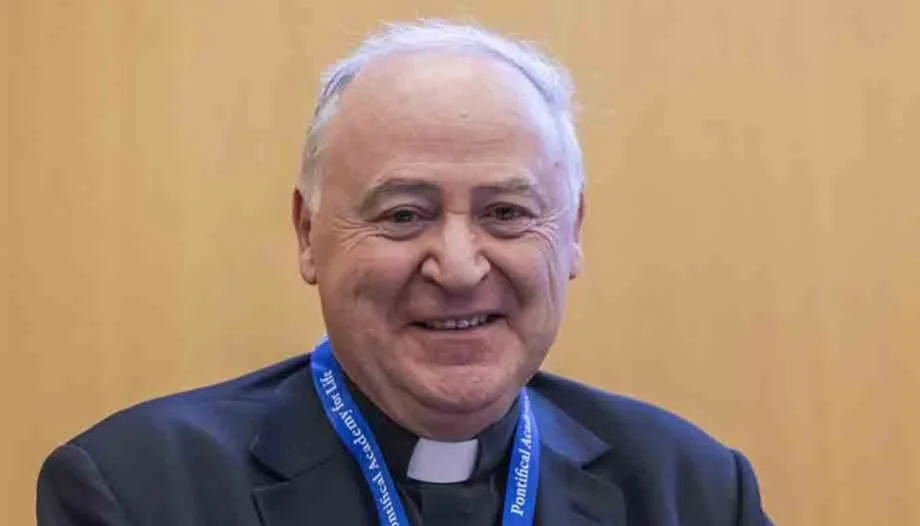
The Pontifical Academy for Life of the Holy See, with a specific mission to “form a culture of life”, is composed of a presidency, which is held by Monsignor Renzo Pegoraro as of May 28, 2025, a central office, and members, also called academics.
As of yesterday, with the approval of Pope Leo XIV, he will be able to have “collaborators”, called ”patrons” in the new Bylaws, and “sympathizers”, in order to carry out its tasks in defense and promotion of the value of human life and the dignity of the person”, as stated in its article 1.
“The Pontifical Academy for Life is composed of a Presidency, a Central Office and Members, also called Academicians, and Collaborators” (“Sostenitori”), states Article 2 when referring to the structure of the Academy for Life.
Collaborators: contribute with your support
Subsequently, Article 7 reads as follows:
“Art. 7 - Sponsors of the Academy.
a) The Collaborators of the Academy recognize its commitment to the institutional goals and contribute, with their support, to the realization of its activities and the achievement of its statutory objectives.
b) The sympathizers, after approval by the Secretary of State, are appointed by the Board of Directors for a period of three years and may be confirmed, by resolution of the same body, for a maximum of two more consecutive periods”.
New Bylaws
The provision with the new Statutes of the Pontifical Academy for Life has ten articles, and is signed by Pope Leo XIV on February 27, 2026. The Academy was erected by St. John Paul II with the Motu Proprio ‘Vitae Mysterium of February 11, 1994, as stipulated in the bylaws.
The above were approved and published by Pope Francis on October 18, 2016, almost ten years ago, and had eight articles.
Ambitious task
The specific mission of the Academy over which he presides Msgr. Pegoraro, The Foundation, according to the approved statutes, has three aspects in the field of the “defense and promotion of the value of human life and the dignity of the person”:
"a) study, from an interdisciplinary perspective, the problems relating to the promotion and defense of human life;
b) forming a culture of life -The Church's own character - through appropriate initiatives and always in full respect for the Magisterium of the Church;
c) inform clearly and promptly to those in charge of the Church, of the various institutions of biomedical sciences and socio-health organizations, of the mass media and of the civil community in general, of the most significant results of their own study and research activities (cf. Vitae Mysterium, 4)”.

Human life and dignity of the person
The Statutes then underline that “the task of the Academy is primarily scientific, for the promotion and defense of human life (cf. Vitae Mysterium, 4)”.
In particular, it “studies the various aspects of care for the dignity of the human person in the different stages of life, mutual respect between genders and generations, the defense of the dignity of every human being and the promotion of a quality of human life that integrates material and spiritual values, within the framework of an authentic “human ecology” that helps to restore the original balance of Creation between the human person and the whole universe (cf. Chirograph, August 15, 2016).”.
“Academics without discrimination”
In Article 6, the text states that “The Academicians are elected, without any religious discrimination, from among ecclesiastical, religious and lay personalities belonging to different nationalities, experts in disciplines related to human life (medicine, biological sciences, theology, philosophy, anthropology, law, sociology, etc.)”.
It then recalls that “the new Academicians are committed to promote and defend the principles relating to the value of life and the dignity of the human person, interpreted in accordance with the Magisterium of the Church”.






 Español
  English
  Italiano
  Français
  Deutsch
  Polski