


An extended version of this article can be found here.
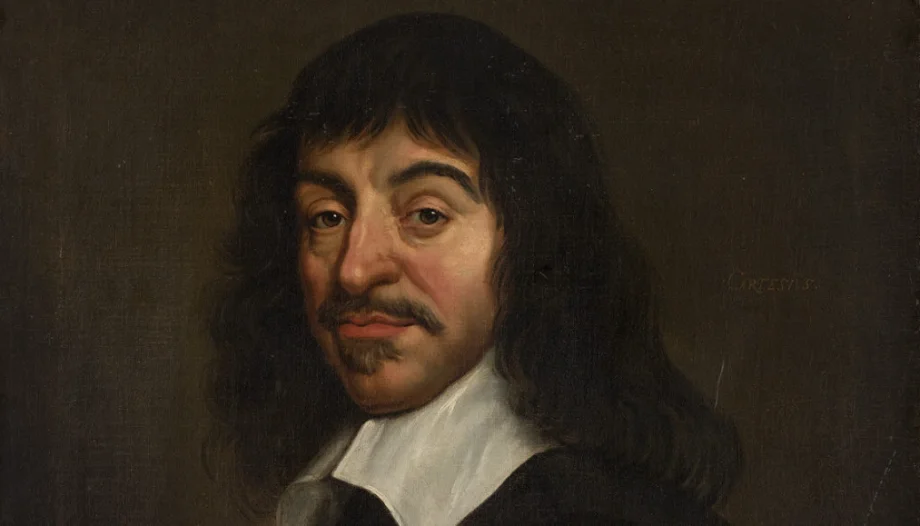
René Descartes was trained in mathematics, literature and classical philosophy at the Jesuits of La Flèche, graduated in law in Poitiers in 1616, and discovered, while quartered in Bavaria in the winter of 1619, his method and his vocation as a philosopher and mathematician. He settled in the Netherlands in 1622 and published in 1937 his Discours de la Méthode, which, together with its appendix Geometry, The founders of rationalist philosophy and analytical geometry. He died in Stockholm in 1650, after four months as preceptor advisor to Queen Christina of Sweden.
Exposure of the philosopher
It has been said that he who despises philosophy unknowingly follows a dead philosopher. This is especially true of the Discourse of the method and its parallel work Meditationes de Prima Philosophia for they inaugurate the philosophy of the Modern Age, from which contemporary philosophy is a logical consequence. Mentioning only the Method, We will use both works indistinctly for our exhibition.
Clear and different ideas
Of an autobiographical nature, Descartes begins his Speech expressing his discomfort at the weakness of his certainties in the important matters of life, in comparison with the absolute certainty in mathematics that he himself professed. He then conceived a method that would provide in philosophy the same certainty as in mathematics: He would admit only those truths of which it was not possible to conceive of any doubt, rejecting methodologically those in which such doubt was possible. And to proceed from some truths to others he would use rigorous reasoning that would be governed by the following precepts:
“It was the first, not to admit as true anything, as I did not know with evidence that it is so; that is, to avoid understanding in my judgments anything but what presented itself so clearly and distinctly to my spirit, that I had no occasion to doubt it.
The second is to divide each of the difficulties he examines into as many parts as possible and into as many as their best solution requires.
The third, to conduct my thoughts in an orderly manner, beginning with the simplest and easiest objects to know, and gradually ascending to the knowledge of the most complex, and even assuming an order among those that do not naturally precede each other.
And the last, to make in all such comprehensive accounts and such general reviews, that I could be sure of omitting nothing”.
Me, God and World
Eight years after conceiving this method, he considered himself experienced enough to implement it. The senses sometimes deceive me -for example, when I dream-, then we can doubt them as we doubt a friend who has once deceived us. Methodologically, then, I will not rely on any data from the senses: “Everything that I have hitherto admitted as absolutely true I have perceived from the senses or by the senses; I have discovered, however, that they deceive from time to time and it is wise never to trust those who have deceived us even once”.
But the ancients already said that there is nothing in the understanding that has not first been in the senses, since even the most abstract ideas begin with some sensory image, so Descartes, by dispensing with the data of the senses, is plunged into universal doubt:
“Finally I am forced to acknowledge that of all those things which I once judged to be true there is not one about which one cannot doubt, not out of inconsideration or lightness, but for strong and well-considered reasons. Therefore, no less must I refrain from giving faith to these thoughts than to those which are openly false, if I am to find anything true. Consequently, I will not act badly, as I trust, if by changing all my resolutions I deceive myself and consider them some time absolutely false and imaginary.”.
He has been left with no other certainty than that of the very fact that he thinks! And it is then when, in the midst of so much darkness, a light is kindled: There is a being of whom he has a clear and distinct idea, for it is impossible to conceive in him any doubt, since in the same doubt he would emerge as the one who doubts: himself! I THINK, THEREFORE I AM.
“I do not now admit anything that is not necessarily true; I am therefore, in short, a thing that thinks, that is, a mind, a soul, an intellect, or a reason.”. But this first being conceived, this first light kindled in the midst of the universal darkness, will spread like the light in the night of the Christian Easter, since the metaphysical principles he has learned remain intact, and among them, that of causality. If I am not the cause of myself, but if I have a cause other than myself, this also has a cause other than myself, and so on and so forth - I recall from his training in Thomistic philosophy - until he necessarily arrives at a being Sui Cause , cause of itself. Two ideas, then, already immune to doubt: The I, as a thing that thinks -res cogitans- and God, as the being Sui Cause.
Moreover, the desire for goodness and nobility that is in me cannot be caused by me - neither as good nor as noble - for the effect cannot be superior to the cause (another metaphysical principle) but from him from whom my being proceeds, in which the goodness of God concludes. Thus it cannot be that he has given me the faculty of knowing in order to deceive me, therefore my knowledge only deceives me when I misuse it, taking as evident that which it presents to me as susceptible of doubt, such is the datum of the senses. But I cannot be deceived in its mathematical activity, since it is of such clarity that no doubt can be conceived in it. And mathematical is the geometry with which I study that quality of corporeal beings which is extension. He thus recovers the material reality that surrounds him -including his own body- to the extent that he conceives it as extension.
In this way, he has arrived from universal doubt to the reality of three clear and distinct ideas: the res cogitans, the Causa Sui, and the Res Extensa. I, God, world, the three perennial themes of philosophy.
Philosophical Criticism
The critique will be standard but will raise one of the main questions in philosophy, for which we will rehearse a non-standard answer.
Real me or thought me?
Once the eyes are closed to all reality, immersed in a world of pure thought, the I that emerges in doubt is not the I that thinks, but the I that is thought. Can a chain be hung on a nail painted on the wall? Yes, it can be hung, if the chain is also painted on the wall (Vernaux). Thus, the God and the World that Descartes hangs on the self emerged from doubt, are a thought God and a thought World, not a real one. And the fact is that reality, once we doubt it, disappears, never to return. He who doubts his own faculty of knowing, will never get out of doubt, and will remain with the reality of his thought alone. The logical derivation implicit in Cartesian thought is a God and a World reduced to an idea. This dilution of being into idea will be inexorably developed by history until it becomes the protagonist of Hegelian panlogism, which will identify Being with the Idea. And it will be the dilution of existence in the essence that will end up diluting “this man”, the concrete man, in “the man”, in the abstract idea or humanity. This is how the individual will be dissolved in the collectivity, the foundation of the social philosophies of the nineteenth century that inspired the political collectivisms of the twentieth century, Marxist and National Socialist.
In fact, this identification of “existence” and “essence” has its medieval gestation: Very soon after Thomas distinguished them forcefully, that is, distinguished between “who” I am (Ignatius Sols, a concrete existence) from “what I am” (a man, the abstract idea in me), Blessed Duns Scotus put an essence in every existing being. This is very dangerous, because counting essences by existences would lead centuries later to the Jesuit Francisco Suárez, in his Disputationes philosophiae, to no longer admit any real distinction between essence and existence.
René Descartes was formed in this “essentialist” philosophy as a student at the Jesuit school of La Flèche. Such identification supposes an implicit pantheism, for only in God is His essence His existence, only He exists by essence, He exists necessarily. He is the only Necessary Being. And this is how he responded to Moses“ ”who are you“ with ”what is“ with his essence: ”I am the one who is". His essence is Being.
For this reason, that logical derivation of the Cartesian starting point which is Hegelian panlogism will in fact be pantheism, and a pantheism that was paradoxically implicit in the philosophy of a man as devout as René Descartes: if from universal doubt, with eyes closed, I pretend to recover the world, to deduce it without having observed it, it is that I hold it as necessary reality, I hold it as God, I hold it as the Necessary Being.
But there was a philosopher who in only twenty years deduced what the history of philosophy would take two hundred years to deduce: gathering in a few axioms the essentialist conceptions of Cartesian philosophy (in his Ethica more geometrico demonstrata, Spinoza, or demonstrated in the manner of Euclid's axiomatic geometry), arrived in only three pages of pure metaphysics -Baruch Spinoza is the only true metaphysician of his century and the next- at the logical conclusion of pantheism in his proposition XIV: “No substance can be given or conceived outside of God”. But he will be the great absentee in this list of authors, because his “impeccable” reasonings from such a “mistaken" and "wrong" point of view will be the only true metaphysician of his century and the following one." starting point - he was wrong on all counts, Polo used to say - cannot be summarized without being betrayed.
Not intellectual choice, but method error.
I was always taught as a student, and in very different philosophical environments, that we either start from the Res Sunt, We can either start from the doubt that things exist - Plato, Aristotle, St. Thomas - as they are presented to our understanding by our faculty of knowing, or we can start from the doubt of their reliability, submitting it to a critique that has as its starting point the very fact, undeniable, that we think. Either we start from being, as did the Greeks and medieval philosophy, or we start from thinking, as did Descartes and the critical philosophy that his method inaugurated. Both starting points have been presented to us as irreducible, and neither one can lead to the other, nor can it be shown to be erroneous, leaving, therefore, both realistic and critical starting points as an option. In the work Metaphysics of intellectual choice by an author close to me, Carlos Cardona, this was presented as a moral option, after we have seen its inexorable consequences implemented historically.
The already departed Leonardo Polo resisted the idea that the most profound philosophical conception of being, the one that will condition all others, should be reduced to a mere option! And in his Theory of Knowledge Course, volume 2 -perhaps his main philosophical work- takes sides without taking sides: what is primarily present in knowledge is the idea, but what is known in it is the idea. without any mediation is the being.
Well, the argumentative point of view of this series of articles is that the Cartesian starting point - and with it the whole of modern philosophy, of which contemporary philosophy is a logical derivation - can be criticized because it can be presented as an “error of method”. The mathematician smells mathematics from a distance, and in the Speech sees in the attempt to bring to philosophy the method proper to mathematics, as all modern philosophy will emulate the method of the sciences.
This is recognized by Descartes himself who in personal letters refers to his own as a “philosophie mathematique”demonstrating that God exists just as one demonstrates that the angles of the triangle add up to two right angles. Whoever, with minimal mathematical training, reads the steps of the method described above recognizes the steps of a mathematical demonstration, each of them by itself “evident”, but demonstrating all together a truth that is not evident, but to which we arrive from other truths that were already known to us.
And his demand for clear and distinct ideas in philosophy comes from the fact that such are the ideas in mathematics. The mathematician knows clearly and distinctly the ideas with which he works, because he himself has constructed them by means of his definitions, so that he can reason about them clearly and distinctly, with a certainty in which no doubt can be conceived. But to demand in philosophy clear and distinct ideas, such as is possible, and demandable and even characteristic, in the mathematical sciences and in the mathematized sciences is to cancel wisdom at its very origin. It is an important error of method, characteristic of modern philosophy, and which has its origin - precisely - in a book entitled Discourse on Method. If Descartes did not dare or did not know how to draw the consequences of this erroneous starting point -Spinoza did know how to do it- the philosophy after Descartes will dare to do it, which will be more inspired by his method, or by his way of philosophizing, than by his own content: his peculiar demonstration of the existence of God and of the existence of the world, as if the latter also needed demonstration.
Let us say it: I do not know how to define the dignity of man, I do not have a clear and distinct idea of it, but I know well that for the dignity of a man I cannot make him my slave. This requirement of clear and distinct ideas, only possible in the sciences, we will see later in the English empiricists, who will understand as idea - literally “what is seen” in Greek - the sensory impressions that I perceive in a clear and distinct way. And if there is modern rationalist and empiricist philosophy it is precisely because there is theoretical and experimental science. And that common gesture in modern philosophy - Descartes, Spinoza, Locke, Hume, Kant say it explicitly - emulating the clarity of the scientific method is a clear “error of method” because human wisdom does not proceed in this way, and an error that has historically cancelled it by demanding from it clear ideas that philosophy neither has nor needs to have.
Complutense University of Madrid. SCS-Spain.






 Español
  English
  Italiano
  Français
  Deutsch
  Polski