



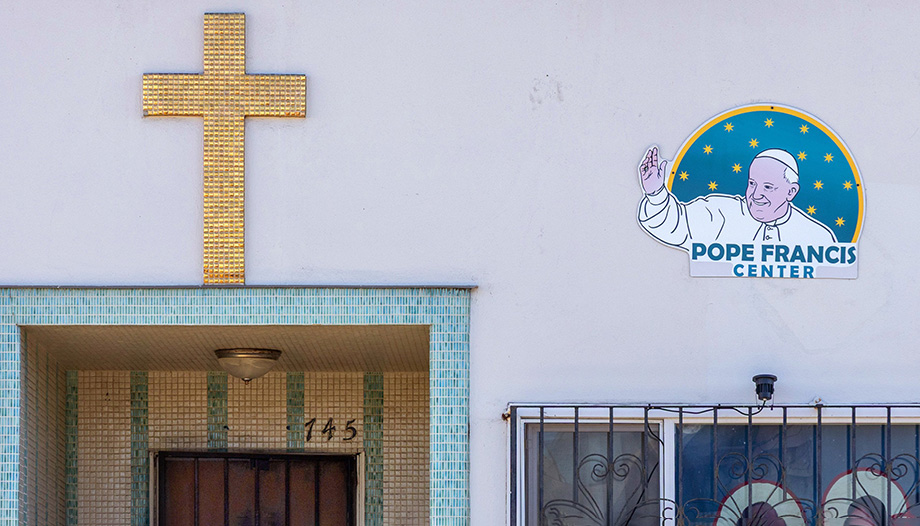
In previous articles in this section I have referred to the U.S. experience, which has a culminating point in the 1992 Pastoral Letter of the Bishops titled Stewardship: Response of the Disciples. Whenever I talk about these good practices I am met with frowns and reluctance because “.“we already know that the culture and the tax deductions for donations in that country are very different from those in Europe, Latin America and the rest of the world.”. These “objectors” are absolutely right and that is why I will try to point out those practices that can be transplanted independently of that culture and its fiscal regime.
Creation of a group of the faithful. I have already mentioned the importance of this small group that encourages and inspires co-responsibility in the whole parish. Its mission is basic because this spirituality, this way of being grateful disciples, is not easy to emerge without the commitment and dedication of some of the faithful who offer their time and qualities to guide the parish.
Training for the faithful and for members of the stewardship group. Once this group of the faithful has been formed, it is important to take special care in its formation. There are numerous materials on the web, and some parishes that have been working for many years can be a good guide to recommend texts and materials that will help us to know better everything that underlies co-responsibility, its biblical roots, its theological foundation and its pastoral fruitfulness.
Homilies that address and deepen co-responsibility. Co-responsibility cannot be associated in the imagination of the faithful with the moments when their financial collaboration is requested. That would be a real burden for their commitment and dedication. For this reason, it would be very good if throughout the year homilies made reference to stewardship and thanksgiving to God for the gifts and blessings we have received from his generosity.
Testimonies from lay people on what stewardship has meant in their lives. It has proven to be one of the most helpful things for parish communities to hear firsthand from some lay people about the impact that stewardship has had on their daily lives. Specifically, how this spirituality has helped them to recognize the gifts and talents they have received from God and how they have learned to put them at the service of the Church's mission with joy and gratitude.
Annual Stewardship Plan. To prevent stewardship from being a matter associated with annual campaigns or certain urgent financial needs, it is very useful to have a series of activities throughout the year that help the faithful discover the gifts they have received and inspire them to become grateful disciples.
Annual co-responsibility report. It is very encouraging for the faithful to see how other faithful are already putting their talents, time and prayer at the service of the parish. Such a report is a source of inspiration about possibilities for involvement in the life of the parish, beyond its walls, financial needs and official activities.
Accountability and transparency. All experts agree that accountability and transparency, not only in financial matters, are key to inspiring the faithful and getting them to adopt a stewardship lifestyle. The ways to achieve this are varied: creating open forums to suggest and comment on the parish budget and balance sheet, reports in the parish bulletin, data breakdowns on the parish website, personalized reports sent by mail, and communication of results at Sunday Masses. When several of these accountability channels are combined, their effectiveness is multiplied exponentially.
These good practices are already working in parish communities outside the United States. It is true that there they have a well-established tradition and a way of living co-responsibility that is very unfocused on the economic aspect. I think that this is the main challenge for parishes to adapt this way of life that has given so much fruit in the service of evangelization. Creating grateful communities should not be a local privilege of any Church. The experiences that are being consolidated in other countries such as the Philippines or Spain augur a future of joyful and grateful commitment of the faithful who rediscover their irreplaceable role in the building of the Kingdom.
Professor of Canon Property Law, University of Navarra, Spain






 Español
  English
  Italiano
  Français
  Deutsch
  Polski
  简体中文
简体中文