


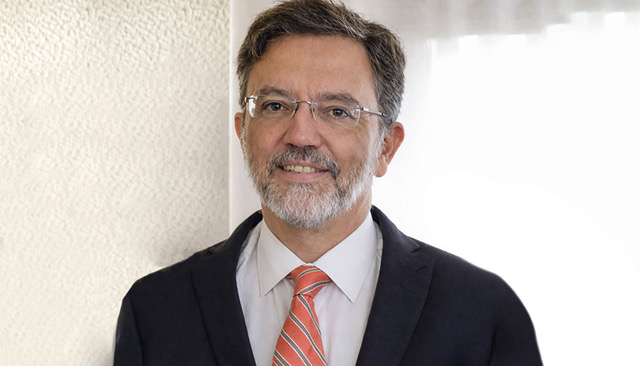
In July 2025, the Iuris Naturalis Societaswas founded, an international association of jurists and law professors whose goal is to promote the legal and political relevance of natural law. It currently has nearly one hundred members from a wide variety of countries. We interviewed Diego Poole, one of these scholars, who is based in Spain
Why is natural law necessary today?
ーNatural law is as necessary as the sun or the law of gravity. Its validity does not depend on our recognition of it. Natural law is inexorably fulfilled, just as the sun rises every morning. Perhaps there is some politician so ambitious that he intends to repeal it. As if he wanted to ban… the rain.
If we want to align ourselves with reality and walk safely through this world, we must know that law and respect it. Natural law, in its broadest sense, is the law of nature. And nature is that which man has not created—which is almost everything around us, including ourselves, for we too are nature.
We see that the world has an order, that things do not act at random, but according to a prior intention. Things that lack knowledge do not tend toward their end unless directed by someone with knowledge and intelligence, just as an arrow does not fly toward its target unless guided by the archer. Therefore, we can say that all of nature is like “God’s artifact.” That meaning, purpose, or raison d’être, imprinted on nature by its Creator, is expressed in the law of nature.
It is true that, since St. Augustine, tradition has called the law governing the cosmos the “eternal law,” and reserves the name “natural law” for man’s participation in that law. The irrational beings (animals, plants, the sea, the heavens...), being directly moved by God through the law of nature (or “eternal law”), participate “passively” in this order. Human beings, on the other hand, participate “actively and responsibly” in this law, which they come to know by knowing themselves and by contemplating the world around them.
Man is the only creature in the material world who has the capacity not only to understand the law that governs him, but also to reject or accept it. This acceptance is called “participation” in the proper sense, because it consists not only in saying yes to God’s plan for man and the world, but also in actively cooperating with God in the governance of nature (of oneself and of the entire world), discovering its demands and enacting them. For this reason, for St. Thomas, the eternal law is extended into natural law, which is what man discovers when he becomes a participant in God’s plan. Natural law is a real “participation” in God’s governance of the world; a participation in which man becomes, in a certain sense, a co-legislator with God in the course of the universe.
Is iusnaturalism compatible with scientific development?
Natural law theory embraces the scientific paradigm of “intelligent design,” according to which nature expresses and responds to a creative rationality, because it is evident that the world has an order, that things do not operate by chance, but in accordance with a prior intention. A paradigm that is not merely a matter for philosophers or theologians, but also for scientists, such as Max Planck (Nobel Prize in Physics, 1918), Albert Einstein (Nobel Prize in Physics, 1921), Werner Heisenberg (Nobel Prize in Physics, 1932), Arthur Compton (Nobel Prize in Physics, 1927), Brian Josephson (Nobel Prize in Physics, 1973), and many more—and the list is growing. By the way, there is a wonderful recent book that explains this very well, titled “God, Science, and the Evidence,” written by two Frenchmen:God, science, evidence”written by two Frenchmen: Michel-Yves Bolloré and Olivier Bonnassies, already translated into several languages. In this book there are many quotations from world-class scientists concerning the intelligent design of the universe by God. Einstein said that «serious scientists are the only men who are deeply religious» and that «chance is God walking incognito».
Let’s be clear: acceptance of natural law is intimately linked to the recognition of God. There is no law without a lawgiver. There are only two possibilities: chance or causality. But chance is not binding on anyone. To accept that nature is the result of chance or random processes would imply the meaninglessness and absurdity of the world. This was, among others, the stance of existentialism, which, by denying the existence of God, concluded, consistently, that nature has no more meaning than whatever meaning each person chooses to give it.
The denial of nature’s inherent meaning and, therefore, of natural law is the basic premise of gender philosophy, adopted as state philosophy by most Western countries.
The denial of nature’s inherent meaning—and, therefore, of natural law—is the basic premise of gender philosophy, adopted as state philosophy by many Western countries. It is no coincidence that one of the precursors of gender ideology (Simone de Beauvoir) was the lover of Jean-Paul Sartre, the precursor of existentialism.
Is the natural law philosophy you advocate a utopia in a secularized and relativist world?
Quite the contrary. It is a commitment to realism. To respect nature and its laws is to recognize the consistency of the world, because things are defined by their ends. Things do not first exist, and then become good or bad. For example, a plasticine hammer is not strictly speaking a hammer. It is not even a “bad” hammer. It is simply not a hammer, because it does not in the slightest fulfill the purpose of a hammer. Things are, and are good or bad, by reference to the end for which they were created. This has many, many consequences. For example, natural realities, including human beings, progress or corrupt to the extent that they approach or move away from their proper end. If there were no meaning or purpose, we could not speak of “better” or “worse,” nor of “progress” or “corruption” (neither physical nor moral). All evolution would be nothing more than change or movement.
Incidentally, we could not speak of beauty or ugliness either, because beautiful things are those that realize their form and figure (beauty comes from “formosa,” meaning “having form”); therefore, deformed beings are also ugly, precisely because they lack the form that corresponds to them according to their nature. Natural law theory also seeks to explain why what is natural is good and beautiful.
People are not outraged because the law is violated, but because a person is violated, who exists before and above the law.
Positive law seeks to regulate human coexistence, but it does not define what is natural. The law should not define man or his natural communities, such as the family. The law proceeds from a reality that is already defined, that precedes it and binds it. If the law contradicts nature, it contradicts reality. It is not we who invent good and evil, and certainly not politicians. People are not outraged because the law is violated, but because a person is violated—a person who exists before and above the positive law.
The rejection of natural law does not stem so much from positivism (which, incidentally, means very different things) as from ethical relativism. And relativism is the expression of the world’s meaninglessness. Natural law, by contrast, is an invitation to common sense, realism, and respect for reality.
What activities does the Iuris Naturalis Societas promote?
ーI answer this question in a video we made to introduce the association
The first objective of the Association is to disseminate initiatives, publications and events related to iusnaturalism, promoted by professors and jurists from all over the world. Likewise, the Association seeks to foster mutual knowledge among its members, so as to give rise to common projects, joint publications and normative proposals.
The Association’s primary objective is to disseminate initiatives, publications, and events related to natural law, promoted by professors and jurists from around the world.
The second objective is to make ourselves known to the international academic community as a broad collective of researchers who defend natural law.
The third objective is to offer high-quality intellectual resources: books, articles, tutorials, videos, and teaching materials of all kinds—whether produced by us or by others—that highlight the legal and political relevance of natural law.
A fourth objective is to organize and publicize national and international conferences and workshops on natural law. In the short time we have been active, we have already organized several events, which can be viewed on our website.
How does the Iuris Naturalis Societas’s view of human dignity differ from the modern narrative of human rights that we see in international organizations?
It is said that legal positivism is already a thing of the past, which is quite true, but it is trying to return to the realm of legal science disguised as a grandmother, like the wolf in the fairy tale. And what is that disguise? The relativist rhetoric of human rights—rights that have been stripped of their essence and reduced to collective interests. We are now witnessing a crisis in the understanding of human rights, because when the normative force of human nature is denied, that force is grounded in mere self-interest. Now, for example, people are demanding the human right to euthanasia, to abortion, to sex reassignment… Soon, with the Therians knocking at the door, it will be the right to change species, or to be treated like a… traffic light. Without going any further, the right to sex with children is gradually gaining ground, with the age of sexual consent being lowered more and more. I am not exaggerating; there is a website www.nambla.orgthat attempts to “intellectually” justify pedophilia.
We are currently witnessing a crisis in the understanding of human rights, because when the normative force of human nature is denied, that force is grounded in mere self-interest.
If human rights are merely manifestations of the capacity for self-control, in exercising that capacity, one could “renounce” all one’s rights. This renunciation is presented as a “different way” of exercising the right. For example, someone who renounces life is not renouncing the “right to life,” but rather exercising their right to “dispose of their life,” since the essence of every right would be freedom as pure self-determination.
If, as liberal thought argues, rights are manifestations of each individual’s capacity for self-determination, the priority of one right over another will be determined by each person’s preferences. There will be no objective criterion that transcends subjective preferences; there will be no criterion that serves as a measure to determine the prevalence of one right over another. We see how today certain rights “come into conflict” with one another: the right to life and the right to abortion; the right to freedom of expression and the right to religious freedom; the right to one’s own culture and the right to asylum; the right to mobility and the right to health... And when we speak of “balancing” rights—which our Constitutional Court frequently does—we will not really know how they are “balanced,” measured, or compared.
Universality in a pluralistic society: How do you propose to defend the existence of “universal” and “permanent” truths in a society that tends toward ethical relativism?
ーThe question is based on the assumption that universality is incompatible with pluralism, but this is not necessarily the case. First, we must define what we mean by pluralism. From a realist perspective, pluralism is not defined as the coexistence of opinions that are equally valid simply because they are held by different people, but rather as the coexistence of diverse ways of life, cultures, and traditions within a common framework of truth and the good. I do not believe that the problem can be solved by rules of rational dialogue alone: what is needed is the common acceptance of a substantive good that enables dialogue. A pluralistic community can only exist if there is a shared minimum that makes coexistence possible. Aristotle said that one can engage in dialogue about many things, but with someone who argues that one should strike one’s own mother, there is no debate, nor any pluralism that justifies respect for such an opinion. If we form a community, it is precisely because we have something in common that we wish to preserve.
I do not believe that the problem can be solved by rules of rational dialogue alone: what is needed is the common acceptance of a substantive good that enables dialogue.
Relativism is often presented as a guarantee of freedom and respect for diversity, but in practice it tends to undermine freedom and respect. If all values are reduced to subjective preferences, any rational criterion for resolving conflicts of preference disappears, and the result is the imposition of the strongest views, and sooner or later, the breakdown of coexistence.
If a teacher is explaining geography and a student raises their hand to say that the teacher is “marginalizing” the group of flat-Earth students by not also providing an explanation that respects their “sensibilities” as an alternative perspective, the teacher will have no choice but to explain that there is no alternative narrative for that group, because the Earth is round, not flat. Academic discourse is measured by its truthfulness, not by its political correctness.
Natural Law has lost ground in university curricula. What strategies do you propose to encourage future lawyers to reconsider these philosophical foundations?
ーWe bear a great responsibility, since without knowledge of natural law, we will not be in a position to judge positive law. In most courses in the program, students learn to judge “according to positive law.” However, with a solid grounding in the philosophy of law, they will also be able to judge positive law. Without knowledge of the philosophy of law, jurists become mere instruments in the service of power and dominant interests, but not of justice.
The first strategy to restore the prominence of natural law is very simple: explain natural law, its justification, and the danger of ignoring it
The first strategy to restore the central role of natural law is very simple: explain natural law, its justification, and the danger of ignoring it. When professors of Philosophy of Law limit themselves to explaining only the theory of interpretation and argumentation, legal informatics, or bioethics, without saying anything about justice or natural law, they are devaluing the subject. And when the subject is devalued and curricula are scaled back, the first things to be eliminated are the devalued subjects.







 Español
  English
  Italiano
  Français
  Deutsch
  Polski
  简体中文
简体中文