



On March 17, 2026, in the Pontifical University of the Holy Cross In Rome, a congress was held that brought together four Roman pontifical universities to reflect on the challenges that the digital context poses to evangelization and to those who dedicate themselves to the proclamation of the Gospel in this ecosystem of information and relationships. A theme that is certainly not new, but which in recent months has once again come to the center of ecclesial attention thanks also to the Synod on Synodality, which has recognized this field as an authentic “mission environment.”.
The Roman colloquium was attended by the Gregorian, Salesian, Lateran and Santa Croce Universities. It focused on the theme of formation, particularly for priests and consecrated persons, also because many of the protagonists of the ecclesial presence on social networks belong to the clergy or consecrated life. The discussion focused on four key areas: pastoral, spiritual, human and intellectual.
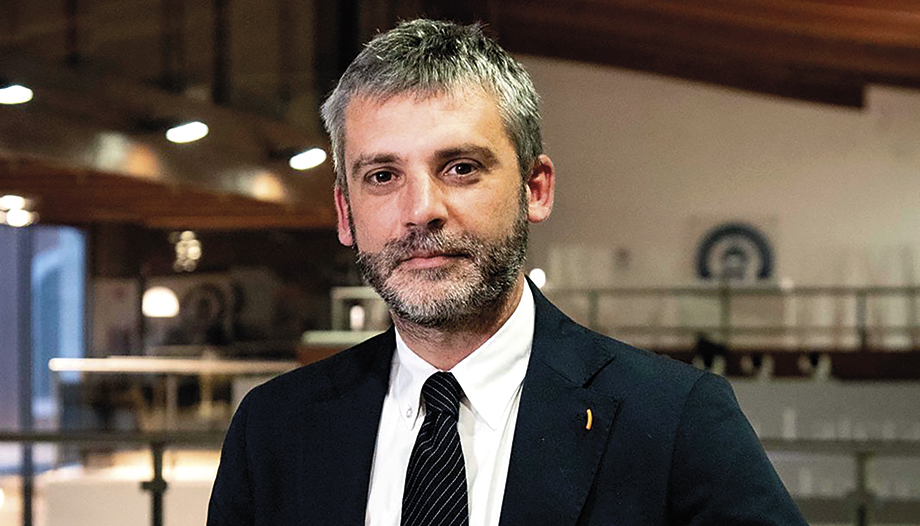
The socio-pastoral reflection was entrusted to Professor Massimiliano Padula, Professor of Communication Sciences at the Pontifical Lateran University. A sociologist of communication, in his studies he deals with the relationship between the media and pastoral practices, with particular attention to the processes of transformation in contemporary society and in ecclesial institutions.
In this interview with Omnes, he offers further food for thought on the need to relativize the adjective “digital” in order to bring out the properly missionary dimension of Christian presence in these “environments”.
What is your assessment of the report? The mission in the digital environment, The report, prepared in the wake of the Synod of Bishops?
-The document represents a significant contribution, because it has initiated a debate on a complex and often misunderstood topic. One of the most relevant elements is the starting point: the idea that the digital environment is not just a set of tools, but a true and proper culture. This approach is an indispensable presupposition for a theological-pastoral reflection suited to the present and for imagining new forms of mission.
However, a certain ambivalence persists: on the one hand, the cultural nature of the digital is affirmed; on the other, there is still a tendency to configure it as an area to be organized and regulated by means of specific institutional instruments. Proposals concerning the creation of new functions, the recognition of a possible specific ministry or the adaptation of ecclesial structures respond to understandable needs, but run the risk of shifting pastoral action towards a predominantly organizational logic. The principle recalled by Pope Francis in Evangelii Gaudium, according to which “time is superior to space”, On the contrary, it invites us to privilege processes over time, capable of generating transformation, rather than the construction of immediately defined structures.
How then to interpret the relationship between structures and processes in digital pastoral care?
-The question does not refer to an absolute opposition between structure and process, but to their correct balance. However, an overemphasis on the formalization of pastoral care in the digital realm risks producing counterproductive effects, such as self-referential isolation and the reduction of the mission to a specialized practice.
The digital dimension, as a dimension already integrated into daily experience, does not require a rigid institutional separation, but rather a generalized integration into ordinary ecclesial practices.
What does it tell us about the phenomenon of the so-called “God influencers”?
-The emergence of figures that use digital platforms for evangelistic purposes must be placed within a broader participatory dynamic.
The generalized production of content has favored the development of forms of ecclesial action from below, which can be traced back to a paradigm that I define as “grassroots pastoral care”, that is, a pastoral care that is born from below. These are forms of ecclesial action that arise from the participatory dynamics of digital networks, in which anyone can become an active subject of evangelization, helping to generate processes that are not centered exclusively on institutional structures. These dynamics, which sociologist Heidi Campbell has described as “religion in network”represents a great opportunity. But it also carries with it important critical aspects: the risk of excessive personalization, the transformation of testimony into spectacle, and the reduction of theological content to a simplified narrative.
What strategies do you consider effective in addressing these difficulties?
-The decisive element is training, understood in an integral sense. It is not simply a matter of acquiring technical skills, but of developing a critical conscience and human, spiritual and intellectual maturity. In this perspective, it is necessary to invest in formative itineraries capable of integrating the theological dimension and communicative competence. The quality of pastoral action, in fact, depends on the balance between depth of content and expressive effectiveness.
A theologically correct communication, but lacking in communicative adequacy, is ineffective; in the same way that a formally effective communication, but lacking doctrinal roots, is fragile.
What characteristics should the training of digital missionaries have that are appropriate to the contemporary context?
-An adequate formation must focus on people rather than on instruments. This implies the ability to deal critically with the complexity of contemporaneity, characterized by pluralism, conflicts and profound transformations in the languages and forms of life in society. Moreover, it must take into account the transformations affecting fundamental realities such as the family, the younger generations and the aging of the population, while also recognizing new forms of social vulnerability.
In this context, the ordained minister and, more generally, every pastoral agent is called to develop an interpretative competence capable of translating the Christian message in a horizon marked by uncertainty and fragmentation.
Only by integrating theological rootedness and contextual awareness will it be possible to avoid disincarnated forms of mission and remain faithful to the nature of a Church which, as Joseph Ratzinger wrote, is first and foremost a community of love and a community of persons.
If in recent times the Church increasingly recognizes “digital” as an area of evangelization, why does it consider it necessary to relativize this adjective?
-The tendency to qualify social phenomena linguistically responds to a twofold need: on the one hand, to make a given area of experience comprehensible; on the other, to attribute to it a precise interpretative key, whether positive, negative or neutral. From this perspective, the term “digital”, originally descriptive, has progressively acquired a qualifying function, to the point of becoming an attribute that extends to multiple dimensions of social life: we speak, for example, of “digital lives”, “digital education”, “digital church”.
However, in the current context, the digital tends to lose its distinctive function. Not so much because its instruments, times, spaces, logics and risks are fully understood, but because it has already been internalized as an ordinary component of social and daily life. According to the Digital 2026 Global Overview Report, In other words, digital can no longer be seen as a separate or merely technological dimension, but must be interpreted as an increasingly invisible and normalized structural requirement of social life. In other words, digital can no longer be seen as a separate or merely technological dimension, but must be interpreted as a structural requirement of social life, increasingly invisible and normalized. This is why “digital” is no longer synonymous with “technological”: it has become a background condition of human and social experience.
In light of this perspective, how do you interpret expressions such as “digital mission” or “digital synod”?
-I believe that these expressions should be reinterpreted starting from their deepest meaning. Missiological and synodality are not defined according to the technological context in which they are expressed, but in relation to their theological and ecclesiological nature. The adjective “digital”, in this sense, runs the risk of introducing an improper distinction, as if there were a mission “other” than the ecclesial one in the strict sense. On the contrary, missionary action and the synodal journey are configured as processes that traverse the various spheres of human experience, without being exhausted in a specific context.
Rather than insisting on these labels, perhaps it would be better to bring them back to their fundamental dimension: the mission and the synod as forms of ecclesial co-responsibility, oriented to the concrete care of people and their integral promotion.






 Español
  English
  Italiano
  Français
  Deutsch
  Polski
  简体中文
简体中文