


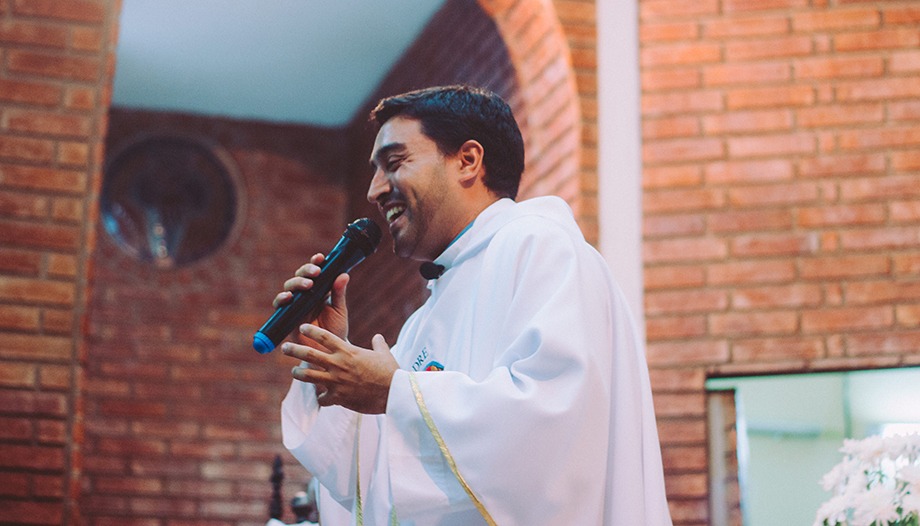
The Dicastery for Divine Worship and the Discipline of the Sacraments has informed the president of the German Bishops« Conference, Bishop Dr. Heiner Wilmer, SCJ, that »it is not possible to grant the dispensation requested on March 30, 2026, to allow, under exceptional circumstances, a duly commissioned lay person to deliver a homily during the celebration of the Eucharist.”.
The German Bishops« Conference had submitted its request, citing specific pastoral needs arising from the current ecclesial context in the country. The Dicastery acknowledges and appreciates »the pastoral concerns that inspired the request,” but concludes that it cannot be granted for reasons that go beyond ordinary canonical discipline.
The Homily as an Integral Part of the Liturgy
The Vatican’s response is clear in its underlying reasoning: «Reserving the homily for the priest or deacon is not merely a disciplinary rule, but derives from the very nature of the liturgy.» Therefore, it cannot be waived by means of an indult.
The document states that «the homily is an integral part of the Liturgy of the Word, is intrinsically linked to the proclamation of the Gospel, and constitutes an exercise of the munus docendi »entrusted to ministers ordained through the sacrament of Holy Orders.« Consequently, »the proclamation of the Word in the liturgical celebration is inseparable from the mission received sacramentally and from the unity that binds the Word and the Sacrament in the Eucharistic celebration.".
In addition to rejecting the request, the letter emphasizes the importance of clergy formation as a means of addressing pastoral challenges: the Dicastery highlights «the importance of promoting the ongoing formation of ordained ministers, so that the homily may fully express its pastoral and spiritual effectiveness.».
Wide-ranging opportunities for the laity outside the Eucharist
The Dicastery concludes its statement by noting that there are numerous alternatives within the current canonical framework: «The Church’s current discipline already provides for numerous forms of proclaiming the Word and preaching that can be entrusted to the lay faithful, apart from the homily and the celebration of the Eucharist, in accordance with Canon Law and the specific nature of these different forms of proclaiming the Gospel.».
The decision comes at a time of intense debate within the German Church, which is in the midst of the synodal process known as Synodal Path, which has promoted various proposals for structural reform, including greater participation by the laity in liturgical functions and church governance.




 Español
  English
  Italiano
  Français
  Deutsch
  Polski
  简体中文
简体中文