



 What we haven't been told about motherhood
After the Apostolic Journey During Pope Leo XIV’s visit to Spain, the official account described it as a resounding success: packed squares, overflowing stadiums, the Congress of Deputies paying tribute with a historic ovation, and a sea of young people cheering the Pontiff at every stop along the way.
Spain once again demonstrated exceptional warmth and a remarkable ability to rally together. However, behind the collective euphoria and the camera flashes, this journey has left us with an uncomfortable and devastating assessment of our own reality.
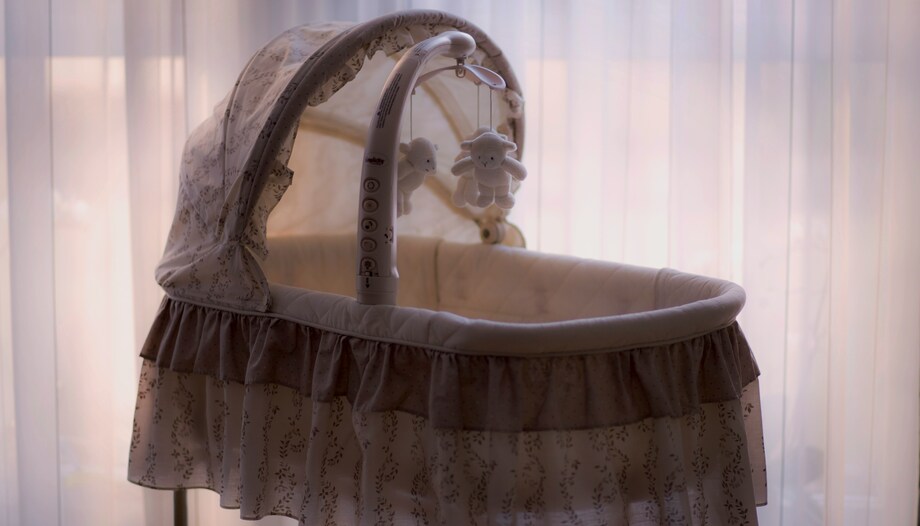
The paradox is as undeniable as it is troubling: Leo XIV found a country with packed squares but empty cradles; a society capable of filling churches to capacity to hear messages of hope, yet mired in the worst demographic and existential winter of its history.
Throughout his homilies, speeches, and meetings with people from all walks of life, the Pope did not come just to entertain us. With the insight of one who knows how to read the soul of a people, he wove a common message that connects the parliamentary chamber with the outlying neighborhoods, and the great cathedrals with social service centers. His motto, “Lift Up Your Eyes,” was in fact a comprehensive remedy for the existential weariness of a Spain that seems to have forgotten how to look toward the future.
The Mirage of the Crowd
It would be a journalistic and sociological mistake to focus solely on the aesthetics of the masses. In his homilies, the Pope praised the deep spiritual roots of our culture and the vitality of a popular faith that refuses to fade away. But immediately afterward, he tempered that praise with a stern warning about the existential void that threatens the very foundations of our society. What good is it to fill a square today if tomorrow there are no generations to whom we can pass on the torch of life?
Spain’s demographic winter is not just a matter of numbers, pensions, or economic statistics; it is, above all, a spiritual symptom. A society that stops having children is a society that fears the future, one that has replaced the boldness of hope with the comfort of the present or the paralysis of nihilism.
In his meetings with the young people, the Pope accurately identified this «virus of real disconnection»: a youth that is hyperconnected to screens yet deeply lonely, numbed by the noise of algorithms and lacking any goals worth risking an entire lifetime for. The Pope called on them to stage an “insurrection of reality,” reminding them that human existence is not consumed in a digital showcase, but is shaped and ennobled through face-to-face encounters with others.
A Crisis of Internal Sovereignty
This existential weariness carries over directly into our institutions, bringing us full circle to what the Pontiff denounced before the legislators. When a society loses the strength to shape the future, its laws ultimately reflect that same decline.
In the Congress of Deputies, Leon XIV warned against the danger of an omnipotent state that, under the banner of absolute legal positivism, ends up encroaching on the most intimate sphere of individuals: freedom of conscience.
This is where the journey reached its peak of anthropological coherence. The Pope recalled that true democracy is not built on arithmetic majorities that impose laboratory-derived truths, but rather by safeguarding the inner sanctuary where each individual processes their existence.
If we strip citizens of their conscience, if we subject it to the invisible coercion of political correctness or social engineering, what remains is not a free society, but a moral wasteland. A law—he reminded us relentlessly—is not just by the mere fact of being formally enacted; it is just when it can look the intrinsic dignity of the person in the eye without shame.
The Final Exam Assignment
León XIV's visit to Spain He laid his cards on the table. He reminded us that a nation’s true progress is not measured by its technological advancements or its macroeconomic indicators, but by its ability to protect life and dignity in its most vulnerable moments.
We saw it in his gestures and words toward the sick and the marginalized, where the Pope highlighted the failure of a materialistic welfare system that prefers to dismiss suffering or hide it rather than accompany those who suffer and treat them with humanity.
The crowded squares of recent days have been a beautiful mirage of vitality, but reality awaits us when the lights go out. Spain is confronted with the mirror of its own contradictions: a people with an immense spiritual heritage who, nevertheless, are failing to pass on life and hope.
«Lifting Our Eyes» is not, therefore, an invitation to abstract idealism. It is an urgent call for profound moral renewal. If the political leaders, institutions, and citizens themselves who cheered the Pope are not willing to change course, to enact laws for real, flesh-and-blood people, and to restore families’ confidence in the future, the applause of those days will become the bitter echo of a society that applauded itself while silently gazing at its empty cribs.






 Español
  English
  Italiano