


In a world filled with suffering, loneliness, and vulnerability, human and spiritual accompaniment is becoming increasingly important. However, providing effective accompaniment requires much more than a willingness to help: it requires training, the ability to listen, and a holistic understanding of the person.
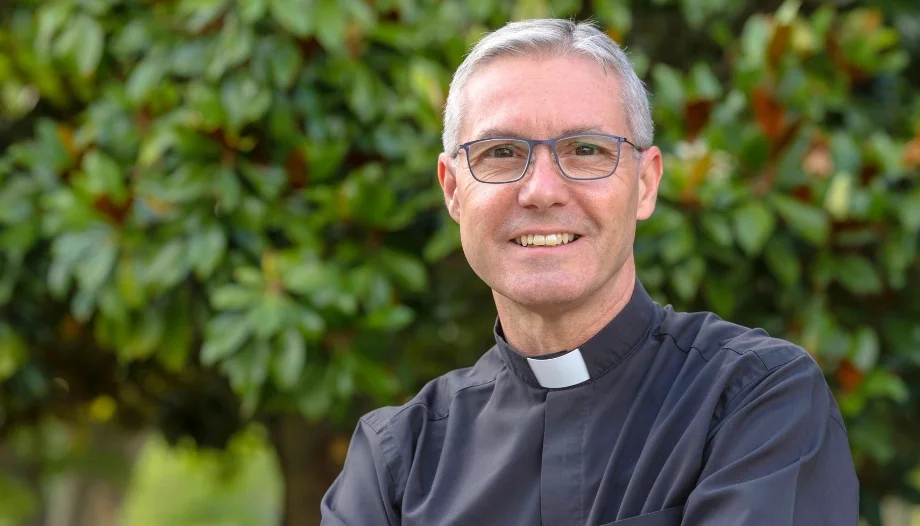
It is with this conviction that the Continuing Education Program in Human and Spiritual Accompaniment in Complex Situations was launched by the Faculty of Theology at the University of Navarra in collaboration with the Core Curriculum Institute. Directed by José María Pardo, this new university-administered degree program aims to provide tools for those working in the health care, education, social services, or pastoral care fields who wish to support people going through particularly difficult times.
José María Pardo explains the reasons behind the creation of this program, the challenges of providing support today, and the need to train those who want to stand by those who are suffering with competence, sensitivity, and hope.
What specific need did you identify in society that led to the creation of this support program?
–We are living in a historic moment in which human suffering is becoming increasingly complex. Illness, mental health issues, addiction, family crises, loneliness, and the end of life present situations that deeply challenge those whose mission is to support others.
The Church has always considered accompaniment an essential aspect of its pastoral ministry. However, current circumstances highlight the need for increasingly solid and interdisciplinary training. Many situations require integrating the richness of Christian anthropology with the contributions of psychology, psychiatry, and other human sciences.
This program stems precisely from that conviction. We want to help form individuals who are capable of offering comprehensive guidance that addresses all aspects of the person and who know how to combine the depth of faith with a serious understanding of human reality.
What does it mean to provide effective support to someone in crisis? What are the key elements of providing support?
–True accompaniment means approaching the mystery of each person with respect, a willingness to listen, and prudence. Rather than offering answers, the companion must learn to understand the person in front of them, their story, and what they are going through.
True accompaniment begins with attentive listening and continues with discernment that takes into account all dimensions of the person: the spiritual, psychological, emotional, familial, social, and even biological. Only from this holistic perspective is it possible to offer appropriate help.
That is why our program structures its training around three main areas: anthropological and theological foundations, contributions from psychology and psychiatry, and the study of certain particularly complex situations, such as conflict resolution, addictions, and end-of-life care.
Ultimately, accompaniment means helping a person walk their own path, while always respecting their freedom and dignity.
What are some common mistakes people make—even with good intentions—when supporting those in vulnerable situations?
–The first is to assume that all situations can be resolved in the same way. Every person has a unique story and needs to be understood in their own way.
It can also happen that we reduce suffering to a single dimension, when, in reality, spiritual, psychological, family, social, and even medical aspects are often intertwined. Human reality rarely lends itself to simplistic explanations.
Finally, a good support person knows how to recognize the limits of their own expertise. There are situations in which the best way to help is precisely to work alongside other professionals or to refer the person to someone who can provide more specialized care. Far from being a limitation, this attitude is part of truly responsible support.
What specific contributions does theology make to providing support in situations such as illness, grief, or addiction?
–The first contribution of the Christian tradition is its understanding of the human person. Christian anthropology views the human being as a unity of body and spirit, of intellect, emotion, and freedom, and as one who is also called to communion with God and with others. This holistic view provides a solid foundation for any form of accompaniment.
Faith also sheds light on crucial issues such as the meaning of suffering, hope, forgiveness, and the ever-present possibility of starting over. These are profoundly human dimensions that help us cope with many painful situations.
However, precisely because the person constitutes a unity, theology does not operate on the margins of the human sciences. On the contrary, it engages in dialogue with them. Psychology, psychiatry, medicine, and sociology provide knowledge that is essential for better understanding the complexity of human experience. The goal is not to juxtapose different fields of knowledge, but to integrate them in the service of the individual.
What specific skills do you expect students to acquire by the end of the program?
–Our goal is not to train specialists in psychology or psychiatry, nor is it to offer solely a theological exploration.
Our goal is to provide a holistic view of the individual and tools that enable a better understanding of complex human situations. We hope that students will learn to listen deeply, to make an initial assessment of each situation, to offer support with discretion, and to recognize when it is appropriate to collaborate with other professionals.
Ultimately, we want to train people who are capable of providing better care for those who are going through particularly vulnerable times.
In your opinion, what distinguishes someone who is «well-intentioned» from someone who is truly trained to provide support?
–Goodwill is essential, but it must be guided by knowledge and prudence.
Training provides insight. It teaches us to listen before speaking, to avoid hasty responses, to understand the complexity of certain situations, and to discern the most appropriate course of action in each case.
In this sense, training does not replace human qualities; it refines them. The better we understand a person, the better we can serve them.
Are we all meant to be companions?
–We are all called, in one way or another, to be neighbors to those who suffer. Caring for others is part of the human vocation and, for Christians, constitutes a privileged expression of charity.
However, good accompaniment is also something that can be learned. Like any task of responsibility, it requires training, experience, and a continuous exercise of discernment. The Gospel offers us a particularly eloquent image in the parable of the Good Samaritan. Not only because he knows how to stop and help someone who is suffering, but also because he cares for him competently and, when necessary, entrusts him to those who can continue that care. Accompaniment also requires humility to recognize one’s own limitations and to work with others for the benefit of the person.
This program is intended to be a first step on that path. It does not aim to cover every aspect of such a broad reality, but rather to provide a solid foundation from which to continue growing. Our hope is to help build a community of people committed to providing support that is increasingly humane, competent, and deeply Christian.






 Español
  English
  Italiano
  Français
  Deutsch
  Polski
  简体中文
简体中文