



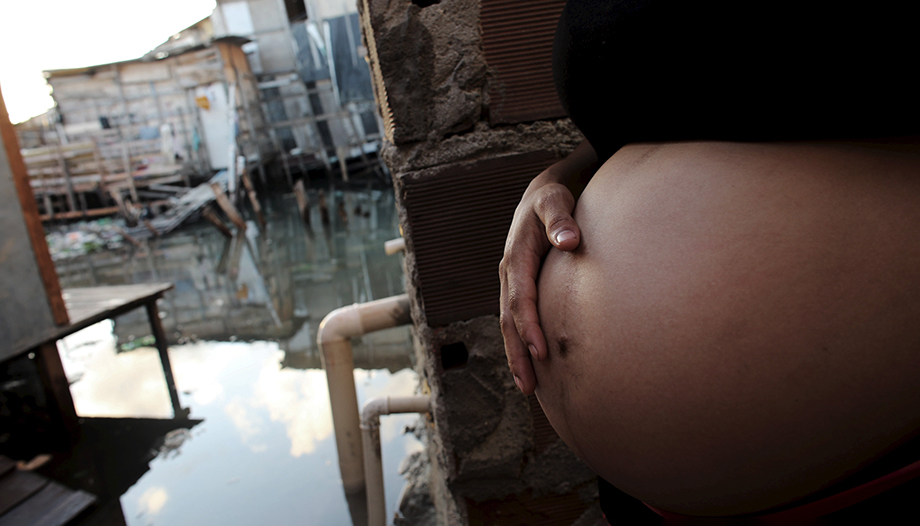
 "Surrogate motherhood is violence" says UN Special RapporteurPope Francis' prophetic call to abolish surrogacy
Surrogacy is an arrangement in which a woman carries and gives birth to a child for another person or couple, who then become the child's legal parents. The Catholic Church has consistently opposed this practice; the Pope Francis’ spoke out against it, and Pope Leo XIV reiterated those concerns in January, followed by the Holy See’s statement at the United Nations in March. In June, several governments also raised their concerns about the surrogacy before the UN Human Rights Council.
Despite these warnings, surrogacy is becoming increasingly mainstream, especially among celebrities, politicians, and public figures with high purchasing power, who often openly describe it as an empowering and transformative path to parenthood.
Even more shocking is the fact that surrogacy is already a multimillion-dollar industry in which people with considerable financial resources can pay women—often from more modest backgrounds—to carry their children. This raises questions not only about the morality of surrogacy itself, but also about wealth, power, women’s dignity, the commodification of children, and the kind of society we are building around motherhood.
No one can know the circumstances behind every decision to resort to surrogacy. Infertility, medical complications, or other deeply painful circumstances may be involved. But as the practice moves beyond exceptional cases and becomes increasingly common, there is one question that deserves greater attention: What happens when the wealthy can outsource the physical demands of pregnancy to women with fewer economic options?
When Pregnancy Becomes a Commodity
For years, Hollywood has been one of the most visible showcases for surrogacy. A quick search will reveal countless examples of actors, models, and other public figures who have welcomed children through this practice. What was once generally considered an exceptional response to serious medical circumstances is increasingly being presented as a routine reproductive option. It is no longer discussed solely in the context of infertility.
Furthermore, the popularity of so-called “social surrogacy” makes this shift particularly striking. In these cases, surrogacy is sought for professional, social, or aesthetic reasons. Underlying this is the perception that pregnancy does not fit well with a professional career—either because someone does not want the physical changes associated with pregnancy, or because taking time off from work could mean missing out on opportunities.
Whatever the individual circumstances may be, the rise of social surrogacy runs the risk of treating the physical realities of pregnancy as obstacles to be overcome through money and technology, rather than realities to which society should adapt by supporting and caring for pregnant women. This also reflects a deeper problem in our modern culture, which often measures a person’s worth by their productivity. Thus, pregnancy is viewed as unproductive, since it requires time, energy, and sacrifice, and motherhood can temporarily disrupt a woman’s career and financial prospects.
What we are witnessing is a system in which wealthy families increasingly have the option of shifting the costs and physical burdens of pregnancy onto someone else. Surrogacy is often presented as a step forward and as an expression of reproductive autonomy. The language of free choice is appealing, but it can mask a harsher reality: one party’s freedom may depend on another’s economic vulnerability.
The Fundamental Paradox of Subrogation
With surrogacy, the burdens of pregnancy do not disappear; they are simply transferred. Pregnancy does not become any less demanding just because someone else is willing to carry the child. The physical risks, medical monitoring, pain, and potential complications are simply borne by another woman’s body.
The power imbalance becomes even more troubling when contractual agreements dictate what a surrogate mother can eat, drink, or do during her pregnancy, or when the intended parents demand that the pregnancy be terminated because the baby has been diagnosed with a disability or a health condition. Whatever the circumstances of each specific case, these scenarios highlight how easily pregnancy can become subject to the terms of a contract.
That is why we cannot ignore the social and economic inequality inherent in surrogacy. The question is not whether people who turn to surrogacy sincerely want to have children. Undoubtedly, many do. The question is why it is so consistently women with fewer financial resources who bear the physical burden, while those with greater financial means can commission a pregnancy.
Just as wars are an age-old phenomenon that send young people off to fight and die, surrogacy is the way the wealthy distance themselves from the physical burdens of pregnancy by placing them on those from more modest backgrounds.
When this happens, the abuses suffered by surrogate mothers are overlooked and disappear from public debate. While attention naturally focuses on the prospective parents and their desire to start a family, the woman who is actually carrying the child in her womb becomes almost invisible, reduced to the means by which that desire is fulfilled. Her body risks becoming, in practice, infrastructure for someone else’s family.
The war in Ukraine brought this dynamic into particularly sharp relief. When Russia invaded the country, international media reported on intended parents who were unable to pick up the babies born through surrogacy because the children remained in Ukraine. The language used was often shockingly commercial, framing the crisis around parents who could not retrieve the children they had commissioned, while the women who had carried those children received far less attention. This revealed how easily the surrogate mother can disappear entirely from the narrative.
The Politics of Reproductive Dynamics
The surrogacy industry thrives on a constant supply of poor and vulnerable women who, faced with harsh economic conditions, become surrogate mothers. At its core, this system turns women’s bodies into a market, and we see this happening all over the world in countries such as India, Thailand, Nepal, and, in recent years, Nigeria and Georgia.
We may be witnessing the emergence of a new reproductive class, in which those with sufficient wealth can free themselves from the physical demands of pregnancy while women with fewer economic options bear those demands. In California, a surrogacy arrangement can easily cost more than $150,000 once fertility treatments, medical care, legal fees, agency fees, and compensation are factored in. This is not an ordinary consumer expense. It is an industry accessible primarily to people with considerable purchasing power.
For most of human history, pregnancy was one of the few biological realities that transcended class barriers. Women experienced vastly different levels of medical care and living conditions, but pregnancy itself could not simply be transferred to another person. With surrogacy, this reality changes.
This change is particularly significant in our modern culture, which places enormous pressure on women’s bodies. Hollywood and much of the entertainment industry in general reward youth, thinness, beauty, and constant professional availability. Pregnancy can disrupt all of that. Hence, the wealthy can buy into an arrangement in which another woman’s body bears the physical costs of reproduction, while the economic system that makes it difficult to balance pregnancy with work remains virtually unchanged.
That is toxic capitalism, a lack of ethical morality, and a disregard for innate human values—all of which, taken together, are making their way even into the womb itself.
Building a Culture of Life
Instead, we should work toward a culture of life that truly prioritizes the family. In a society that genuinely values motherhood, pregnancy should not be viewed as a burden or a career setback that women must find ways to avoid. This requires affordable child care, safe working conditions, and meaningful social protection for families.
The desire to have a child is deeply human, and infertility can cause profound suffering. But a good desire does not make every means of fulfilling it morally good. Instead of building a society in which the wealthy can outsource pregnancy to poorer women, we should build one in which motherhood is supported, protected, and valued.
The Catholic perspective is based on a simple principle: neither the mother nor the child exists to serve the desires of another person. Both possess an inherent dignity bestowed by God. The question, therefore, is not merely whether technology allows us to outsource pregnancy, but whether this is the kind of society we should want to build.
Journalist and essayist born in the United Arab Emirates and based in Lithuania. He is a contributor to Omnes, EWTN News and CNA Deutsch.







 Español
  English
  Italiano