



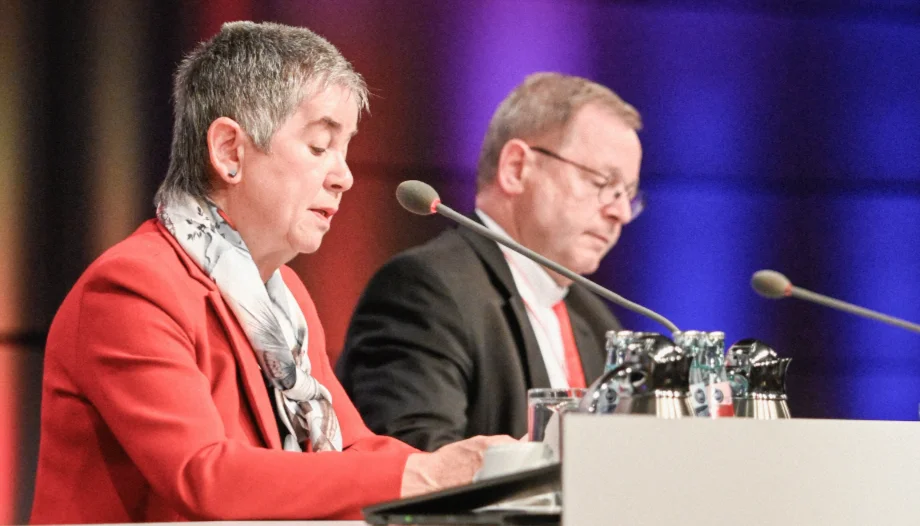
The German Synodal Path, launched in December 2019 in response to the sexual abuse crisis and the loss of confidence of the faithful, is taking a further step towards its consolidation: the German Bishops“ Conference (DBK) plans to transform this temporary process into a stable structure called the ”Synodal Conference." However, the Vatican has already warned on several occasions that a body with the power to control bishops has no place in canon law.
The Synodal Way was conceived as a space for open dialogue between bishops, clergy and laity to discuss power in the Church, sexual morality, ministries and lay participation, with the aim of proposing organizational and pastoral reforms. However, already in its development, signs of rupture with the government of the Church began to become evident, for example, when asking for equal decision making between laity and bishops, changes in moral matters, etc. Several bishops and participants, in fact, have expressed their opposition to this development and some have left the sessions as ... (see name, I think at least two women and the bishop of Cologne).
The final intention of this new structure is to consolidate a mechanism in which the laity not only deliberate, but can make decisions together with the bishops, including sensitive aspects such as diocesan budgets. In other words, it is not a consultative body but an executive one.
The new proposal
After several warnings from Rome about the invalidity of a “Synodal Council” as a permanent body, a "Synodal Council" was established. Synodical Committee The new Synod was charged with drawing up a road map for the new structure. Between January 29 and 31, in Stuttgart, the last 27 members of the Synodal Conference, which now replaces the initial name of “Council”, were elected. Although the change of name is intended to reduce tensions, the suspicion persists that it is a permanent monitoring structure of the episcopate.
The future Synodal Conference will be composed of 81 members, divided into three blocks: 27 diocesan bishops, 27 delegates of the Central Committee of German Catholics (ZdK) and 27 other members selected according to different criteria, including youth, religious and women. The statutes have already received unanimous approval from the ZdK, and will be voted on at the end of the month by the Bishops' Conference, scheduled for February 23-26. However, it will then require final approval from Rome.
Criticism
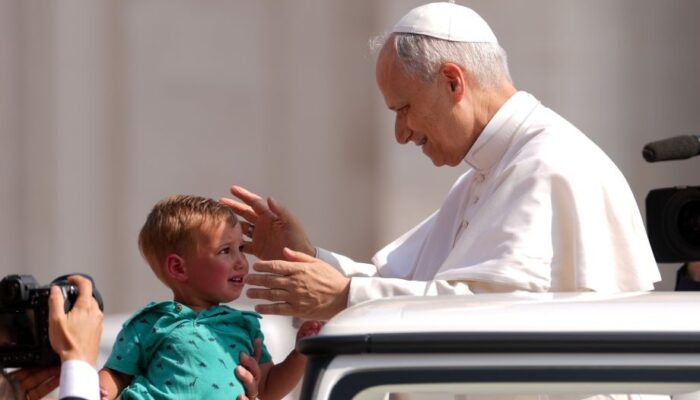
Leo XIV has expressed his concern that “many Catholics in Germany” do not see themselves reflected in some aspects of the process, as was demonstrated by the fact that four women participants will be separated from it.
The Pope also recalled that the Synodal Way is not “the only” way possible in the country. According to Vatican News, the pontiff perceives similarities with the synodality of the universal Church, but also “significant differences”.
Social support for the process shows limited: a September 2025 survey indicates that only 21% of German Catholics are in favor, compared to 17% against, while 58% did not respond.
Among the bishops, The perception is also diverse. Even Cardinal Reinhard Marx, Archbishop of Munich and one of the driving forces behind the Synodal Way, declared that he wanted “a higher authority that constantly controls me as a bishop. That is not possible. That is precisely what Rome did not want”.
For his part, Cardinal Rainer Maria Woelki of Cologne, one of the most critical, declared a few weeks ago that for him the Synodal Path “has ended” and he will not participate in the final assembly or in the steps to establish the permanent body.
The president of the German Bishops“ Conference, Bishop Georg Bätzing, insisted that the Synodal Conference will not begin to function without the approval of Rome, calling any attempt to move forward without Rome's approval an ”unnecessary provocation". consent of the Holy See. Bätzing stressed that the Church in Germany does not intend to act on the margins of the universal Church, keeping the door to dialogue with the Vatican open.




 Español
  English
  Italiano