



Martin Buber begins one of his classic books Eclipse of God with this sentence: «The true character of an epoch is recognized above all by the prevailing relationship between religion and reality».
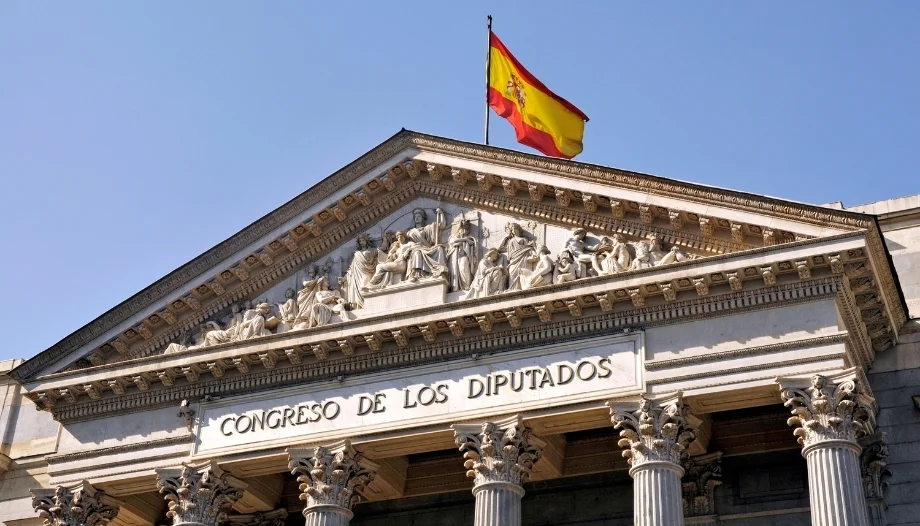
As Olegario González de Cardedal says, the main objective of the 1978 Constitution was to move from the consequences of the civil war to a project of peaceful civil coexistence. This principled attitude also had repercussions on religious questions, and the left and political nationalism wanted to distance themselves as far as possible from Francoism. It is from this general perspective that, for many, questions of God, religion and churches were seen in the light of the above as something repressive that had to be avoided.
The religious debate in the drafting of the 1978 Constitution
For example, the PSOE representative Gregorio Peces Barba justified his «exit» from the Constitutional Proposal by his opposition to the constitutional mention of the Catholic Church in what would be art. 16.3 of the Constitution (no confession has a state character, but the public authorities will take into account the beliefs of society, maintaining relations of cooperation with the Catholic Church and the other confessions) and which his party opposed because it considered it an underhand confessionalism.
Beyond this position, it was thought that the general awareness prevailed that concord, collective understanding between human groups, parties, ideologies, regions and religions, should prevail over possible and legitimate claims.
Peace or truth: the moral dilemma of the Transition
There are two moral imperatives that man has to conjugate and many times he does not know how. On the façade of the Casa Museo de Unamuno in Salamanca is written the phrase: «First truth before peace». Now, he was referring to personal peace, to the necessary search for the truth that preceded and preceded him. The context was his existential struggle. At the time of the Spanish transition and the drafting of the Constitution, the statement «Peace before truth» prevailed in people's consciences.
And here is where we find the difficulties that for some Spaniards the text of the Constitution of 1978 (date in which 90.5% of Spaniards declared themselves Catholic) offered because it silenced the affirmations about God that had preceded practically in the preamble of almost all the previous Spanish Constitutions with the exception of the one proposed by the Republic in 1931, beginning with that of the Cortes of Cadiz that makes two capital affirmations. The first one opens the text: «In the name of Almighty God, Father, Son and Holy Spirit, author and supreme legislator of the Society». And article 12: «The religion of the Spanish nation is and will perpetually be the Catholic, apostolic and Roman, unique and true. The Nation protects it by wise and just laws and prohibits the exercise of any other».
A godless constitution for a Christian people?
In the current Spanish Constitution there is no nomination, invocation or explicit reference to God. The problem was raised only by the independent senator from Soria, Fidel Carazo, who was joined by two other UCD senators and Admiral Gamboa, who put as a condition to give their positive vote to the Constitution, that the following amendment be admitted: «Spain recognizes God as the inspiring foundation of law and the transcendent basis of human values». They were joined by another group, which found no echo in Spanish society or in the Spanish Church. In the political parties and in the constitutional papers there was a shared conviction: religion should not again be a problem that divided Spaniards.
On September 28, 1978, the Permanent Commission of the Spanish Episcopal Conference published a note on the Constitutional Referendum of December 6, 1978. In it the bishops showed their recognition to the values that the Constitution offered at the same time that they showed some reservations and reservations. And they concluded: «We consider that there are no decisive reasons for us to indicate or forbid the faithful to vote in a decisive way».
Monsignor José Guerra Campos, Bishop of Cuenca, in a Pastoral Letter taken up by the Bishops of Vitoria, Orense, Sigüenza-Guadalajara, Ciudad Rodrigo, Tenerife and Orihuela, asked in the title: «Constitution without God for a Christian people? The presupposition of this question was that, if it is a question of a mainly Christian people, it is not possible to enunciate the essence of its moral orientation, of its project of meaning and of its constitutional juridical norm, without naming God.
In a private conversation, St. John Paul II said to Cardinal Bueno Monreal, Archbishop of Seville and Cardinal Tarancon, Archbishop of Madrid: «You have consented to an atheist Constitution in Spain». Cardinal Bueno Monreal replied: «It is a non-confessional Constitution, it recognizes the autonomy of civil power and religious autonomy».
European models of the relationship between God and the Constitution
The situation in the rest of the European constitutions is diverse: from those that begin with an invocation to the Holy Trinity as Ireland and Greece, to those that maintain the divine designations that come from centuries as is the peculiar case of England, to those that do not enter the question and think that the affirmation of God is subsumed from its only verifiable place: the freedom of men, which is respected and assigned its own place among the rights and freedoms that are regulated. The Federal Constitution of the Swiss Confederation, in its 1999 version, begins as follows: «In the name of Almighty God, the Swiss people and Cantons....».
The Basic Law for the Federal Republic of Germany of May 23, 1949 deserves special mention: «Conscious of its responsibility before God and mankind and animated by the will to serve the peace of the world as an equal member of a united Europe, the German people...». Here not only is a nomination of God made, but the responsibility of the legislators before Him is affirmed. He is conceived as the front of legitimacy on the one hand, of demand and judgment on the other, before whom the laws have their ultimate meaning, foundation and defense. The experience of the 12 years of Nazism, which arose at first from the democratic vote of the Germans, can be glimpsed in the background.
Secularism arises for the defense of minorities, as an area of freedom for all and can never be used for the repression of the majorities from a dominant ideology or group that rises to absolute interpreter as the sole guardian of the nation or the republic. This is exactly the point of the Polish Constitution, which chose a middle way, so that believers and non-believers are represented in this Magna Carta.
The text reads: «We the Polish nation, all citizens of the Republic, both those who believe in God as the source of truth, justice, goodness and beauty, as well as those who do not share such faith, but respect universal values as coming from other sources, equal in rights and obligations towards the common good ... recognizing our responsibility before God or before our conscience».
Moral foundation and cultural consequences
By putting the word God in a constitutional text we are breaking the horizontality of history and of human life; we are knowing ourselves to be superior to ourselves; we are accepting the precedence of good and the sovereignty of Truth over man as a power that qualifies him and as a power that judges him, so that evil cannot be declared good or good evil. In uttering the name of God, we are each knowing ourselves equal to those who have the power because they too are referred to their judgment and truth. They, as well as we, must obey legislation, which is not pure law, but must be founded on justice.
Ortega repeated that God is a question for everyone, a civil problem and not only for believers but also for thinkers. Rahner affirmed that a culture or university that does not dare to speak of God, and that does not have a public place for Him, cannot have a public place to speak of metaphysics and ethics, of being and duty. These are not more evident than God and have not occupied in consciences nor do they occupy today more real space than He does.
Historical balance and critical judgment
Cardinal Marcelo Gonzalez, Archbishop of Toledo and Primate of Spain, published days before the constitutional referendum of December 6, 1978, a letter entitled Ante el referéndum sobre la Constitución (Before the referendum on the Constitution), in which he warned: on the seriousness of proposing an agnostic Constitution in a nation of baptized people whose immense majority had not renounced their faith, being able to turn it in the hands of successive public powers into a “safe-conduct for legalized aggressions against inalienable human rights”, referring to the possibility of legally introducing abortion in Spain; on the subjection of the management of educational centers to obstacles that favored Marxist tactics; on the non-consideration of the moral values of the family (speaking of the future divorce law as “a huge factory of broken marriages and orphans with father and mother”).
The prelate did not imagine the laws that would be passed in the following decades or the release from prison of unrepentant ETA convicts and collaborators of justice that we are currently experiencing.
In 2004 came the debate on the non-inclusion of a mention of the Christian roots of Europe in the draft of the unborn European Constitution. Marcelo and the 7 bishops who adhered to his letter, branded by some press as fundamentalists, saw coming the moral degradation of Spain that has made possible our Constitution and that we contemplate today.
It is also fair to point out that June marks 30 years of PSOE governments, which together with the 5 years of UCD and the 14 years of PP, make these parties the architects, actively or passively, of our current moral situation. Let us hope that a future constitutional reform will lay its foundations on firmer foundations, while respecting the freedom and diversity of the Spanish people.




 Español
  English
  Italiano