The Church in the street
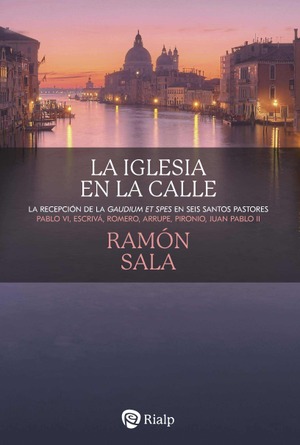
AuthorRamón Sala
EditorialRialp : Rialp
Pages: 264
Year: 2026
La entrada La Iglesia en la calle: transformar el mundo desde dentro se publicó primero en Omnes.
]]>Seen a posteriori, the mystery of the incarnation of the second person of the Blessed Trinity and the hypostatic union; two natures, divine and human, in the one person of Jesus Christ, seemed very convenient to carry out the work of Redemption and Salvation.
Precisely on this recent anniversary of the Pastoral Constitution “Gaudium et Spes” (1965) that we have just celebrated, that element of the illumination of the world from within, from the light of so many hearts that are one, one could understand the conciliar expression with deep patristic resonances: “the Church is the soul of the world”.
Ramón Sala OSA (Bilbao 1963), professor of theology at the Augustinian Theological Study of Valladolid, has done a magnificent job of understanding the texts of the Constitution “Gaudium et spes”, taking as a starting point the life and work of great saints who were involved in its drafting and its interpretation according to the light of God that they had received.
Of course, the selection of persons and themes elaborated by Professor Sala could not be more appropriate: first of all, two Roman Pontiffs: St. Paul VI and St. John Paul II, two saints who knew how to echo the Holy Spirit, first as active protagonists of the and then in its development or application.
St. Paul VI was able to intervene in Vatican Council II, first as Council Father and then as Roman Pontiff to carry it out and close it. Ramón Sala recommends us to read slowly his Encyclical “Ecclesiam suam” (Rome 6, VIII, 1964), to discover many concomitances and synergies with the mentioned Constitution (26).
Then there was St. John Paul II who, first as Council Father and then as Roman Pontiff, carried out the true application of the Second Vatican Council with his travels throughout the world that brought all the particular Churches together with the universal Church in all languages, lives and cultures, and, above all, with the body of Encyclicals and apostolic exhortations. Finally, with the treasure of the 1983 Code of Canon Law, and the 1992 Catechism of the Catholic Church and the true liturgy celebrated by the Church in all the languages of the world or in Latin to show the unity and diversity of the Latin rite (215).
Next, our author will highlight the figure of St. Josemaría Escrivá, Founder of Opus Dei, who would have anticipated the doctrine of the conciliar Church on the laity and especially would have articulated the sanctification of ordinary work as a theological place to dream of the sanctification of the world from within (30).
It is interesting to note the figure of Cardinal Pironio who would bring from America the Catholic Action and the work of so many years in the application of the Council in the peoples and nations of America and Europe in that capillary work of the laity, as St. John Paul II would underline in the Exhortation “Christifidelis laici: “The Church is a mystery of missionary communion” (187).
The contribution of the holy martyr Saint Oscar Romero, who applied the conciliar doctrine to the particular Church of El Salvador and gave his blood for the Church, is very interesting because he was martyred when he asked for respect for the dignity of the Christian people and specifically for the poorest and most despised of the American continent.
The conciliar doctrine of “Gaudium et spes” recognizes that all men and women, of every class and condition, have the right to a dignified life and work because they are children of God: “Without Christ there is no true liberation” (118).
Professor Sala reminds us that the Universal Declaration of Human Rights of 1948 was deepened and founded in the Constitution “Gaudium et spes”, when the Council magisterium recognized that this declaration was based on the dignity of the human person and that the dignity of the human person was based on the fact that every human being was created as “the image and likeness of God”.
The fundamental option for the poor, characteristic of the Church since the beginning of Christianity, is present in “Gaudium et spes” and at the same time was courageously applied throughout the world. Therein lies the example of Oscar Romero who was martyred for the truth and of many other Christians who were martyred without dying defending this universal cause (109).
The contribution of the Superior General of the Jesuits, Pedro Arrupe, who intervened in the last sessions of the Council and was very active in its application throughout the world through the mission entrusted by God and by the Church to the Society of Jesus in the apostolic mission of the Society (146).
In particular, our author recalls the mission entrusted by Pope Paul VI to the Jesuits of dialogue with non-believers and with the contemporary atheism that plagued and continues to plague humanity in so many parts of the world. Arrupe “contributed in a direct way to begin to overcome the social barrier that still exists today between believers and non-believers” (151).
This mission was concretized positively as a fundamental option for justice, the defense of human rights, the voice of the voiceless and the daily effort to promote justice and the development of peoples in all countries: “Arrupe's insistence on linking contemporary unbelief to social injustice is striking (149).
La entrada La Iglesia en la calle: transformar el mundo desde dentro se publicó primero en Omnes.
]]>La entrada Camino: la oración de los hijos de Dios se publicó primero en Omnes.
]]>It is truly impressive to consider that when St. Josemaría sent to press in Valencia in 1939, at the end of the Spanish Civil War, the 999 Points of The Way, he never thought that it would spread so widely in space and time and that it would become a classic treatise on spirituality.
In all honesty, we must make it clear from the outset that The Way was written by the Holy Spirit and that all St. Josemaría did was to become the notary of those inspirations, to write them down, group them together and draw up an index, which was the true work of the Founder of Opus Dei.
What we have just narrated succinctly is the true story of The Way. From a very young age, St. Josemaría was accustomed to noting down the lights he received from the Holy Spirit: the new Mediterraneans that opened up before his eyes, when he read a book, celebrated Mass or recited the Liturgy of the Hours, and also when he spoke with others.
The lights of the Holy Spirit would burst forth at any moment, because even sleep can be prayer. St. Josemaría had learned from his mother, like everyone else, to love God and others, and therefore he habitually practiced what he called “prayer of complicity.
That is what led him to holiness in the midst of the world through the ordinary chores of life: to keep alive the thread of prayer, but the prayer of complicity. It is very important, therefore, to involve God in our life and to involve ourselves in dialogue with God.
When he preached or when he spoke personally with those university students or professionals who came to his confessional, he always brought out in his conversation sparkling memories, anecdotes, lights that he had received in his prayer or in any moment of prayer during the day.
One day, those kids started asking him to write down those anecdotes so that they could relive the moments when they had heard them in the media or in personal conversations he had with them.
Cardinal Luciani, Patriarch of Venice, Blessed John Paul I, described very graphically in the summer of 1978, a few months before he was elected Pope, the difference between St. Francis de Sales and St. Josemaría Escrivá in the following way: the former, St. Francis, provided formation for the laity and St. Josemaría imparted a lay formation. Indeed, the meditative reading of the points of The Way will eventually convert us, with God's grace, into discerning souls to be good children of God in the midst of the world in our ordinary activities.
In fact, at any time of the day, we can recollect ourselves interiorly and spend some time in prayer: in the tabernacle of our parish, in a chapel or cathedral or in the subway, in a corner of our own home and raise our hearts in complicity of friendship with God and read a point of The Way to relive those divine lights and make them our own or to converse confidently with Jesus about our things.
I remember one morning in the bar of the Faculty of Geological Sciences of the Complutense University of Madrid, when the thirty students of the class met there for a mid-morning drink with some of our professors and one of us took a spoon with coffee and deposited a lump of white sugar on that spoon and the coffee began to impregnate the sugar cube with black color and, at that moment, we all exclaimed happily: “magmatic undermining”. It was the jubilant cry of those of us who were happy to study minerals, rocks and crystals and could exult with our classmates without fear of being considered mad scientist crackpots as had happened to us before we enrolled.
At that moment the Holy Spirit enlightened me and made me realize that with my times of prayer meditating on the points of the Way, by raising my heart in love to God while working, by getting together with my friends and helping each other in their needs, my soul was being transformed into a magmatic undermining and God was making me a saint: in love with the Love of loves.
The key to The Way is that it is a lay and secular instrument for converting everyday life into personal, daily encounters with Jesus Christ and with others. Some professors at the University of Navarra have published a book with the one hundred points of the Way that speak directly of the “love of God”. In other words, a 10% of the Way speaks directly of God's Love, like yeast in the dough. And, we will soon discover that the remaining 90% are also expressions of God's love, which is the main issue.
This uniting of heaven and earth, or this illumination of the world from within with the love of God, is the background to all the points of The Way. As St. Josemaría affirmed in another well-known text: “On the horizon, my children, heaven and earth seem to be united, but no, it is in your hearts that you live your ordinary life in a holy way” (Conversations, no. 116). (Conversations, no. 116).
I would like to end by commenting on a memory of one of the first priests of Opus Dei, Father Joseph L. Muzquiz, who was sent by St. Josemaría to begin the work of Opus Dei in the United States, Japan and other parts of the world.
He noted in his memories that when they arrived in a new country with St. Josemaría's blessing, an image of our Lady and little else, they always did so trusting in God's grace and full of joy. Immediately, he added, the first thing they did was to look for a job, a house and begin to make friends and be very close to each other and to the hierarchy of the country and to all the Christians in their new country, whom they had to love and become one of them.
Finally he added: “We were preparing an edition of The Way to teach how to pray and we were looking for a big house to put up a student residence and we were living in good spirits what we had learned from St. Josemaría.
La entrada Camino: la oración de los hijos de Dios se publicó primero en Omnes.
]]>La entrada Pobre como Cristo, rico en alegría: san Francisco de Asís se publicó primero en Omnes.
]]>With this year dedicated to St. Francis, the Holy Father simply wishes to commemorate the eighth centenary of the death of the “...".“Poverello”The name "Carlo Acutis", as they call in Italy to one of their most venerated and beloved saints and visited in Assisi where his remains are kept and now also those of Carlo Acutis.
Precisely, the decree published on January 16 by the Apostolic Penitentiary recalls the hopes of the Holy Father, expressed in very concise but precise words, that “every Christian faithful, following the example of the Saint of Assisi, may become a model of holiness of life and a constant witness of peace”.
Finally, the decree recalls that to gain the plenary indulgence it is sufficient to visit any place related to St. Francis or the Franciscan family. Finally, the decree recalls the general conditions to be observed to gain the indulgence “with the usual conditions (sacramental confession, Eucharistic communion and prayer according to the intentions of the Holy Father), applicable also in the form of suffrage for the souls in Purgatory”.
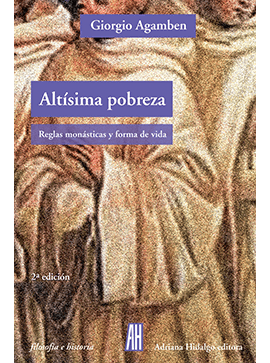
Precisely in the work of Giogio Agamben, to which we will refer next, the relationship between the primitive Franciscan rule and law will be dealt with exhaustively, and in these pages we will discover the high concept of poverty for St. Francis and for the great authors of Christian spirituality. Precisely in the 21st century, with the great inequalities between North and South and within Western countries themselves, it is very important that we apply the teachings of poverty to the life of Christians of every class and condition in this Jubilee year dedicated to St. Francis of Assisi.
Our author, Giogio Agamben, will deal with the concept of “Highest Poverty” in many different ways, since total detachment from earthly goods is one of the most essential characteristics of St. Francis. This “Highest Poverty” has much to do with the life of Jesus narrated in all naturalness in the Gospels and in the New Testament.
The detachment and, at the same time, the freedom in the use of the material goods so necessary to be able to live and develop the intense activity of the hidden and public life of Jesus, will mark the poverty of the first Christians.
Lady Poverty, “Lady of the heart”, St. Francis called her, and with these words, taken in all their dignity and category, he is dealing with such a delicate question, because, as Giorgio Agamben will explain, many learned theologians and canonists became bitterly involved after the death of St. Francis to argue about the rule and the law, about the use and ownership of material goods (119).
Those great diatribes, seen now with the perspective of time, can seem to us Byzantine discussions or school debates without the greatest interest. But the reading of those impassioned quoadlibetales speaks to us of the radical holiness of the Christian life (162).
Certainly, this is a question that affects the heart: “Ubi thesaurus cor” (Mt 6:21) “Where your treasure is, there will your heart be”. In this sense, the solution was given by St. Francis himself when he affirmed that to love and imitate Jesus Christ was the basic rule of the Christian, the rule of life of anyone who wishes to love and imitate Jesus Christ is to identify himself fully with Him (152).
Immediately, we must remember that, as the venerable Cardinal Carlos Amigo Vallejo, Archbishop of Seville, a Franciscan since his time at the University of Valladolid, often affirmed, the essence of the Franciscans was not poverty but joy. Indeed, the most important thing we will learn from this Jubilee Year of St. Francis was his profound joy, his good humor and his optimism, fruits of an immense love for God and souls.
I will always remember the anecdote that Friar Carlos Amigo Vallejo told me in one of our long conversations. He referred how in one of the first meetings of the Franciscans on the outskirts of Peruggia, on the lawn, there were about three hundred people coming from all the places where they were established. They were in silence and prayer when St. Francis stood up and exclaimed: “We have made great promises to God”. After a while he stood up again: “Even greater are the promises that God has made to us”. Finally he spoke again for the third and last time, before blessing them and bidding them all farewell: “Let us be faithful to our promises and He will be faithful to His promises!.
It is always said that joy is the result, the consequence of having peace in the heart, the fruit of living the prayer, the Our Father, that Jesus taught us: “Thy will be done on earth as it is in heaven”. If we try to think about what Jesus and others may need from us and we are ready to give it to them, we will discover that the first thing others need is a smile (173).
Precisely, the first thing the Holy Father Leo XIV did when he was elected from the balcony of St. Peter's Square was to remind us: ”Peace be with you” and to ask us to be builders of unity and peace.
It is significant that this is the goal of this new Jubilee Year, which follows the Jubilee Year of Hope. Let us recall the words of Leo XIV when he proclaimed the Year of St. Francis: “May every Christian faithful, following the example of the Saint of Assisi, become a model of holiness of life and a constant witness of peace”.
Joy is the consequence of knowing that we are beloved children of God, as St. Josemaría so often emphasized, ever since he discovered trust in God the Father in one of the moments of his greatest mystical life, on a streetcar near Atocha Street in Madrid.
La entrada Pobre como Cristo, rico en alegría: san Francisco de Asís se publicó primero en Omnes.
]]>La entrada La verdadera opción benedictina se publicó primero en Omnes.
]]>In Spain, this option of enclosure in the Christian truth, which facilitates self-referentiality and segregation from other families, cultures and mentalities, did not succeed. It is necessary that Christian families mix with other pagan families and stimulate and evangelize them. To enclose ourselves in a small world denatures us, because we have to be leaven in the mass.
The Cardinal of Rabat, Clemente Lopez, commented that when Pope Francis visited them in 2019, on the last day, before boarding the plane that would take him back to Rome, he told him that it did not matter whether the Christians in Morocco were many or few, whether they had much or no influence; the important thing was that the “salt did not become insipid”.
In Spain there are still enough Christian roots to be able to create with our friends and neighbors a culture and a civilization full of Christian and human values with which to develop our homeland with values without the need to encapsulate ourselves.
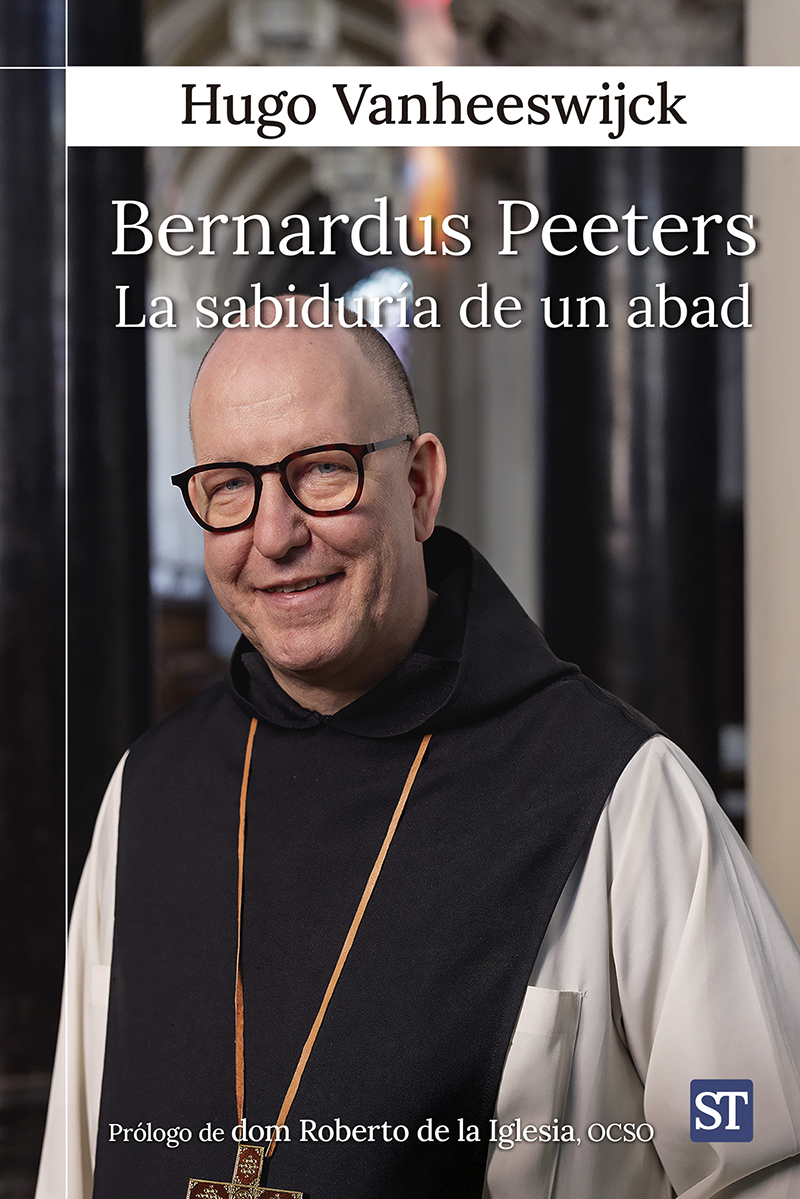
This is the essence of the book published by “Sal Terrae”, the fruit of three years of conversations between the Dutch journalist Hugo Vanheeswiijck “and Abbot Peeters (Simpelveld, 1968) of the Abbey of Our Lady of Koningshoeven in Tiburg in the Netherlands and, since February 11, 2022, Abbot General of the Cistercian Order of the Strict Observance (OCSO) also called “Trappist” religious: 150 abbeys around the world fell into his heart (20).
Indeed, Abbot Peeters will expose in these conversations a proposal of Christian life that would be the Trappist life, with all its depth and profundity, so that we see how this distinguished institution remains faithful, in the end, to the rule of St. Benedict of the fourth century and, at the same time, is perfectly adapted to the mentality of a monk of the twenty-first century. Moreover, Bernardis Peeters himself chose as his motto in 2005, when he became abbot of Koningshoeven Abbey, these words: “Seek God and live” (16:134).
Undoubtedly, and this is the secret of this book, the wisdom that God the Holy Spirit grants to these religious not only envelops them in an unfathomable richness of the Spirit that leads them to a full life of grace, but from their holiness of life the whole universal Church is enriched by the communion of saints and by the fruits of holiness and Christian ideas that will cross the walls and reach the farthest corners of the earth.
Indeed, we are before a true treatise on spiritual life, contemplation and holiness, as in the 16th century when they were called treatises on “asceticism and mysticism”, which helped members of the regular and secular clergy to nourish their own spiritual life and enkindle the Christian people in their mission to enlighten the world from within.
Perhaps the first conclusion of this work is its brevity. It is a matter of transmitting the wisdom of an abbot to the contemporary world, and ideas such as wisdom are more intense than extensive and do not require many speeches but the personal reverberation of one's own personal contemplation.
The task remains that of the Holy Spirit and also continues to require, as the Council of Trent and subsequent Councils up to Vatican II made clear, the cooperation of freedom: holiness and contemplation are the fruit of the conjunction of God's grace and the personal freedom of each Christian. As the author of this book explains: “to involve God in the concrete life of each day” (16).
Charity is also important: “When Christ speaks of denying myself, he does not at all say that I must abandon myself. However, I must renounce myself in order to belong to a community, to give myself to the community, to be there for others” (91).
The second conclusion of this work is the climate of trust with which we Christians must treat each other in order to activate the communion of saints. In the Church, as is clear from the New Testament, everything rests on trust. We are a universal family united with the Pope and our bishops and priests who are moving towards the same goal: to live with Jesus on earth and in heaven in a family climate of mutual trust: “Authentic prayer is rooted in silence and simplicity; but it extends to the whole of creation and therefore emphasizes solidarity” (106).
Trust is that which God places in us by giving us his grace in ordinary circumstances. Thus our abbot will say: “a school of love is a way of life that transforms the human being through the combination of prayer (heart), reading (intellect) and work (body). It teaches you how to love and why to love” (111).
Immediately, we will talk about personal prayer, liturgy, family life, community life, the universal Church, getting to know each other, loving each other and respecting the ways of thinking of others. Unity and variety. It is very interesting that the monks encounter in their prayer the same difficulties as ordinary Christians in the street: “Often people do not stop running. We monks do too. It is important to stop the whirlwind inside us. We must be silent in the presence of God” (121).
The goal is the same for all Christians of every class and condition: intimacy with Jesus Christ and living in charity with one's neighbor. The word holiness is used again and again as friendship with Jesus Christ and the desire to know and love him. The word struggle, in this work, means falling in love and the illusion of loving more and better: “Jesus who lives in me also prays in me. I just have to join in that prayer. It was clear to me what Paul means when he says that it is the Spirit who prays in us, that it is he who says ‘Abba, Father’” (125).
La entrada La verdadera opción benedictina se publicó primero en Omnes.
]]>La entrada Francisco de Vitoria y la paz se publicó primero en Omnes.
]]>Precisely, in this new year of 2026 we will celebrate the V Centenary of the beginning of the teaching of Francisco de Vitoria (1483-1546) at the University of Salamanca and, therefore, of the beginning of the fruitful School of Salamanca that promoted peace in the world and whose principles are behind the statement of the Declaration of Human Rights of 1948 that has marked the path of peace in the world since the end of the “Second World War”.
It is a good time to reread, with the impulse of Pope Leo XIV, the great theological and juridical Relecciones that Francisco de Vitoria pronounced between 1528 and 1539 in Salamanca and that changed the course of the government of the empire of Charles V and of the Christian kingdoms and its principles ended up being collected in the new international law that enriched the law of nations.
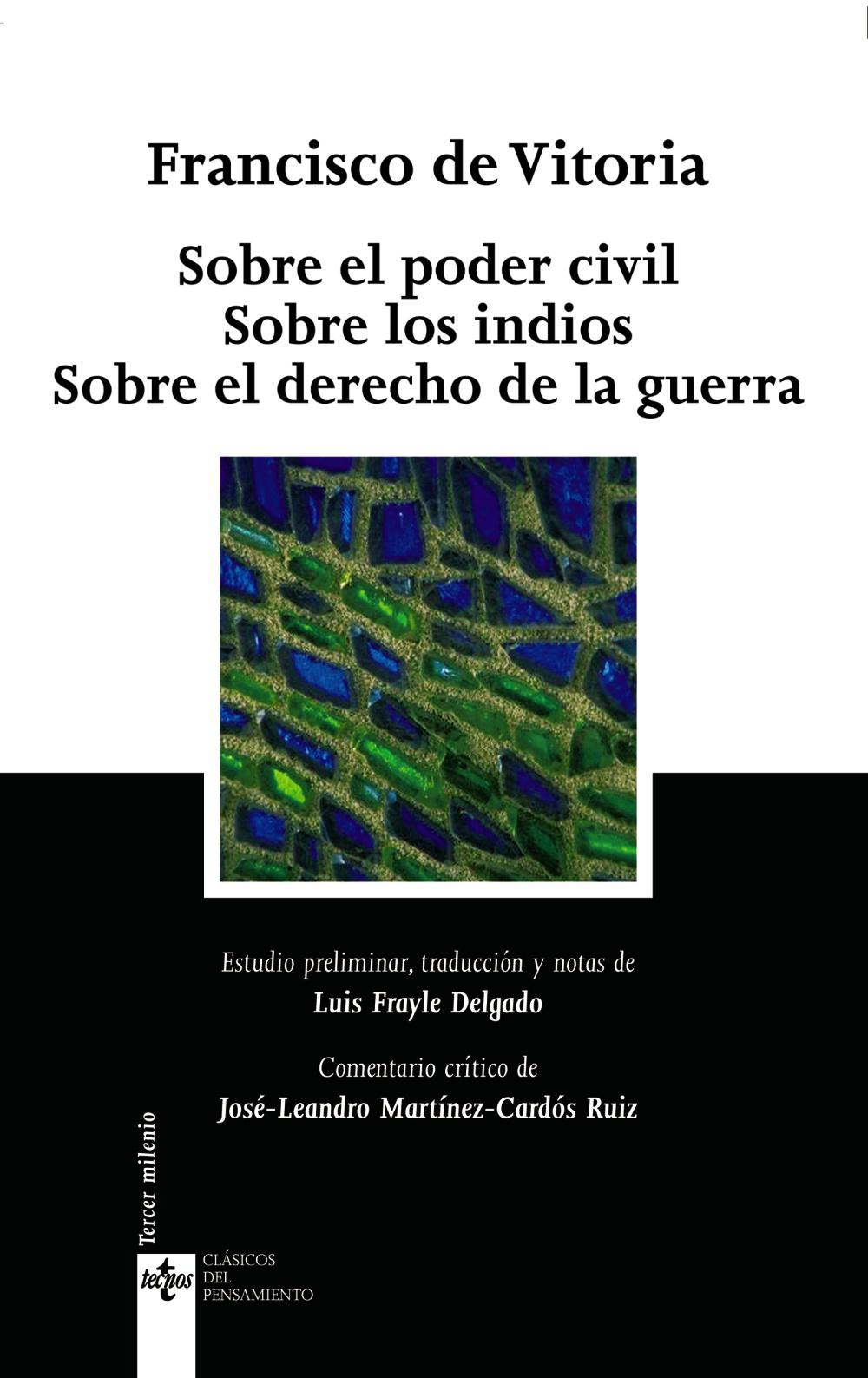
The professor, lecturer and researcher Luis Frayle Delgado (Salamanca 1931) collected in the volume published by Tecnos, which we will comment below, the three great relections of Francisco de Vitoria on the law of nations that originated the international law and marked a brake on the just war until trying to make it disappear: “so that one arrives at war by obligation only in case of necessity and against one's own will” (Sobre el derecho a la guerra n. 60, p. 212).
These three relections, “The civil power”, “on the Indians” and “on the right to war” were delivered at the University of Salamanca before the cloister and the students of all the university faculties between 1528 and 1539 and are already included in the first edition of the Relecciones of Master Vitoria, published after his death in Lyon by Jacques Boyer in 1557.
These relections deal with the new international order created by the Lutheran rupture and the beginning of the wars of religion and, therefore, the disappearance, de facto, of the concept of Christianity to enter fully into the system of balances between nations.
Certainly, the great success of Francisco de Vitoria was to have contributed with his teaching and the plethora of disciples who took his ideas and the theological method promoted by him to all the European universities and to the incipient ones in America, Africa and Asia.
Vitoria and the School of Salamanca moved quite naturally from theology to law and from there to economics, simply because they had an anthropology based on the dignity of the person.
Let us remember that both Roman law and the Christian faith that the Salamancan masters handled was based on the dignity of the human person and, especially, on the fact that man was considered as “the image and likeness of God” (cf. Gen 1:26). This conviction produced the shift from pagan humanism to Christian humanism that has lasted until the present day.
Certainly, Francisco de Vitoria will be, centuries later, at the basis of the declaration of human rights of 1948, which has underpinned Western democratic society ever since and, especially, has provided the legal basis for global law. Human rights are based on the fact that man is a person and has been created in the image and likeness of God, otherwise we would be dealing with human rights that would be based on human rights themselves.
In the first place, Master Vitoria recalls the importance of harmony between civil and ecclesiastical power and the concert of nations in the search for the common good and in the task of facilitating the path to eternal beatitude of the Christian faithful.
Immediately, he will emphasize the importance of personal freedom and the responsibility to collaborate and obey just laws so that society may develop in the peace of the children of God. Logically, since the Indians were “in partibus infidelium” owners of their lands and possessions and governed by their legitimate lords, there was no place to deprive them of their dominion or to make war against them.
God is the one who possesses the civil authority, who delivers it to the people, who, through the oath of fidelity, delivers it to the monarchs who must provide for the civil society to be governed in order to the peace of consciences and eternal bliss, as the book of the Partidas of Alfonso X the Wise points out in the first Partida, first title and first law.
The civil laws in consonance with the natural law and the eternal law are of obligatory fulfillment and therefore the harmony between the natural and supernatural order must be observed. Vitoria will also point out the importance of a just fiscal order so as not to stifle families in their economic development and maintenance of their dignity.
It is very interesting that Francisco de Vitoria has assumed the end of Christianity, both by the Lutheran rupture of the unity of the Christian faith and the atomization of the Reformed communities that will lead to a new world order in the Peace of Westphalia in 1648.
Vitoria also stressed the impossibility of the constitution of a single empire or the rule of one nation over the others. Therefore, the new world order since Westphalia should be based on the balance between nations and international law.
The principles of personal freedom and the dignity of the human person will be behind the need to respect free trade and freedom of movement, always respecting the legislative and administrative order of the various nations of the world. Vitoria will anticipate the Second Vatican Council by promoting the principle of religious freedom and the call to evangelical preaching under the respect for freedom and through evangelical persuasion and respect for consciences.
La entrada Francisco de Vitoria y la paz se publicó primero en Omnes.
]]>La entrada Europa medieval en imágenes: un viaje fascinante por las rutas del conocimiento se publicó primero en Omnes.
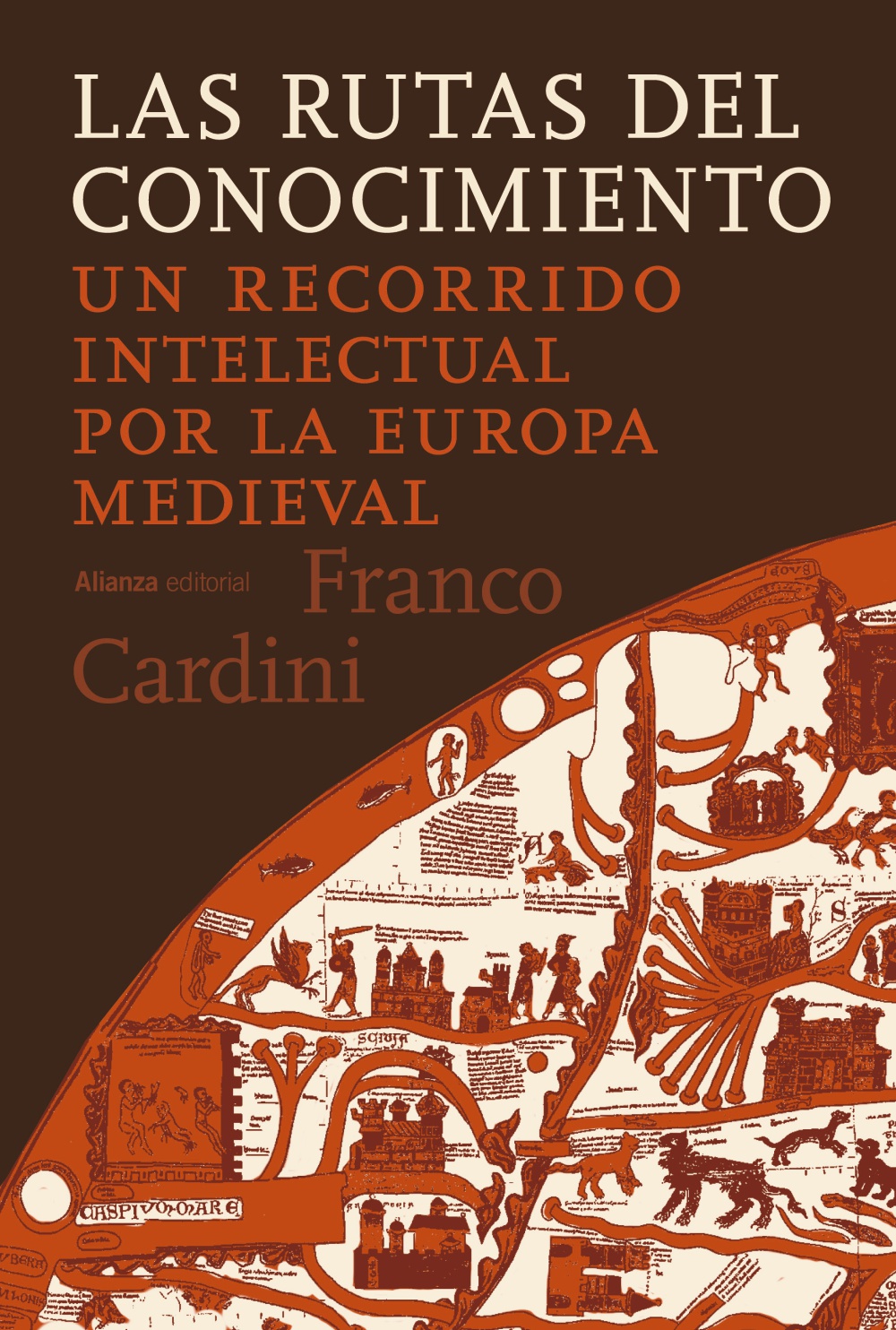
]]>Professor Cardini gathers in this work that we now present, a small part of his knowledge and images accumulated and selected throughout his academic life, to make a magnificent intellectual journey through Medieval Europe and to be able to explain what he simply calls: “the routes of knowledge”.
It must be recognized that Professor Cardini is a tireless disseminator, capable of bringing to the public at large issues and details hitherto reserved for a minority of tireless researchers.
Undoubtedly, this work has fallen short, very short, because to take advantage of the text would have required a full color edition of maps, engravings, images taken from museums, archives and libraries so that the reader could read this delicious text as an explanation and commentary of a history of art and culture from the great cities of the Middle Ages and their contribution to Western civilization.
Our author will begin by glossing in the introduction the concept of travel, of freedom, of the interconnection of cultures and cities of the Middle Ages, since the Christian faith was the bridge of unity of all of them and, therefore, there are many intellectual connections of the traveler in any place of Western civilization.
At the same time, diversity is seen as richness, as a broadening of the soul and the origin of wisdom and understanding. Unity is useful and necessary and uniformity is neither useful nor necessary.
I will now dwell briefly on the chapter dedicated to Renaissance humanism from the 14th-15th century onward, for simple reasons of academic urgency and to enjoy Professor Cardini's comments. In fact, we will not be disappointed but enriched by the comments, images and suggestive references to one of the artistic, cultural and philosophical movements of our already long history.
The Renaissance would be characterized “by a more strictly elitist dynamic and a clearer commitment to the freedom of its protagonists in terms of literary and artistic production, but at the same time by a greater interest also with respect to the cultural dimensions in the technical and scientific fields and by a close relationship between the artist and the client” (245).
Our author will be outlining the transformation of the small French city of Avignon into a place of world importance: “The court of Avignon also saw the presence of characters such as Francesco Petrarca and Simone Martini, who contributed to making it a center of attraction for prestigious cultural forces. The popes of the Avignon period were often shrewd politicians and generous patrons, as well as competent financiers; in fact, the French city became the destination of the greatest bankers of the time” (249).
He will then focus on the triangle Avignon, Florence and Rome to delineate the great transformation of the decadent Europe of the fourteenth century, spectator of the fall of Constantinople in 1454, to become a movement of return to the Greek and Latin classics and permeate the European courts with a pagan humanism in just a few years.
With great skill Franco Cardini reconstructs the birth of humanism: “the prince expected celebrity and glory from the poet or the architect whom he protected and financed, and in fact most of the works of art of the fourteenth and fifteenth centuries, including the best ones, are celebratory works commissioned (...). In short, the freedom, independence of judgment and audacity of certain humanist cultural projects were born no longer in confrontation with power or behind its back, but, on the contrary, protected by its shadow” (251).
He would then focus on the figure of Lorenzo Valla who in 1440 would publish his famous treatise “de falso credita et ementita Constantini donatione” which denied the historical veracity of the “Constantinian donation” that would produce an undoubted alteration in the Italian political chessboard. If the pontifical legates for the Papal States since Cola di Rienzo and Cardinal Albornoz between 1343 and 1354 had promoted the renewal of the Papal States (249), now they had to stand firm to avoid disintegration (257).
Our author's conclusion is that Renaissance and civic humanism became convergent: “times were rapidly moving towards a concentration of both wealth and power and, therefore, more and more towards elitist, oligarchic and autocratic political forms; on the other hand, the literati and artists needed the protection of noble lords or rich businessmen, of patron-fathers who would protect them and support their costly work” (258).
He will also tell us about the close link between “humanist and Renaissance culture and the exercise of power, already emphasized, explains how in the course of the fifteenth century a series of inventions and discoveries were made that literally changed the face of what had been the known world until then” (259).
The Renaissance world would change radically after the discovery of America and the entry of Holland and England into the naval world. Oceanic voyages would change humanism: “the great epoch of oceanic exploitations was the result of the advancement of practical techniques, technologies, graphic representation capabilities and theoretical reflections” (268).
La entrada Europa medieval en imágenes: un viaje fascinante por las rutas del conocimiento se publicó primero en Omnes.
]]>La entrada Cuando la política quiso borrar a los jesuitas se publicó primero en Omnes.
]]>If you look at it from the point of view of religion, you do not understand the maneuvers lacking in supernatural sense, moved simply by the pettiest envy. If you look at it from the angle of politics, you are always amazed at how short Machiavelli came up short, thinking of government without limits or scruples.
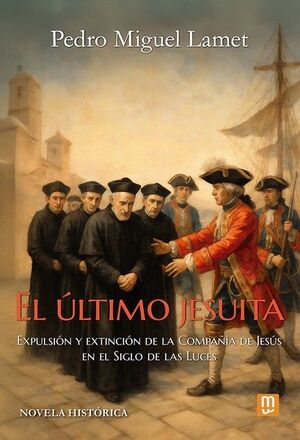
The Jesuit Pedro Miguel Lamet (Cádiz 1941), one of the best writers in the Spanish language, has just delivered a literary jewel of historical plot about the expulsion of the Jesuits from various European countries until their suppression by Pope Clement XIV, on July 21, 1773.
As always, the strength of Lamet's novels lies in how extensively documented they are so that the gentlemen's agreement of the historical novel is fulfilled: everything that is narrated could have happened and surely did happen, albeit with some name or circumstance changed.
The advantage of the historical novel in Lamet's hands is that it makes history much more attractive because it enhances the intelligent interpretation of historical data by the work and grace of a fine observer.
For example, it is enough to read the masterful scene in which the future Count of Floridablanca teaches Mateo the Apostolic Brief “Dominus ac Redemptor” in which the Holy Father, as a result of the diplomatic pressure of the kings of Spain, France, Portugal and Austria to suppress the Society for the sake of the unity of the Church, at that moment of the maximum triumph of Charles III, of Caesaropapism, realizes that this suppression is “personal”, it is falsely torn, temporary, inadequate: “a brief is revoked with another brief” (21), it does not have the force of the juridical reason of the suppression by a pontifical bull that has the backing of the curia and the bishops (25).
Indeed, Pope Clement XIV had won the game, he had removed the diplomatic pressure, retained the maximum spiritual power, got rid of his enemies and succeeded in safeguarding the Society of Jesus which, with a simple Brief, would return to existence purified and splendid a few years later with the unconditional support of the entire universal Church.
Pedro Miguel Lamet has succeeded in explaining in an entertaining and simple way one of the most studied and commented historical enigmas of the last centuries, a demonstration that the Society is of divine origin and will remain until the end of time. The question has always been twofold and until now we had partial answers.
First, Lamet gives us the historical setting, the successive attacks, meticulously designed by a force that has always been attributed to Freemasonry but which Lamet simply dismantles.
Lamet solves the first part of the enigma by noting down the slanders and defamations to which they were subjected and which are passed from hand to hand, we will see in short how the atmosphere can deteriorate, create a climate of opinion, of slander accelerated by the simplest envy (121-122).
Let us simply note the explanations expressed by the various Jesuits who are presented throughout this magnificent historical novel. In the first place, the mixture of religion and politics of the “Reductions of Paraguay”. In order to understand this issue, it is necessary to go back to the various disputes over the limits of the influence of Spain and Portugal in America.
The “Reductions”, commissioned by a mission area in a territory under Spanish influence, would pass to Portugal and the Portuguese government decided to put an end to the utopia of Thomas More that the Jesuits had set in motion and would hand over the missions to Brazil, which would want nothing to do with them and would destroy one of the most interesting proposals for the pedagogy of civilization in history. Therefore, the Jesuits would be free from the authorities: a political group (38).
Other calumnies against the Jesuits are more simplistic, such as the attack that they preached a relaxed morality and therefore were to blame for the spiritual and moral deterioration of the European courts that had Jesuit chaplains. It is not to understand the probabilism that affirms that “doubtful law does not bind” (82).
Another commonplace was to attack the famous Jesuit missionary Ricci and affirm that in order to ingratiate himself with the Chinese authorities he would have changed the message of Jesus Christ for a mixture of Christian revelation and Chinese cultural traditions. History has shown that the Catholic Church in China is faithful to the doctrine of Jesus Christ (101).
Let alone blaming them for having divided the Church because in France all those who did not think like them in moral matters were called Jansenists and heretics. They were self-referential and in their books they only quoted Jesuits. It is very interesting to study Pascal's “Letters to the Provincial” to see that if Pascal had succeeded we would all be scrupulous now. His criticisms are simply arithmetic as opposed to prudence.
Finally, we must go to the heart of the matter, as Lamet does: the great unanswered question. Indeed, Charles III will say that the real reasons for the expulsion and suppression were left to his real conscience.
What could these “real” motives be? Lamet answers masterfully by explaining, without explaining it explicitly, that Charles III wished to carry out the reform of the Church in the world, as Henry Kamen has explained, with his hands free and he was hindered by the Holy See and the Society.
Indeed, Charles III and his successors imposed the Cortes of Cadiz, liberalism, the suppression of religious orders, “the religious question”, the disentailment of the “dead hands”, the quotas of seminarians and novitiates according to the needs of the dioceses, that is, the Church subjected to the State, dedicating itself to explaining the “constitution“ to the people and asking permission from the mayor of the town if it was going to leave on a trip. That is to say: the 19th century.
Thank goodness for democracy, religious freedom, the respectful separation of Church and State, the social doctrine of the Church, the Second Vatican Council and the universal call to holiness.
La entrada Cuando la política quiso borrar a los jesuitas se publicó primero en Omnes.
]]>La entrada Las evidencias de que Jesús es Dios se publicó primero en Omnes.
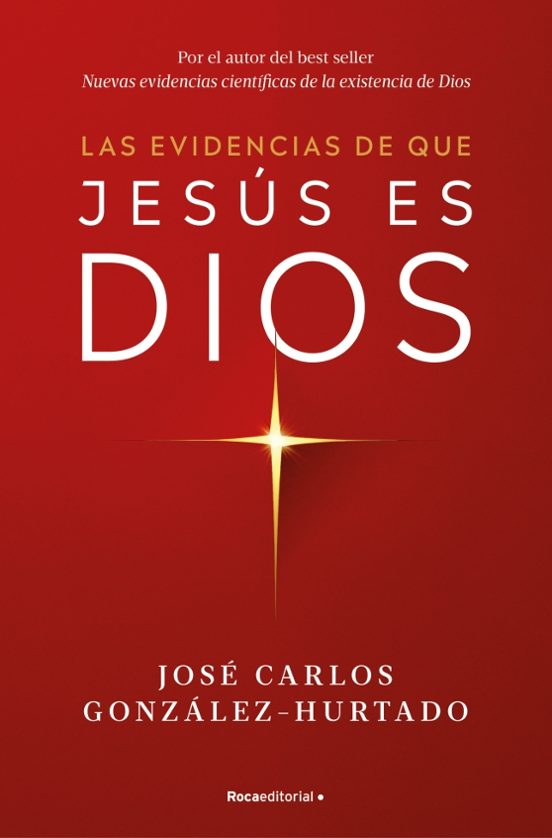
]]>In this regard, it should be clarified that José Carlos González-Hurtado's work is not controversial, nor is it the result of discussions with argumentative people or those who seek debate for debate's sake.
Really, it is not worth reasoning about the figure of Jesus and the scope of revealed truth when the person in front of us is not interested and does not have the slightest curiosity. It is preferable to wait until a loved one dies, or they suffer from depression, financial ruin, or colon cancer. That is, when they rethink their way of life and their value system is in crisis, then you can ask them if they are interested in knowing Jesus Christ and entrusting their material and spiritual needs to Him, because this is certainly a question that essentially affects the core of the soul. It is only worthwhile to speak directly and propose who Jesus was so that by knowing Him, they can relate to Him and, by relating to Him, grow fond of Him.
Cold reasoning can multiply in front of the skeptic who neither wants to believe nor is interested in believing, and who is comfortably settled into a selfish way of life. The path to God is the path of the heart, simply because God is love.
This is what I was thinking about when I began to read José Carlos González-Hurtado's book, which brings together many indications of the divinity of Jesus Christ that will not leave those who have never considered the opportunity to know Jesus intimately unmoved.
The table of truths about Jesus, which are fully supported by numerous sources outside the Church and preserved almost miraculously, is very cleverly put together (64).
We must now turn to a very interesting chapter that has given rise to the most serious insinuation in recent years: “whether Christianity was an invention of the early Christian community.” If this were the case, as some authors insisted at the beginning of the 20th century, then the Church could continue its work until the end of time simply by adapting it to the times, as some schools of thought claimed at the end of the Second Vatican Council (69).
Before concluding the first part of this interesting work, our author will focus on two key figures. The first is Feuerbach, who in his book The Essence of Christianity presented one of the most important critiques ever made throughout history: “Did God create man, or did man create God?” Certainly, here is the question in its rawest form: do we or do we not have faith in the existence of God, and of a God who has revealed himself and invites me to know his revelation?.
The second key author in this final section is Nietzsche, who, dissatisfied with the doubts raised by Feuerbach, encourages Western culture to be consistent and kill God, that is, the false God that men have created and continue to worship out of inertia and superficiality (155).
In seeking arguments in favor of the evidence that Jesus is God, our author will begin by explaining the origin, consolidation, and dissemination of the oral revelation of Jesus and subsequently the written revelation in the New Testament and in the writings of the Church Fathers, all of which has been preserved, conserved, and transmitted by the magisterium of the Church to the present day.
Certainly, after twenty centuries, we can affirm that we believe the same as the early Christians, for the Holy Spirit has watched over us throughout history so that the treasure of revelation would not be lost. At the same time, we know more about Jesus Christ than the early Christians did, for we have spent centuries passing on to one another what we have learned about Him in our personal relationship with Jesus Christ Himself.
Thus, the central argument of this work is to focus on the figure of Jesus Christ, alpha and omega, lord of history and father of this supernatural and human family that is the Church, universal sacrament of salvation.
The first thing our author does is review the scene of the discouraged disciples of Emmaus, when Jesus Christ himself ignites their hearts simply by demonstrating how He himself had fulfilled all the messianic promises contained in the Scriptures (272-284).
At this point, you may wonder why most Jews did not convert to Christianity (285). This question is logical and very easy to answer, because they have not responded to God's grace. In other words, for a Jew to believe in the divinity of Jesus Christ, the grace of faith and the response of the person are necessary (288).
Next, he will bring up the archaeological argument, as he will indeed provide much scientific evidence that speaks to the divinity of Jesus Christ, reflected in burials and especially around holy sites in the Holy Land such as the Pool of Bethesda, and so many other proven miracles, such as the miracle of the resurrection and the “empty tomb” (313).
He will immediately address the sum of Eucharistic miracles throughout history, for example, those collected by St. Carlo Acutis and others that continue to occur today (353). He will also provide the latest data on the testing of the Shroud of Turin, despite the difficulties of Carbon 14 and Carbon 16 after the atomic bombs (341), and the Holy Face of Oviedo (343).
La entrada Las evidencias de que Jesús es Dios se publicó primero en Omnes.
]]>La entrada ¿Ideales o ilusiones? El sentido de la vida a debate en la obra de Juan Antonio Estrada se publicó primero en Omnes.
]]>As a result of his extensive research, Estrada reminds us of that memorable text by Benedict XVI when he emphasized that the early Church entered into dialogue with Greek philosophy in search of a dialogue between faith and reason.
The result of this dialogue was the so-called realistic philosophy that underpinned Christian humanism until the May 1968 revolution, passing through the renewal introduced by Francisco de Vitoria and the School of Salamanca.
Christianity would be an ideal because it would open the way to identification with Christ by following the necessary steps of an ideal or any project of greatness: “there are three values that are fundamental to any project: meaning, emancipation, and salvation” (14).
Certainly, Jesus“ evangelization ”sharpened the need for personal conversion and individualized the concept of salvation" (60), to which we could add that this took place in a climate of total freedom.
Estrada then draws an initial conclusion: “the focus of religion is no longer worship, but behavior and relationships with others, radicalizing the previous message of the Jewish prophets” (61).
Certainly, the Gospel scene of the destruction of the temple speaks to us of the new altar in the heart of every Christian who offers up his or her daily life as a sacrifice of immense value, as great as his or her love, and always united to the one true sacrifice of the New Law, which is the Mass. St. Josemaría spoke of not reducing Christianity to going to church: “Christianity arises around a person, not a doctrine or an ideology; it offers a different way of life. The ultimate reference is not the religious system, but the personal following of Jesus” (62).
For much of history, the Ten Commandments revealed to Moses occupied an important part of the moral teaching of the Church from the Middle Ages to the present day, when the new catechism has proposed a morality of holiness for all Christians (65).
Estrada then recalls that “Human history shows humanity’s inability to triumph over evil. The success of revolutions soon turns into new forms of oppression by the victors. We must place our hope in the ongoing struggle against evil and in the action of God, who inspires those who follow Jesus” (69).
Indeed, what happened to our author is similar to what happened to Juan Azor, author of the Jesuits“ ”ratio institutionis" in the 16th century, who influenced the drafting of the catechism for parish priests or St. Pius V, when the time came to propose holiness as a model for Christian morality, faced with the urgent need for reform of the Church and the Christian people, he simply called them to salvation.
Once again, Estrada places the mystery of the Lord's resurrection at the center of the new morality and the new evangelization when he states: “What is new in the proclamation of the risen Christ is the fundamental reference to his history and his way of life. To emphasize the resurrection while marginalizing the life of Jesus would lead to the devaluation of the earthly Jesus” (70).
For Christianity, it was a unique opportunity to develop within the framework of the Roman Empire, adopting its laws, bureaucracy, and administration, because it was a well-organized society. The price to pay was the distancing of Judaism from its origins (75).
It is interesting that Estrada made the mistake of admitting a distance between the clergy and monks and the Christian people, and a difference between the various social classes in Christianity. This was surely due to the influence of the Marxist views of his youth (76).
The different theological schools that would emerge in the Church with the birth of universities, depending on the emphasis placed on the balance between faith and reason by St. Thomas, on the effort to emphasize the will in John Duns Scotus and St. Bonaventure, or on the promotion of nominalism with William of Ockham and his contempt for reason (79).
Luther brought about a painful transformation of Christianity, stripping it of the mediations of the Virgin Mary and the saints, of the sacraments to intervene in grace, and of the magisterium to shed light on understanding (81).
Finally, our author will refer to the Catholic reform that took place in Spain with the reform promoted by the Catholic Monarchs and Cisneros and continued by Francisco de Vitoria and the School of Salamanca, which we will celebrate in the year 1526 (86).
Next, he will address the Enlightenment, whose starting point we must place in Descartes (1596-1650) and his discourse on method, when philosophical immanentism began, which would last until Kant (1724-1804).
He then summarizes: “The Kantian system has influenced philosophy, ethics, and religion. But Hegel (1770-1831) is the continuator, reformer, and systematizer of global rationality. His system dominates the entire 19th century and serves as a reference point for Feuerbach, Marx, Kierkegaard, Schopenhauer, and Nietzsche” (111).
La entrada ¿Ideales o ilusiones? El sentido de la vida a debate en la obra de Juan Antonio Estrada se publicó primero en Omnes.
]]>La entrada ¿La religión está obsoleta? se publicó primero en Omnes.
]]>In this work, he will exhaustively quantify the sociology of religion to provide us with accurate data so that we can agree with or contradict his interesting conclusions (29).
The first conclusion of this work, derived from the exposition, tables, analyses, and reference authors, would be that sociologists of religion in the United States are closer to reality than Spanish sociologists of religion who, as we have had occasion to point out on other occasions, are heavily influenced by the political ideologies of the Spanish transition and the present day.
The critical realism of this professor of Sociology at the University of Notre Dame in the United States is not perfect, nor does it coincide 100% with reality, simply because only God has a complete vision of reality, since He scrutinizes the interior of our consciences and knows our deepest thoughts and the truth of our intentions. However, his realistic view and the minimal ideology with which he approaches problems certainly make it more relevant and, above all, capable of providing guidelines for reconnecting with God on a personal and family level (41).
Christianity is certainly not obsolete, nor will it ever be, because even though people today may be less religious or less observant, or may have a weaker doctrinal and liturgical formation than in other times, they will always have the power of obedience to be found and loved by Jesus Christ our Savior, as St. Paul said to Timothy: “God desires all men to be saved and to come to the knowledge of the truth” (1 Tim 2:3-4).
On the other hand, there is and always will be an infallible bridge through which Jesus Christ connects with each of the men and women he has created and to whom he has given an immortal soul. This bridge, which can be crossed at any time, consists in the fact that we are “the image and likeness of God” (Gen 1:36). Therefore, through understanding and the heart, Jesus Christ passes through every day and invites us to a personal relationship with Him, to heaven on earth and heaven in heaven, as can be seen in our personal lives.
Now that we are celebrating the 500th anniversary of the founding of the School of Salamanca, since Francisco de Vitoria OP began teaching at the Faculty of Theology of the University of Salamanca in 1526, we must look at how the Salamanca master developed the concept of the dignity of the human person and, specifically, the fundamental concept of freedom throughout his classes, rulings, and lectures.
What is obsolete, therefore, is a concept of man and anthropology that may have been interesting at other times in history and facilitated coexistence and the construction of social order, but must now give way to anthropological models more in line with the thinking of our time.
Precisely for Victoria, man is essentially relationship, as God is in her intimate life: three subsistent relationships: the subsistent relationship of Fatherhood, the subsistent relationship of Sonship, and the subsistent relationship of Love. Hence, man, the image and likeness of God, is also essentially relationship with God and with others.
In fact, man matures in the most important of relationships, which is that of love. Let us not forget that “God is love” (1 John 4:8) and therefore, what we do is give love in our relationships as a fruit of the love received in our relationship with God.
Now let's return to Professor Christian Smith's analysis to note some of his interesting observations about the importance of promoting this anthropological concept we have just discussed.
Indeed, our author repeatedly returns to the subject of prayer and the things that young and old alike talk about with God in their prayers. Logically, drawing on the Spanish tradition of the Golden Age of Castilian mysticism and the universal call to holiness for all Christians from the Second Vatican Council (Constitution “Lumen Gentium” n.11), he proposes a renewed Christianity based on a personal and real relationship between Christians and God. Therefore, if there is a personal relationship, Christianity is alive; if not, it is dead and quickly disappears from the horizon of life (49).
Christian Smith will certainly tell us that the intellectual and educational level of believers has risen enormously over the course of the 20th and 21st centuries. Certainly, in Western civilization, the education we can impart to Christians is much higher and deeper than in other periods of history, and in that sense, it is assumed that in the coming years the doctrinal formation imparted by priests and pastoral agents will be more attractive and profound than it is today, and that this will have an impact on the appeal of Jesus Christ: for in order to love Jesus Christ, it is necessary to know him better. (99).
The way the chapters of the book are titled is interesting: “The 1990s, the beginning of the end,” which includes the technological revolution and the internet as accelerators of the divorce between neoliberalism and Catholicism (137). Certainly, in Europe, the process of secularization had begun earlier, and what it has really shown is that Christianity, being a personal relationship, cannot remain a set of ideas or a package of beliefs.
We will conclude with Jesus“ own question: ”When the Son of Man comes, will he find faith on earth?" (Lk 18:8). Certainly, if in liturgical and sacramental life, people will always find the beginning or nourishment for a life of knowledge and love of Jesus Christ and the communal experience of faith that will also break the strong individualism of our time.
La entrada ¿La religión está obsoleta? se publicó primero en Omnes.
]]>La entrada Diego Saavedra Fajardo, una vida en Roma se publicó primero en Omnes.
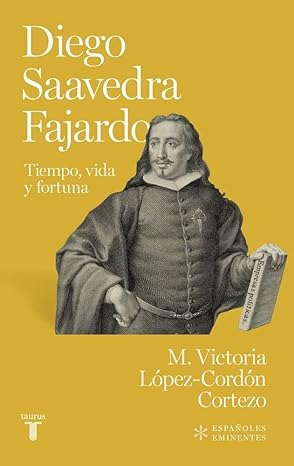
]]>On this occasion, we now have at our disposal the best biography ever written about Diego Saavedra Fajardo (Algezares, Murcia 1584 – Madrid 1648), agent of Preces of the King of Spain before the Holy See, secretary and collaborator of cardinals, ambassadors of Spain, and diplomat in Madrid, Rome, Naples, and Central Europe, in order to carry out tasks of coordination and liaison in a very complicated world, which ended with the Peace of Westphalia in 1648, the date of his death.
This century of consolidation of the great European monarchies following the debacle of Lutheran fragmentation in part of Europe and the break between the United Kingdom and the Holy See is interesting.
At the same time, let us not forget that Diego Saavedra Fajardo had studied in Salamanca. both rights and had been steeped in the spirit of the School of Salamanca, since Vitoria, Soto, and Cano not only achieved a reform and update of theology that was poured into the sessions of the Council of Trent and its dogmatic constitutions, but also into the great pastoral decisions of the Council, such as the episcopal residence, the constitution of the conciliar seminaries, and the reform of spirituality that produced a plethora of saints throughout Catholic Europe.
In Salamanca, Diego Saavedra Fajardo discovered the dignity of the human person emphasized by Francisco de Vitoria and its application to international law and natural law, both in the field of economics and law.
Finally, we must not forget that Diego de Covarrubias—a disciple of Vitoria and Martín de Azpilcueta—had left his chair in Salamanca and the Court of Granada to become Bishop of Segovia and President of the Council of Castile.
The appointment of clergymen, tonsured only in the case of Saavedra Fajardo, to high positions in the state administration developed by Philip II, was continued by Philip III and Philip IV during the lifetime and diplomatic activity of our humanist Saavedra.
Saavedra Fajardo was also a writer and poet, as can be seen in the compositions he wrote from time to time and published periodically, but above all in his reports, which he regularly presented to the Court, the Holy See, the Spanish Embassy, and the secretary of Cardinal Borja, whom he served faithfully for so many years.
Diego Saavedra Fajardo was a representative of “a generation” who read Tacitus, Seneca, and Machiavelli in order to learn what the ancients thought about political science and, of course, Boccalini, Lipsio, Mazarin, Quevedo, and so many other contemporaries who were preparing for enlightened despotism after the end of the wars of religion.
We are in the period of the European pre-Enlightenment, which is usually dated to the death of Descartes in 1650 and, therefore, to the beginning of rationalism and its criticism of the realist philosophy that prevailed in Europe and its immediate consequence, mistrust of the Church and God, which would become strong in the Age of Enlightenment.
Likewise, Saavedra Fajardo's work will be linked to the end of the religious wars that took place with the Peace of Westphalia in 1648 and the settlement of the breakup of Christian unity in the concert of nations.
This peace treaty would include the Treaty of Münster, signed in the same year in which Spain recognized the independence of the Republic of the Netherlands, which would eventually become a naval power trading with China and Japan.
We must not forget that, since the Battle of Lepanto coordinated by Philip II in 1571, the Ottoman threat had receded and European interests were more focused on trade with America and Asia than on the traditional Mediterranean routes.
In the 17th century, Spain had lost part of its empire in Europe, the Netherlands, and Germany, but remained strong with its monopoly on trade with America and the Philippines. The struggle with France continued as usual and reached a point of détente with the Peace of the Pyrenees (1659), which provided economic respite for Louis XIV, his regent, and Mazarin.
It is true that for Philip II and his successors, Spain's presence in the world meant serving the Catholic Church and defending the true faith against the Reformed and the infidels.
It is interesting how María Victoria López-Cordón Cortezo has taken the time to consider the presence of the works of Tacitus, the classic Roman historian who supported the empire. Tacitus respected the freedom of subjects and obedience to the laws of the Roman Empire, while Spain wished to be a staunch defender of the ideals of the empire, the Christian faith, and Roman law.
In this regard, we must highlight that Tacitus' works were published in all the major European languages during those years and were read and discussed throughout Christendom. In particular, Lipsius (1547-1606), the Flemish humanist, when he converted to Catholicism, promoted the people alongside his monarch, in accordance with the dictates of the Peace of Westphalia of 1648 and the classical echoes of the illustrious Tacitus. He took pragmatism, cold analysis, and raison d'état from the Latin classic.
Finally, we bring up Boccalini's (1556-1613) work on the commentaries on Tacitus that circulated in manuscripts, some of which can be consulted at the National Library of Spain or in the 1677 Italian print edition. Boccalini was very critical of Spain, as María Victoria López-Cordón Cortezo recalls, but he acknowledged the legality of Spain's presence in Milan and Naples and, above all, he was a supporter of Christian unity alongside the Roman Pontiff.
La entrada Diego Saavedra Fajardo, una vida en Roma se publicó primero en Omnes.
]]>La entrada Genealogía de los derechos humanos se publicó primero en Omnes.
]]>Certainly, the declaration of human rights was made possible by total and universal agreement, and that Magna Carta has since served to unite people of all races and conditions, as if they were applications of natural law, of a global ethic, and of a starting point for preventing or at least condemning attacks on human dignity.
The problem is that, in the minds of Christians, Jews, and Muslims who believe in a single, transcendent God, it was very clear that human rights were based on the dignity of the human person as a child of God or, at least, as a creature of God.
The difficulty lay with non-believers, who were growing in number and who could not find a solid principle to support human rights other than human rights themselves.
The idea developed by Hans Joas in the essay we are discussing here is precisely this: basing human rights on the dignity of the human person would be tantamount to sacralizing the human person, that is, giving them a dignity and renown that would truly ward off the temptation to attack, humiliate, or degrade that dignity.
In a way, Hobbes“ Leviathan pact would pale in comparison to the sanctification of the person who makes commitments of truth and freedom to other human beings, recognizing that this relationship dignifies and becomes a source of fruitful creativity. In short, it would be to interpret the Second Vatican Council, in the dogmatic constitution Gaudium et spes, when it affirms that man is the ”only earthly creature that God has loved for its own sake, and that it cannot find its own fulfillment except in the sincere gift of itself to others“ (n. 24).
This is very important, because Hans Joas believed that, after a few years, there was a risk that we would turn the 1948 Universal Declaration of Human Rights, which has underpinned the United Nations, into a “successful process of generalizing values” (p. 21).
Even some, years later, could cite it as an example of the historical evolution of the good intentions of the 18th century in updating the ideas of the American Revolution or the French Revolution (p. 24).
Above all, let us bear in mind that the French Revolution was above canon and civil law and manipulated the people and the Church at will to become persecutors of God throughout French territory, leaving the country littered with guillotined corpses until they themselves were guillotined (p. 31).
The first consequence in the United States was the principle of religious freedom, whereby no one should be harassed for their beliefs or forced to adopt a religion or creed (p. 53). Years later, the Second Vatican Council itself would take up this freedom and spread it throughout the world: without freedom, it is impossible to love God.
This was logical, since human rights apply to all people of all races, cultures, and nations, and we are all equal before the law and have equal opportunities.
They also quickly put an end to torture in the constitutions of all European nations, so that torture ceased to be a systematic part of criminal law or the investigation of theft (p. 63).
The disappearance of torture is not simply the result of the humanization of punishments and penalties; it is something much deeper. It is a return to the principle of presumption of innocence and the idea that man should always be treated as the image and likeness of God, and that it is preferable for him to lie than to be tortured.
Torture is undoubtedly abhorrent in a state governed by the rule of law and far removed from all human logic (p. 69). Human rights therefore introduce a new sensitivity into criminal relations (p. 71).
Thus, since 1830, it has been practically abolished throughout Europe, and in Spain since the Cortes of Cádiz in 1812, although it is true that torture has occasionally been used in some places in the 20th century, but it is no longer official or systematic. Unfortunately, we must point out the case of China (p. 105).
It is also interesting that, as a result of those first declarations of human rights, they began to be exercised and slavery was soon abolished in Europe, so that, with varying degrees of agreement on the implementation, slavery, which was a shameful scourge, disappeared.
Finally, our author returns to the idea of the spiritualization of human rights. Specifically, speaking of the Holy Spirit, he suggests that with its help, “the sovereign force of recasting” could be achieved (188).
He then goes on to say that God “reveals himself in history and in human action” (193), which is why it is important for Christians to show that they have a personal relationship with God, so that we act in reliance on him, asking for his help and involving him in our plans.
He even goes so far as to say that “institutions without spirit would be unreliable” (p. 204). Therefore, human rights would end up being like “the Magna Carta of human autonomy” (206). He concludes by saying that humans either become sacred by uniting with God or become disenchanted with life (p. 244).
La entrada Genealogía de los derechos humanos se publicó primero en Omnes.
]]>La entrada Tiempos de la Historia, tiempos de la Justicia se publicó primero en Omnes.
]]>Next, the study of time will begin in earnest with a masterful distribution of three moments of the subject. First, time as “chronos,” that is, the now classic “tempus fugit,” in which time slips through our fingers, is, in short, the relentless passage of time.
This is very interesting, because this basic conception of time is, in a way, uncontrollable, overwhelming, and truly ephemeral: “time would be independent of people and problems” (p. 29).
Next, our author will address “Kairós,” that is, the event, the wonder, the impact, the spark of life in time, that which is always remembered, that which will mark the inseparable destiny of men, the so-called milestones.
We are, therefore, “facing a moment of great human decisions” (p. 30). It is a qualitative time, a playful and lively time, and therefore, even if it arrives as the ripe fruit of wisdom, it will not depend on us.
Finally, he will refer to “Clio,” that is, history as judge; the dock of history, the judgment of history, or the spirit of History according to Hegel, or as Cicero would say, history as the teacher of life, with its lessons.
It is a moment that Machiavelli would call the art of politics and Baltasar Gracián would simply call prudence. In any case, it will be supernatural prudence and human prudence judiciously weighing the causes (p. 31).
The plasticization of these periods in art history is interesting, from the first impressions of death to Goya's paintings featuring Clio and the devouring truth (p. 33).
Therefore, our author would have overcome the famous dichotomy of time in Greek philosophy, which was always circular and perpetually repetitive, or the Christian version of time as a horizontal line, progressing from its beginning, which is history, but which leaps to eternal life after the brief passage of earthly life.
It will also show Frederick II Barbarossa breaking with the tradition of “Christ the judge” and lord of history and universal judge of good and evil, as reflected in the feast of Christ the King at the end of the liturgical cycle, by the new figure of the “Emperor-judge” who begins to persecute the Cathars and put them to death before they become a new Arius in the Church and end up destroying the Church and Christianity (p. 41).
Indeed, Innocent III reacted by reviving the “munus regendi” and ended up taking back the keys and founding the nefarious institution of the Inquisition to proceed with violence in defense of the faith. This was condemned by St. John Paul II on March 12, 2000, but the damage had already been done since the 13th century, with the inquisitorial mentality of judging man by his ideas and not by his heart.
Before concluding the chapter by coordinator and professor Fernández Sebastián, we would like to recall his interesting observations about the fundamental difference between historical memory and historical judgment: “All justice is historical (in the sense of being temporary and contingent) and, therefore, there is no such thing as supra-historical justice, which already obsessed Plato and periodically resurfaces in the work of philosophers who, as in the case of Leo Strauss, aspire to attain immutable moral and political truths, in this case a concept of justice safe from the dissolving and transforming effects of the pickaxe of time” (p. 51).
He then goes on to propose a new code of ethics that brings together all historians of different tendencies, backgrounds, ages, and intellectual and cultural training (p. 56).
It is very interesting to see how other disciples of the professor from the University of the Basque Country are taking up the baton and taking this magnificent work in other historical directions.
For example, researcher Marcos Reguera, professor of political thought at various American and European universities, will revisit the issue of unjust laws and their non-binding nature (p. 83), given that “law and justice must oppose arbitrariness” (p. 84).
He also discusses the history of theology in Christianity and the shift that took place within it when it moved from the Church that awaited the imminent “parousia” of the Lord in the early centuries of Christianity to the sanctifying Church that illuminates the path of Christian life with preaching and the sacraments (p. 93). The conclusion is clear: “more important than faith and works is love” (p. 97).
Josu de Miguel Bárcena will discuss the amnesty law which, together with the new constitution, endorsed the rule of law that underpinned democratic coexistence in Spain and served as a model for many years. It is now being studied in detail from a historical and legal perspective, leading to the conclusion that it was a law of “memorable forgetting” but that it will not satisfy the desire of some judges of history who lack a deep historical vision (p. 185).

La entrada Tiempos de la Historia, tiempos de la Justicia se publicó primero en Omnes.
]]>La entrada La Virgen Madre de Dios se publicó primero en Omnes.
]]>Indeed, the consolidation of hope has been the key to this Jubilee year that we are celebrating in the universal Church and we cannot forget that the foundation of hope is rooted in the grace of God that has been poured out in baptism under the invocation of God the Father, God the Son and God the Holy Spirit.
First of all, we must refer to the theological disputes that arose from the fourth century onwards in the Church, that is, as soon as the “so-called intellectuals” came into contact with the Christian revelation and became aware of the first expositions of the faith: catechesis, the symbol of the apostles and Christian apologies.
Let us also remember that in 313 Constantine allowed the Church to obtain a charter and to possess juridical personality, and countless people asked to be baptized.
The Church Fathers of this period emphasized how this massive influx of new faithful without careful preparation and, above all, with few clergy to assist them on the path to baptism, produced a drop in tension in the Church.
Here we have the origin of the double movement that developed throughout the Catholic Church at both ends of the Mediterranean, in whose basin the Christian faith had grown and expanded. On the one hand, the monastic life that led thousands of men and women to live a life of identification with Christ, imitating him in the days he spent in the desert in preparation for his public life. A path of holiness that had three phases: the anchorites, the cenobitic life and the monasteries. This path of holiness endures in our time in very varied forms that have a common trunk with the desert fathers.
We should immediately recall the thousands of men and women who, as Origen and other apologists told us, remained celibate in the bosom of society, dedicated to work, family life and the exercise of charity in apostolic celibacy or as fathers and mothers of a Christian family in fullness of love. St. Josemaría pointed out, however, that this way of life of many Christians “ended up being forgotten as a result of not living it.
Within the framework we have just outlined, we now wish to present the problem of the theological disputes that arose within the Catholic Church in the fourth century, as soon as institutional normality was achieved.
The first question raised by the pagan priests and even by the rabbis and doctors of the law converted to Christianity, i.e. the “intellectuals” of that period, was how to reconcile the uniqueness of God with the presence of the theophanies of the New Testament, the identification of Jesus Christ with his Father and the undeniable presence of the Holy Spirit not only in the theophanies mentioned but also in the Acts of the Apostles and in the daily life of the Church.
Thus, it was a matter of reconciling the trinity of persons with the unity of nature. Basically, the central arguments of the Treaty of Trinitate in which everyone believed and had grown in faith and in the life of faith, needed to be made explicit.
The second great question would be how to combine the two natures of Christ, the divine and the human, in the one person of Jesus Christ. Let us not forget that since the spread of the heresy of Manes, the idea of one God of good and another of evil was very widespread, which was rejected by anyone who thought a little about the divine substance.
Theological discussion moved from the scientific and specialized sphere to the simple people and the street, thanks, for example, to the catchy songs of Arius, and open discussions became public and passionate.
Finally, let us remember the figure of Nestorius, Patriarch of Constantinople (428-431), who raised another very delicate question. In his opinion it was convenient to call the Blessed Virgin “Mother of Christ” instead of “Mother of God” lest some ignorant people think that the Virgin was God.
Here are some words of St. Josemaría commenting on this theological discussion and the solution it provoked at the Council of Ephesus: ”This has always been the sure faith. Against those who denied it, the Council of Ephesus proclaimed that «if anyone does not confess that Emmanuel is truly God, and that for this reason the Blessed Virgin is the Mother of God, since she begot the Word of God incarnate according to the flesh, let him be anathema».» (Council of Ephesus, can. 1, Denzinger-Schön. 252). History has preserved for us testimonies of the joy of the Christians before these clear, clear decisions, which reaffirmed what everyone believed: «the whole people of the city of Ephesus, from the early hours of the morning until the evening, remained anxiously awaiting the resolution... When it was known that the author of the blasphemies had been deposed, all with one voice began to glorify God and to acclaim the Synod, because the enemy of the faith had fallen. As soon as we left the church, we were accompanied by torches to our homes. It was night: the whole city was joyful and illuminated» (St. Cyril of Alexandria, Epistolae, 24 (PG 77, 138). Thus writes St. Cyril, and I cannot deny that, even at a distance of sixteen centuries, that reaction of piety impresses me deeply”.
Undoubtedly, these words highlight how devotion to the Virgin was always based on considering her as Mother of God and mother of men, and on this maternal privilege the other Marian titles and privileges were based, as the Dicastery for the Doctrine of the Faith recently recalled.
La entrada La Virgen Madre de Dios se publicó primero en Omnes.
]]>La entrada Habermas: Cambio estructural en la esfera pública se publicó primero en Omnes.
]]>That this common ethics that is being sought should be open to transcendence is a sign of great common sense and open-mindedness, since for twenty-first centuries there have been many men and women of great intelligence who have lived in accordance with their faith in a divine revelation that is in accord with the dignity of the human person and therefore worthy of being taken into account. Indeed, the transcendence of man, in the philosophy of the limit, enriches the dignity of the human person, a transcendental matter for building the common home.
First, in the study we now present on the structural change of the public sphere, Habermas will refer to the concept of “deliberative politics” thanks to which democratic debate can be recovered, seeking the common good and not simply clashing or convincing the adversary, nor even considering the other as an adversary but as a stakeholder in the dialogue.
For Habermas, it is important to broaden the concept of “public opinion”, which is already too hackneyed and with clear traces of manipulation, and exchange it for that of “public sphere” where we can all be comfortable.
Logically, Habermas will recall from the beginning of his presentation how society has changed since the fall of the Berlin Wall, the end of communism and, at the same time, the collapse of the welfare civilization, since we are heading towards an atrocious individualism and also towards excessive tax burdens by the State to maintain the excessive social charges, social security contributions and pensioners' money. Finally, he will point out that we are still in a democratic capitalist society but prone to constant financial crises.
He will then state that the foundations of the democratic and legal concepts on which we base the edifice of the State and the structures of power must be strengthened: “With the Declaration of human rights and fundamental rights, the essence of rational morality migrated to the medium of imperative constitutional law, constructed on the basis of subjective rights”.
He will therefore point out some deep contradictions that we experience in today's society: “with the secularization of state power a legitimacy vacuum arose. Since in modern societies the legitimizing power of faith in the divine election of the ruling dynasties was no longer sufficient, the democratic system had to legitimize itself from within itself.”.
It is interesting to note that Christian humanism had the potential to help post-war society in the universal declaration of human rights, since they were able to legitimize them in theological anthropology. Man “is the image and likeness of God”, and therefore, in the 1948 declaration of human rights, human rights were legitimized in human rights, that is to say, they were self-legitimized, based on human dignity and on a universal rational consensus.
Let us return immediately to Habermas to recall that “The close relationship between social status and electoral participation is well documented (...). It only works as long as democratic elections lead to the correction of serious and structurally entrenched social inequalities”.
Habermas will then conclude his argument by leaving the issue up in the air or in abeyance: “for the time being there is little to say in favor of the desirable policy shift towards a sociological agenda aimed at further integration of the European core”.
He will immediately tackle the great problem of the unity of interests in political life and the importance that communication and states of opinion are acquiring in the public sphere.
It is logical that he pauses to note: “the media system is of crucial importance to the role of the political public sphere as a generator of competing public opinions that meet the guidelines of deliberative politics.”.
Indeed, much of the structural change in the European Community, for example, is based on the media, advisory cabinets and ways of exposing different attitudes: “since the emergence of media societies, nothing has changed significantly in the social basis of such a separation between the public sphere and the private spheres of life. (...). Moreover, there is a growing tendency to move away from the traditional perception of the political public sphere and politics itself”.
Next, the editor of this book brings together several interviews with Habermas, which may help us to understand some of the concepts he has pointed out in the first part of his work.
For example in some answers, he will take up some of the issues pointed out and outline such important matters as the following: “in political disputes we improve our convictions and get closer to the right solution of problems”.
We find the following important: “most political decisions are based on compromises. But modern democracies combine popular sovereignty with the rule of law”. Almost at the end Habermas will point out, as a constitutive requirement, the importance of “rationalizing political power through democratic control and critical debate”.
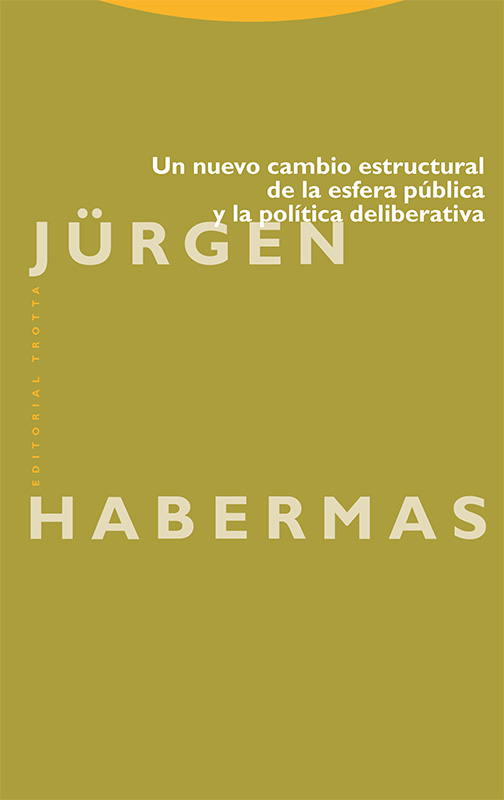
La entrada Habermas: Cambio estructural en la esfera pública se publicó primero en Omnes.
]]>La entrada Luna Miguel: la censura más profunda nace de nosotros se publicó primero en Omnes.
]]>In fact, St. Basil the Great (p. 330-379), one of the great fathers of the Church in the fourth century, when the Church had already obtained a charter and could therefore express itself with complete freedom, is the first to address the young people of his time and of all times to speak to them about critical sense at the time of reading the Greek and Latin classics that they will be able to read when they enter the schools of Rhetoric and Oratory to begin their formation.
The advice that has transcended all times and cultures is of great wisdom: it is necessary to read a lot in order to learn to know who God, man, the world and nature are and thus to be able to govern the world that God has given us as an inheritance (Dt 3:18) and, therefore, to live together with others will build the kingdom of God and, finally, to acquire the necessary wisdom of life with which to bring to our time the values and gifts we have received from the family and our teachers.
The second piece of advice, even more concrete, was to know how to draw from books all the greatness they contain in order to build in ourselves the greatness of the dignity of the human person, of every human person of every class and condition. Logically, as a believer, he added that the greatness of the person is based on being the image and likeness of God. At the same time, it is necessary to know how to elegantly set aside anything that attacks the dignity of the human person, or diminishes or diminishes it in any way.
Luna Miguel will tell us on this occasion in first person, the genesis and development of a lecture that she had to give to a university audience on a topic as broad as censorship and pleasure, within a cycle of literature and eroticism.
He then explained that in order to be able to say something valuable so that those attending the conference could take away from the presentation any idea of interest, it occurred to him to give the personal example of what had happened to him and his environment when, after much effort, he had managed to get hold of the novel by the Russian Vladimir Nabokov, published in the United States in 1955, which narrated the adventures of the protagonist, an obsessive man, Humbert Humbert, in his adolescence he had managed to get hold of the novel by the Russian Vladimir Nabokov, published in the United States in 1955, which narrated the adventures of the protagonist, an obsessive man named Humbert Humbert, who had fallen madly in love with a 14-year-old girl named Lolita and ended up marrying Lolita's mother in order to get close to the girl and take advantage of her.
First of all, Luna Miguel reduces the climate of tension that he would have created in a few short pages, that is, he explains crudely that the novel is much more propaganda than reality, because after a few years neither the subject matter was so crude, nor the narration is so explicit, and finally the exposition is not so credible either. That is to say, that nowadays its reprint would not have any success.
Evidently, the most interesting part of this work is the bibliography that he has incorporated at the end of the book, since it shows that he has given a lot of thought to what he has written and, above all, he has expressed it with good humor, maddeningly and documented.
Logically, he will provide us with all the information he has been able to gather about the impact of the famous contemporary novel that, according to the New York Times at the time, became a worldwide “best seller” and was translated into all Western languages.
He will also tell us about the scandal that the hippie movement and world pacifism due to the Vietnam War caused in large sectors of European and American society, ten years after the end of the Second World War, when secularization was slowly advancing and almost ten years before the revolution of sixty-eight.
As the author clearly explains, in a very personal way, the book now has much less shrapnel than many works that are being published everywhere, television series, etc., both in terms of the subject matter and the way it is written.
In any case, it is interesting that the advice received by the author when she was a teenager, whether from her parents, the librarian or her literature teacher, was to wait a while to read it in order to have the necessary training, more complete criteria and critical capacity to extract from the book what was necessary to better understand the dignity of the human person and to reject what would diminish it.
In the background of this interesting work, it is clear that there is still a lot of tension in everything that refers to the treatment of women in literature, the audiovisual world or art in general. Evidently, there is a lot of mistrust in this book: “Let's not be naive. We have not yet broken the glass text. It is enough to know a little of the history of our gender to realize that behind the advance of our rights and freedoms there is always a wave of iniquity that forces us to retreat” (p. 33).
Admittedly, the work will gain momentum and eventually turn the subject of Lolita into a knot of interesting comments: can one distinguish the work from the author? Can one read this work without drawing the obvious conclusion that psychological abuse is wrong? (p. 37). This work will get “complicated” at times, but it also provides thought-provoking arguments for both novel readers and authors.
It is interesting that our author, in a moment of raving, writes some words that summarize a senseless complaint against common sense: “it didn't matter if they censored it, she had them in her head and therefore she would rewrite them if she felt like it; to put an end to literature, they would first have to put an end to her” (p. 72-73).
And, putting Simone de Beauvoir in line with the Marquis de Sade, she will affirm: “De Beauvoir saw in the various misunderstandings provoked by the pornographer's work a form of murder. To forget her literature or to reduce her life to a couple of anecdotes was, on the one hand, that which would destroy her thought, but also that which, ironically, would save her name from the fire” (p. 95). Moreover, she will affirm: “the history of literature is the history of our addictions, I thought then, right there, at the stroke of midnight, with the enormous sadness of being alone” (p. 117). Shortly afterwards, she will end this work with these significant words: “It will be up to you to decide whether you want to participate in this unthinkable delirium, or whether you have only come to understand it” (p. 211).
La entrada Luna Miguel: la censura más profunda nace de nosotros se publicó primero en Omnes.
]]>La entrada Los 250 años de Estados Unidos se publicó primero en Omnes.
]]>A good example is the recent work of historian and communication specialist Angel Luis Cervera Fantoni, focused on Spain's contribution to the independence of the United States.
Let us remember that very recently Professor Nel deGrasse Tyson (New York 1958), one of the most influential science communicators in the United States, referred to Columbus' voyage and the discovery of America on October 12, 1492 as one of the most important events in history, because with his daring to follow the western route he managed to interconnect two worlds that had been divided: North and South America had been disconnected from the rest of the continents for many centuries.
In fact, through the fundamental fact of the discovery, the American colonization began based on cultural exchange and in the religious and legal sense, since the following discoveries throughout the length and breadth of those territories were aimed at the evangelization of the natives and their culturization.
It is enough to realize that more than 60 % of the inhabitants of New Spain (Mexico) at the time of independence were indigenous people who were baptized and many of them were literate and governed their lands and had their industries. That is to say, the culture and civilization that Spain implanted was not that of Europe, but was completely new: neither Spanish, nor indigenous, but a synthesis of both that was acquiring tonalities and accents according to the different places.
In fact, when the United States gained its independence and, above all, after the Civil War, the process of overcoming racism and slavery began and the new United States began to act as in South America, creating a new culture and civilization in those vast territories.
In fact, just as in the South Spanish was imposed but grammars and dictionaries were written to evangelize those lands and to preserve many local traditions, so too in the United States they stopped the English system of “the best Indian is the dead Indian” to adopt the Spanish system.
But Spain did something much greater than discovering America and that was to bring there the Christian humanism that was sprouting in Europe from the School of Salamanca and that turned Renaissance humanism into a new humanism that was spreading from Spain to the whole world.
In fact, in 1526, we will now celebrate the five hundredth anniversary of the beginning of the teaching of Francisco de Vitoria in the Faculty of Theology of the University of Salamanca and with that teaching would also begin the friendship and contacts of Vitoria and his disciples with more professors and students of the University and, through academic mobility and books, Vitoria's ideas reached all the universities of the world and from there to all the Christian people.
It is very interesting that the laws of the Spanish Indies influenced the United States and contributed to the creation of the rule of law with the American Constitution. That is, the law protected the individual.
Precisely, the dignity of the human person was the key to understand the School of Salamanca and to understand its fundamental characteristics. If we were to summarize the contributions of the School of Salamanca, we would have its characteristics and we would see that the basis was the dignity of the person.
Vitoria only based his theological, economic and juridical edifice on human anthropology. Therefore, that man has the dignity of a person as the image and likeness of God, even if he was not baptized, subject to rights and obligations, free and capable of owning his land and supporting his family meant that there were no slaves among the Indians: they were all subjects of the crown of Castile.
Precisely, the approval of the fair price, the limitation of taxes, the establishment of precarious loans, the dominion of land and the free market that operated in America and between Europe and America.
The suppression of slavery, admitting black slaves to baptism meant that they had to be treated with delicacy, they could not be put to death, they had the right to buy their freedom.
It is very interesting the establishment of schools, universities, hospitals, hospices, hospital cities, and the whole network of works of mercy, spiritual and material, since the commandment of charity was never taken in the Church as a benefit of inventory.
The ordinations of mestizos, cuarterones, indigenous people began to surpass that of the crilllos, thus the civilization of Peru, Central America, Ecuador or Colombia are especially striking.
All this way of acting would lead to the American constitution and democracy in the North, which received from Europe huge masses of population that were incorporated into the faith, law and culture that have made the United States a great and highly developed nation.
In the juridical world of Vitoria and de Soto, Spain had a title of presence in America: to bring faith, culture and law, but always respecting freedom and the conviction that it could not be imposed except by persuasion. It is important that the 250 years of American independence remember that the principles of the School of Salamanca enlightened Europe and America through Christian humanism. If today we wish to get out of the impasse in which we find ourselves, a good solution would be to recover the humanism of Salamanca and turn it into a new humanism.
La entrada Los 250 años de Estados Unidos se publicó primero en Omnes.
]]>La entrada Cómo la fe cambió la democracia se publicó primero en Omnes.
]]>The work we now present, Catholicism and Democracy, aims to be a true synthesis of the history of political thought along the lines of the philosophy of political history in the noblest and broadest sense. At the end of this brief review the reader will understand why we do not offer from the outset a more overflowing conclusion.
Undoubtedly, the approach of this work is absolutely up to date, since the relationship between freedom and democracy and between religion and democracy from the French Revolution to the present day.
Logically, while reading this interesting lesson in history, law and theology, we cannot but thank the author for his clarity of ideas to explain certain moments in history, such as the rupture of the Ancien Régime, the ancient union of the throne and the altar and to take the example of the separation of Church and State from the mutual respect and full acceptance of the principle of religious freedom and the principle of political freedom of ordinary Christians who are those who build, with their fellow citizens, the democratic society of the West.
We are fully aware that the Syllabus of Blessed Pius IX (p. 139) was a clear demonstration of how the social doctrine of the Church requires constant updating, since the inculturation of the Church in every moment of history always requires discovering what is essential and perennial and what is transitory and ephemeral.
Logically, our author, with great agility and simplicity, takes the opportunity to shed light on issues that for centuries were complex and complicated: “this is history and this is how we have told it”.
Just as there was a time when the confessionality of the State seemed fundamental for the Church to have freedom of action and the material means necessary to evangelize the Christian people and to energize it so that it would always be a good son of God and of society, so too came the time of the deconfessionalization of nations as democracy took hold and secularization advanced, and so, as the German saying goes: “the air of the city makes man free”.
Émile Perreau-Saussine, will focus his speech on the study and comparison of Vatican Council I and Vatican II, underlining the importance of the papacy in enlightening consciences and the capital of free action of ordinary Christians who must be, as Vatican II said, the “soul of earthly society”. In addition, our author will focus his research on France and recently: “France has combined political, religious and intellectual lives with an uncommon energy, giving the great events of its history a rare physiognomy” (p. 29).
After navigating problems such as the civil constitution of the clergy, the distrust of the enlightenment and the serious and complex problem of Jansenism, he will deal with Gallicanism: “The affirmation of the autonomy of the temporal did not imply religious secession. France remained in the universal Church and recognized the authority of the universal councils” (p. 68).
We will then focus on the French Revolution and its fundamental consequence: the radical separation of Church and State with which France faced the 20th century and the world wars (p. 176), bringing the faith to the interior of consciences and, at the same time, with an unprecedented deployment of religious orders and congregations in their missionary work, both in towns and cities and in mission territories and in the exercise of corporal and spiritual works of mercy that filled France with institutions that energized the life of the Church and of society.
At the same time, people looked to Rome for guidance for consciences in liberal society, in industrial development and in the social doctrine of the Church. Of course, science, industry and technology developed, but man needed God and the sacraments: “In a world in upheaval, the papacy manifested the permanence of a firm identity. In a world that was searching with difficulty for its organizing principle, the papacy appeared as the apex of a hierarchy, a stable and organized force” (p. 108).
Émile Perreau-Saussine will begin the second part of his book with a comparison between intolerant secularism and liberal secularism (p. 167). 167), to finish by studying the Second Vatican Council and giving the Christian laity the true weight of the Church in the face of the third millennium of Christianity that we are beginning, not only by the universal call to holiness expressed in the Dogmatic Constitution “Lumen Gentium” (n. 11), but above all by the constitution “Gaudium et spes”, in which he calls on the laity to enlighten the world from within (n.43).Logically, in order to do so, they had to begin by overcoming atheism based on a scientistic rationalism” (p. 175).
It is very interesting that Émile Perreau-Saussine devotes an ample space in his book to study a canon of the 1983 Code of Canon Law, specifically can. 285, § 3, which, by the way, was not in the 1917 Code: “clerics are forbidden to accept those public offices which involve participation in the exercise of civil authority”. In this way it is clear that the action of Catholic clerics in public life should really give way to the laity and avoid all clericalism (p. 233). A little later he will affirm: “The Church became less clerical because it no longer felt the need to oppose the Catholicism of the clergy to lay corruption” (p. 245). Very interesting is our author's defense of the freedom of teaching (p. 253) and even the affirmation: “The State must serve God in its own way: by legislating with justice for the common good” (p. 254).
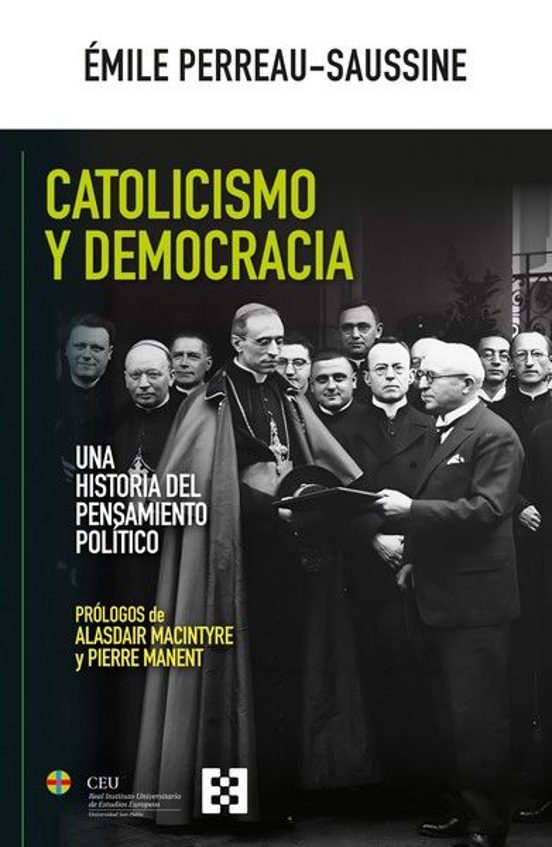
La entrada Cómo la fe cambió la democracia se publicó primero en Omnes.
]]>La entrada «La tierra sometida»: la historia de pensamiento sobre ciencia y fe se publicó primero en Omnes.
]]>Of course, he will always speak from the history of ideas, with depth and rigor, in spite of being diverse and dispersed themes. Blom's visit to Sacred Scripture and classical antiquity is very important to prove the sin of idolatry of the Jewish people (p. 63) together with the command to “subdue the earth” (p. 93).
Regarding St. Augustine and his famous contribution in the treatise “de bono matrimonii”, about concupiscence, Blom reminds us of its origin in Manichaeism and neo-Platonism, which would explain “the obsession with Greek systematics, the Platonic opposition to carnal pleasures and Manichaean paranoia” (p. 112).
Particularly interesting is Blom's study of one of the fathers of modern science, Francis Bacon (1561-1626), a contemporary of Montaigne (1533-1592), but much more incisive than him in subduing the earth with instrumental reason (p. 186). For example, in his “Novum Organum” he will tell us: “Man, servant and interpreter of nature, neither works nor understands except in proportion to his experimental and rational discoveries about the laws of that nature: outside of that, he knows nothing and can do nothing” (p. 187).
The parliamentary Bacon ended badly but the “jurist and political Bacon was a productive thinker in his conversations or in correspondence with other scholars” (p. 188). That is why Blom will assert: “Bacon's ambition went further: he not only wanted to be a servant of nature: he also aspired like Telesius, to master it by learning, to know it from the inside out” (p. 192).
Blom will end this short synthesis of Bacon's thought with a quotation from Descartes to close a chapter that began with the rationalist's view of the animal soul (p. 178): “Descartes recognized that his image of nature also rested on the opinion and interests of the masses, but in his books he defended it until he ran out of ink: only man alone has a soul; the rest of nature is composed of non-sentient automatons that are to serve man, with the help of reason, to carry out - by mastering it - his divine mission” (p. 193).
He then turned to Baruc Spinoza (1632-1677), an author so vilified in his time that he could hardly be mentioned in the intellectual debate because he was considered “subversive and scandalous” (p. 194), for he claimed that “God is matter and the laws of nature, and the world, in Spinoza's legendary formulation, is deus sive natura, God or nature, two interchangeable terms” (p. 196).
And more: “As an attentive reader of Montaigne and Bacon, of Telesius and Descartes, Spinoza knew the models of his predecessors and developed his argument with unsurpassed elegance, as if Montaigne had moved Descartes” pen. Nature is an infinitely complex system whose laws are circumvented and distorted through ignorance or greed“ (p. 198). Finally Spinoza was buried in the index of banned books, ”however, his work sank under the general movement towards the new gospel of scientific and rational domination of nature, engine of new prophets..."(p. 199).
The Enlightenment was never a school of thought with binding dogmas, apart from the emphasis on reason, a basic optimism and a certain elitist tendency which, however, already had very different faces“ (p. 208). In addition, various trends began to differentiate themselves: ”The rationalist and moderate enlightenment of Immanuel Kant or Voltaire, Thomas Hobbes or Leibniz was, for many of its opponents, an attack on the traditional order of the world, although in reality it also played the opposite role, because in a secular world it breathed new life into many central ideas of the Christian theological tradition“ (p. 209).
Blom then reminds us: “Most of the enlightened had received a Christian education and these ideas were so familiar to them and their societies that they seemed to them the only possible structure of thought. Although the Enlightenment authors attacked Christian dogmas, they also used arguments and conceptual images from the Christian tradition to rewrite them in their own way” (p. 211).
Logically, Philipp Blom had to dedicate a chapter to the Lisbon earthquake of November 1, 1755, which caused thousands of victims in that city and in others nearby and, in addition, the tsunami that took thousands more people and, above all, a broad and heated philosophical, scientific and theological debate about physical evil and moral evil (p. 219). The conclusion, for Blom, after exposing the Kantian, Voltairean or Herderian arguments is the following: “Lisbon became synonymous with the analytical weakness of rational religion. At least for the educated elite, the earthquake of 1755 was an intellectual tremor” (p. 223).
Moreover, he will add: “After all, both the aristocracy and the Church derived their legitimacy from a divine mandate and the grace of God (even the rich Calvinists had learned to consider their prosperity as proof of God's favor, which at the same time allowed them not to feel responsible for the poor). Therefore, any reasoning that questioned the divine order and removed the authority of knowledge and morality from the throne and the Church was in itself a revolutionary act” (p. 224).
Having arrived at the substance of the Enlightenment Blom will tell us: “On the one hand Kant drove his contemporaries to despair insofar as his philosophy affirmed that with the sensory experience of the essence of the world it was impossible ever to perceive anything and therefore nothing either of an expected spiritual truth, i.e. of God, but, on the other hand, like Descartes with his res cogitans, created a space that made room for mystery and the Creator, a place that would never be touched by science” (p. 226).

La entrada «La tierra sometida»: la historia de pensamiento sobre ciencia y fe se publicó primero en Omnes.
]]>La entrada Pío XII no guardó silencio ante el nazismo se publicó primero en Omnes.
]]>That is to say, when the Holy Father decides to open the doors of the Vatican Apostolic Archives, the oldest and most complete government archives in the world, the documentation is read and arranged in the general and reserved collections. In this way, historians can publish serious and reliable works while at the same time avoiding putting in the hands of anyone, questions of conscience or especially delicate matters about which the necessary reserve and delicacy in their treatment must always be maintained.
After many years working and teaching in the pontifical universities and writing works of great importance, Dr. Cárcel Ortí provides us with the first and most important document on the relations between Pius XII and Spain.
Once again, as he did with the pontiff Pius XI, Cárcel Ortí has published in the BAC the first volume on Pius XII's collections, with first-hand documentation from the Vatican Apostolic Archives and with updated and recent bibliography. A real first that historians have at hand from now on and that will be expanded with more documentation and successive works.
The first thing we have to thank the Valencian historian for is the magnificent documented biography of the Roman Pontiff with which he begins this magnificent volume that we now present. Certainly, he has placed in our hands, documents of great value thanks to which we have been able to know in greater detail the human and supernatural profile of Pius XII, as well as more obscure moments of his biography, almost unknown to date. For example, here it is specified how Pope Pius XI was preparing his Secretary of State to succeed him after being elected by the Holy Spirit in the conclave of 1939. In this way one can understand the trips and delegations of the last years (p. 141).
As is well known, the opening of the Vatican Apostolic Archives concerning the pontificate of Pius XII was brought forward to 2020, and has been brought forward from its usual date by a wish of Pope Francis, especially motivated to put an end to the false interpretations and accusations of collusion of Pope Pius XII with the Hitler regime.
Undoubtedly, the documentation provided is devastating and definitively frees the Roman Pontiff from any “cover-up” and, of course, from the accusation of guilty silence. The documents provided are clear that Pius XII, first as nuncio in Germany (p. 40), as Secretary of State and as Roman Pontiff, unmasked Hitler before public opinion, condemned his doctrine and ideology and fought strenuously to save the Jews and all humanity from the racism underlying Nazism and, therefore, the vast destructive capacity of humanity that it contained (p. 148-199).
It is also very interesting, the Roman Pontiff's dedication to Spain, both from his time as Secretary of State when he was able to closely follow the evolution of the civil war and encouraged Pius XI to receive 500 survivors of the war in Rome on September 14, 1936. Many times throughout his pontificate, the phrase that appears on the cover of this book resounded in his ears: to the cries of the Spaniards “Spain for the Pope”, he replied: “The Pope for Spain”.
The documentation provided by Vicente Cárcel Ortí confirms the distrust of Pius XII towards the Franco regime due to its totalitarian character and, therefore, subject to a diplomatic blockade by the United Nations (p. 297). He then goes on to say: “Pius XII recommended moderation, love and forgiveness to Franco, but he was not always listened to, and with regard to the Regime, he was concerned about its immobility and agreed on the need for an opening, without the slightest doubt, but carried out at the appropriate speed to avoid traumas and tears. The hierarchy also demanded an opening of the Regime, as slowly as necessary, but never its closure” (p. 298).
It is very interesting to note the intense process of negotiation of the 1953 Concordat in the Vatican documentary sources, where they were fully aware of the fragility of the dictatorship and how it would lose strength and internal support over the years precisely because of the strength of the nascent European Community, which would end up imposing itself both politically and economically.
At the same time, the Holy See was aware of Franco's immobility and his inability to allow political freedoms in an increasingly personal and autarchic regime. Hence the effort to reach a Concordat of long duration like those being drawn up with other Western countries (p. 337).
Another interesting chapter of this work is about the juridical itinerary of Opus Dei. This is precisely the title of an extraordinary work carried out some years ago by three eminent persons: José Luis Illanes, Amadeo de Fuenmayor and Valentín Gómez Iglesias, who contributed the documents they had at their disposal to study how Opus Dei had been adopting the juridical clothing necessary to safeguard its charism and enable it to work throughout the world in unity with the Holy Father, the bishops and the entire Church, safeguarding the lay and secular charism of the majority of its ordinary faithful of every class and condition. Likewise, these authors studied juridically the various formulas that the Holy See was providing for the unity in the work of priests and laity until, in 1982, they finally arrived at the Prelature of Opus Dei united to the Priestly Society of the Holy Cross. Logically, after the opening of the Vatican Archives, this work will have to be revised (pp. 450-470).
As is well known, and as Professor Vicente Cárcel Ortí recognizes, since the juridical configuration of the prelatures has changed in the Code and following Francis“ own Motu proprio ”Ad charisma tuendum", a process of adaptation of the Statutes has begun and is currently underway (p. 439).
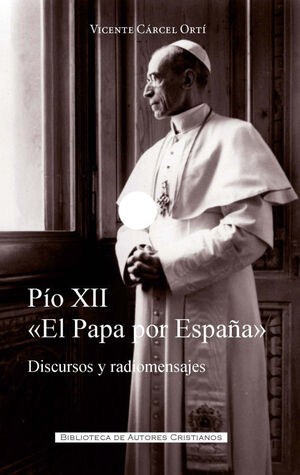
La entrada Pío XII no guardó silencio ante el nazismo se publicó primero en Omnes.
]]>La entrada Un análisis de los cambios religiosos y sociales en España se publicó primero en Omnes.
]]>The co-authors of the book are people of relevance in the academic world of sociology at the Complutense University of Madrid. First, the fine interviewer, Rafael Ruiz Andrés (Palencia 1991), a prestigious professor at that university and author of an important doctoral thesis already published with great success on secularization in Spain during the twentieth century.
The interviewee is Rafel Díaz-Salazar (Ciudad Real 1956), professor of sociology at the Faculty of Political Science and Sociology of the Complutense University of Madrid, an authority in the field of religious sociology and politically marked as a left-wing Catholic and committed to Christianity in the PSOE and lately in international ecosocialism. He is the author of important works on this subject referring to Antonio Gramsci and, of course, his interesting study "The Catholic factor in Spanish politics. Del Nacionalcatolicismo al laicismo, in PPC in 2006 and other works of religious sociology that were present in the democratic transition in Spain and that explain the rapid growth of socialism in Spain at that time in the seventies.
From the very first pages, Rafael Díaz-Salazar has no shame in explaining his conversion to Marxism, his class consciousness, his commitment to justice and social action from his youth to the present, always with a tenuous link to Christianity: "I am the fruit of the Christian workerism of the HOAC" (15). It is interesting in the personal life of Ruiz-Salazar the confusion between the life of personal prayer and the practice of cultural and spiritual formation (30-31). All this goes together with a total absence of sacramental life and Eucharistic devotions or meditative reading of the classics of spirituality (256-257).
It seems to Díaz-Salazar that religion has mutated and has become something more personal or familiar and less public and ostensible (47). All this forms a rupture of unity of life between faith in Jesus Christ and his doctrine.
His historical vision of the Church is full of commonplaces and ignorance: "the Church allied with power" (97), or this other statement: "it was a misfortune that Protestantism could not take root in our country" (66). Likewise, he shows a great ignorance of the subject when he affirms that the Inquisition expelled the Jews and the Moors from Spain (80, 89).
The knowledge about the late-Francoism is exposed when he affirms with all forcefulness, as someone who dominates the knowledge of the matter, that the two pillars of the regime were Opus Dei and the ACNdP. Quite simply, the dictator never allowed himself to be dominated by any institution or group of people who could overshadow him and, furthermore, Opus Dei did not have the aim of entering politics, nor the extension, nor the capacity to politically influence the regime since it never got involved in politics, nor did it have people or institutions to do so. It is understood that, if he is wrong in something so basic and well known, how many times will he have been wrong in his sociological theories expressed in this work (75).
Regarding the sources of his thought, it is enough to read the list of authors that he himself presents to confirm that we are before a genuine exponent of "Christians for socialism", since he is superficially a believer and is also imbued with the social question, not only Marxist, but also committed to revolutionary action (16).
He then added that for young people of his age and his line of thought, the north was "the hunger for justice and the hunger for God were connected and deeply united to our being. We were revolutionaries and Christians at the same time (...). Revolutionary Christians" (17).
Pages later he summarized his commitment-vocation: "to dedicate myself to political commitment and direct action, like Jesus of Nazareth, to change the reality of injustice and exploitation suffered by the working class world" (20).
Shortly thereafter, he will point out how his struggle took shape in the Complutense University as a professor of Social Structure of Spain: "I have always been clear that I had to walk with two feet: one was there and the other in the world of social movements and other socio-political and Christian organizations in order to accompany the formation of activists and generate critical public opinion" (23).
Logically, the two authors of the book will end up speaking as sociologists of religion and of the new map of religious sociology in Spain, they venture dire predictions for Christianity, such as its disappearance. Although they give all kinds of possibilities, including that of the Catholic Church benefiting from the reigning secularism.
Indeed, it can happen that the Holy Spirit brings to Catholic temples and to the warmth of Christian families men and women and pagan families who, in the heat of the liturgy, discover the "Deus absconditus" in the interior of the Christian soul and of the churches and of Christian charity in its many and varied forms of corporal and spiritual works of mercy.
Diaz-Salazar is wrong to blame the defeat of the growth of Catholics in the center-left vote on John Paul II. The social doctrine of the Church revalued by him has had its continuity in Pope Francis. Perhaps the key lies in the fact that John Paul II, who came from Poland to fight against Marxism as an engine of political life, opened the eyes of many left-wing activists to the anti-Christian anthropology contained in Marxism (78).
La entrada Un análisis de los cambios religiosos y sociales en España se publicó primero en Omnes.
]]>La entrada La humildad según san Benito: guía para vivir y amar hoy se publicó primero en Omnes.
]]>Logically, it does not make sense to classify spiritualities as good or better, but it does make sense to make sure that you are providing the right spirituality to the audience you have in front of you when you give a means of spiritual formation, deliver a homily, or teach a catechism class.
On this occasion I wish to refer to an interesting work by Joan D. Chittister on the virtue of humility and more specifically on the degrees of humility as described by St. Benedict in his famous rule.
It is clear that the author, a nun of the Benedictine Abbey of Eric, Pennsylvania, well known for her numerous works of spirituality, simply intends to apply the works of St. Benedict, 6th century, to the United States of the 21st century, without further delay or acclimatization.
Of course, what our author intends to do is to focus her fellow citizens on the virtue of humility, which is the key to personal holiness. As our 16th century classics affirmed: "in humility is truth".
In fact, in the canonization process, the first and most important thing is to read in the Positio about the life, virtues and fame of holiness, how the servant of God has lived charity to a heroic degree, that is, love for God, love for the Church and love for all souls. Not in vain was the commandment of Jesus Christ the commandment of charity.
But, it is necessary to recognize it from the beginning, then, it is necessary to read the chapter dedicated to the virtue of humility, not only the virtue of theoretical humility: its conception, importance, meaning and scope. But fundamentally, how the servant of God took the blows and humiliations of life, that is, not the theoretical humility of the books and manuals of spiritual theology, but the real and concrete life.
In this sense, the author, after briefly exposing the chaos of life we lead in the West, the multiple and varied occupations, crises and moments of intense ups and downs, stops to make the first accurate analysis of this work: "What we have really lost is the awareness of who we are and what our place in the universe is, and what this means in everything we do" (13).
The virtue of humility in this work is very clearly stated from the very beginning: we must be well centered in the love of God and of souls. With a clear conviction: we mature to the extent that we love.
Next, he will speak to us about the practical element of humility, through the need for an accurate and definite examination of conscience or simply with the mapping of our existence.
To be humble we need to know how to locate pride on the existential map: where self-love, lack of right intention or the hidden desires of selfishness and superficiality nest.
For this purpose, our author will have recourse to the twelve degrees of the virtue of humility according to St. Benedict. First, she will enunciate them according to what an American might find more intelligible and then she will enunciate them again but according to the original text. The rest of the work will consist of asking these twelve questions or steps to the American society of our time.
Certainly, it would have been more practical to sum it all up with the question suggested by St. Augustine to make an examination of conscience every day of our lives: "What do I seek, Lord, when I seek you? Do I seek me or do I seek you?" (Confessions, X, 6, 9).
Let us now return to the Rule of St. Benedict written in 520 and its degrees of humility to find some of those degrees that can complete St. Augustine's examination of conscience and help us to focus on God and others and enable the action of grace in our souls and grow in humility.
First of all, we must open our soul to grace in order to discover that God is within us (15) and desires, through love for God and others, to become stronger and deeper within us.
We must immediately discover the profound meaning of the book's title: inner freedom consists in doing things out of love. In this way, we are free to love because humility has freed us from the slavery of self and opened us to self-giving.
We cannot fail to refer to the affirmation of Meister Eckhart: humility and love are "the fruit of nothingness". That is to say, it is when we empty ourselves of ourselves that we can strengthen our love for God and for others.
The affirmation of St. Benedict in his fifth passage is important: "Humility makes us courageous. Once we know who we are, all false illusions of grandeur and all pharisaism die" (47).
Then, in the seventh and eighth steps, he will underline the efficacy for humility that unconditional self-giving to God and to others brings. It is logical: he who empties himself of himself can be filled with love (59). Finally, he will refer to the awakening of the soul to love: to grow in love (73).
La entrada La humildad según san Benito: guía para vivir y amar hoy se publicó primero en Omnes.
]]>La entrada ‘En nombre del Santo Oficio’: la Inquisición vista desde un caso real se publicó primero en Omnes.
]]>Logically, the incorporation of good historians and cultured and well-documented writers has contributed to this. Herein lies the success of the historical novel: to be faithful to the historical facts and, above all, to capture the mentality of the period in which it is set. Indeed, the reader is perfectly aware of whether the events being narrated correspond to the period: that is to say, that perhaps it did not happen exactly that way, but it could perfectly well have happened.
Precisely, when the pact between the writer and the reader is broken and the characters are placed in the current mentality or in another imaginary one, perhaps some copies can be sold among inexperienced readers, but, immediately the word of falsehood spreads and the works of that author will be in dead end, for lack of historical rigor and documentation: nobody likes to be deceived and even more in this time where there are more and more people with studies and knowledge of the cause.
In this sense, our authors who are not historians should try to read good treatises on history and realistic novelists of the period in which they are working, because in this way they will be formed and will incorporate the results of recent research.
Now we wish to deal with a recent historical novel, in order to apply what we have been discussing. In the case of the Inquisition, especially the Spanish Inquisition, it has experienced a remarkable boom from 1975 to the present day. It is enough to know that, in the first ten years of Franco's death, when censorship disappeared, more works were published on the Inquisitorial tribunal in Spain than in all of history. Both with works of serious research and dissemination.
Specifically, let us comment on the recent work of Sally Santiago (Madrid 1966), an author of historical novels, a specialist in micro-stories who has embarked on writing a short novel set in the Spanish Inquisition in the seventeenth century.
Indeed, the author situates the work well, has read some popular works and has approached a cause still little studied, hence she points out on the back cover, to attract readers, that it is "based on a real documented process of the Inquisition".
Logically, the author poses an attractive plot: "A child is found dead in his crib. His body, with strange signs and bruised, soon becomes irrefutable proof for those looking for culprits. A young maid known for her love spells and her closeness to an unstable couple. What begins as a domestic drama ends up before the judges of the Holy Inquisition, shrouded in superstitions, rumors and confessions that are only uttered in the torture chambers".
As we have just shown, the author plays with various commonplaces and set phrases attributed to the Inquisition tribunal in order to attract readers. This will become increasingly difficult as history books and teachers explain to students the reality of the inquisitorial process.
First of all, let us recall that the Tribunal of the Inquisition was set up in Castile in 1478 by Pope Sixtus IV to investigate ("inquisitio" means investigation) the crime of Judaizing heresy that had spread in Castile since the massive conversions of Jews in Castile since 1390.
The objective of the inquisitorial process was to determine whether the "supposed heretic" had really committed a crime of heresy, that is, whether he was a formal and material heresy and whether he was persistent in his heresy or not. As is known, the crime of heresy was considered a crime of "lèse majesté". If counterfeiting currency was a crime of "lèse majesté" punishable by death, in the same way, counterfeiting the faith was also considered a crime of "lèse majesté" and, if the defendant was persistent in heresy, he could be handed over to the secular arm for execution.
If changing the faith by denying some of the articles of the creed was a sin of heresy, apostatizing from the Christian faith adopted by baptism to return to the law of Moses would be the worst of heresies: apostasy.
At a time when the Catholic kings were seeking the unity of the kingdoms of Spain under the crown, unity in the faith was considered capital for the maintenance of the kingdom. In addition, faith was the most appreciated value in society and the most sold books were the Bible and the "ars moriendi", how to prepare oneself to die well in order to reach heaven.
The Holy Father John Paul II in a moving ceremony on March 12, 2000 asked forgiveness for all the sins of all Christians of all times and especially for the use of violence to defend the faith.
This is the theological error of the Inquisition, to force the conversion of the heretic, to procure his repentance under the threat of the death penalty for the obstinate heretic. Heresy was the worst social sin.
Finally, let us remember that the Spanish Inquisition paid little attention to witchcraft. First, because it was not a heresy, but a sin against religion, and also because in the few cases that were studied in the Tribunal of Logroño in the sixteenth century, it was found that the defendants usually had mental problems.
The Inquisition was abolished by the Cortes of Cadiz and later by King Ferdinand VII in 1834. But the Inquisition left behind an even more serious error, which was the inquisitorial mentality that leads to impose distrust on those who stray from the true faith, instead of trying to attract them back to the truth through persuasion.

La entrada ‘En nombre del Santo Oficio’: la Inquisición vista desde un caso real se publicó primero en Omnes.
]]>La entrada San Josemaría y la liturgia se publicó primero en Omnes.
]]>In the great theological reform carried out by the School of Salamanca, which notably influenced the Council of Trent and the great reform of the Church both in Europe and America in the 16th century, undoubtedly influenced one of its fundamental principles: "ad fontes". That is, to return to the sources, to the oral and written revelation of Jesus Christ, transmitted, preserved and deepened by the magisterium of the church and by the great tradition of theology and canon law of holy and profound men who had been able to live, study and transmit the treasure of Christian revelation during their time and in their lives.
Professor Silvestre will begin his work by posing the key question for a liturgist of the 21st century: whether St. Josemaría belonged to the great liturgical movement that, since 1904 with St. Pius X, has been spreading throughout the universal Church until it converged in the Second Vatican Council, and was embodied in the first great document of the Council, the dogmatic Constitution "Sacrosantum Concilium.
St. John Paul II published an Apostolic Letter on the occasion of the 40th anniversary of the above-mentioned Constitution, in which he wrote: "The promulgation of the Constitution 'Sacrosanctum Concilium' marked a stage in the life of the Church of fundamental importance for the promotion and development of the liturgy. The Church, which, animated by the breath of the Holy Spirit, lives her mission as a 'sacrament, or sign and instrument of intimate union with God and of the unity of the whole human race' (Lumen gentium, n. 1), finds in the liturgy the highest expression of her mystical reality" (Apostolic Letter "The Liturgy").Spiritus et sponsa"Rome 4.XII.2003, n.16).
Professor Silvestre, therefore, will study all the documents of the Church's magisterium during the 20th century in order to trace the birth of the liturgical movement and its intuitions, as well as the doctrines of the great liturgists of the 20th century, their monographs, articles and conference papers, etc., and, finally, he will delve into the works of St. Josemaría in order to conclude that St. Josemaría was indeed a true pioneer of the liturgical movement (29, 38).
I remember a conversation with the great historian of the liturgical movement and the liturgy, Father Manuel Garrido OSB (1925-2013), who was a member of the Tribunal for the diocesan phase of the process of beatification and canonization of St. Josemaría Escrivá in Madrid, who said that for him the most important of St. Josemaría's contributions to the liturgical movement was how he had formed the faithful of Opus Dei and cooperators and friends in the way of loving and living the liturgy.
The work of Professor Juan José Silvestre will explain in detail the way in which St. Josemaría lived the Liturgy of the Church and how he taught it by his example and his words to people of all kinds and conditions, especially to the priests of the Prelature of Opus Dei and the Priestly Society of the Holy Cross, as can be seen simply by watching them celebrate Mass, impart the blessing in a ceremony or distribute communion.
As always, we must emphasize that Professor Silvestre naturally lives a great historical rigor in the works he has published and always knows how to frame his works in historical coordinates, because in this way his theological and canonical argumentation has much more solidity.
Likewise, we must emphasize that Professor Silvestre knows how to reason theologically the questions he deals with and, therefore, he is a liturgist with whom we can dialogue, since with others it is very difficult for them to listen to the argumentation of someone who has a different criterion from theirs, which happens simply due to lack of intellectual soundness.
With regard to the contributions of Professor Silvestre in this work, we consider important the development made by St. Josemaría and studied by our author regarding the concept of "identification with Christ of the priest" both at the time of the celebration of Mass, "in persona Christi," and habitually throughout the day, as St. Josemaría used to ask priests: "to have the same sentiments as Christ on the Cross" (188).
Along these lines, it seems important and revealing from a liturgical point of view the anecdote that took place on August 7, 1931, at the Patronato de enfermos, when St. Josemaría received a divine locution in his interior with those words from the Gospel of St. John: "When I am lifted up on high, I will draw all things to myself" (I John 12:32), and he saw the sanctification of temporal tasks become a reality (174, 178).
It is also worthwhile to include a few words by Professor Silvestre about how St. Josemaría applied in the centers of Opus Dei the measures taken by the Roman Pontiffs and in each diocese by the Ordinaries to live faithfully the provisions of the Second Vatican Council. At the same time, our author does not fail to recall "the pain that St. Josemaría suffered in the face of the abuses and deformations that the liturgy underwent in the years following the Second Vatican Council" (212).
It is very instructive and formative to recommend that readers of this work take a closer look at the last part of Professor Silvestre's work, which contains many of St. Josemaría's texts scattered in his written works and in his oral preaching on how to live the parts of the Mass with a "passion of love," taking advantage of the depth contained in the rubrics of the Mass and the history of the Mass: "encounters of love between Christ and his Church," as Professor Silvestre calls them (249).
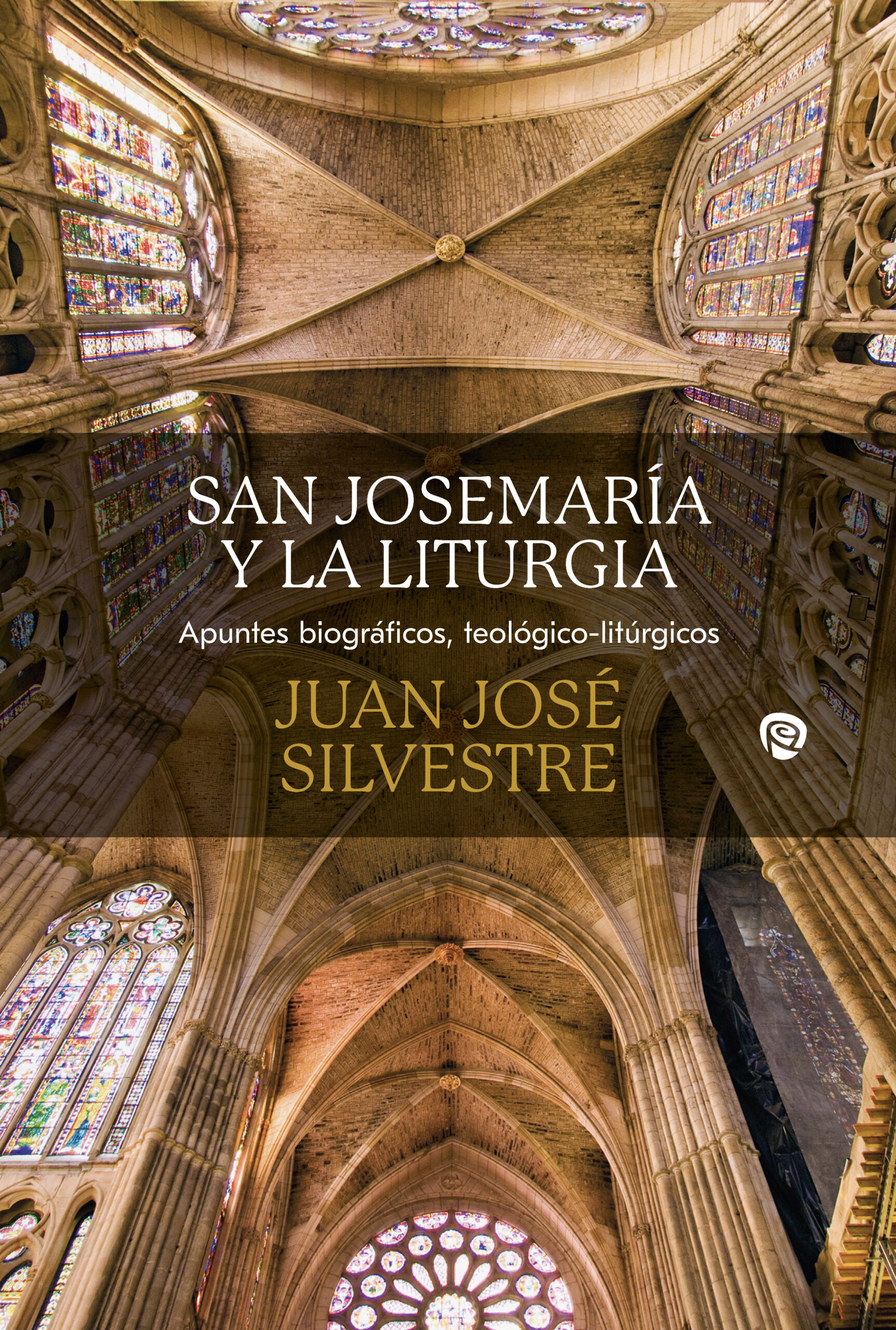
La entrada San Josemaría y la liturgia se publicó primero en Omnes.
]]>La entrada Montse Grases, una amiga que tenía muchas amigas se publicó primero en Omnes.
]]>Some time ago a journalist from a well-known radio station phoned me to ask me shamelessly why the Catholic Church would make the mistake of canonizing a 15-year-old boy when we all know that at that age children are quite "dull".
I immediately replied that Carlo Acutis is one of the great saints of the recent history of the Catholic Church, on a par with the Venerable Servant of God Montse Grases, St. John Paul II, St. Teresa of Calcutta or Padre Pio, to name a few outstanding examples.
What is the characteristic note that makes Carlo Acutis be proposed as a model and intercessor for the Christian people? What makes him worthy of the title of champion of the faith, as Benedict XVI called the saints? Quite simply, Carlo Acutis, like the great saints in the history of the Church, prayed a true prayer of "complicity".
We have all learned to distinguish between the prayer of need that leads us promptly to turn to God's mercy, as Pope Francis has taught us, to solve our material and spiritual needs. In addition, we have had a few years with the pandemic, the philomena, the DANA in Valencia and Malaga and, as if that were not enough, the blackout of April 28 that has demonstrated the fragility of human life.
For this reason, it is impressive to discover Carlo Acutis beginning his preparation for his first communion by moving forward like a giant in his life of prayer, simple, trusting, complicit, like a friend with a friend: "talking to God as a friend," as St. Josemaría liked to say.
Immediately, we will remember that, since his first communion, Carlo began to attend Holy Mass daily and to receive Holy Communion, because, as he confided to his mother: that was the highway that would lead him to heaven.
In fact, the extraordinary thing about Carlo Acutis is that he spent his day going here and there, doing what a boy of his age does: classes, studying, playing with the computer, being with friends, helping around the house, skateboarding, but in all of this he was taking and picking up the thread of the conversation with Jesus.
That is why, when Acutis began to feel the symptoms of the leukemia that would lead to his death in a few days, he tried, with God's help, to keep smiling and encourage his mother. In fact, when they entered the hospital, he commented that he would never leave. Logically, Jesus was already preparing him to continue the conversation in Heaven.
Montse's prayer is like that of Carlo Acutis, and they will have met in heaven and greeted each other with great affection and will be delighted to help the young people of the 21st century to be as happy as they were.
Montse gives us a lesson of love for Jesus Christ in everyday life, without anyone realizing it, but in a complete process of identification. As Francis recalled in the "Gaudete et exultate" of March 18, 2018: "Holiness does not make you less human, because it is the encounter of your weakness with the power of grace" (n. 34).
Let us recall the scene of the wedding feast at Cana in Galilee narrated by St. John. The miracle takes place because we obey Our Lady. "Do whatever he tells you" (Jn 2:5). Then we do what we know how to do: put water and He works the miracle. If we put the water of our love for God and for others, it will become happiness.
Montse discovered her vocation by Opus Dei loving Jesus Christ and loving her parents, her brothers and sisters, her friends, the people of Opus Dei throughout the world with whom she shared her dialogue with Jesus Christ.
She reached holiness as identification and complicity with Jesus Christ and knew how to carry her illness with grace, because she tried to maintain the thread of conversation with Jesus throughout the day. One can dance a sardana while praying, play basketball while praying or prepare to act in a theatrical performance or walking through the Catalan Pyrenees in Seva or wherever.
Montse Frases was a friend who had many friends. She was also a close friend of Jesus Christ. Therefore, she was very comfortable with her.
Fernando Ocáriz, who studied brilliantly in Barcelona at the Faculty of Sciences, often reminded us that "we do not do apostolate, we are apostles". That is what Montse teaches us: to be normal with Jesus, to charm him and make him fall in love, and then, to love our friends, to be aware of their needs, to listen, to be interested.
As Benedict XVI said in a conversation with Cardinal Julián Herranz a few years ago: "Do you know which point of The Way I like the most? The one that says "Charity is more in giving than in understanding" ("The Way", 463).
If we are very normal and we love Jesus Christ very much, we will have hundreds of friends and the best thing will be that we will know how to spread our happiness to our friends, to our girlfriends, so that with the passage of time they will want to be with that Jesus who is in your soul and who comes to the surface.
Precisely, another saint of our time who died in Manchester at the age of 21, saw that the nurses who brought the chemotherapy bags to the residence where he lived, disputed the joy of being there for a few hours, because in Pedro Ballester's room it was very good. Because with God, with Montse, with Acutis, with the saints, one is very well. The purpose of today is to ask Montse for many things so that we can prove that we have a friend in heaven and she, who is eternally grateful, will teach us to have a heart as big as hers.
La entrada Montse Grases, una amiga que tenía muchas amigas se publicó primero en Omnes.
]]>La entrada Cómo actúa el espíritu en el mundo se publicó primero en Omnes.
]]>The subtitle he has given to this interesting work is very significant: "God and the soul in the context of contemporary science". Indeed, Professor Javier Sánchez Cañizares openly recognizes the existence of the spirit and, moreover, its capacity to relate to matter. Moreover, he points out: "what cannot be measured is of great interest to science" (p. 11).
The great problem that the author has had in writing this work is as simple as realizing that "the book of science is written in mathematical characters" (p. 34), hence the difficulty in disseminating, for example, quantum mechanics or ultraviolet radiation.
Throughout the reading of this exciting study the important thing is not to stop, even if at some point the reader loses the thread of reasoning. At that moment, the reader must continue and will be able to pick up the thread again later, since it is not necessary to understand everything and every mathematical formula. It is convenient to learn to trust scientists and their mathematical way of reasoning, knowing that among them they exercise a rigorous and uncompromising criticism.
He then establishes an interesting comparison between the great systems to enlighten us in the current discussions: "Indeterminism is probably the quantum feature most conducive to a non-reductionist vision of nature, in clear contrast to the mechanistic visions based on a deterministic universe. According to determinism, the state of the universe at any given moment, together with the natural laws that govern its dynamics, univocally determine the state of the universe at any given moment. Quantum indeterminism, on the other hand, seems to leave room for a kind of activity that goes beyond what is quantifiable and determinable by physics in a mechanistic way" (p. 93).
Shortly afterwards he will add: "the framework provided by quantum mechanics could be indicating the compatibility and complementarity of the behavior of free agents with the laws of physics, which remain open in their fundamental indeterminacy" (p. 94).
In addition, he will explain the complexity of the possible causes involved in a physical process and, therefore, the patience to arrive at the "principle of sufficient reason" so that the fact is explained (p. 111). And, of course, how scientific theories and models work (p. 112).
In the second part of the book he will speak of the "real reasons for a renewed vision". The aim will be to shed light that avoids a rupturist vision and gives way to an integral vision of the world of matter and spirit in the perspective of "creative nature" (p. 143).
It is logical that he goes deeply into the hylemorphist theory of Aristotle and its retouched and improved version of St. Thomas, with contributions from physics itself: "We could describe life as a rebellion of systems in the face of the general tendency of increasing entropy in the universe" (p. 147).
Likewise, he will also bring concepts from evolutionary theory itself in its current version: "The bottom line is that the selective pressure of the environment also changes because the environment itself does so, albeit on much longer time scales. The outcome of success or failure, in the short or long term, for a species can be a highly nontrivial and difficult matter to predict" (p. 149).
Then, he will clearly state: "with the arrival of the human being, evolution seems to take a giant leap, in such a way that we are no longer simply in a random evolution, in which we advance by trial and error, but we are capable of generating culture, learning through the transmission of ideas, symbolic languages, history or sense of transcendence" (p. 171).
Faced with the direct question about the origin of the soul, our author will also answer directly: "Man comes entirely from evolution and entirely from God: evolution is nothing but the way in which the creative action of God unfolds. That the human soul is created directly and immediately by God does not mean that God breaks directly into the specific temporality of evolution, it means that the human being, bearer of an immaterial soul, is for this reason the subject of a direct and immediate relationship with God. Our misunderstandings about how to combine evolution and creation ultimately stem from a faulty understanding of creation" (p. 182).
The concept of "ontological emergence" handled by our author is interesting, but we will let him explain it: "we will show how the ontological emergence that we have called 'take-off of immateriality', could be understood as an ontological change where the tendency of the type of granularity that we observe in the emergence of natural systems is reversed" (p. 183).
In the last section on how God acts in the world, he will continue his approach from the philosophy of science and the world of physics to recall the basic notions of theodicy: "God does not emerge in creation, God is eternal and is not subject to temporal succession, to the change and movement typical of the natural world in which we exist" (p. 213).
Later, he will remind us of the difficulty of language to express questions of great depth: "the challenge lies in articulating that divine causality, the activity ad extra of God, with natural or created causality" (p. 214). That is to say: "how to understand the articulation of transcendence and immanence in the divine activity" (p. 216). He will also add: "how to articulate the created, temporal being and the subsistent, eternal Being, which are alike in existence and dissimilar in almost everything else" (p. 217).
La entrada Cómo actúa el espíritu en el mundo se publicó primero en Omnes.
]]>La entrada Palabras de odio y odio a las palabras se publicó primero en Omnes.
]]>Professor Anna Pintiore, professor of philosophy of law at the University of Cagliari, has written an intense work on censorship in liberal society, its limits and methodology, in order to stop the birth of a new inquisitorial court in the countries of Europe that will return to judge intentions, beliefs and opinions (p. 15).
It is worth remembering the juridical principle from Roman law: "De internis neque Praetor iducat", which would pass, as it did, into canon law: "De internis neque Ecclesia iudicat". This principle of not judging intentions and thoughts was so often invoked to achieve the abolition of inquisitorial law.
Indeed, the objective of the modern tribunal approved by Sixtus IV in 1478 to put an end to the Judaizing heresy in Spain that had spread in Castile and Aragon, seemed to them to make "necessary" the implementation of an effective method to achieve the longed-for unity of the faith.
Undoubtedly 75% of the processes took place between 1478 and 1511. Hence, the tribunal should have been abolished and the defense of the faith left in the hands of the diocesan Ordinaries, as was decided after a violent discussion in the Cortes of Cadiz in 1812.
– Supernatural Inquisition It could have been suppressed, but the climate of intense lack of formation of the people and the clergy and the perfect superstructure that had been created favored the maintenance of this unworthy tribunal, for no one should be judged within himself except by God, for "by their fruits you shall know them".
That is the great evil of the tribunal of the Inquisition, to have given way to the inquisitorial mentality that consisted, then and now, in judging the ideas and intentions of others, without contrasted data and causing distrust and destruction of the honor and fame of people for several generations. In fact, the Catechism of the Catholic ChurchThe Catechism of Trent went so far as to affirm that honor and fame were as important as life itself.
At the same time, Professor Anna Pintore points out that the liberal state has the right to defend itself against falsehoods written by an author in a book, in a newspaper article or in the media, since they can undermine the social or moral foundations on which the state and civic coexistence are built (p. 21). In other words, it would be convenient to "redefine censorship in terms of convenience" (p. 23 and 32).
There is no doubt that Michel Foucault revealed himself as an enemy of Hobbes when, in Leviathan, he demanded the surrender of citizens' freedom so that the absolutist state could build a lasting and stable peace. Logically, peace without freedom is impossible to maintain in a culture that has experienced freedom (p. 33).
It is amusing to see how our author entangles herself in a "vulgar play on words" when she pretends to oppose an "external, coercive and repressive" censorship to a "modern censorship" that would be "productive, structural and necessary" (p. 34).
In fact, throughout the pages of this book, the conviction that the only possible censorship is "self-censorship", derived from common sense, prudence, deep convictions, love for one's own and others' freedom, respect for the opinions of others and the deep desire to contribute with our criticism to the common good and the dignity of the human person and to safeguard the principle of the presumption of innocence and the good faith of individuals, will emerge (p. 38).
It is interesting to see how there are fields of "agreed censorship" that are markedly ideologized, even in our democratic times, such as the following exposed by our author: "institutional regulation of free expression, market censorship, cuts in government funding for controversial art, boycotts, prosecution and marginalization and exclusion of artists based on their gender or race, to 'political correctness' in academia and the media, so much so that the term is overwhelmed, even trivialized" (p. 41-42).
Undoubtedly, our author expresses her perplexity before the abundance of literature and opinions that wish to further restrict freedom of expression, especially since the abusive invasion of the Internet, which has filled the web with opinions of the most varied and solid origin. Two apparently conflicting principles are invoked: freedom of expression and equality (p. 51).
It is very important how he arrives at this major conclusion: "hate speech (and pornography) should be banned not insofar as it excludes the voice of its victims from the public arena, but because it is morally reprehensible, that is, because it is unacceptable in the light of the human rights ethic that has been affirmed in the Western world (and we add the dignity of the human person)" (p. 67).
Finally, we take up, by way of our author's conclusion, the last words of her book: "The metamorphosis of censorship that has taken place in recent decades is certainly not the only factor that has determined this situation, but it has certainly created an extremely welcoming intellectual environment for it. Given the success enjoyed today by the ideas that have been criticized here, one cannot be very optimistic about the future of freedom of expression" (p. 85).
La entrada Palabras de odio y odio a las palabras se publicó primero en Omnes.
]]>La entrada Los años salvajes de la filosofía se publicó primero en Omnes.
]]>Particularly important are the biographical insights in the case of Rüdiger Safranski's historical studies. He is highly valued in this respect for his profound knowledge of the history of ideas and especially of the period he calls "the wild years of philosophy" (387-404).
Undoubtedly, Schopenhauer, a self-made philosopher who contributed important ideas to the history of thought, is right when he said: "Who can ascend and then be silent" (76). Interestingly, as a young man he had written: "If we take away from life the brief moments of religion, art and pure love, what is left but a succession of trivial thoughts" (90).
As is well known, thinkers tend to fall in love with their ideas, as when Kant invented an extraterrestrial God that could be adopted as such by agnostics and deists distrustful of the Church and of God himself, who ended up depriving the German enlightenment of confidence in God (91).
It is very interesting the development of the biography of Schopenhauer and other authors of that time, such as KantHegel and Hölderlin. Also, the study of the French Revolution and its reception in Germany, until they were invaded by Napoleon's troops, their cities sacked and turned into a trail of blood, violence and desolation that turned the idyllic ideas of the revolution into disappointment and hatred of the French that has endured to this day in some layers of German society (122).
Of great interest are the pages devoted to the education and training of the young Arthur Schopenhauer and his sister Adele, who was frail throughout her life, by their wealthy widowed mother. Finally, Safranski comments: "It is clear that the freedom his mother granted him was too great for Arthur. But his pride forbade him to confess it to himself" (133).
In this matter it is worth noting that, in the house of Johana, Schopenhauer's mother, there was a salon where the ladies of high society came to talk and listen to the city's leading men, especially Goethe who frequented the house and focused everyone's attention, especially Arthur's (135) with whom he would end up falling out (251).
Once Schopenhauer came of age and his mother died, he would become a rentier who would live off the inheritance and would manage it skillfully in order to live soberly but not depend on anyone or any official position where he could teach and earn money.
On the other hand, after some first moments of courtship and approach to some women of his time, he would end up closing himself in his philosophical creation and not only did he not form a family but he had little contact with other authors of his time.
With respect to his contribution to the philosophy of his time and to the history of philosophy itself, being outside of academic environments and the scarcity of his works throughout his life, his fame and the interest aroused by his ideas will take time to consolidate and it would almost be necessary to wait until his death to talk about him.
In the first place, Safranski will characterize the devastating encounter with Kant who had destroyed traditional metaphysics by means of a system whereby "metaphysical transcendentals do not refer to the transcendent: they are merely transcendental" (...) They are only of interest for epistemology: "transcendental analysis consists precisely in showing that we cannot and why we cannot have knowledge of the transcendent" (150). He then adds that Kant will undertake an enterprise aimed at dealing with how objects are known, without being interested in the object (151).
Schopenhauer, enthusiastic about Plato, wrote about Kant: "the best way to designate what Kant lacks is perhaps to say that he did not know contemplation" (156). Undoubtedly, locked in subjectivism, he never saw beyond his intellectual construct of his own self (156). Finally, he will end up knowing "the Kant, the theorist of human freedom" (157).
In 1813, Arthur Schopenhauer went to Rudolstadt via Weimar to write his doctoral thesis "On the Fourfold Root of the Principle of Sufficient Reason", which would establish him as a philosopher.
Years later, he will write his most famous work, indebted to his doctoral thesis on "better consciousness", with the famous title of "The World as Will and Representation". In it, "he will remain Kantian in his own way in order to remain Platonic in his own way as well" (206).
It is very interesting how Safranski prepares the reader to discover the key to Schopenhauer's new philosophy on the "secret of the will", that is, a will in one's own body, lived from within, like an arrow, like iron attracted by the force of the magnet: "with the discovery of the metaphysics of the will, Schopenhauer finds a language to express this vision; this language will give him the proud confidence that allows him to radically separate himself from the whole philosophical tradition and from his contemporaries" (217).
A discovery, full of extraordinary radicality, he writes: "The world as a thing in itself is a great will that does not know what it wants; it does not know, but only wants, precisely because it is will and nothing else" (266).
La entrada Los años salvajes de la filosofía se publicó primero en Omnes.
]]>La entrada El humanismo cristiano de María Zambrano se publicó primero en Omnes.
]]>Undoubtedly, the book by Juana Sanchez-Gey y Venegas, professor of philosophy at the Autonomous University of Madrid, illustrates one of those sources of thought that filled the current of Christian humanism in Spain, until now quite unknown.
It is a fact that Maria Zambrano (1904-1991), disciple of Ortega, Garcia Morente y Zubiri (21), was during her long exile from Spain, from 1939 to 1984, both in America and in various European countries, a standard-bearer of Orteguian thought, but with her own accents. Among others, her fidelity to Christianity and her constant deepening of the mysteries of the Catholic faith. In fact, her deep-rooted beliefs caused her to lose academic opportunities in Mexico and forced her to leave Cuba, etc.
Professor Juana Sánchez-Gey has had the good sense to search through all of María Zambrano's writings, her letters and her autobiographical relationships, for clues to present us, in a fairly orderly fashion and in concert, María Zambrano's "theological" thought, something that is generally unknown to the general public, more accustomed to recognizing facets of her philosophy such as "poetic reason" (p. 21) and other specific contributions of the Malaga-born philosopher to Spanish and Western culture.
Precisely, Professor Juana Sánchez-Gey will emphasize from the beginning the naturalness with which María Zambrano habitually showed her Christian faith, since it was really the reason for her life, indeed, a way of living (p. 36). Moreover, this faith will be closely linked to poetry, because for her poetry is a way of praying, of accessing mysticism and philosophical thought: "poetry is a gift, a grace open to transcendence" (p. 34).
Next, Juana Sánchez-Gey tells us that Maria Zambrano defends a "liberal and ethical humanism" (p. 43). Moreover, her way of converging with Christian humanism will be through philosophy and poetry, in "poetic reason". As she will affirm, in philosophy: "if you don't go beyond, you don't go anywhere" (p. 48).
The anthropological question will be key, as in Ortega, both for philosophy and theology: "The Christian principle of liberalism, the exaltation of the human person to the highest rank among all that is valuable in the world, was hidden under swelling, under pride (...), but full of confidence in man" (p. 47). All this and more is called "original sense", because it discovers the human condition as a creature of God: "man has the vocation of transparency, even if he does not achieve it" (p. 50).
Shortly after, Juana Sanchez-Gey will bring up some beautiful texts: "Zambrano's proposal points towards a philosophy as mediation, which welcomes the sense of a religion whose God is incarnate and merciful (...). His ideal of a philosophy as salvation leads him to this dialogue with religion from St. Augustine to St. Thomas, who strove to serve as mediation between the divine infinitude and man, a constitutive relationship of the human being, always counting on freedom, through which the person is united and fulfilled in this relationship or can, because he has the capacity, reject it" (p. 52).
Moreover: "Love is the source of knowledge because only it can tell who man is and what his vocation is. Thus he accepts a philosophy that presents itself as a creative and unitive gaze, because poetry and philosophy in unity strengthen love" (p. 61).
Let us remember that "the original feeling is a basic theme in Zambrano's relationship. As it is relevant to speak of the soul, of suffering, of vocation, all of them will be the themes that are recovered from the 'original feeling', philosophy or poetic reason, then it becomes more human and more divine. Poetic reason that is, at the same time, metaphysical and religious" (p. 64).
In the second part of the work we are presenting, Professor Juana Sanchez-Gey dwells more specifically on the philosopher Maria Zambrano's treatment of theological questions properly speaking, and thus she will enunciate some of them: "the divine processions, especially the mission of the Holy Spirit, the incarnation of Christ, the Virgin, the liturgy and the reception of Vatican II, among other personal experiences. The search for the Spirit as the foundation of knowledge is discovered in an outstanding way, so that one could go so far as to say that this experience is at the origin of his rejection of rationalism in philosophy and materialism in his conception of the person, which he conceives as a spiritual being" (p. 75).
A large part of the topics summarized in this second part come from the Letters of the Pièce. That is to say, the correspondence with Agustín Andreu, then a young priest and doctoral student in Rome, with whom he established a fluid dialogue.
First of all, this summary highlights the close relationship between philosophy and theology, especially through the school of Alexandria in general and, in particular, Clement of Alexandria (150-215), as an awakener: "the being that awakens thinking" (p. 78).
He will soon enter into harmony with St. Augustine, the Father of the Church, with whom he will be in permanent dialogue, and in particular with two of his works: "The Confessions" and "The City of God" where he will find "the Truth that dwells within man" (p. 79).
Moreover, in this intense dialogue with Agustín Andreu and Ortega "we can perceive the distances between both thoughts. They are separated by the conception of the spirit and even by that longing of ethical roots which is personal perfection and the desire for a better world: that doing good is not lost even in dreams" (p. 83).
La entrada El humanismo cristiano de María Zambrano se publicó primero en Omnes.
]]>La entrada «Conversos»: reconocer a Cristo al final de la Edad Media se publicó primero en Omnes.
]]>In any case, let us begin by pointing out that the title of the work is a little misleading, since from its reading it is easy to infer that the author is going to develop an essay on the theology of history to show the processes of conversion of the Jews of Seville, Valencia and Burgos in the years 1390-1391, when abundant conversions from Judaism to Christianity began to take place in some of the large cities of Hispania.
Likewise, from the subtitle, one could venture that we were going to witness the "metanoia" or inner conversion of the once great rabbi of Burgos, Salomón Leví, the most important Jew of the kingdoms of Castile and Aragón, to Christianity and, after a while, he would be ordained priest and bishop to end up occupying the archiepiscopal see of Burgos, then also the most important of Castile.
In reality, the book is a great exposition and historical setting of the coexistence of Jews, Muslims and Christians in times of the end of the reconquest, XIV and XV centuries, when the Christians living in the Iberian Peninsula wondered intensely about the reason for the lack of conversions of Jews to Christianity and came to the conclusion that they had not explained themselves well.
Both the Christian theologians and the faithful people were convinced that, if they could explain themselves better, they were sure to become a mass, as indeed they did.
Indeed, since the fifties, when the Acts of the "Disputation of Tortosa" (Antonio Pacios, CSIC-Arias Montano Institute, 1957) were published, we know very well the summons of Pope Luna, Benedict XIII, and the King of Aragon, Ferdinand I, to the great of the kingdom of Aragon, clergy and nobility, as well as the Jews of the highest consideration to attend a public dispute for almost two years.
During sixty-seven sessions (1413-1414), morning and afternoon, they met to listen to the best and most expert rabbi in the messianic promises: the main one was Rabbi Albó (309) and the best Catholic scripturist of the time: Jerónimo de Santa Fe (302), to answer both to a single question: if Jesus Christ had fulfilled all the messianic prophecies or not. The Acts that were signed and sealed every afternoon by the disputants, as well as by the authorities present, attest to the intense and serene expositions on both sides.
Finally, at the end of the book, Pacios' work includes the echoes of the dispute of Tortosa: thousands of Jews of all kinds and conditions were converted and the greatest of the kingdom were, in fact, sponsored by the kings and nobles of both Castile and the kingdom of Aragon, as godparents of baptism and confirmation and marriage of those new Christians.
Indeed, after those events, it is worth noting that the chronicles affirm the existence in Castile and Aragon of three types of citizens (if we can talk like that at that time): the old Christians, that is to say, those of all their lives, the families that led the reconquest of the Christian lands of Hispania that in 711 suffered the humiliation of the conquest as punishment for the disunity of those Visigothic nobles, some still Arian, without conversion, who gave in to the Muslims.
The second category would be the Jews who had not received the grace of faith and baptism and who continued, therefore, faithful to the law of Moses and under the protection of the king of Castile, for as the book of the Partidas said to perpetuate the memory of the deicide people.
Finally, there was the large and very numerous group of new Christians, recent converts to Christianity who brought their talents and the love of the convert, and this, logically, will be noted both in the exercise of the ascetic life, as well as in mysticism and literature, as will be observed in the golden century of Christianity. mystique 16th century Castilian Spanish.
At the same time, criticism arose from both sides. On the one hand, some old Christians began to show their discomfort when they saw that the new Christians - Jewish converts - were rapidly gaining access to important positions in the judiciary, local governments, the army, the countryside, the Church and even the militia. Faced with this situation, they spread accusations of apostasy or religious practices mixed with elements of Judaism.
On the other hand, there were also slanders by some Jews who, feeling betrayed in their faith, accused the converts of being neither good Jews nor authentic Christians, insinuating that their conversion had been motivated solely by the desire to leave Jewry and move up the social ladder.
In this context, the Catholic Monarchs, with the aim of achieving total unity in their kingdoms - political, juridical and religious - requested Pope Sixtus IV to create the Inquisition in Castile. This institution had the mission of investigating possible false conversions or cases of apostasy among the new Christians, with the intention of reestablishing peace and social cohesion. However, when the unity of faith was not fully achieved, the monarchs made the wrong decision: to expel the Jews from their territories. They were the last in Europe to do so, and this measure was a great loss to society as a whole.
La entrada «Conversos»: reconocer a Cristo al final de la Edad Media se publicó primero en Omnes.
]]>La entrada La Teología del derecho canónico se publicó primero en Omnes.
]]>We now wish to refer to his academic life, where he has had a great dedication to canon law and, especially, to a special and certainly novel branch of it, called "Theology of Canon Law". A pioneering subject in the canonistics and truly consistent with the doctrine and spirit of the Second Vatican Council and its application to the problems and difficulties of contemporary Christianity.
It is logical that, in the development of canon law throughout its existence and in its application to the life of the Church, of the faithful and of ecclesiastical institutions, novel questions and intricate juridical problems have arisen, since the Church has a divine origin, but is constituted by human beings with rights and obligations.
Precisely, as St. Augustine affirmed, the fact that the Church is part of civil society -since she lives and acts in it- and, at the same time, belongs to the world of God -by her ends and her way of acting, received from Jesus Christ- is one of her essential characteristics. The Church, therefore, must combine the natural and the spiritual, the theological and the juridical, under the perspective of Christian anthropology and history where the salvation of the human race takes place.
In this interesting work, Rouco Varela will bring up important theological issues for a solid foundation of canon law, such as the concept of the Church, the dignity of the human person as the image and likeness of God, and the relationships within the Church as the family of God and as an institution (p. 33).
At the same time, Cardinal Rouco recalls that in the face of the provocation of modernity (p. 116) represented by juridical positivism in civil law, canon law is not reduced to juridical practice in relations within and outside it and in the exercise of the rights and obligations of Christians.
Professor Rouco Varela has collected, therefore, in this volume of the BAC, within the collection of manuals of canon law, "Sapientia iuris", various research articles that he had published on the theology of canon law in various specialized journals both in Spain and Europe.
Thus, throughout this work, our professor will illuminate with great skill various juridical questions that have arisen throughout history to show how, through the contribution of theology, a true and profound juridical resolution could be found. Rouco Varela will make explicit many times throughout this manual an affirmation of the canonist Mörsdorf: "canon law is a theological discipline with a juridical method" (p. 140).
Let us now point out a juridical question resolved by theology so that the reader can glimpse how the theology of canon law has come to resolve, in practice and theory, questions of canon law.
We take it from Rouco Varela himself, when he affirms that one of the great lights of the Council contained in the Apostolic Constitutions "....Lumen Gentium"(Rome, 21.XI.1964) and "Gaudium et spes" (Rome, 7.XII.1965), is the concept of the Church of communion. This aspect is developed extensively in the Catechism of the Catholic Church, in the subsequent magisterium of the Church and, especially, in the theological works of the Holy Father Benedict XVI.
It can truly be said that the 1983 Code of Canon Law is the juridical expression of the theology of communion of the Second Vatican Council: "The Church is in Christ as a sacrament or sign and instrument of intimate union with God and of the unity of the whole human race" (LG n. 1).
Likewise, in the proem of "Gaudium et spes" it is stated: "The Christian community is made up of men and women who, gathered together in Christ, are guided by the Holy Spirit on their pilgrimage towards the Father's kingdom and have received the good news of salvation in order to communicate it to all" (GS, n. 1).
Finally, let us note that the Catechism of the Catholic Church once again reflects the ecclesiology of communion: "In the one family of God, all the children of God and members of the same family in Christ, by uniting ourselves in mutual love and in the same praise of the Most Holy Trinity, we are responding to the intimate vocation" (n. 959).
In basic questions such as the one we have just raised, the one true divine and human reality of the Church and of her faithful as human persons endowed with the dignity of having been called by baptism to be children of God and of the Church are reflected in unity (77).
Precisely, the Church of communion will overcome theologically the vision of Pius XII in his Encyclical "Mystici corporis" (Rome, 12.VI.1943), because for Canon Law the theology of communion is easier to express in the juridical order and will emphasize a relationship of the human person with God and with the authority of the Church.
It is of great historical interest to recall with Rouco Varela the post-conciliar times as moments of "hopeful ecclesial springtime" and also as "widespread indiscipline", especially in some parts of Europe, which is why the promulgation of the 1983 Code of Canon Law came at a providential moment when St. John Paul II was applying the true Second Vatican Council in the universal Church through his writings, his government and his travels (144). Thus Rouco reminds us of the words of Mörsdorf: "Canon law is 'ordenatio fidei'" (147)....
La entrada La Teología del derecho canónico se publicó primero en Omnes.
]]>La entrada La historia de amor del matrimonio Ortiz de Landázuri Busca se publicó primero en Omnes.
]]>I would like to recall the magnificent edition prepared by Pedro Antonio Urbina for Palabra editions, which provides many Christians with a personal encounter with one of the most important Church Fathers in history.
When the Holy Father Leo XIV mentioned on the day of his election in St. Peter's Square that he was a son of St. Augustine, he was calling all Christians to a new conversion, a conversion to love, as did the saint of Hippo.
The first messages of the new Holy Father were, as we all remember, a call to the unceasing search for peace in the world. Certainly, as St. Josemaría Escrivá said, for there to be peace in the world there must be peace in consciences, and for this there is nothing better than the permanent conversion of each one of us to love.
Precisely, I wish to present now the posthumous work of the former professor of communication at the University of Navarra, the Valencian Esteban López Escobar (1941-2025), who undertook this last work of his life with great illusion and a galloping leukemia that killed him only to deprive him of seeing the book published in the street, because a few weeks before his death he had given us the manuscript perfectly revised.
When a year before I went to him, as a friend of many years in Pamplona, and as diocesan postulator of the cause of beatification and canonization of the Servants of God, I was able to see him, as a friend of many years in Pamplona, and as the diocesan postulator of the cause of beatification and canonization of the Servants of God. Laura Busca Otaegui and Eduardo Ortíz de Landázuiri, we could not have predicted this fatal outcome.
In fact, Esteban had already prepared two editions of a biographical book on Eduardo Ortiz de Landázuri, the former professor of pathology at the Faculty of Medicine, dean and vice-rector of the University of Navarra. The admiration and friendship they had during his lifetime allowed him to enter deeply into Eduardo's soul and family. Those semblances were reprinted several times.
In the course of time and life, Esteban had known and treated his wife Laura, a Basque from Zumarraga, always smiling, a pharmacist, mother of seven children and an accomplished cook.
With this background and the perspective that the diocesan investigation had already been closed and that both processes, Eduardo's and Laura's, had entered the Roman phase, Esteban decided to undertake the work.
Let us remember that the "Positio" on the life, virtues and reputation for sanctity of these Servants of God had already been delivered to the Dicastery for the Causes of Saints, and, therefore, now it only remained to await the judgment of the Church and, in the meantime, to continue disseminating the prayer card for private devotion.
Precisely in the print for private devotion Laura and Eduardo appear together in a photograph taken in Granada when they were a young married couple who were joyfully welcoming their first children and, while Eduardo was making his way in the practice of medicine and university teaching.
Esteban was struck by the fact that she told him that they appeared together, since both were in the process of beatification and, therefore, the graces and favors that God Our Lord in his particular providence decided to give us, would be attributed to the intervention of the couple.
Therefore, if one day a miracle were to occur, by means of that event, both could be beatified or canonized. That is to say that in the causes of marriage the phenomenon occurs that with one miracle you have two saints.
The question is obvious: why does the Church demand two rigorous processes of virtue separately for the two spouses and, on the other hand, why with only one miracle for beatification and another for canonization, would we obtain two saints? The answer given by the Dicastery for the Causes of Saints is quite simple: marriage is a "theological place".
This is the origin of this biographical sketch of Laura and Eduardo's marriage and, in a way, also of the tribute to a professor, writer and journalist such as Esteban López Escobar.
The proposal I made to Estaban was to write the story of the love between Laura, Eduardo and God, for as we know, married love is a matter of three, since all human love is based on divine love: "For where two or three are gathered in my name, there am I in the midst of them" (Mt 18:20).
A careful reading of this work shows how human love is transformative. Indeed, the lives of Eduardo and Laura and the intertwining of their desires for mutual love and self-giving appear throughout this book in the form of the children who are the crystallization of the spouses' love in a new life with God's grace.
Likewise, in a very delicate way, Esteban Lopez Escobar relates the becoming of Christian virtues; the conjunction of God's grace and the free correspondence of each one of them and of both of them to reflect in their lives God's gift of the beatitudes and the procession of moral virtues.
It is true that men are not born saints, but that they become saints through God's grace and personal effort, but it is also completely true that without God's grace we can do nothing. In fact, the anecdotes described in this book show how this couple, not only were happy and created a bright and joyful home, but were transformed by God's grace.
La entrada La historia de amor del matrimonio Ortiz de Landázuri Busca se publicó primero en Omnes.
]]>La entrada El último papa se publicó primero en Omnes.
]]>The book has been presented in certain press as a critique of some facets of the pontificate of the last Popes from St. John Paul II to the present day, although in reality we are dealing with an analysis of variable value.
In fact, Professor Vian, a connoisseur of the Roman Curia and of the contemporary history of the Church, echoes an appreciation abundantly developed by the great Christian intellectuals of recent history such as Merry del Val, Romano Guardini, Hans Urs Von Balthasar, Rahner, Ratzinger and more recently by Andrea Riccardi.
According to Vian, the Church should abandon the style and ways proper to the society of Christianity, that is to say, those corresponding to the connivance with the State from the time of Emperor Constantine to the present day, to recognize that the separation of Church and State is irreversible and that the Christian roots of society are disappearing at great speed, to enter fully and in a few years into a new post-Christian globalized civilization and culture.
In this sense, when St. John Paul II affirmed that the new evangelization was "new in its ardor, method and expressions", he was referring to a society still with Christian roots that could be "de-secularized" and become Christian again to a considerable extent, that is, a human society still with Christian roots founded on the Gospel, Greek philosophy and Roman law.
Surely, although he does not say it explicitly, what Giovanni Maria Vian is proposing, deep down, would be the convenience of celebrating a new Vatican Council III that dialogues with today's world. To rewrite "Gaudium et spes", to analyze the current western society in order to help it find educational, anthropological, philosophical and spiritual approaches that revalue the dignity of the human person and open horizons of hope to a society in decadence. He wants the Curia to emerge from self-referentiality (p. 205) and return to the rule of law (p. 213).
It is important to realize that the liberal society, like the social-democratic one, has perished and we are moving towards a new culture and civilization in which cultural and social parameters are different.
It must be discovered that there are immense layers of today's society that have no other major interests than personal self-affirmation, moral autonomy, pleasure and comfort, and that the first world, in fact, despises solidarity and emigration because it has become cruelly unsupportive precisely because it has abandoned spiritual values.
First world society is self-destructing at great speed: fundamental values such as love, family, friendship, work, culture, serenity of judgment, spiritual and transcendent vision, and even ecology and the environment, peace.
Vian seems to forget that the Catholic Church has the solution: the human and divine person of Jesus Christ and his saving doctrine. His capacity to drag and transform, to ignite and open horizons of happiness, of unlimited love and concern for others, the family, the world, the needy, the discarded. Benedict XVI said it in a very graphic way: "The Holy Spirit is the source of all our faith".We have believed in God's loveThis is how a Christian can express the fundamental choice of his or her life. One does not begin to be a Christian by an ethical decision or a great idea, but by the encounter with an event, with a Person, which gives a new horizon to life and, with it, a decisive orientation" (Deus Caritas est1).
In any case, Vian reminds us that it is necessary to rewrite part of the Christian doctrine in order to give an answer from Christ to the real problems that afflict men and especially those of the ruling classes of this world of ours: a new anthropology, attractive and consistent with the dignity of children of God, endowed with freedom and dignity (p. 25).
In this regard, Vian will devote a few pages to highlighting the final document by which the Pope endorsed the conclusions of the "synod of synodality" on November 24, 2024, a few months before his death. This extraordinary post-synodal document connects very well with current sensitivities, also with other religious confessions and in the social organization of the economy - of business - and in the way of working in teams that has been imposed. Precisely, the final document underlined Vian speaks to us of putting the shoulder and to feel the Church as our own. At the same time, the bishops of the whole world and the Pope, as fathers of the family, will watch over the course of the universal Church (p. 39).
Logically, many of the futurist proposals that are exposed throughout this work are completely opinionated and touch sensitive points of the tradition of the Church, for what it is necessary to take them with freedom, as well as they have been expressed with naturalness as, for example, the proposal of destruction of the works of art made by certain artists of our time entangled in terrible juridical causes (p. 47). Finally, he will directly address the reform of the Pontifical Curia, its working methods and the contribution of ideas that have continued since the code of 1917 (p. 98).
The comments on Opus Dei are biased, imprecise and subject to a false dynamic: Opus Dei has never wanted to be an exception, nor to live apart from the bishops, nor to be an institution of power, but to serve the Church and souls (p. 218).
La entrada El último papa se publicó primero en Omnes.
]]>La entrada Publicadas las memorias de Josep-Ignasi Saranyana se publicó primero en Omnes.
]]>Professor Saranyana's intellectual fecundity could be discovered by simply browsing through his abundant publications; articles, monographs, conferences and congresses, where his interventions were always eagerly awaited, due to their sharpness and sympathy. But there is one facet that I would like to highlight in this brief commentary on his memoirs: the wisdom imparted in his classes, in the direction of undergraduate and doctoral theses, and in the plethora of disciples he has left in many universities, among whom I am honored.
I have well recorded the many conversations I had with Dr. Saranyana in Pamplona, in Madrid, in Seville and, of course, the classes I received in the licentiate and doctorate in Church History and theology during my years of studies in Rome and Pamplona. Logically, he always exercised his patronage delicately because he knew that my thesis director and perpetual teacher would be Juan Belda Plans and also Paulino Castañeda, one in the History of the School of Salamanca and the other in the History of America.
My friendship and dealings with Professor Saranyana have continued throughout my professional life, since the history of theology and the history of the Church have been the object of my study and research up to the present day, and Dr. Saranyana has always been a reference to study his works and collaborate with him in projects and publications at the request of a party or by confluence of interests and always out of friendship.
As a young professor I tried to find some time each week to share views and learn from the then director of the Department of History of Theology and Historical Theology, Josep Ignasi Saranyana, who had replaced the venerable Professor José Orlandis.
I remember the detailed advice on how to write a book review or a book review. On how to teach a subject of cycle I or cycle II in the Faculty of Theology or how to deal first of all with the mail that was arriving to my office in the morning, matters on which I should give my opinion or how to wish Christmas greetings to fellow historians I was getting to know with the offprints of my first articles or book reviews.
From reading these exciting notes and impressions of life, I have been especially interested in the whole period of Dr. Saranyana's incorporation to the Faculty of Theology of the University of Navarra in the sixties when it was taking its first steps and it was necessary to learn the fundamental languages for research and dealing with colleagues: French, English and German.
I was especially interested in the biographical profiles and sketches of Alfredo García Suarez, Pedro Rodríguez, José Luis Illanes, Ildefonso Adeva, Amador García Bañón, of whom I had heard or met at the Faculty. Now I am reading the summary of the letter that the Founder of Opus Dei and Grand Chancellor of the University wrote to the faculty of the Faculty of Theology in March 1971, in the midst of the crisis of the phenomenon of contestation in the Church (p. 202). As Dr. Saranyana points out: "he wanted unity and peace in the academic faculty of the Faculty of Theology and demanded fidelity to the pontifical magisterium, which was logical and in accordance with the spirit he had transmitted. Moreover, he promoted authenticity of life and coherence, that is, that we should live what we preach. He wanted us to be pious (theology and piety must go hand in hand), because at that time, as we have already said, the theological world was in turmoil" (pp. 202-203).
It is very interesting the way he uses to acknowledge the profound teaching of Alfredo García Suárez, the first dean of the Faculty, and immediately the imprint of Dr. José Luis Illanes who in 1978 took over the deanship and transmitted serenity and optimism in the environment. Of course, also the unforgettable figure and the theological fecundity of Dr. Pedro Rodriguez (p. 205). Such tributes are logical, to which we should add Professor Saranyana, founder of the journal Anuario de Historia de la Iglesia, well known to historians around the world, because, quite simply, universities are what the great masters who have worked, taught and researched in them are.
Another matter to which we must refer in this brief review is the history of theology itself. When Dr. Saranyana began to study it in the sixties and seventies, he started working in parallel on the history of theology and the history of philosophy and in fact he will be considered in the academic world as a master of both specialties. To prove it, it is enough to read the first university manual on the history of theology signed by Dr. Illanes and Dr. Saranyana, published in the collection "Sapientia fidei" of the BAC in 1993.
Years later, Dr. Saranyana himself will carry out a gigantic work in several volumes on the History of Theology in Latin America, published by Iberoamerica-Vervuet, completed in 2007, and finally, as a book of maturity, let us point out the monumental history of Christian theology (750-2000), published by Eunsa in 2020. Truly, in these three manuals are collected his research, readings and extensive teaching throughout his academic life. We can affirm that the history of theology has in Professor Saranyana a main reference. Particularly interesting is the close relationship between the history of philosophy and theology and, secondly, the speculative load. Finally, let us remember the contribution of Dr. Saranyana to the evangelization of America in the V Centenary of the same, as can be deduced from the Acts of the Symposium that he organized in Pamplona in 1992.
La entrada Publicadas las memorias de Josep-Ignasi Saranyana se publicó primero en Omnes.
]]>La entrada Primeras impresiones del nuevo Romano Pontífice se publicó primero en Omnes.
]]>It seems as if at the end of his Pontificate, Pope Francis wanted to give us a suitable successor to his missionary and synodal illusions in the whole world, since the long pontificate of Francis has a depth and profundity unknown to the world of today, but very intelligible to the people of God who heard more than twenty centuries ago the words of Jesus on the day of the Ascension: "Go and preach to all nations" (Mt 28:19).
It is very significant that the first words of Pope Leo XIV do not refer to Leo XIII, to whom he seems to give continuity, but to Pope Francis since the last words of the previous Holy Father on the morning of the recent Easter were a vigorous impulse to peace in the world, even if he could not pronounce them himself, but his presence corroborated it.
Indeed, taking his cue from the words of the Gospel of John on Resurrection Sunday, the Holy Father Leo XIV began by recalling the words of Jesus to a frightened, humiliated and discouraged people of God hidden in the Upper Room: "Peace be with you" (I John 20:21). At that moment, the presence and encouragement of the Risen One restored their faith, hope and love and made them the pillars of the new Church, which they will spread with great speed throughout the world and to all strata of society.
Therefore, the new pope's call for us to place our hope in the Risen One, that we continue to live this year retire of hope: "Spes non confundit" (Rom 5:5), but now with his guidance and encouragement.
It is endearing that the new pontiff reminds us that he is the son of St. Augustine, an Augustinian, and therefore a man in love with God who desires to bring the peace of God to the consciences and relationships among the peoples and cities of the world. Therefore, the new Pope, servant of all, servant of the servants of God, will bring to the magisterium of the Church many words and teachings of St. Augustine, a man of great heart and attentive to the love of God and well versed in the relationship between faith and reason.
It is touching that the Holy Spirit wanted to come again to South America to bring us a new pope, first by electing him as bishop of Chiclayo in Peru (2014), where he brought all his Augustinian missionary spirit and knowledge of the land and its people.
Let us not forget that one of the first religious orders to go on mission to America were the Augustinians and, precisely, the Augustinians. Peter of Gaunt (1480-1572) we owe the first pictorial catechism of America, a copy of which is preserved in the permanent exhibition of the National Library of Spain.
In addition, the new pontiff was baptized in Chicago (1955), is the son of a mother of Spanish descent, and there he completed his priestly studies (ordained in 1982) and joined the Order of St. Augustine in 1977-1981. Therefore, his academic and spiritual formation took place in an American environment and with a mentality that will logically be present when approaching the problems of the Universal Church. In addition, he holds a doctorate in canon law by the Angelicum of Rome, something fundamental for his government work.
Therefore, many of us thought that the new Pontiff would come from Asia, since it seemed that we had already received the imprint of America, and now we needed fresh air from another continent, but perhaps with the new Pontiff we complete this vision with that of North America.
It is also very important to highlight the theological depth of the speech he delivered, together with the closeness of the Christian people and the moving memory of the recently deceased Roman Pontiff. We will need to meditate on it in the coming days in order to try to follow it faithfully.
On the other hand, being a pope who worked in the Curia, it seems as if the Holy Spirit is speaking to us to finish applying the "Praedicate Evangelium", the document with which Pope Francis addressed the reform of the Curia to give it not only the usual sense of service to the universal Church and the particular Churches, but also to encourage that in all the offices of the Curia and in all the institutions of the Church there be a great apostolic and missionary zeal to bring the Gospel capillary to the last country and the last corner of society.
The serenity and restrained emotion of the new Pontiff are proverbial, because the Church of God needs to live every day, and today more than ever, that unity of the Church that St. Josemaría summed up in a very graphic Latin expression: "Omnes cum Petro ad Iesum per Mariam. That is, "all with the Pope to Jesus through Mary.
Leo XIV's joy and restrained emotion show that he is a man with a great heart and, therefore, all Christians throughout the world will receive the affection of his care as today we have received for the first time from his hands the blessing "urbi et orbi".
Finally, we cannot fail to emphasize that he is a native pope of the United States, although he has been a bishop in Latin America and has worked in the Roman Curia, and this will be noticeable in his way of being and will surely be a source of great joy for the many Catholics in that country who have suffered many attacks in recent years and constant humiliation for his courageous defense of human life and other aspects that the Gospel of Christ urges us to spread in very secularized environments.
La entrada Primeras impresiones del nuevo Romano Pontífice se publicó primero en Omnes.
]]>La entrada La Iglesia y la II República española se publicó primero en Omnes.
]]>In the late nineteenth and early twentieth centuries, the de-Christianization of the working masses in Spain took place, especially with the birth of extreme neighborhoods and poverty in disadvantaged rural areas of the country. Although many initiatives of a social nature were launched, especially since the Encyclical of Leo XIII, Rerum NovarumThe disconnection of large masses of workers from the Christian message is a proven fact.
A key factor in understanding the hatred unleashed during the constitutional period of the Second Spanish Republic was the high degree of illiteracy that Spain suffered during that period. There has been talk of the 40% at the end of the Dictatorship of Primo de Rivera. Only ignorance would explain how priceless works of art could be destroyed, temples that burned without the slightest consideration. And, also, it would explain how it could be believed, for people of the town affirmations as peregrine as that the priests poisoned the fountains or killed children with poisonous candies.
On the other hand, since the beginning of the twentieth century, there were consolidated sectors of Spanish intellectuals formed in unbelief, convinced of their atheism and agnosticism, who skillfully moved, mainly through the press, the masses. Undoubtedly, the constant action of Krausism and the Institución Libre de Enseñanza had an influence.
A sector of the republican press insisted, in those years, on seeing the Church as a spiritual power that tyrannized consciences, and therefore it was urgent to free ourselves from it. To this should be added the publishing houses that emerged and the popular editions they published, as well as plays, etc.
The influence of some thinkers, will be always growing, and their aversion to the Church will go from coldness to hostility. Its clearest reflection is the growing anticlericalism and this anticlericalism became a passion among the working masses and in some rural areas. Evidently, they made a miscalculation: neither the Church was the same as in the Old Regime, nor was the Catholic faith as little rooted as they thought. As Álvarez Tardío points out: "It is convenient to reject, therefore, that explanation, as common as it is elementary, according to which the aggressive secularism of the Republicans responded to the intolerable anti-republicanism of the Catholics".
The aim of anticlericalism was not to discuss the doctrine of the Church, or the contents of the Gospel, or the truth of the faith proposed by the Church, but to try to shake off the yoke of conscience, and the social forms shaped by the Church. These new thinkers desired a secular morality and autonomous liberal principles.. It is interesting to note the phenomenon that took place during the 19th century in Spain: the appearance of intellectuals, firstly, and secondly, to see them exercise a moral magisterium, which until then had only corresponded to the Church. Due to the high rate of illiteracy, they did not fail to speak to minorities. Meanwhile, the clergy, through catechesis, teaching and liturgical celebrations, addressed the majority of Spaniards throughout their lives.
The discussions around article 26 of the Constitution, in October 1931, brought to the surface a wealth of opinions against the action of the Church, with a great deal of passion. As Jackson points out: "As soon as the floodgates were opened, no one was able to reflect calmly on the need for new reflections between Church and State". Thus, it was like an overflow of a river of passions, among which is the name itself: "the religious question", which until then, for the majority of the country was something endearing, appeared as a problem, and, apparently, of importance, because more effort was put into these debates, than in the serious economic, structural, and educational problems.
In spite of everything, the influence of the Catholic Church was very high throughout the country. Both by having in its hands most of the educational centers, as well as through the teachers who, for the most part, were good Catholics.
A large part of the intellectuals, as well as of the managerial classes, were Catholics of good formation, even if their spiritual practice was more or less fervent. Of course, social customs were basically Christian. They kept their manners. Undoubtedly, there was a lack of Catholic intellectuals with the adequate preparation to present the Christian message in an exciting way, with more strength and personal coherence.
It is interesting to note the good general situation of the clergy during the Second Republic. This was the result of the seminaries and the degrees obtained there, or in Rome at the Gregorian University. The clergy and the bishops enjoyed spiritual health: there was an abundance of pious, virtuous, dedicated, exemplary priests. In fact, the number of martyrs and confessors in the Civil War was striking.
Intellectually they lived enclosed in a small intellectual world, but neither the bishops, nor the clergy had been affected by the modernist crisis that altered Europe, years before. On the other hand, it is convenient to remember the situation of the Spanish Faculties of Theology since 1851, when they ceased to belong to the Civil University, had been declining in prestige and scientific level. In 1932 Pius XI published the "Deus scientiarum Dominus"This was the first time that the Spanish Faculty of Theology had been created. In fact, in 1933 most of these Spanish Faculties were closed and only the one at Comillas was left. In 1933 a canonical visitation of all the seminaries in Spain took place. The clergy was abundant, but poorly distributed.
Nor can it be forgotten that the prevailing philosophy of many university students was that of faith in scientific progress, and therefore in a new era of progress without God, or at least where God was in parentheses. Ortega y Gasset appeared as a close model for many men formed around the ideas of the Institución Libre de Enseñanza. In the heat of those ideas, the false appreciation of the Church as the enemy of human progress had been consolidated.
On the other hand, in many villages, a faith consolidated over centuries was preserved, where life revolved around the practice of the sacraments and the liturgical seasons, filling the customs, folklore and habits of life. There were agnostics and unbelievers, but the majority were Christians at heart.
The arrival of the Republic on April 14, 1931, and the rapid elections of the Constituent Courts, produced results that foreshadowed the worst for Church-State relations, since the majority of the deputies elected were from the left and from the Radicals, who had survived the Dictatorship of Primo de Rivera.
In fact, on May 6, the Gaceta de Madrid published a circular declaring the teaching of religion in Primary Education to be voluntary. It was the consequence of having suppressed, days before, the confessionalism of the State. In fact, in May 1931, churches and works of art were burned, such as the Inmaculada de Salcillo in Murcia.
For this reason, when the majority of the deputies of the Chamber proceeded to discuss the articles of the Constitution, they presented a frontal battle against the Church. Most of these deputies lacked the necessary intellectual level, as well as religious training, with the exception of some intellectuals of recognized prestige. But, in the end, the debates only served to highlight the law of arithmetic against reason.
Everything seems to indicate that the Republican left presented the religious question independently of the real situation of the country and the opinion of Catholics about the Republic; what bothered them was the presence of Catholicism in social and cultural life.
When reviewing the actions of the protagonists: dignitaries of the Church, members of the government, parliamentarians, the press of those days, etc., it is clear that those Cortes did not represent the reality of the country, but they did show in all its crudeness the different positions against the Church that existed at that time in Spain. The result, as is well known, was a Magna Carta that could not be an instrument of concord and pacification, since it was born against the will of the majority of the citizens.
Once again, in connection with the 19th century, a small minority tried to correct the course of a country by pretending, through Constitutions, an evolution. "A country can be decatolized, but not by virtue of a law". In the end, a true democratic culture was lacking.
Some of the Republican deputies were Catholics and had played a fundamental part in the birth of the Republic, for example, Niceto Alcalá Zamora, who in his famous speech against the anti-church provisions of article 26 of the Constitution, on October 10, 1931, which led to his resignation as President of the Government, said: "I have no conflict of conscience. My soul is the daughter of religion and revolution at the same time, and the peace of it consists in the fact that when the two currents are mixed, I find them in agreement in the expression of the same source, of the same criterion, which reason elevates to the ultimate principles and faith embodies them in the teaching of the Gospel. But I, who have no problem of conscience, have a conscience (...). And what remedy is left to me? Civil war, never (...). For the good of the homeland, for the good of the Republic, I ask you for the formula of peace". He would embody what he called the third Spain. A truly democratic, non-denominational government of the center. His illusion was that the Republic would have contained the Social and anticlerical Revolution.
It is convenient to remember the famous and contemporary speech of Manuel Azaña, on October 13, 1931: "I have the same reasons to say that Spain has ceased to be Catholic, as I have to say the opposite of the old Spain. Spain was Catholic in the 16th century, in spite of the fact that there were many and very important dissidents here, some of whom are the glory and splendor of Castilian literature, and Spain has ceased to be Catholic, in spite of the fact that there are now many millions of Catholic Spaniards, believers". The translation is clear: the State is no longer Catholic. Once the premise is accepted, which would be valid: if all Spaniards democratically decide that the State is not confessional. Now, what would not make sense is that it becomes anti-Catholic, and then the State persecutes the Church, deprives it of freedom, and pretends to subject it to itself.
It was not the first time that a small group in the name of democracy had tried to subjugate the conscience of the majority. But the acceleration of history does a lot of damage.
Indeed, most of the laws that were enacted were a consequence of the principle of secularization of the State, but many others were an attack against the freedom proclaimed for all in the Constitution. This lack of truth would make it clear that they did not seek the common good, but rather partisan interests, and ended up breaking harmony and peaceful coexistence. Of course, "a democratic culture was not achieved, but an alternative".
The intention of the parliamentary majority in the Constituent Courts was to remove the Church from teaching, as shown in Article 16 of the Constitution, but in practice it was unfeasible to build as many schools and train as many teachers as would be needed.
Finally, it is worth remembering the words of another President of the Government during the Republic, Lerroux, who pointed out the following: "The Church had not received the Republic with hostility. Its influence in a traditionally Catholic country was evident. To provoke it to fight, as soon as the new regime was born, was impolitic and unjust, therefore unwise".
It is important to emphasize that the attitude of the Holy See before the arrival of the Second Republic on April 14, 1931, was cordial. As demonstrated by the abundant negotiations of the Nuncio and the Spanish Prelates.
On the other hand, the Archbishop of Toledo, Cardinal Segura, became an uncomfortable character, due to his traditionalist approach in the line that the Church should guide the work of the State, and that he did not hide his support to the monarchy. The Republic managed to expel him from Spain and the Holy See, in a gesture of ingratiation with the Republic, removed him from the See of Toledo on 1.X.1931 and replaced him with Cardinal Gomá. However, it should not be forgotten that the Government of the Republic, on 18.V.1931 promoted the expulsion of the Bishop of Vitoria, Múgica, raising the problem of Carlism as an anti-republican force and its influence on the Basque-Navarre people.
Thus, when the Constitution was adopted in a short period of time, in the early stages, the reaction of the The Vatican and of the Spanish bishops was one of serene expectation. The Joint Declaration of the Spanish episcopate of December 20, 1931, came out in the wake of the Constitution approved on December 12, recalling that the right and freedom approved in the Constitution were for all.
Niceto Alcalá Zamora himself resigned as President of the Government in order not to approve those anti-Catholic articles, but he presented his candidacy for the Presidency of the Republic, in order to -in time- bring those articles back into line with the objective situation of the country. And, there he remained, until April 1939.
La entrada La Iglesia y la II República española se publicó primero en Omnes.
]]>La entrada Consolidar la democracia se publicó primero en Omnes.
]]>The work has been written by two young professors of contemporary history, José-Vidal Pelaz López of the University of Valladolid and Pablo Pérez López of the University of Navarra, both friends and colleagues at the University of Valladolid and specialists in this period of Spain's recent history. This team promises and announces new and interesting works on the history of Spain during the Transition since, as they point out, they have extensive archives of the personalities of the Transition.
Likewise, it gathers with great intensity and very solid documentation, the first moment of real danger during the course of the Spanish political Transition that took place between 1981 and 1982, where three capital events took place in the incipient Spanish democracy.
Firstly, the departure of Adolfo Suárez from the government in 1981, the key man in the transition from dictatorship to democracy, since King Juan Carlos I handed over the government to him in 1976 with the task of installing democracy in Spain.
The second danger occurred in the middle of the investiture debate of Leopoldo Calvo-Sotelo in 1981, the failed military coup of 23-F, with the profoundly democratic actions of King Juan Carlos I, the still president Adolfo Suarez and his vice-president General Gutierrez Mellado. This failure was, undoubtedly, the end of the interventions of the army in Spanish politics that had been so frequent in Spain in the 19th and 20th centuries.
Finally, after Calvo-Sotelo failed in his attempt to unite the ruling UCD party with the presidency of the government, it ended with the early elections of 1982 and the Socialist victory by absolute majority.
The first key to this transition was Calvo-Sotelo, who governed in a climate of democratic normality, with a magnificent government program, to end up ceding power to Felipe González, who would govern for fourteen endless years to culminate the transition, since alternation in the institutions is fundamental to measure true democratic maturity. That is to say, the real alternation of government and, for many years, it reflected the democratic normality that had ended up being installed.
It is interesting that the UCD parliamentary group broke up (p.130) because it housed within itself a real amalgam of political ideologies, from the social democracy of Fernández Ordoñez and Meilán Gil to some characters like Iñigo Cavero of the Christian democracy and Herrero de Miñón who would leave with Fraga: a political project always leaned to the right that had collaborated with Franco's regime, which would stagnate Spanish political life because it could not offer a plausible alternative to the Spanish people who wanted to be democrats and turn the page with respect to the previous dictatorship.
Another of the keys highlighted in this interesting work would be the real and true collaboration of the socialists in the Spanish government during the period of Calvo Sotelo, which was perfectly compatible with the usual parliamentary squabbles. In fact, the development of the autonomous regions, the entry into NATO, the support against the very hard offensive of ETA that gave no truce to the government, keeping the army out of the area of influence in the executive (for which he could count on the support of the king) (p.149), fundamental and urgent economic measures. The book notes many cordial meetings between the two leaders who worked together.
Even in the critical moments of the UCD, Calvo-Sotelo had the proposal of a coalition government between the Socialists and the UCD, although in reality the coalition government was already suffering from it. Calvo-Sotelo in his skin before Fernández Ordoñez went to the socialists and Herrero de Miñón to Fraga (85). This can be seen in the balance of forces in the government crisis of January 15, 1982 (141).
Certainly, the search for the "legitimization of the democratic left" was a fact in those years, as it would be later when the Socialists governed with the unions, especially with the sister UGT (29).
The detailed explanation of the autonomist turn of the PSOE made by our authors is interesting, since from Suresnes where "-A Federal Republic of the nationalities that make up the Spanish State" was claimed to the Spain of the Autonomies reflected in the Constitution there are many important changes and not of mere political opportunism as the authors gather with abundant documentation (191, 192). To which they add: "Only the PSOE was willing to reach an agreement, perhaps because the socialists understood that the moment was approaching when they would have to face the responsibilities of government" (193). Also interesting are the intense relations with Jordi Pujol and Miquel Roca (206-207).
With respect to the economy during that short period of time, it should be remembered that it was the worst year in the countries around us, but on the other hand, the skill of Calvo-Sotelo and his ministers managed to ensure that "Spain grew between 1.5 and 2 percent, compared to an average contraction of 0.2 percent in the OECD economies. This had made it possible to improve the evolution of employment; unemployment had grown, but at a slower rate than in other years" (265).
It is interesting that there is no reference throughout the book and no chapter dedicated to Church-State relations. This indicates that the suggestions of the Bishops' Conference to encourage Christians in social concern and to live the social doctrine of the Church.
La entrada Consolidar la democracia se publicó primero en Omnes.
]]>La entrada El humanismo de Francisco de Vitoria se publicó primero en Omnes.
]]>Undoubtedly, it is not enough to criticize what is wrong in society, in the cultural approaches of others or in the lives of others. We must enter the laboratory of Christian doctrine and search among the richness of Christian revelation for new approaches, attractive ideas: "If Christianity is to survive it will have to offer something that is personally transforming and existentially plausible, that allows for a meaningful way of life, if it is to appeal to the new cultural landscapes that await in the future" (Alister E. McGrath, The Laboratory of Faith, p. 212).
After the fall of Constantinople and the loss of the Byzantine Empire, many artists, sculptors, painters, architects, musicians and writers sprang up in the western world, mainly in Florence, Bologna and Rome, who, in the light of the richness of classical Greek and Latin literature, revived the idea of a civilization built on human dignity.
Man became the center of cultural, political and even religious life. Man, created and redeemed by God, free, could and should give glory to God. Followers of Marsilio Ficino and of the Neoplatonic current, which he tried to recover to put in dialogue with Christianity, Pìco della Mirándola and Gianezzo Manetti, recovered the Greek and Latin tradition, as well as the theology of Augustinian interiorization, focusing their interest on the definition of dignity associated with the incarnation and not so much with creation.
The anthropological conception adopted by these philosophical currents invited to contemplate the person in his capacity to live the union with God, but focusing not so much on the origin of the person and his dignity, but on his real potentiality, on the capacity to develop this faculty of mystical encounter with God.
Many treatises on anthropology were written in those years and, above all, man was placed as the measure of all things, as Leonardo Da Vinci would say. Precisely, "Dignity of man" is the title of a work by Pico de la Mirandola (1486) and also by Ferran Perez de la Oliva (1546).
The entry of the Renaissance and humanism into the universities led to a rectification of that pagan humanism widely spread in all the refined courts of Europe, with too many traces of Stoic philosophy and Machiavelli.
In this context of reform of the Church - which embraced the religious orders and congregations as well as the regular and secular clergy, the councils and, ultimately, all the people of God - an interior transformation was also promoted. This included the renewal of theology, law, spirituality, and biblical and philological studies, which would culminate in the new version of the Vulgate: the Sixtus-Clementine.
The summit of Christian humanism will be the documents of the Council of Trent and its pastoral expressions: the seminaries, the missal of St. Pius V and the Roman Catechism or the Catechism of parish priests.
Precisely, in a few months we will celebrate the V centenary of the beginning of the magisterium of Francisco de Vitoria at the Faculty of Theology of the University of Salamanca. Both he and his early disciples, Domingo de SotoMelchor Cano, will form a pleiad of teachers who will influence all the universities of Europe and America, bringing a single spirit and a new way of doing theology: that of the School of Salamanca.
Among other works that are being published, I would like to mention the one we have recently published with León Gómez Rivas, professor at the Universidad Europea en Sekotia Editionswhere its origin and development can be found in detail.
Francisco de Vitoria, through his chair in Salamanca, was the origin of a true school of theologians, many from the Order of St. Dominic, who faced the first human, theological and moral challenges of the time, caused by the irruption of Protestantism with its various currents, the discovery, colonization and evangelization of America, and the economic and social consequences of the first globalization.
It is interesting to dwell a little on the significance of the School of Salamanca, since it is commonplace to attribute to them the foundation of international law and to have opposed the titles wielded by Charles V for his presence in America, and little more.
It is a theological and juridical school because they based all their arguments, lessons and opinions on the concept of the dignity of the human person. Not only with the capacity to make moral decisions, but truly as children of God and endowed with juridical and theological personality. They promoted the rights of the Indians, both those who freely adhered to the Christian faith and those who did not.
The consequences are immense: the freedom and responsibility to face the economy and globalize it, the elimination of economic obstacles and fears to commercial activity. The respect for the laws of the market, the fair price, the effort to reduce the fiscal burdens of kings and municipal corporations.
Perhaps the reading of this book will serve to understand more deeply the characteristics of Christian humanism, which has practically reached our days, so that we can affirm that Vitoria's spirit has remained latent until now.
La entrada El humanismo de Francisco de Vitoria se publicó primero en Omnes.
]]>La entrada Nefarious: una buena película sobre el diablo se publicó primero en Omnes.
]]>The film is conceived from an ecumenical point of view, that is, it explicitly avoids any particular reference to Catholicism, such as the intercession of the Virgin Mary, the saints, the sacraments or the ministerial priesthood. However, the core of the message is deeply spiritual and revolves around absolute trust in God, whose saving action is central. This is indicated by the very teaching of Jesus Christ in the Lord's Prayer: "Lead us not into temptation, but deliver us from evil" (Mt 6:13).
The harshness of the story, at times difficult to bear, also seems to be aimed at generating a serious reflection on the abolition of the death penalty. In this sense, the film can be read as a plea in favor of life, in line with the modification of the Catechism of the Catholic Church promoted by Pope Francis.
The characterization of the characters and the rhythm of the sequences immediately capture the attention of the viewer, who is immersed in a real debate about good and evil in the contemporary world. The film unmasks the arguments of postmodernity and confronts the viewer with a spiritual reality that is often ignored or ridiculed.
In this context, a great paradox emerges: the devil, Nefarious, has been working since the psychiatrist's childhood to influence his soul, sowing atheism and preparing the ground so that, when the time came, he would sign a death sentence. The conversation between the two shows how the denial of the spiritual (the existence of God, of the devil, of the soul) can hide the true inner drama of the human being.
Konzelman and Solomon manage to convey, with remarkable skill, how the psychiatrist manages to save himself from possession by regaining faith and trusting in God again. It is precisely this invocation that prevents the demon from entering him. Thus, the path of evil appears as a process: it begins with pride and selfishness, passes through distrust in God, and culminates in his denial or in the worship of a false image, deformed by Satan himself.
The film makes a clear and profound case that the rejection of God brings with it a radical inability to confront the problem of evil, both in one's own suffering and in the suffering of others. And when God is denied, evil becomes even more incomprehensible and hopeless. The intention here is not to solve the problem of evil, but to expose it. For a broader reflection on this question, see the recent work of José Antonio Ibáñez Langlois.
It is important to distinguish between two types of evil: physical evil and moral evil. As for the former, it is enough to remember that creation is a natural system in equilibrium, where certain processes involve pain or destruction, but are not for that reason devoid of meaning. God is not the author of evil, neither directly nor indirectly. He has created the world with its natural laws and is always present to help us give a transcendent meaning to our ailments.
With regard to moral evil - sin - God permits it because he wanted human beings to be free, capable of choosing the good and, therefore, of loving. Freedom, as St. John Paul II reminded us in Veritatis splendoris inseparably united to the Truth, which is Christ himself: "Way, Truth and Life. Hence St. Thomas understands freedom as strength, St. Josemaría as energy, and Edith Stein as the courage of the free soul.
Finally, it is worth highlighting the lucid exposition of suffering offered by St. John Paul II in Salvifici doloris. The great question that arose after the horror of the Holocaust - "Why did God allow this? Benedict XVI proposed transforming reflection into prayer: "Why, Lord, have you allowed this? And John Paul II gave a Christian and hopeful answer: suffering can become a vocation, a participation in the redemptive cross of Christ. A mystery that does not eliminate pain, but gives it an eternal meaning.
La entrada Nefarious: una buena película sobre el diablo se publicó primero en Omnes.
]]>La entrada San Isidoro de Sevilla, último Padre de la Iglesia de Occidente se publicó primero en Omnes.
]]>Undoubtedly, his best-known and most quoted work, "Etymologies"will mark his method of work and his style of preaching and government. It is necessary to go to the sources and from them to illuminate the great and small problems of pastoral life and the life of Christians.
Indeed, the "Etymologies" constitute the first encyclopedia of knowledge and learning inside and outside the medieval Church. If we read slowly the BAC edition, for example, we will see that it is a compendium of scientific, humanistic, sapiential, etc. knowledge.
In those tight pages, as was written in ancient times to make the most of the paper, everything that a teacher had to keep in mind in the formation of his subjects was preserved. His "Sentences" are brimming with ecclesiastical science and prelude the future "Sentences" of Peter Lombard (1100-1160) and the same "Summa Theologica" of St. Peter Lombard (1100-1160) and the "Summa Theologica" of St. Peter Lombard (1100-1160). Thomas Aquinas (1224-1274).
We must immediately recall his extraordinary apology "Of the Catholic Faith against the Jews"; also the reminder of Christian customs and Church discipline in "Of the Ecclesiastical Offices"; likewise, he writes the history of the Goths, Vandals and Suevi kings in "The Illustrious Men"; he deals with everything that could be discussed at that time in the two books "Of the Differences"; He comments on the Bible, he dissects dogma and morals, he delights in describing the most minute details of nature... It may be said that his work embraces all the domains of science, from the high field of theology to the most ordinary of the mechanical and sumptuary arts.
Because of his holiness and science, it can be said that he also personifies the life and culture of the Hispano-Visigothic Church. To him belongs the merit of having awakened and consolidated the awareness of the cultural unity of the Germanic and Romanic peoples. Compiler and reworker of the thought of the classics, imbued with the knowledge of his time and fruitful in the literary field, he knew how to expose in his works and bring to the conscience of the Germanic nations the precious heritage of the ancient erudition. This earned him recognition as one of the great masters of the forerunners of the medieval period.
St. Isidore was no less important for national life. Advisor to kings and inspirer of a new legislation, he created a policy of Christian inspiration that, going beyond the Visigothic frontiers, would serve as a model for the policy that would later be imposed in the Christian Empire during the Middle Ages.
From the time of St. Isidore is the magisterium, for example, exercised in Toledo by his archbishops: the two saints Eugenio, San Ildefonso, "river of eloquence", and San Julian; in Zaragoza shine Tajón and the brothers Juan and San Braulio, the latter one of the most representative glories of Visigoth Spain; in Barcelona, San Quirce; in Seville, San Leandro and San Fulgencio; in Braga, San Fructuoso... Spain then has a pleiad of ecclesiastical writers that we can hardly find in the other nations of Europe.
We would like to take advantage of this portrait of St. Isidore of Seville to highlight an issue that is little known to the general public: the importance of St. Isidore in priestly formation until the Council of Trent.
In fact, the IV Council of Toledo is one of the most important councils of the Church in Spain. It was held in 653 and was presided over by St. Isidore of Seville. It was attended by 5 archbishops, 56 bishops and 7 vicars of other dioceses. For our purpose, the study of priestly formation, it is a council of great interest, since it dedicates many canons to the question.
In the first place, it was established that priestly studies should be based on the knowledge of Sacred Scripture and the canons: "so that all their work would consist in preaching and doctrine and serve to edify all, both by the science of the faith and by the legality of teaching" (Council IV of Toledo, c. 25, Mansi 10, 626 ff.).
Then, concrete aspects of this formation were established: "Any age of man from adolescence onwards is inclined to evil; but nothing is more inconstant than the life of the young. For this reason, it was agreed to establish that pubescent or adolescent clerics should all live in an enclosure in the atrium, so that they may spend the years of the lubricious age not in lust but in ecclesiastical disciplines, under the direction of an elder of very good life and experience, whom they all have as teacher and witness of their actions; and if any of these are pupils, they should be protected by the tutelage of the bishop, so that their life may be free of crimes and their goods free from the injury of the wicked".
With the canons adduced from the IV Council of Toledo and the works of St. Isidore, we are in a position to delineate what has been called the "Isidorean seminary", which will have a great influence in the Middle Ages, both in Spain and in other parts of Europe and, finally, will be taken up in the Council of Trent. In fact, the Decree "pro seminariis", of the Council of Trent, will begin with the same words of the IV Council of Toledo already mentioned.
The first novelty introduced by the Council of Toledo is to call presbyter, elder, the one who until then was called "superior". That is to say, "the elder of a very good and experienced life" succeeds the "superior" in the demands and in what refers to the experience of life and his competence.
Likewise, in the development of the life of this priestly school, there will be a clear reference to "ecclesiastical disciplines", which the students must study in the "enclosure of the atrium", next to the episcopal residence and under the watchful eye of an experienced man who is "prudent in his words and rich in knowledge".
The age of the students was limited to 30 years of age. On the other hand, no new constitutions were written for the life of these schools, since it was understood that the Rule of St. Benedict sufficiently summarized the various questions.
In addition to the teaching of sacred and profane sciences, they were taught to preach, that is, they were given a course of sacred oratory, very practical and aimed at preaching to the people, based on classical rhetoric.
They were also taught both theoretical and practical pastoral experience. Thus, in one of the prayers of the "Liber ordinum", it was prayed in this way: "Lord Jesus Christ. You who opened the mouths of the dumb and made the tongues of children eloquent, open the mouth of this servant so that he may receive the gift of wisdom so that, taking advantage with all perfection of the teachings that are beginning to be given to him today, he may praise you forever and ever".
The pedagogy, "Institutionum disciplinae", conceived by St. Isidore, was said of these colleges that were instituted and established in three parts: to learn to read, to write and to be readers of the Word of God, that is, to read and comment on the mysteries of God.
It is interesting to note that, a few years later, St. Julian of Toledo, in his "Ars grammatica" insists on the same ideas. St. Ildefonso also adds liturgical chant, which should henceforth be considered an important subject for teaching in these schools.
St. Isidore made explicit in his works the studies to be carried out in these schools. One had to begin with the "Trivium", oriented to the knowledge of Latin; rhetoric, dialectics, literature and rudiments of philosophy. Afterwards, the student would begin the study of the "Quadrivium", that is, arithmetic, music, geometry and astronomy.
Regarding the pagan poets, Isidore, as the Fathers of the Church had already done, warned the students about their use and taught them to extract the positive part of them and to leave aside the pagan resabios. Once the humanistic studies were finished, the candidates who were considered suitable were ordained as subdeacons.
From that moment on, the theological studies proper began and, with them, the immediate preparation for ordination to the priesthood. In theological studies, particular importance was given to Sacred Scripture, to the study of the writings of the Fathers of the Church, both in their commentaries on the Scriptures and in their dogmatic treatises, and, finally, they studied the canons of the Councils.
As the Council of Toledo summarized, the candidates to the priesthood had to master the Psalter, the canticles and hymns and the way of baptizing. Finally, let us point out that St. Isidore, in his work "De Ecclesiasticis officiis" skipped the doctrine of the Arcanum, as the ancient ecclesiastical writers used to say, and in chapter 24 he wrote the rule of faith. That is to say, the creed that they learned by heart and engraved in their hearts, became public knowledge.
Among the books that could not be missing both in the monasteries and in the schools and that had to be copied in order to have them in the library, were first of all the Sacred Scriptures, the collections of canons of the Church, the books of Sentences of St. Isidore, the Commentaries of Gregory of Elvira and of Justus of Urgel to the Song of Songs, the works of Apringius and the commentary of Beatus of Liébana to the Apocalypse; the works of Tajón, St. Ildefonso of Toledo and St. Julian and, of course, the exegetical books of St. Isidore included in the Etymologies.
When referring to holy orders, the VIII Council of Toledo established the following: "When the presbyteries are ordained to go to the parishes, they should receive from their bishop the official book so that they may be instructed in the churches entrusted to them, so that through their ignorance they may not be irreverent to the divine sacraments". Thus, in Hispania, at that time, sufficient books were available.
Let us return to the works of St. Isidore of Seville where the profiles of priestly formation are completed and let us point out the most outstanding ones. Indeed, in the "Book of Sentences" written by St. Isidore, the figure of the priest and therefore the priestly formation that he wanted to confer to the candidates is delineated. In it he spoke of the priest as a man of God, affable and charitable, sensitive to the poor and the suffering, modest, obedient, devoted to prayer and silence and, finally, fond of the readings of the martyrs and saints.
La entrada San Isidoro de Sevilla, último Padre de la Iglesia de Occidente se publicó primero en Omnes.
]]>La entrada Claves del pontificado de Francisco se publicó primero en Omnes.
]]>First of all, we must remember that when the Cardinal of Buenos Aires, Jorge Mario Bergoglio, arrived at the room he would occupy during the conclave, he found on his desk a copy of the first edition in Spanish of the work of Walter Kasper, a German Cardinal who was staying opposite, on the mercy of God.
As is well known, this book, reprinted many times in recent years, summarizes very well the pontificate of Pope Francis. Indeed, he will go down in history as the Pope of the mercy of God. In fact, he was enthroned on March 19 and Holy Week began immediately. But on Easter Monday 2013, during the recitation of the "Regina Coeli", the Pope announced to the world the tenderness of God: the "tenerezza di Dio", that is, the sweetness of God and the power of his mercy.
Indeed, among the attributes of God is the divine gift of mercy. Entitatively, for the great theologians of history, who copied one another with impunity without quoting each other, the gift of mercy was the last, after omnipotence, wisdom, etc. Anyway, for us, the gift or divine attribute that interests us most is that of mercy.
The first Holy Year convoked by the Holy Father Francis was the Year of Mercy, an extraordinary Holy Year that began on December 8, 2015 and concluded on November 20, 2016, to celebrate the fiftieth anniversary of the closing of the Second Vatican Council and to stir the souls of Christians to turn to the sacrament of Penance: "God does not tire of forgiving, it is man who tires of asking for forgiveness."
The bull "Misericordiae vultus" of Pope Francis was promulgated on April 11, 2015 and with it was recalled the main arguments patiently collected by Cardinal Kasper in his book, but assimilated and meditated by the Holy Father Francis.
Since then, the Holy Father Francis has marked the way he has approached the serious problems afflicting humanity: the wars that have grown and multiplied in those years, emigration, poverty, marginality, slavery, economic inequalities, gender violence, pederasty and pedophilia, the lack of ecological sensitivity, the absence of freedom and the flagrant violations of human rights, famines, terrorism and so many other scourges that have been the subject of his speeches at major events: On Christmas and New Year's days, he has always been faithful in St. Peter's Square to bestow the blessing "urbi et orbe" and at the same time denounce these terrible facts.
The mercy of God will be the key to the last ordinary Jubilee Year of 2025, "Spes non confundit" (Rom 5:5), with which the Holy Father encourages all Christians to come to Rome to gain the indulgence or to the Jubilee temples designated by the bishops of the whole world. God's mercy is based on Jesus Christ's gaze on every person: "misereor super turbam": he had compassion on them because they were like sheep without a shepherd" (Mt 15:29).
Immediately, we must point out that the Holy Father's pontificate has been profoundly pastoral, both in its closeness to people and to the particular churches, as well as to countries never previously visited and, above all, its closeness to the problems and difficulties in the governance of the universal Church.
For example, it has taken first-hand command of the protocols of action in cases of abuse, and has even reacted with such forcefulness and speed that it seemed to bypass the principle of presumption of innocence in order to set an example to the whole world of sensitivity and to immediately stand by the side of the victims and their families.
Undoubtedly, Francis will go down in history for his closeness to the needs of Christians, including direct phone calls from the Holy Father to the Argentinean parish priest in Gaza from the Gemelli hospital to convey the Pope's affection for all the Catholic Palestinians suffering there.
Likewise, the Holy Father has been very close to the youth, first of all, putting all his affection for young people, secondly, seeking the necessary generational changes so that they would take the lead in the Church and, to the extent of their strength, in the various governmental cadres of society and, finally, promoting vocations for all the institutions of the Church, especially for fathers and mothers of Christian families.
It is also profoundly pastoral that, as a good Jesuit, having applied the "gift of discernment of spirits", both in his personal life and in the institutions and dioceses, since he wished to discern for himself and for all, seeking to give greater glory to God.
If we look at the various speeches he has made and the way in which he has tackled the difficult and thorny problems he has faced, it has always been with the discernment and prudence of government. Moreover, he has not hesitated to bypass the usual mechanisms of government in order to have direct access to the problem and tackle it quickly. As the adage goes: "to solve a problem you have to get out of the problem". It is therefore very pastoral and, also pastoral of urgency, as many "ad hoc" commissions as he has organized.
Undoubtedly, there is much work to be done: the salvation of the more souls the better, so no one will be able to say that the Holy Father has not done everything possible to introduce a great apostolic dynamism. In fact, the usual reform of the curia that all Roman Pontiffs undertake in Francis has taken on a clear missionary nuance, as can be seen in "Praedicate Evangelium".
We cannot end this quick analysis without mentioning his enthusiasm for a synodal church, returning to the style of the exercise of the pontificate during the first millennium, well aware that synodality will collaborate with the missionary, ecumenical and pastoral dimensions of the Church.
La entrada Claves del pontificado de Francisco se publicó primero en Omnes.
]]>La entrada La conversión de España al cristianismo se publicó primero en Omnes.
]]>In the works of Christopher Dawson and José Orlandis, the great European medievalists of the twentieth century, it was sufficiently established that the conversion of the new nations to Christianity, after the barbarian invasions, would take place as a result of the conversion to Christianity of the respective monarchs. Once the head was incorporated into the Church, it was natural that his nobles and the people would follow him.
Basically, it was to reproduce the system of Constantine's conversion in 313 when the Church ceased to be persecuted and obtained a charter of nature and was able to return to work and serve souls normally and naturally.
Evidently, in both cases, the Church was in danger of being manipulated by the State and dominated by Caesaropapism and of applying civil power to the life of the Church. Once again, the Holy Spirit protected in many moments that nascent Church or that had regained the ability to serve all souls.
Logically, history has shown that the new evangelization of those lands and valleys was very slow because the Visigothic nobles did not act in unison, like those of other nations, and every time a king died, the problem of succession was reproduced again until the new king was admitted by the nobles of the kingdom.
Likewise, the Arian Church did not easily yield its influence on the kings and nobles and it can almost be said that the conversions took place province by province and valley by valley. In fact, the rapid spread of Islam in the Iberian Peninsula was undoubtedly due to the fact that in many places the inhabitants preferred the yoke of Islam, which did not believe in the divinity of Jesus Christ with all that this implied, to conversion to Christianity and dependence on the new lords.
The conversion of the Visigothic people was indirectly favored by King Leovigild (573-586), who tried to bring about national and religious unity around Toledo and the Arian religion, with these two objectives he intended to turn Hispania into a strong and culturally powerful nation.
From the 6th century until the end of the 20th century, the intellectual center of the Iberian Peninsula became the religious and cultural core of Spain, from where Leovigild (573-586) would later attempt to consolidate the new national unity.
Leovigild discovered that in order to carry out the fusion of such different and varied peoples in such a vast territory, he needed to rely on the Catholic nobles, generally endowed with a greater spirit and culture than the Arians.
These data support the sources to show that in reality the dominion of the Visigoths in many parts of Hispania was a political dominion and by force of arms, since the cultural and religious power was much greater among the descendants of the Romans who had survived the invasion. One more proof that the Visigoths, far from destroying the previous civilization, had been defeated, subjugated and molded by that civilization that so dazzled them and that they had not been able to annihilate.
King Leovigild was a convinced Arian and tried to get the Christian nobles, through pacts and alliances, to convert to Arianism with the clergy and the Christian people. On the other hand, he was immediately aware that he was surrounded by the Franks, the Suevi and the Byzantines of the south of the Peninsula, all of them Catholics and enemies of the invading Arians.
Finding complete opposition to his plans in neighboring towns and within his own, he tried to achieve this through threats and violent persecutions which, as we shall see below, inflamed the Christians in the defense of their traditions.
The opposition of the Christian nobles was joined by that of the bishops, especially that of Masona, metropolitan bishop of Merida, in a deeply Christian region of Hispania, with very ancient traditions and the veneration of martyrs and saints such as St. Eulalia. He was also joined by St. Leander, the archbishop of Seville, another of the great churches since Roman times.
Masona, particularly loved by the Christian people, was banished to the north of Hispania due to the intrigue of the Arian bishops, while St. Leander managed to make himself strong in Seville and resist. Let us not forget that he came from a Byzantine family settled in Cartagena from where he had moved to Seville. In 578 he was named archbishop of the city and in a few years he took charge of the archiepiscopal see. He managed to bring together all the authorities around him, for the cultural, economic, artistic and educational prestige.
St. Leander connects in Seville with Hermenegild, the son of Leovigild to whom his father entrusts the government of Baetica. Leovigild's attempts to have his son Hermenegild (564-585) neutralize the work of the archbishop were turned upside down, as both Hermenegild and his wife Ingunda (+579), who was Catholic and belonged to the Frankish nobility, began to support the archbishop's ideas and were fully committed to spreading them throughout the province. Finally, Hermenegild was baptized on April 16 and became a Christian.
The problem was that Hermenegild, surely deceived by his advisors, took up arms against his father, aided by a good number of Catholics; by the Suevi, from the north who had recently converted, and by the Byzantines, who occupied the province of Carthage. Shortly afterwards he was defeated and captured by his father who tried to force him to apostatize from the faith.
The chronicles of the time do not coincide in their opinions. For example, the monk Juan de Bíclaro, also called the Biclarense, speaks of "rebellion and tyranny". St. Isidore has words of praise for Leovigild for having subdued his son, "who tyrannized the Empire"; and both lament the great evils that the war brought about for both the Goths and the Hispano-Romans.
The fact is that Hermenegild was taken prisoner. He was taken first to Valencia and then to Tarragona, where in 585 he was executed for refusing communion at the hands of an Arian bishop. Undoubtedly, with his martyrdom he eliminated any possible guilt, and soon the people began to venerate his memory. His cult was later confirmed by the Roman Pontiffs, and he was canonized on April 15, 1585, a thousand years after his martyrdom. His feast day is celebrated on April 13.
Perhaps, remorse, the heroic gesture of resistance or the evident failure of his unification policy led the Visigothic king Leovigild to a better understanding in his last days. According to the "Chronicle" of Maximus of Saragossa, Leovigild would have embraced Catholicism before his death and recommended St. Leander to work for the early conversion of his other son and successor, Recaredo. But neither St. Isidore nor the Biclarense speak of it and the "Life of the Emeritan Fathers" continues saying that he died in Arianism.
The reign of Recaredo was described by the chronicles of the time as a time of peace and unity for the Visigothic people, since with his conversion to Christianity and his appointment as king the Christian monarchy of Hispania would join those of France and other nations to open the Europe of nationalities that would lead to medieval Christendom, as it would be known from the "Isidorian era".
Undoubtedly the supporters of the union of the "throne and the altar" that would bring so much suffering to the Church through the ages, have seen in this time their founding moment. We know that the union was not full, logically because the State and the Church have their distinct spheres and their completely different means of governing.
On the other hand, the Christianization of Spain and religious unity was never complete and even less so at that time, since the Arians, reluctant to convert, communicated with the Muslims who also deny the divinity of Jesus Christ.
In 587, Recaredo gathered the Arian bishops and proposed to them plain and simple conversion. The fact was that quite a few did so and the rest were not banished but stripped of the support of the state. In fact, the scarce material means at the king's disposal were used to develop and build Catholic temples in the places where the bishop refused to convert. This produced some uprisings, which obeyed more to political reasons than to religious causes.
When Pope St. Gregory the Great learned of Recaredo's conversion, like other monarchs in similar cases, he sent him a precious letter: "I am not able to express in words how much I rejoice in your life and works. I have learned of the miracle of the conversion of all the Goths from the Arian heresy to the true faith, which has been accomplished through your excellency. Who will not praise God and love you for it? I never tire of telling my faithful what you have done and of admiring myself with them. What will I say on the day of judgment if I arrive empty-handed, when you will carry an immense crowd of the faithful after you, converted by your solicitude? I do not cease to give thanks and glory to God, because I share in your work, rejoicing in it".
The Biclarense draws a parallel between the king of the Visigoths, Recaredo, and the Roman emperors, Constantine and Marcian: as they did, he not only converts himself, but also brings with him the conversion of the peoples of his own Germanic lineage.
St. Isidore's advice consisted above all in not forcing the conversions of the bishops, priests and the Arian people; it was enough for him to live his own faith and hope that, with the fullness of revelation and the consequent happiness, many others would be converted.
La entrada La conversión de España al cristianismo se publicó primero en Omnes.
]]>La entrada «Legado de gigantes», una obra para conocer la Edad Media se publicó primero en Omnes.
]]>Indeed, it is on the "shoulders of giants" (p. 15), as was said at that time, that we walk and foresee, in every period of history, looking down from above the steps and paths we must take to go forward, because each stage of human life brings to the great tradition of the Church and of society a set of values and contributions that contribute to the development of the dignity of the human person.
Undoubtedly, the first great lesson that the Middle Ages has left us is to trace the invasion of the Germanic peoples, from the 5th century to the 15th century (Cf. 28), when the Renaissance began and then came the Christian humanism of the School of Salamanca, which has lasted until almost the present day.
In those ten centuries where Christianity, Roman law and Greek philosophy merged; Rome, Golgotha and Athens, to give rise to a new civilization quite different from the Roman Empire, full of more lights than shadows, although logically very rich in contrasts (Cf. 39).
Our author will develop with great mastery, even if only in broad strokes, the highlights of the Middle Ages: the cosmopolitan environment (Cf. 51), the intense relationship between faith and reason (Cf. 53) and the cloisters and monasteries where faith and culture were preserved (Cf. 58).
It undoubtedly took many centuries to eradicate paganism and recover the level of dignity of the human person that St. Augustine developed in his unforgettable "De civitate Dei", where he explained that the fall of the Roman Empire was due to three reasons: the first was due to human weaknesses and decadence, the second to make it clear that the Church was not related to a single model of civilization and, finally, to provoke Christians with their fellow citizens to build new cultures and new civilizations.
He will then stop to talk about the many high points of the Middle Ages, especially the origin of the Universities, those corporations of students and professors united in the search for the ever new and ever beautiful truth. He will also briefly explain the intersection between the regular clergy and the secular clergy, between theologians and canonists, between philosophers and theologians, that is, the theological schools and the relationship between the various fields of knowledge.
The relationship between those who seek the truth is a living teaching that truth requires contemplation, study and dialogue, for, as will be affirmed centuries later, the heart has reasons that reason does not understand. Or more simply: truth is polyhedral.
Professor Aurell will comment on several paintings and sculptures from different periods and places in Europe and will do so with great skill to explain that the history of thought is expressed through arguments, books and oral thought, but also through art.
The broad exposition of Romanesque and Gothic art will offer us the best Aurell, that is to say, a professor who has become a history teacher and not an average professor who knows what he has to explain in order to know.
Precisely in the chapter on "the Europe of the cathedrals" (p. 81) the work becomes more masterful, as well as in the breakdown of the passage of the so-called theological innovation from the convents to the cathedral and palatine schools.
Indeed, access to education for the children of the nobles, the bourgeoisie and the sons and daughters of the nobility led to the spread of universities throughout Europe. As the language was Latin and books had to be copied by hand, knowledge was globalized and also naively copied from one another.
The emergence of the Universities tells us about people dedicated to the world of knowledge and teaching: "The founding heroes of the Universities" (p. 72), but it also tells us about peace, welfare, the market and the laws of the market, honest work and the transport of goods.
In reality, for the search for truth to open the way, it is necessary to have recovered the dignity of the human person and therefore the concept of children of God in the spiritual life and in the concert of peoples and nations, and above all in the opening of the search for truth in science and of the "perspective in art. That is to say, to go beyond (Cf. 111).
The second part of the book is an essay within the essay and recalls the ten highlights of the Middle Ages or the lines of force to be taken to characterize a new account of the Middle Ages.
The telegraphic summary would be as follows: contemplative spirit; the practice of not being practical; restraint; "Noblesse oblige"; aspiration to heroism; reform over revolution; appreciation of tradition; ability to smile; permanence of the classics and courtesy.
In short, with these values and the extensive exposition he has made, Professor Aurell has prepared the extensive index of a new book that could consist of a new account of the Middle Ages.
La entrada «Legado de gigantes», una obra para conocer la Edad Media se publicó primero en Omnes.
]]>La entrada La riqueza de la lectura se publicó primero en Omnes.
]]>There is no doubt that we can withdraw for reasons of age, fatigue, weariness or interest from the front line and leave to others the task of forming the heads and hearts of Christians who can contribute to the development of our society. cultural battle which is at a time of special interest.
It is also true that, even if others speak in debates, write in the press, spread the truth of Jesus Christ and his message of salvation and happiness on the Internet, we will not be able to avoid the question, because generations of Christians will come to ask us in the warmth of our trust and friendship, the issues that are in the street.
In the first of the Encyclicals of the Holy Father Francis, ".Lumen Fidei" (June 29, 2013), the pope was referring to the fact that each generation of Christians would have to confront the doctrinal questions that appear more obscure to the companions of our environment.
Precisely, the problem and the current concern is the loss of trust in the Church in so many environments and in broad strata of society. To rebuild trust, it is essential to live with coherence between faith and action, to know the doctrine of Jesus Christ and to know how to communicate it effectively to the people of our time. In other words, we need, as the colloquial language says, "understanding" and also "explanations".
For example, in the case of the abuses committed by some priests and religious throughout the world, we must know what the root causes were: loss of the sense of personal relationships and violation of the freedom and moral authority of persons, loss of a supernatural and human sense, etc. Moreover, it will be necessary to apply as soon as possible all the protocols established by Pope Francis for these problems, as the magisterium of the Church has always done, knowing how to be very close to the victims and their families and also to the culprits so that they do not fall into despair.
Within the topics of reading and possible deepening, we must promote the necessary culture to know Jesus Christ and fall in love with Him, to know the doctrine of the Church to identify ourselves with it and to know ourselves to be able to love God and souls more and better.
The theological and scriptural genre is completely on the rise since the book of Jesus of Nazareth by Pope Benedict XVI, who brought to the common heritage of priests the true and weighed contributions of modern exegesis. It is very interesting the collection of books directed by Santiago Guijarro in ediciones Sígueme, as well as the collection of patristics of Ciudad Nueva, the works of Mons. Cesar Augusto Franco and José Miguel García on the first times of Christianity.
To know better the mystery of the Church and the means of sanctification. Precisely, the image of the Church as "Communion" rightly expresses one of the keys of the Second Vatican Council and has been developed by Benedict XVI and the great ecclesiologists of the present time. It is enough to read the manuals of Ecclesiology of the various publishing houses.
Pope Francis' document "Gaudete et exultate" (Rome March 18, 2018) has helped us to discover the richness and timeliness of the concept of the beatitudes and that of the virtues, as true gifts of God and, therefore, to approach the Christian life as a loving correspondence to an invitation of love, rather than as a strenuous and exhausting effort.
Evidently, this touches very closely on the question of canonizable holiness: how the "Positio" should be written about the life, virtues and reputation for holiness of the servants of God and, consequently, to consider the "heroic virtues" as the abundance of God's grace and the response to God's gift. It will be convenient to read the translation of the book where the commentaries of great thinkers of the time to the "Gaudete et exultate" are collected, soon to be published by the BAC.
Among the conclusions of the recent Congress on Vocations in the Church, held at IFEMA with more than 3,000 participants, nearly seventy bishops and various institutions and dioceses, was the importance of the Christian family as a cradle of vocations. Its role is key to strengthening the Christian fabric and contributing to the future of the Church and society.
The formation of thousands of Christian families is up to all of us: to be "rodrigones" of the families, to be close to the family so that they grow up healthy in an inhospitable environment, in the confluence with other disparate families.
Both "Familaris consortio" of St. John Paul II and "Amoris laetitia" of Pope Francis provide abundant light for the formation of families and for the pastoral care of dysfunctional families. In order to teach how to love, we need to learn how to love. We must teach spouses to love each other because, in many cases, they no longer have the reference of their parents and grandparents.
Obviously, we will need to read many books that are being published in all the publishing houses about the life of prayer, adoration of the Blessed Sacrament, meditation on the Gospel, etc. Learning to love will teach us to love in spiritual accompaniment and in conversations with young people.
Friendship and love are rising values in our society. The "New Commandment" lies in "as I have loved you". The key is the personal relationship in prayer.
La entrada La riqueza de la lectura se publicó primero en Omnes.
]]>La entrada Julián Carrón y la trasmisión del evangelio hoy se publicó primero en Omnes.
]]>The reading of the book that we propose to comment on can be considered a possible answer to this interesting question. Its author, Julián Carrón, explains that we Christians of every generation, in every period of history and in every corner of the world, are the ones who must become suitable and worthy instruments so that, around us, those divine impacts capable of transforming reality are manifested.
The outstanding work We have not seen anything like it. The transmission of Christianity todayby the New Testament professor Julián Carrón (Cáceres, 1950), who led Communion and Liberation from 2005 to 2021, offers us his vision of what God expects at each stage of history, in each place and through the Christians of each era, called to be leaven in the masses and light for the nations.
Together with the traditional messages that we have received in these years about the "New Evangelization": new in its ardor, in its method and in its expressions, as St. John Paul II, Benedict XVI and Francis have underlined, Carrón will add interesting new perspectives and lights that we wish to collect below.
Undoubtedly, the presence of Christ has left a profound mark on every person, as well as on cultures and civilizations throughout time and in different parts of the world. From this interpellation, innumerable fruits of holiness have arisen throughout history, but also, due to distancing and indifference, it has given rise to mediocrity.
It is significant that a Christian civilization such as ours, having lost the sense of the revelation transmitted by Jesus Christ-both oral and written and preserved by the magisterium of the Church-has ended up, at many times and in many places, reduced to an ideology, a set of ideas or mere beliefs.
Julián Carrón's proposal in this work is developed through a series of interviews, round tables and short essays. Its purpose is to reflect the simple but vibrant life of the members of Communion and Liberation, who, over the years and with God's grace, have sought to challenge anew the heart of every man in his daily life.
I was able to verify this reality a few months ago in the auditorium of the Faculty of Dentistry, during a meeting on "Francisco de Vitoria and human rights", to which I was invited. There I had the opportunity to experience up close a Christianity lived in fullness.
Throughout the book, at various times, we are transported back to the times of early Christianity and the spread of the Gospel throughout the world. This happens thanks to the testimony of many lives transformed by the impact of the encounter with the risen Christ or by the attraction of his figure.
Undoubtedly, the path of beauty continues to be the most effective way to approach Christ and his message of salvation. Carrón illustrates this idea by recalling the beautiful face of a woman that immediately refers us to the beauty and attractiveness of God, the source of all truth, goodness and beauty. In this sense, he affirms: "to attract is the art of God" (p. 121) and points out with certainty that "the beauty of God imposes itself". He then adds with naturalness that the disciples "recognized him and recognized him again" (p. 125).
Throughout the book, the figure of Luigi Giussani (1922-2015), founder of Communion and Liberation, is constantly present. His daily invitation to live in love with Jesus Christ continues to infect the members of the movement, who, with God's grace, manage to transmit it to companions in study, work and life, whether at home, at university or on the street. All this without forgetting a key idea: "The way to the truth is an experience" (p. 130).
An interesting question raised by the book is: "Is God free to consent to evil" (p. 141). To this, Carrón responds with classic wisdom, "Who are we to enter into the mind of God and answer this question?" (p. 147). However, he clarifies that God respects our freedom because he values and appreciates it. Without it, we would not be able to glorify him or respond with love to our encounter with him.
Another relevant point is the question of "possible divine arbitrariness" (p. 154), already raised by William of Ockham. The answer is clear: Christ's redemptive love was both universal and personal. Justification has already been accomplished, but its application depends on the free acceptance of each generation. In this sense, the core of the book is not to be content just to be in the Church, but to be truly God's (p. 155).
In the second part of the book, Pilar Rahola asks: "Does God continue to fascinate" (p. 165). Carrón answers: "Yes, with conditions". He affirms that God continues to fascinate, but requires a new form of presentation.
Culturally, Christianity needs to be rediscovered, since many have received it in childhood, at school or in the family, but without sufficient intensity. As Carrón points out: "When Christianity fascinates Christians, then it is truly attractive" (p. 168).
In fact, one of the conclusions of the recent Vocations Congress, held in Madrid with more than 3,500 participants, 65 bishops and numerous Church institutions dedicated to youth ministry, was the fundamental importance of the Christian family.
In this sense, the role of the family, the school and the parish is key to fostering and consolidating vocations.
La entrada Julián Carrón y la trasmisión del evangelio hoy se publicó primero en Omnes.
]]>La entrada Reflexiones en torno al centenario de la ordenación sacerdotal de san Josemaría se publicó primero en Omnes.
]]>In the Office of the Causes of Saints of Opus Dei we continue to record, investigate and give thanks for those favors and graces that we receive every day, because they manifest the gift of God for his children and express that those who received everything from God for their lives and for Opus Dei, now continue to receive gifts and graces from God to distribute them everywhere and to people of all kinds and conditions.
This is precisely the great gift of the communion of saints. God wants us to come to him through the saints, because it is through the friendship and confidence of the saints that we can more easily touch the heart of God. Moreover, by imitating the prayer of complicity with the saints, we too will learn to be good children of God.
This year we celebrate the centenary of St. Josemaría's priestly ordination by Bishop Miguel de los Santos Díaz Gómara in the Church of St. Charles in Saragossa on March 28, 1925, and, consequently, of the first solemn Mass that he celebrated on March 30 in the chapel of Our Lady of the Pillar. We will celebrate the centenary of St. Josemaría's identification with Jesus Christ, for in that word "identification" is summed up the mystery of the grace that worked in St. Josemaría's priestly soul and in the fruitfulness of his priesthood.
For many years all Opus Dei throughout the world, and consequently men and women of every class and condition, offered their Mass, their lives, for the intentions of St. Josemaría's Mass. This identity of purpose in the one goal of the unbloody renewal of the sacrifice of Calvary explains the expansion of Opus Dei throughout the world.
In 1933, St. Josemaría wrote to his confessor: "See that God asks this of me and, furthermore, it is necessary that I be a saint and a father, a teacher and guide of saints," which is why several processes have been set in motion among faithful of Opus Dei who have died with a reputation for holiness and favors.
Logically, the models and intercessors for the People of God must be varied, since, as Pope Francis has emphasized in the Exhortation ".Gaudete et exultate"The saints must be "from next door", "neighborhood saints", saints of proximity. Men and women who have listened to the same music, who have enjoyed themselves in the same way, who have celebrated our feasts and suffered our same inconveniences.
The last words that St. Josemaría spoke on earth a few hours before going home to heaven were during a conversation with a group of young professionals at the Roman College of St. Mary in Castel Galdonfo, Rome, on June 26, 1975. In that conversation St. Josemaría spoke to them once again about sanctifying work, sanctifying oneself in work and sanctifying others through work," and he made an explicit reference to the common priesthood of the faithful received in baptism, which enables Christians to be mediators between God and mankind.
In fact, through the common priesthood all Christians bring the gifts of heaven to our family, our friends and our environment. At the same time, every day, as mediators, we participate in the Holy Mass and there, together with the offerings, we bring the material and spiritual needs of the people around us.
This centenary year of St. Josemaría's priestly ordination is a special time to meditate on the meaning and importance of the Holy Mass. St. Josemaría referred to this overwhelming mystery, as Benedict XVI recalled, as the "center and root" of Christian life.
How often have we heard him refer to the fruits of the Mass in the soul of the Church and of individual Christians as: "An intratrinitarian current of God's love for mankind". It is enough to pause and savor the words that the priest may utter at the beginning of the Mass: "The grace of Our Lord Jesus Christ, the love of the Father and the communion of the Holy Spirit be with you all." This is the foundation of the priest's identification with Jesus Christ at the moment of Holy Mass: to be "ipse christus, alter Christus". Truly, humanity has lived from the Mass for so many centuries and will continue to do so until the end of time.
I remember that Cardinal Castrillón, who was Prefect of the Dicastery of the Clergy when he was President of CELAM, came to inaugurate the first Symposium "History of the Church in Spain and America: 16th to 20th centuries" in Seville in May 1990. A climate of great expectation was created when Castrillón, surrounded by all the world press, officially inaugurated the acts of the V Centenary of the Discovery of America, thanking Spain and the Spaniards for having arrived in America and for having celebrated the Holy Mass on the beach of the island of El Salvador and for having reserved the Eucharist in those newly discovered lands. They brought the risen Jesus Christ there and that presence continues to enliven the lives of those peoples.
Everything comes from the Holy Mass. Therefore, let us learn to celebrate and participate in the Holy Mass and in the living liturgy of the Church and we will be able to continue to spread Christianity throughout the earth, filling the world with hope, as you have asked us to meditate in this Jubilee year Pope Francis: "Spes non confundit" (Rom 5:5)". The foundation of our hope is Jesus Christ who gave up on the cross every drop of his precious blood.
La entrada Reflexiones en torno al centenario de la ordenación sacerdotal de san Josemaría se publicó primero en Omnes.
]]>La entrada ¿Por qué la Iglesia canoniza a un adolescente? se publicó primero en Omnes.
]]>This was amply stated by the Holy Father Francis on March 19, 2018 at the. Apostolic Exhortation "Gaudete et exultate". entirely dedicated to the universal call to holiness (Apostolic Constitution "Lumen Gentium" of the Second Vatican Council, n. 11).
Precisely, his interest in canonized sainthood began within days of being enthroned in the See of Peter when he promoted the canonization of the French St. Peter Faber (1506-1546), one of the most revered Jesuits in the history of the Church, companion of St. Ignatius of Loyola and the first Jesuit priest, well known as "a contemplative in action".
Thus Pope Francis wishes to lead Christians along paths of contemplation in all orders and circumstances of life, simply by corresponding to God's gift of holiness.
It is very interesting to read the extensive commentary prepared by the Dicastery for the Causes of Saints, on the exhortation ".Gaudete et exultate"published in Italian, currently being translated into Spanish by the BAC, where 23 important authors comment on the words of the Holy Father.
In this regard, we wish to recall that Carlo Acutis (London 1991-Monza 2006) will be canonized on April 27, 2025 in St. Peter's Square, as part of the special Jubilee of Children to be celebrated in Rome on those days.
The question is very logical and we advance it at the outset: What does Carlo Acutis say to the Christian people? What is an embalmed fifteen-year-old Italian boy dressed in his skateboard and sweatshirt a model of?
Anyone who reads the Decree of Heroic Virtues of Carlo Acutis, signed by the Holy Father on July 5, 2018, will simply conclude that he is one of the greatest saints of the Catholic Church. As Benedict XVI said, he is a true champion of the faith. Undoubtedly, he has the status of the sanctity of the great saints of the 20th and 21st century.
In fact, he is called the first millennial saint because of his youth, his easygoing manner and his simple path to holiness: continuous prayer, frequent conversation with Jesus. His best friend, as he called him.
The first communion of Carlo Acutis was followed by daily mass and communion, "his highway daily for heaven", for it was from the embrace of communion that her simple path to holiness began; complicity with Jesus Christ.
Frequent confession, attending parish catechesis, his times of prayer and, above all, his regular and simple presence of God as he lived his daily life. A spiritual life in an everyday life like that of an Italian adolescent of his time.
The death of Carlo Acutis took place with the same simplicity with which he had lived, for as soon as the very serious leukemia he was suffering from was detected, he was admitted to the hospital in Monza and, upon entering the clinic, Carlo himself announced to his mother that he would not leave.
Both doctors and nurses commented on the sympathy of that child who spoke to God and offered his pain for the sins of men in an effort to make reparation and atonement and who, by a grace of God, complained as much as was necessary.
On the day of the funeral, the greatest astonishment was that of his mother, who thought she knew her son's friends and acquaintances and discovered many people in the neighborhood whom Carlo greeted, entertained and brought joy to. Especially the poor and needy mourned his death, for he listened to them and attended to them with great affection and naturalness.
Evidently, the Church soon discovered that there was a desire of the Holy Spirit to propose him as a model and intercessor, because five years after his death they began to collect testimonies of fame of holiness and favors, so that the instruction of the Cause had its opening session in the diocese of Milan in 2013 with Cardinal Angelo Scola.
The first miracle that could be documented, among all the favors and abundant graces that came from all over the world, was that of a Brazilian boy with a problem of "annular pancreas" who was constantly vomiting and who asked God through the intercession of the Servant of God, by touching his relic, to stop vomiting immediately. This happened immediately. A few days later he was completely cured.
The decree on that miracle was signed by Pope Francis on February 21, 2020 and a few months later, the pontifical legate of Pope Francis, Cardinal Vallini, proceeded to the beatification in the Basilica of St. Francis Assisi, on October 10, 2020. The relic that was handed over on the day of the beatification and that is kept in Assisi is the heart of the young Acutis.
A few years later, the second miracle was documented: a serious head injury caused by a bicycle accident of a 21-year-old Costa Rican girl, Valeria Valverde, who was studying at the University of Florence. The intercession of Carlo Acutis before God meant that not only did she regain consciousness but all her organs were restored so that she could lead a normal life. Pope Francis had the joy of signing that miracle on May 23, 2024 and announcing the canonization in St. Peter's Square for April 27, 2025. Two films have been produced that are worth watching, as they bring us closer to the figure of this young saint of the Catholic Church, the first millennial saint of our time.
La entrada ¿Por qué la Iglesia canoniza a un adolescente? se publicó primero en Omnes.
]]>La entrada ¿Santos en el siglo XXI? se publicó primero en Omnes.
]]>Of course, the first and most important grace that we always seek from God is that of holiness, for as St. John Paul II affirmed in the Apostolic Letter "The grace of holiness is the first and most important grace that we always seek from God.Novo Milenio ineunte"(Rome, 6 January 2001): "The pastoral care of the Church in the 21st century will be the pastoral care of holiness" (n. 31).
Let us not forget that holiness is simply "knowing and loving Jesus Christ," which is truly a gift of God, a gift of God, for as Jesus himself forcefully affirmed: "No one comes to me unless the Father draws him" (Jn 6:41).
The question of whether holiness is possible could be the object of a detailed study. In the first place, because to ask about holiness is to recall that in the spiritual life the first step is always taken by God.
The question: "Is it possible for there to be saints in this 21st century? Basically, it would be the same question that Jesus asked the apostles: "When the Son of Man comes, will he find faith on earth?" (Lk 18:8). To put it more clearly: "On the day of the end of the world, will there be Christians?
The answer is affirmative, since we are here and we with the example of our joy and happiness will attract many other men and women and so on. "God is love" and whoever believes in love, believes in God.
A few days ago, as an advisor to the Spanish Episcopal Conference, I had to respond to a journalist on a radio program. The journalist asked if the Church had made a mistake in canonizing a fifteen year old boy named Carlo Acutis. What sense would it make to present a teenager as a model and intercessor to the people of God throughout the world? What can a child say to a man or woman of the twentieth century?
The question is interesting because for many people, to think of sanctity is to think of a heroic struggle, to live all the virtues in a superlative degree, to do great feats and to die in a very extraordinary way. In this sense, a 15 year old young man would not have had the material time to prove anything to anyone.
Truly, next April we will receive with joy the gift from God of the canonization of this young Italian, for he is one of the great saints of the 21st century. For he has the fundamental characteristic of all the saints of all times: a life of complicit prayer. As the Acutis momThroughout the day, his son maintained a continuous relationship with God. He had and has, like all champions of the faith, an essential characteristic of the spiritual life: he prayed in complicity.
The definition of happiness is exactly that: "happiness is the intimate conviction of doing what God wants". God wants stones to give glory to God by being stones, animals to give glory to God by swarming and trees by growing and men by being happy as they seek to give glory to God with their freedom: "to have no other freedom than to love God and those around us".
Thus, the prayer of complicity with God, the relationship of intimacy with God leads immediately to living charity with all people. For this reason, the best document of Pope Francis, the most definitive, is undoubtedly the Encyclical "Fratelli tutti" of 3.X.2020 and in it the Roman Pontiff proposes the civilization of love. If all Christians were serious about loving God and others, about living the commandment of charity, the world would change immediately and wars, conflicts and poverty would end (n. 282).
So, not only will there be Christians in the 21st century, but there will be saints in the 21st century, as there have always been in the Church. In fact, we are preparing a history of the Church based on holiness; we have collected a group of 40 saints who changed the course of history. We hope in a few years to make it known to all people in order to promote transforming saints, with the grace of God.
What is common to all these saints is that they learned to love God and others, they learned the way of holiness in their homes, whether they were Christians or not, because all Christian homes are Christian in imitation of the home of Bethlehem and Nazareth. The Christian family has always been the place of learning to love, because people mature by learning to love.
In turn, the nucleus of love in the family is formed by conjugal love, which is built on the daily self-giving between God, husband and wife. Undoubtedly, all Christian spouses know that if they want to love each other more, there is only one way, to begin by seeking God and treating Him in order to ask for help and advice to find details with which to continue to love one's partner eternally.
The Church's holiness proposal to the world could be summarized in the program of life proposed by St. Josemaría in 1939: "That you seek Christ, that you find Christ, that you treat Christ and that you love Christ" (The Way, no. 382). In short, the program is Jesus Christ. And the encounter with Jesus Christ is learned at home and in the ordinary activities of the Christian.
As St. John Paul II said in the "Novo Millennio Ineunte": "It is not a question of inventing a new program. The program already exists. It is the same as always, gathered from the Gospel and the living Tradition. It is centered, in the final analysis, on Christ himself, who is to be known, loved and imitated, so as to live in him the Trinitarian life and to transform history with him until its perfection in the heavenly Jerusalem. It is a program that does not change as times and cultures change, even though it takes into account time and culture for true dialogue and effective communication. This is our program for the third millennium" (n. 29).
La entrada ¿Santos en el siglo XXI? se publicó primero en Omnes.
]]>La entrada Los orígenes de la Sociedad Sacerdotal de la Santa Cruz se publicó primero en Omnes.
]]>The first thing that this in-depth investigation shows is that Opus Dei's work with diocesan priests throughout the world was, from the very beginning of St. Josemaría's priestly life, a true "dominant passion. That is to say, that God's will for him to work in the formation of the secular clergy, their spiritual support, their preparation to work in the orders of the Ordinaries of the places and, finally, in the building of united and vibrant priestly presbyteries, was already in St. Josemaría's heart from his time as a seminarian in Saragossa and would remain so until his death in Rome.
The legal history of the Priestly Society of the Holy CrossIt responds to God's will and will cross all the juridical circumstances of Church law from the Code of Canon Law of 1917 to that of 1984 and of the history of the Church and theology from the twentieth century to the present. Both tributaries converged in 1982 in the Apostolic Constitution "Ut Sit" and its juridical formulation in the Bull "Ut Sit" of March 19, 1983, with which the charism of the Prelature of Opus Dei and the Priestly Society of the Holy Cross has been formulated inseparably united. This juridical formula contains the foundational elements and safeguards them by law.
The fundamental core of this work will consist in explaining how this will of God was carried out: that Opus Dei should work with diocesan priests in full communion with the bishops of the whole world, promoting the full identification of these priests with their Ordinaries and with the priests of the diocesan presbyterate, converting the priestly task entrusted to it by the Ordinaries of each place as a matter to be sanctified (17, 44, 456, 461).
It is well known, and the study we now present explains it in great detail, the moment when St. Josemaría, when he was about to proceed to request Pontifical approval of Opus Dei, then as a Secular Institute, faced with the difficulties he encountered in explaining what would become the Priestly Society of the Holy Cross, was determined to abandon the Work to found an Association for priests throughout the world and promote the pursuit of holiness in the ministry.
Just as God confirmed to him the presence of women in Opus Dei, he also made him see that "diocesan priests had a place" without diminishing his love for the diocese, nor double obedience, nor division in the presbyterate. with a lay and diocesan mentality among the other members of the Work (258). It is convenient to read this chapter slowly because it provides documentation of great interest (280-281).
Precisely, the best conclusion of this extensive and solid work of research is to highlight the supernatural nature of the Priestly Society of the Holy Cross and the fruits of holiness, of union with the bishops of each diocese and among the members of the priestly presbyterate. Obviously, St. Josemaría always asked priests who wished to acquire formation and spiritual direction in this institution to show that they had received a divine vocation and a desire to allow themselves to be helped and to be in communion of prayer with the bishop and with the Father of this spiritual family.
Likewise, the author has tried to approach the mentality about clerical associations that some prelates, their diocesan curias and seminary formators had in the forties, fifties and sixties. This is necessary to understand why some bishops did not fully grasp the freedom of a priest to join the Priestly Society of the Holy Cross, just as they would not later understand the changes that young people demanded after the revolution of 1968. In short, the dialogue with the contemporary world that the Second Vatican Council brought about in order to be able to work better in the contemporary world.
It is also important to read the first chapters to learn a little about the rural world, so different from the present, indeed, almost disappeared ("con la gente se va el cura" p. 153), because without these historical coordinates we cannot understand the pedagogical system of the diocesan seminaries and the intellectual formation that was given to them. 153), because without these historical coordinates one cannot understand the pedagogical system of the diocesan seminaries and the intellectual formation that was given to them, since most of those boys would arrive at the capital of the region or province, if they stood out a lot, with a very mature age, a long experience and after many years of reading and personal study that would enable them to finish their days working in parishes with families and parishioners that required a little higher level.
The only problem of this interesting study lies in its great length, because when one reaches the ninth chapter, which is the most interesting: "Diocesan history of the Priestly Society of the Holy Cross" (539-626), one has already had to read many previous questions. Logically, it is a difficult problem because it is also important to base well the previous questions to be able to understand the facts. It is true that the elaborate graphs make it much easier to understand the issues. Finally, we must emphasize the high spiritual level of those priests (306).
Undoubtedly, the hope that the next volume will be published, the one that will show how the Priestly Society of the Holy Cross will truly survive the tremendous onslaught of the phenomenon of contestation and the identity crises that occurred in many places in Spain. It will also show the intense work of the Priests of the Priestly Society of the Holy Cross to discover many vocations for the seminaries and to collaborate with the authorities of the seminaries and the bishops so that many vocations were born who today are, together with their companions, the hope and the future of the Church in Spain (422).
Santiago Martínez Sánchez, Párrocos, obispos y Opus Dei. Historia y entorno de la Sociedad Sacerdotal de la Santa Cruz en España, 1928-1965, Rialp, Madrid 2025, 702 pp.
La entrada Los orígenes de la Sociedad Sacerdotal de la Santa Cruz se publicó primero en Omnes.
]]>La entrada El error teológico de la Inquisición española se publicó primero en Omnes.
]]>
The angle of vision of this work and its objective coincide in offering a synthesis of the Inquisition from the perspective and interests of the Spanish Empire in Europe, Asia and America during the sixteenth and seventeenth centuries.
This vision attempts to illuminate the dark points of the black legend fabricated especially by Juan Antonio Llorente, the last Secretary of the Supreme Inquisition who went into exile in France in the 19th century and lived off the publication of the "secret" papers he had taken from the archives.
In fact, it has been many years since the Pope St. John Paul II provided the necessary light to understand the origin and theological errors of the Spanish Inquisition. On March 12, 2000, in an impressive ceremony at the Vatican in front of a 12th century crucifix, the Holy Father, surrounded by his cardinals of the Curia, asked forgiveness for all the sins of all Christians of all times and, especially, for the use of violence to defend the faith.
Indeed, Roman law affirmed, and as such passed on to the Church the principle: "de internis neque Ecclesia iudicat". Of internal things neither the Church can judge, only God knows the interior of man.
The theological error of the Inquisition consisted, therefore, in trying to force the conversion of the accused by means of a juridical process. As is the common doctrine of the Church, and as the New Testament and Tradition state, only the grace of God can open the soul to conversion: "No one comes to me unless the Father draws him" (Jn 6:40). Therefore, only persuasion and prayer and penance and good example can stir souls to repentance and rectification.
As all those who have exercised spiritual direction or spiritual accompaniment know well, when a person is sincere in the Sacrament of Penance, with that gift comes the gift of contrition and the soul can regain the peace of God's mercy. To catch a person in the lack of coherence of faith and life and attempt repentance only leads to hardening of the heart and wounded pride.
Indeed, the studies that we have carried out on the subject and that we have published in many articles and monographs on the "theological error of the Inquisition", shed this light: the objective of the inquisitorial process was to objectify the theological error in which the defendant had fallen and then seek conversion under pressure: the Judaizing heresy, the apostasy and return to Islam of the new convert, the denial of the sins established by the positive divine law. The inquisitors usually had a good heart and knew that they had to give an account to the Supreme Court of their rectitude of intention and to God who is the Lord of consciences, that is why so many files are preserved and so prolix.
Evidently, this was a mistake for which we must ask forgiveness because, even if only a single process had taken place, we should already repent and rectify. It is necessary to return to trust in God who will move the soul to conversion and in man who can repent and rectify before the good example and happiness of other Catholics: "If your brother sins against you, go and correct him alone with him. If he listens to you, you have won your brother. If he does not listen, then take with you one or two, so that any matter may be made firm by the word of two or three witnesses But if he will not listen to them, tell it to the Church. If he will not listen to the Church either, consider him a pagan and a tax collector" (Mt 18:15-17).
On the other hand, our author's analysis is full of juridical finesse, thanks to which she demonstrates that the procedural system of the Inquisition protected the defendants from the temptation to seize the assets of the accused or to be condemned for false accusations or to resolve problems of enmity or litigation in the villages. In fact, as the author demonstrates, the complex legal system yielded impressive results: most of the trials ended in the acquittal of the accused because they were not really heretics but people with a lack of elementary Christian education. A few were indeed condemned for heresy, but, upon repentance, they were given medicinal sentences. And only a very few were condemned to death. As Jaime Contreras has already shown in his Inquisition database, only 1.8 % were handed over to the secular arm.
Evidently, only an inquisitorial process would be enough to ask forgiveness for having violated conscience, even if it is argued, as the author does, that the inquisitorial process saved us from events such as: the 50,000 Huguenots murdered in France on the night of Saint Bartholomew, August 23-24, 1572; the 500,000 witches burned in Germany in the Lutheran trials without papers; the death of Michael Servetus by Calvin simply to compensate for the offended divine justice and the martyrdom of the Jesuit Edmund Edmund Servetus.000 witches burned in Germany in the Lutheran trials without papers; the death of Michael Servetus by Calvin simply to compensate the offended divine justice and the martyrdom of the Jesuit Edmund Campion and many other Catholic priests in England because the Anglican inquisitorial court considered them guilty of death for celebrating the Catholic Mass as that would be high treason to Queen Elizabeth, head of the Anglican Church.
In reality, this work is a new vision of the Inquisition taken from the reading and research of many files taken from the National Historical Archive and other archives consulted. The author has focused especially on the second life of the inquisitorial process. That is, from 1511 to 1833. In this period, the Inquisition should have disappeared since it had been created for the processes against judaizers and these practically disappeared during this time.
Indeed, it is understood that the aim of this book is to demonstrate that the Inquisition worked above all at the service of the civil and ecclesiastical authorities of the Spanish Empire at a time of close union between civil and ecclesiastical power when the unity of the faith was capital for the renewal of the Church after Trent and the expansion of the Spanish empire in America and Asia.
La entrada El error teológico de la Inquisición española se publicó primero en Omnes.
]]>