



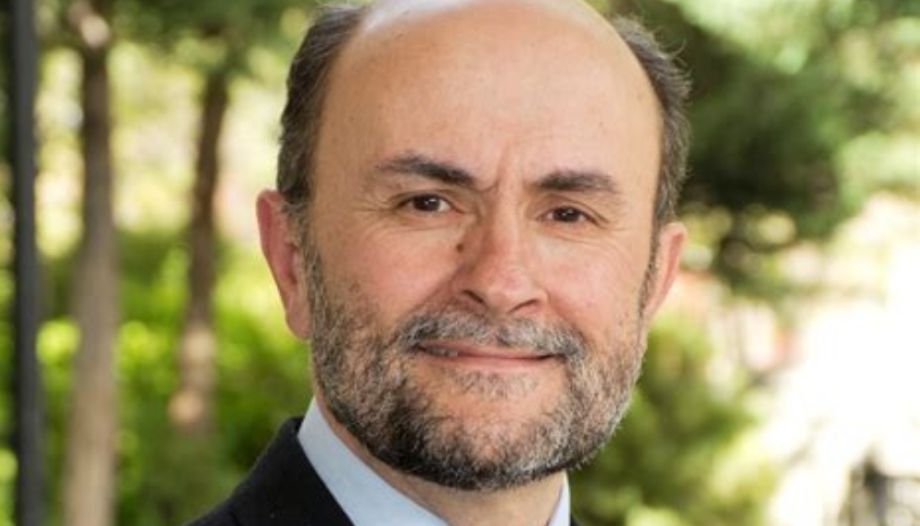
On the occasion of the International Day of Women and Girls in Science, which is celebrated on February 11, we talked to Alfonso Carrascosa, author of ‘100 Spanish Catholics and Women Scientists’. With a PhD in Biological Sciences from the Complutense University of Madrid, and a scientist at the CSIC, Carrascosa considers that “Catholic women scientists have existed, exist and will continue to exist».
Alfonso Carrascosa began his professional career in the field of microbiology. Over time, his interest turned towards the history of science, where he has developed a unique line of research: the recovery and visibility of Spanish Catholic women scientists whose careers have been, in many cases, relegated to oblivion or narrated in a fragmentary way.
The researcher has now published the book ‘100 Spanish Catholics and scientists’The book brings together more than a hundred biographical sketches and highlights a central conviction of his work: that science and faith are not only compatible, but have coexisted fruitfully throughout contemporary history.
In this interview, Carrascosa reflects on the reasons that led her to explore this field of study, the historiographical challenges involved and the importance of offering female references that integrate scientific vocation and believing life.
What inspired you to research and write about Spanish Catholic women scientists?
This topic has always been of deep interest to me. I realized that no one was addressing it in a systematic way, even though there are many women who clearly fit this profile. Making them visible makes it possible to demonstrate, with concrete facts, that science and the Catholic faith are not only compatible, but that they have coexisted and mutually enriched each other over time.
My goal has been to provide names, trajectories and contexts: practicing Catholic women who developed a first level scientific or teaching work, many of them in the university environment.
In ‘100 Spanish Catholics and Women Scientists’ you propose an unusual look at these trajectories. Where do you think the main novelty of your approach lies?
- The main novelty of the project lies in the articulation of these three dimensions: women, scientists and Catholics. These are not secondary features, but constitutive aspects of their life and professional trajectories. Until now, the religious dimension of these women had been largely ignored or directly eliminated from the historiographical narrative. In some cases, their spiritual life was completely unknown; in others, it was considered irrelevant to understanding their scientific work.
The objective is not to add an anecdotal fact, but to recover an essential dimension of their biographies. A history of science that systematically disregards the religious fact necessarily offers a partial and incomplete vision.
What have been the main challenges in researching these trajectories?
- Undoubtedly, to demonstrate their status as practicing Catholic believers. This is true for both women and men. Many people have avoided publicly manifesting their faith for fear of possible professional or academic consequences. Today, in many areas, expressing one's faith is a testimonial, almost martyr-like attitude.
Paradoxically, this silence reinforces the dominant secularist narrative that there are no Catholic women scientists. My work shows that this is false. In order to reconstruct these trajectories, interviews with family members, work in personal archives and consultation of unpublished documentation have been fundamental.
The CSIC features strongly in your research. Why is it a key area?
The Consejo Superior de Investigaciones Científicas marks the birth of the professional scientist in Spain. Between its foundation in 1939 and 1975, the female presence in its staff triples and exceeds 30% of the total. This is an objective fact that is hardly talked about.
Most significantly, the vast majority of these women were practicing Catholics. However, the idea persists that during that period science in Spain was paralyzed, which is false. The development of the CSIC demonstrates exactly the opposite.
What role does the Church play in the intellectual formation of these women?
- A decisive role in many cases. The book includes relevant groups of women scientists linked to ecclesial realities such as Opus Dei, the Catholic Association of Propagandists or the Teresian Sisters, founded by St. Pedro Poveda. These institutions offered many women spaces for high-level intellectual, academic and professional training.
An emblematic case is that of Ángeles Galino, the first university professor in contemporary Spain, who was a Teresian. Until I documented her trajectory, this fact was practically unknown.
How has the reception of your work been?
- Overall, very positive and, above all, surprising. Many people were unaware of the existence of so many women believers dedicated to scientific research. In academia and beyond, these biographies are valued as living examples of the compatibility between science and faith.
That is why I have a strong vocation for writing and publishing these portraits: I believe it is a way to enrich historical knowledge and to offer a more complete and honest narrative.
From your experience, how would you describe the relationship between science and faith?
- As a complementary and, in many cases, synergistic relationship. God lets himself be known through his works, and science seeks to describe and understand them. I have never seen a scientist lose faith because of research; on the contrary, in many cases research reinforces openness to transcendence.
The alleged incompatibility between science and the Catholic faith reflects rather the expansion of certain atheistic discourses, not a real contradiction between the two.
In closing, what advice would you give to young women scientists who wish to integrate their faith with their professional vocation?
- I would tell them not to be afraid. Catholic women scientists have existed, exist and will continue to exist. Faith is not lost by research; it can be a source of strength and meaning.
I would encourage them to rely on the ecclesial realities offered by the Church and not to hide, even in a simple way, that faith and science are compatible. This witness can be a great good for others and also for themselves.




 Español
  English
  Italiano