



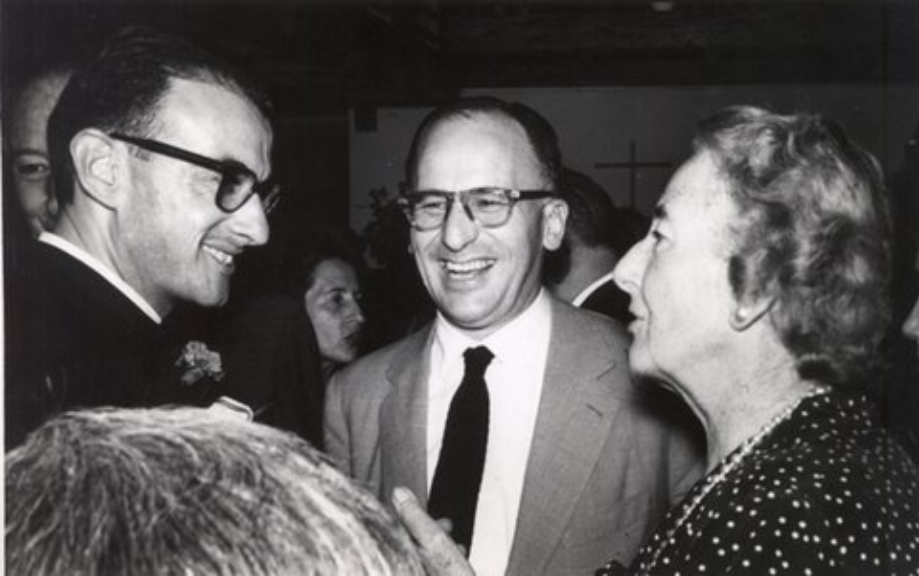
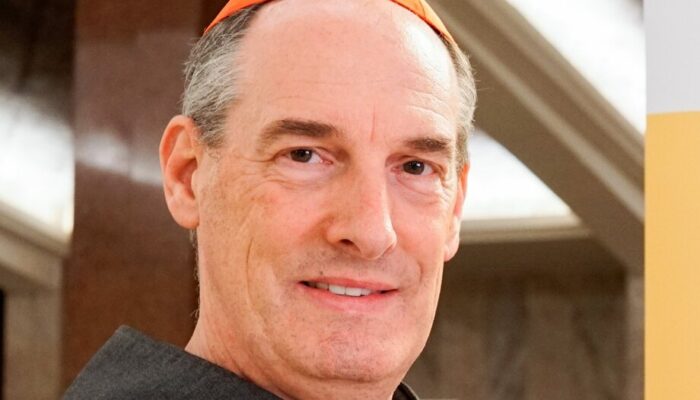
The person speaking in this interview is not a priest or a theologian, but a businessman. And not just any businessman. Fernán de Elizalde—an Argentine businessman, trained from the beginning of his career in the culture of “making money at any cost”—is now the general administrator of Enrique Shaw's cause for sainthood. He came to this position almost in spite of himself. “I was one of those who thought that a businessman could not be a saint,” he confesses bluntly. But Shaw changed his perspective, which is why he believes he can also help improve the image that the Church and society have of the business world.
Elizalde defines himself as a former “business shark.” “You had to make money. I'm not saying kill, but almost. That was the environment I lived in,” he explains. For years, he held senior management positions in large companies, until he reported two internal frauds in accordance with corporate ethical codes. “I reported it to the head of the gang without knowing it. And they fired me.» Paradoxically, that experience was the beginning of his rapprochement with Enrique Shaw, in whom he had previously had no interest whatsoever. “To me, he was a sanctimonious man who handed out money that others had earned. I said that, and I said it out loud.».
He never met Shaw personally—he died in 1961—but learning about his life forced him to reexamine all his preconceptions. “I discovered that beneath the tip of the iceberg there was enormous wealth to be gained with good ethical principles. I realized that I had been wrong in my opinion of him.» Since then, his professional and personal life has been marked by one conviction: “You can be a good businessman, make money, be profitable, and at the same time be a deeply Christian person.».
An uncomfortable saint: layman, soldier, businessman
The figure of Enrique Shaw is uncomfortable for many stereotypes. A layman, father of a large family, successful businessman, and trained military man. In Argentina, Elizalde recalls, “military has always been a dirty word.” And yet Shaw was a sailor, and not just any sailor: “He was the youngest graduate in Argentine naval history” and also a distinguished officer during his years in the Navy. He also studied at Harvard Business School.
The Navy gave him training that would shape his entire life. “Discipline, method, order.” Bringing the ship to port while taking care of the vessel and the crew was always his goal in the companies where he worked.
For years, Shaw was the head of Rigolleau, Latin America's leading glassware manufacturer, owned by the US multinational Corning Glass (bottles, industrial glass, technical glass, products such as the famous Pyrex; in short, a strategic company with thousands of employees).
“I don't want to fire anyone as a first option.”
The anecdote that, for Elizalde, best sums up Enrique Shaw's business ethics occurs when production must be halted and, therefore, the company stops generating income. A categorical order arrives from the headquarters in the United States: lay off 1,200 workers.
“Enrique's response was clear: ‘No.’ He said, ‘We can hold out. We have accumulated profits. Let me present a plan to try to turn the situation around.’” His proposal was concrete and risky: a three-month deadline and authorization to lose up to a certain amount of money, and a firm commitment. “If the time or money authorized is exceeded, then yes, I will make the layoffs you are asking for, but I will do it my way.”.
He traveled to the United States to defend a plan he intended to propose to his counterpart, Amory Houghton, who would later become CEO of Corning Glass. The plan included very specific measures aimed at making the most of employees' time by assigning them useful and productive tasks that are normally put off—maintenance, repairs, filing, technical work—to avoid immediate layoffs.
The phrase Shaw often repeated sums up his entire philosophy: “I don't want to fire anyone as a first resort.” He wasn't naive or soft, Elizalde clarifies: “If someone had to be fired, he fired them. But he did it well, in a humane, positive way.».
The result was unexpected even for the most optimistic. “Long before the 90 days were up, business activity had recovered. The company was selling, invoicing, and collecting again.» Only 50% of the authorized amount was lost. Then something unusual happened. “Enrique went to the executives and said, ‘We were authorized to lose 100. We lost 50. What do we do with the other 50? I propose distributing it as a bonus to the people.’” He wanted to distribute money at a loss, and his proposal was approved.
“I die happy: working-class blood runs through my veins.”
That gesture explains what happened next. Shortly before his death, Shaw needed blood transfusions. Without anyone asking them to, 256 workers from the company left their jobs and traveled to the hospital in Buenos Aires where he was being treated to donate blood.
“There were lines of men in overalls. The hospital staff didn't understand what was going on. They thought he was a union leader or a political figure. When they were told he was the CEO of a company, they couldn't believe it.
Shaw received the blood of his people, but died shortly afterwards. One of his last statements showed his sense of humor: “I die happy, because today working-class blood runs through my veins.”.
For Elizalde, there is no better definition of lay holiness. “They adored him. Not for his speeches, but for his concrete actions. Because he never humiliated anyone. Because he loved his people.».
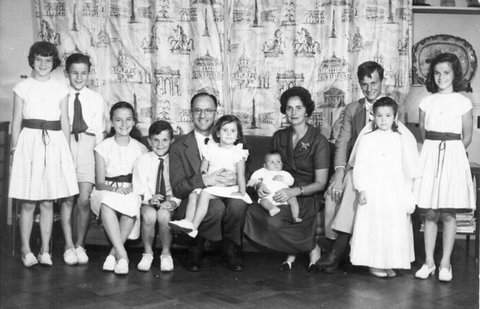
Suffering without anesthesia
Cancer accompanied Shaw during five years of illness. He hardly took any painkillers. “He would say, ‘I suffer and offer my pain for those who truly suffer. I have everything.’» Elizalde recalls that he was often doubled over in pain during meetings, and no one noticed. “The lack of painkillers was not known to those around him until shortly before he died.».
He wasn't looking for heroism or applause. “He was completely consistent. What he said, he did.» He made money, yes, and a lot of it. He came from one of the most important business families in Argentina and Europe. But he understood business as a human community, not as a profit machine.
An entrepreneur who breaks down prejudices
“The big problem,“ says Elizalde, ”is that people talk without knowing. Even I talked about Enrique without knowing. We Argentines like to ”give our opinion on everything,' and we don't always say things that are true.".
Enrique Shaw debunks a deeply rooted prejudice: that a businessman, by definition, cannot be a saint. “He proved that it is possible. He was always profitable. And when he wasn't, he changed things to get back on track. But never at the expense of people's dignity.».
That is why his cause for beatification has a value that goes beyond the religious. “The Church is going to declare a businessman, a layman, a father of a large family, a soldier, a saint. That is revolutionary.” Not because of ideology, but because of the concrete example of a coherent life.
Elizalde sums it up with a conviction born of experience: “If you find yourself in a difficult situation, pray. God will give you a hand. It's not magic. The path is marked out.» And Enrique Shaw, businessman and Christian, walked it to the end.
Prayer for private devotion
Oh God, your venerable servant Enrique gave us a joyful example of Christian life through his daily work in his family, his job, his business, and society. Help me to follow in his footsteps with a deep life of union with you and Christian apostolate. Deign to glorify him and grant me, through his intercession, the favor I ask of you... Through Jesus Christ, Our Lord. Amen.
(Our Father, Hail Mary, Glory Be)
With ecclesiastical approval: Archdiocese of Buenos Aires, July 14, 1999.





 Español
  English
  Italiano