



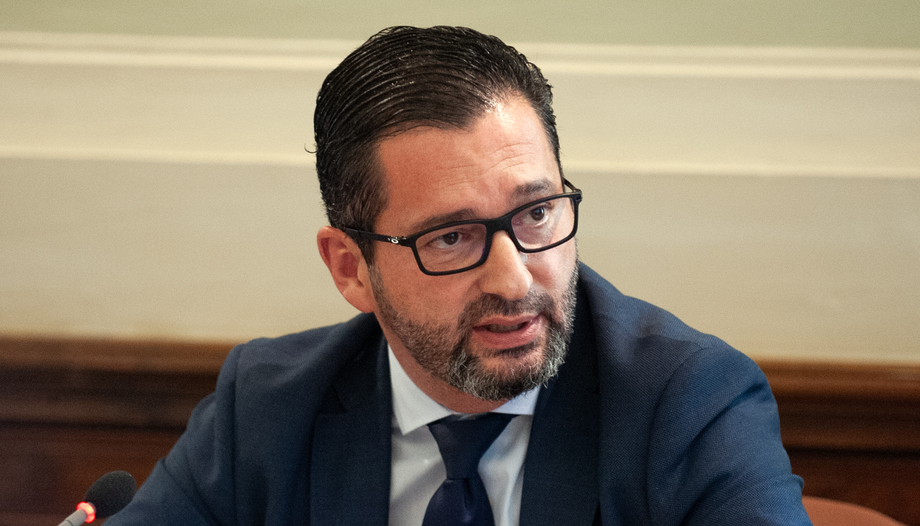
The Director of Religious Institutions and Third Sector at Banco Sabadell, the Sevillian Santiago Portas, has recently published «70 times 7: Leading from forgiveness, truth and reconciliation.», a book in which he reflects on some of the most important characteristics in the leadership and management of people from an evangelical perspective.
Throughout seven short chapters, the author establishes a relationship between different passages of the Gospel with real situations in the professional world and proposes a series of practical exercises through which the reader can evaluate and recognize attitudes and decisions in his daily life.
On the occasion of this publication, Omnes spoke with Portas about this conception of leadership, the importance of Christian coherence in the professional world and the challenge of forgiveness and reconciliation in a world of «sharks».
Why and how was a book like «70 times 7» born?
- The book is born from the concrete experience of leading people in real contexts. As I explain in the prologue, it does not arise from an editorial plan, but from years of accompanying teams, making difficult decisions and learning -sometimes through mistakes- that leadership is a responsibility with human consequences.
Over time I came to understand that categories such as forgiveness, correction and discernment were not just spiritual notions, but profoundly practical skills. The book attempts to sort out this learning and show that it is possible to exercise authority without losing humanity.
To lead is to accompany people. How to do it today?
- To accompany is not to control or invade, but to dedicate real time. In chapter 1, I spoke of time as a measure of love: leadership is not only sustained by decisions, but also by presence.
Accompanying means helping to grow, listening before correcting and always distinguishing between the person and his or her error. In a fragmented society, this form of leadership becomes especially necessary.
How do you distinguish a leader with stated values from one who actually lives them?
- The difference is seen in day-to-day consistency. Values are noticed when there is pressure, conflict or risk. They are noticed in the tone of a correction, in the way merit is distributed, in the ability to assume one's own mistake. At the beginning of the book, I quote a phrase from St. Josemaría Escrivá of Balaguer which sums up this idea well: “Don't live a sterile life. -Be useful. -Leave a legacy.” This invitation to “leave a legacy” connects directly with the leadership of which the book speaks: not to seek prominence, but fruitfulness.
Are practical exercises born from experience?
- Yes, they are not theoretical. They arise from real situations: unresolved wounds, poorly planned corrections, excessive control, decisions made in haste. They are pauses of conscience. Leadership is impoverished when we stop reviewing from where we act.
Is the right decision the one that brings peace?
- In chapter 2, I explain that peace is neither comfort nor absence of difficulty. Sometimes the right decision is uncomfortable, but it leaves inner serenity. This peace is built with silence, listening and right intention. It is not always immediate, but when it appears, it sustains even demanding decisions.
What is the difference between forgiveness and reconciliation?
- Forgiveness is an inner, unilateral decision. It frees the leader from resentment. Reconciliation requires conditions: truth, change and reparation. It is not always possible. Forgiveness does not eliminate responsibility; it allows it to be exercised without resentment.
Forgiveness is not allowing the same thing indefinitely. How to apply it in management?
- Forgiveness is not tolerating without intervening. It means not letting the repetition of the error destroy the relationship or the common purpose. This implies naming the error, correcting with clarity, establishing limits and deciding from the mission, not from the wound.

70 times 7: Leading from Forgiveness, Truth and Reconciliation
Correcting in a hypersensitive society, is it possible?
- It is more necessary than ever. Healthy correction protects dignity. It is done alone, with clarity and from a clean intention. It does not humiliate, it does not ironize, it does not expose. Correcting well not only improves results; it builds people.
Is it hard for us to ask for forgiveness also in the Church?
- It costs us wherever there is authority. But asking for forgiveness does not weaken authority; it humanizes it. Moral authority is not born of infallibility, but of coherence.
Have we fallen into a spiral of productivism?
- There is a strong pressure for immediate results. When leadership is measured only by external metrics, the inner self is emptied. Without silence there is no discernment. Without discernment there is no sustainable leadership. The question is not how much we do, but from where and for whom we do it.





 Español
  English
  Italiano