



If we want to expose the true notes of education in religious matters it is indispensable that we include the unmasking of the current errors that fill the environment; we must refute the «slogans» that confuse many faithful and pious people, because they fail to understand the heretical character of these «slogans» and their incompatibility with the true Christian faith.
There are five basic errors that are making their way into the supposed «reform» of the teaching of religion. Let us briefly examine each of them.
1. The myth of the «modern man».»
The first error is the myth of «modern man» which proclaims the total change in the nature of man in our time. It is argued that man has changed so radically that we cannot expect him to have the same way of approaching the faith and the Church that he had in the past two thousand years. Because man now lives in an industrialized world, it is believed that he has undergone a total change; he can increasingly dominate the world through technological progress. And this, supposedly, makes him a different creature.
The myth of «modern man» has been invented by a few sociologists, but has been, unfortunately, accepted by many as a simple and unquestionable truth.
Certainly, external life has changed a lot, but man himself has not changed. The principles of his happiness are the same as they have always been: love, marriage, family, friendship, beauty, truth and, above all, peace of soul, a good conscience. Its moral dangers are the same as they were before: pride, concupiscence and its fruits, evil passions, exorbitant ambition, envy, blind desire for power, greed, covetousness, etc. The same can be said of the moral virtues, whose practice is required of him: justice, integrity, purity, generosity, humility and charity.
Man has the same condition today as he had before, the same capacities of intelligence, knowledge and free will; the same heart that can rejoice and suffer, the same destiny. He has as much need of redemption as before. The words of St. Augustine apply to him as much as before: «Thou hast created us, O Lord, for Thyself, and our hearts are restless until they find their rest in Thee.».
In reality, what is the source sociologists use to know that today's man has totally changed? On what do they base the existence of this «modern man»? Have they perhaps made a survey and asked each man if he is a “modern man”, with completely different needs, to whom the same moral norms no longer apply? Undoubtedly, no.
And how can those who proclaim at the same time that all knowledge is limited by time, assume that their theses on «modern man» will not be laughed at fifty years from now?
a) Man's nature does not change
In reality, the nature of man has not changed throughout history. It is enough to read the dialogues of Plato or Herodotus to see that man remains always the same in his basic structure. There is only one radical change in history: the coming of Christ, the Redemption of man through his death on the cross, the gift of the life of grace through baptism. Thus, by his vocation to holiness every man is called to bring about this change within himself.
In spite of the identity of man's nature throughout all ages of history, there are, naturally, great differences between men and men, in their mentality, in their moral and intellectual criteria... But these differences are found among men in every age.
The claim, therefore, of complete change in man is a myth, not only because man's nature has not basically changed, but also because «modern man» himself is a myth: as if at one time all men had the same mentality and structure! This is a completely arbitrary claim without any scientific foundation. In fact, the difference in mentality between men of the same epoch is even greater than the contrast between the different epochs.
b) A fatal influence
This myth of «modern man» has a fatal influence on education, especially religious education.
There are too many pedagogues of religion who believe that the child of today should be given a completely different religious diet. They take it for granted that the religious education of former times cannot be profitable today, and this not because it was flawed, but because it was addressed to a young person who no longer exists today. They assume that teaching methods and even the content of teaching must be adapted to this mythical being, to «modern man». They forget to recognize the basic equality of man's nature in all times, including the identity of youth.
Man has always had the same spiritual needs, the same dangers (such as self-deception), the same lack of maturity during puberty, the same temptations of the flesh, the same essential thirst of the soul for God. naturaliter christiana, of the «naturally Christian» soul.
Man's nature is always prone to the same rebellion against authority, on the one hand; and he is, on the other hand, the same being fascinated by false «teachers». Man always has in the depths of his soul the same need and the same thirst for direction exercised by a true authority.
Instead of seeing all this, these pedagogues fall victim to the illusory concept of the «modern youth» which, it seems, can only be achieved through a completely new kind of religious education. But the worst effect of this myth is that these pedagogues believe that not only the methods must be changed, but also the very content of religious education... That is, religious truth itself must be adapted to this modern mind. Such an attitude clearly leads to the emptiness of wanting to modify the divine revelation entrusted to the Magisterium of the Holy Church and of wanting to adapt it to the supposed spirit of an epoch, which is a contradiction.
2. Experimentation
The second basic error is the belief that in order to find the most effective way to guide the souls of young people to a religious life that is not formalistic, but vital, experimentation must be resorted to. The basis of this notion of experimentation is the fetishization of natural science, the naive belief that the only method of achieving any certainty in knowledge is that of the laboratory; hence the «experimental angle of vision.» It is forgotten that this can lead to results only in certain fields, and that its use in others is the ultimate expression of the anti-scientific method.
It makes no sense - and it is completely impossible - to use the experimental angle in spiritual fields such as morality, religion, marriage, love; and in intellectual matters such as logic, epistemology, metaphysics, aesthetics or ethics. In all these objects, the only way to obtain results is through a completely different method. These are all matters in which intuitive knowledge, true evidence, can and must be obtained. For all these things, experiments are meaningless. No one would say: we must do experiments to know that 2 and 2 are 4, or to discover the principle of contradiction.
But experimentation in some of these fields cannot be discarded only because it has no raison d'être, because it is inapplicable and sterile, that is, for epistemological reasons; in some cases it must also be discarded because it is immoral, incompatible with the reverence that certain things demand or with the very nature of a being.
Experimentation implies the possibility of control and repetition of an event under the same circumstances. However, there are many fields in which the same circumstances cannot be produced in successive attempts and in which testing something also contradicts the very nature of that something.
Suppose a man says: «Let us make experiments on contrition»; you must first commit robbery, then adultery, and then we will observe whether your contrition has the same characteristics in both cases. The absurdity and immorality of such a proposition must seem obvious to anyone in his right mind.
It is not only that the gravity of any sin forbids such experimental research, but it is also impossible to make sin an object of experimentation. Neither observation by another person, nor one's own observation can lead to any result worthy of consideration, because true contrition is directed toward God and based on the fact that we have offended Him. As soon as I make of it an «experiment» on the basis of seeing it with a neutral laboratory attitude, it ceases to be contrition.
This kind of experimentation, terrible and empty, is nothing but a deceptive action of the kind found in the unfortunate book by Masters and Johnson, where sexual intercourse is made the subject of laboratory study.
We are all aware of the enthusiasm with which many advocate experimentation in the fields of liturgy and religious education. Experimentation is believed to be the remedy for overcoming conventionalism in education, which has undoubtedly become widespread in recent times.
Experimentation is acclaimed as a realistic method; it brings us into living contact with reality, it substitutes theories for facts, it enables us to hear reality in its fullness and variety. But this very belief that experimentation is the only way to come into living contact with reality is pure theory, abstract and, moreover, erroneous. It turns life and the fullness of being, with all its flavor, richness and beauty into a mere laboratory.
In order to know what is the best method of religious education, we must certainly attend to reality. But this attention is opposed not only to abstract theories, but also, to the same extent, to experimentation.
To attend to reality, in this context, means, on the one hand, a profound analysis of the nature of religion, and, on the other hand, an analysis of the proper way to transmit religious truth to souls. This second task requires an analysis of the human soul in general, and of the nature of each young person in particular. What is essential here is a reverent attitude, an admiration which is the basis of true philosophy.
Assuming this attitude and also the desire to understand the intelligible elements of being in their true nature, we can hope to reach a deeper understanding of the true notes of religious education and discover the causes of past failures. Such truths can only be grasped by this reverent, cooperative attitude, and never by that neutral laboratory access.
It is simply immoral to make the souls of children an object of experimentation with regard to the one thing necessary, to the fundamental question of faith, of union with Christ. This approach undermines ab ovo any true religious education; it is a kind of spiritual vivisection, an abomination in the sight of God.
3. Accommodation
The third basic error is the misleading concept of «vitalization». The new pedagogues say that religion should not be something abstract for the young person, something separate from his daily life, something he thinks about in Church, but quickly forgets when he goes out; something that is so foreign, that is so up in the clouds that he never feels comfortable in it, something he never quite gets used to. That is why, these pseudo-reformers continue, we must present religion in a way that fits into the daily life of the young person, that becomes part of the world in which he normally moves and lives.
We must adapt the content of religion to the present time; we must adapt it to the mentality of our time in such a way that the young person can accept it easily. Religious lessons must be combined with things that amuse and attract him.
So too - they continue - worship must be adapted. Mass should be interspersed with jazz and rock and roll so that the young person feels at home. He will then see religious worship, not as a mere boring obligation, but as something joyful and lively.
As I have pointed out in my book The Trojan horse in the city of God, This idea of a «living religion» reveals a complete ignorance of the nature of religion and of Christian revelation. It brings with it, not the vivification, but the burial of religion. The true vivification of religion consists precisely in the opposite.
Undoubtedly, the evil of a merely «conventional» religion was widespread in the last fifty years before Vatican Council Il. By conventional religion I understand that in which man considers his relationship with Christ and with his Church as a simple legality, similar to that which he has towards the State of which he is a citizen. He is a Catholic because he was born a Catholic and belongs to the Church, just as he belongs to his family and his country. He fulfills the obligations deriving from this fact as something expected of him: thus he goes to Mass on Sundays, and at least once a year he goes to Confession and Communion. He marries in the Church, and does not remarry if he has the misfortune to separate, etc.
Thus religion is regarded as a normal part of man's conventional life, something that fits into his way of living. This man does not have the slightest desire to inquire about the religion into which he was born. But he never makes a real confrontation with Christ. He never realizes man's need for redemption; he never comes to realize that Christ has redeemed us. He never feels God's world, an absolute, new and sacred world. It has no spiritual eyes for the supernatural reality that has been revealed to us in the Holy Humanity of Christ.
This conventional religious man has never been amazed at the miracle that is the very existence of the Church, at the fact that she has begotten countless saints, each one of them being unequivocal proof of the redemption of the world by Christ. She has never seen in the saint a luminous example of the very reason for our life, the very raison d'être of our existence: to glorify God through our transformation in Christ, to become a new creature in Christ.
As soon as we have understood the true nature of living, existential religion, which is the genuine antithesis of a merely conventional religion, we easily see that the attempt to blur the difference between the natural and the supernatural is precisely the way to conventionalize religion, and to undermine the possibility of a true, lived Christianity.
The failures of the past were rooted in the fact that religious truths were presented in an abstract, conceptual way. The startling reality of the supernatural, and its radical difference from the natural, was never elaborated in a correct form and style; that is, in a way that gave the student a living, intuitive awareness of the great things before him.
Faith, then, became conventional, because no one sufficiently prepared the souls of children for a knowledge of the infinite beauty and glory of Christ's Revelation; no one sufficiently developed their sense of the sacred, the intrinsic beauty of holiness, to perceive the gulf that separates holiness from mere efficiency; no one sufficiently discovered to them the difference between any human happiness and the ultimate happiness that only Jesus can pour into the soul of everyone who believes in Him and loves Him, a happiness that can be present and savored already in this earthly life.
A bitter irony
And how bitter is the irony with which we are now confronted! What used to be omitted as a kind of bureaucratic dullness is what some today are systematically, explicitly and consciously aiming at: the obscuring of the difference between the sacred and the profane, the suppression of the sense of the supernatural. And this is done by way of deconventionalizing the faith and making it alive. It is a singular cure that tries to fight the disease by producing a greater abundance of the same disease. And it should be noted that this is not a case of immunization by inoculation.
The «cure» of secularism is prescribed by those pedagogues who have lost the true faith. They no longer understand the radically different planes in the soul of man: that to which God calls and where man is drawn to Him, and that to which they call worldly pleasures, the spirit of the world. They are satisfied that young people are attracted to religious teaching. They never ask why young people are attracted: are they attracted to the authentic world of Christ, or is it that what is offered to them has been adapted to the environment and the spirit that surrounds them, in a desacralized and dehumanized world that naturally has an attraction of its own to such an extent that the content of religion is completely falsified?
4. A secularized creed
And this brings me to the consideration of a fourth error. In their eagerness to make the teaching of religion successful, the «new pedagogues» forget the nature of true success, which is the only thing that matters. They are satisfied if a means succeeds, even if this success is completely antithetical to its genuine end. They undermine the authentic meaning and raison d'être of religious education, which is exclusively to transmit to people the teaching of the Church, to plant in their souls a deep, living, unshakable faith and to foster in them a love for Christ, a full desire to follow him and to live according to God's commandments.
These pedagogues congratulate themselves on the brilliant success of their «new approach» to religious teaching; they do not seem to realize that the appeal of their method was bought by repudiating, for their part, the very supernatural truths and realities they were supposedly trying to impart.
Their «success», then, is comparable to that of the surgeon who boasts: «The operation was a brilliant success, but the patient died». Thus, the end to which they tend and which gives the operation its meaning is sacrificed for the brilliance of the operation.
The faith of any young person who has suffered this unfortunate treatment is no longer the true Christian faith. A secularized, humanitarian creed that lacks the basic characteristics of Christ's Revelation has been instilled in his mind. It no longer believes in original sin, in the need for redemption, in the fact that we have been redeemed by the death of Christ on the Cross. He no longer believes in the one thing necessary: our transformation in Christ, our loving personal relationship with Christ.
They completely ignore the true charity that can be born exclusively in the heart of the one who loves God above all things; God as He has revealed Himself in Christ. Their knowledge of the faith does not include the role of contrition, the horror of sin, the glorious supernatural union of all the members in the Mystical Body of Christ.
What sense, what significance does a religious teaching have, what right does it have to exist if it leads to a creed that has more affinity with the New York Times than with the Gospel and the deposit of faith? What does it matter that many young people are attracted to this pseudo-religious teaching?
Why are people attracted to this pseudo-religious teaching? What is so special about this pseudo-Catholicism that it is easily and happily accepted by the youth; that they «cooperate» with the teacher without difficulty? This success is, in reality, a false success. It may, perhaps, satisfy the vanity of the teacher, but it is the burial of the true faith and the betrayal of the true vocation of the teacher. This teaching operation has really been a «success»: the faith of the students is dead!
Authentic faith must be presented
The true antithesis of conventional Christianity is the vitality rooted in the authentic Catholic faith, the unshakable faith in the Creed that our Holy Father Pope Paul VI solemnly proclaimed at the end of the Year of Faith. It is the deep love of Christ, the decision to follow him, the longing for him, the love of his Church, the reaching out and possessing her beauty and splendor, the deep gratitude to God for all his gifts.
If we understand the above, we can more clearly elaborate the notes of a true religious education and the requirements for it to be truly fruitful.
First of all, the content of our faith cannot be presented as just another subject of knowledge, in the manner of history or mathematics. It must be presented in its absolute uniqueness, in the spirit of the Easter Saturday Mass: Anuntio vobis gaudium magnum, I announce a great message of joy.
The fundamental truths must be presented to the young listeners in such a way that the ineffably holy atmosphere of revelation is transmitted to them. A supernatural aura must surround these truths: the creation of the world and of man, the fall of Adam, original sin, the Revelation of the Old Testament, God speaking to Abraham and Moses, the formidable Revelation of the Decalogue and the solemn, overwhelming voice of all the prophets, especially Jeremiah and Isaiah, and then the ineffable mystery of the Incarnation, the Epiphany of God in Christ, the revelation of God Himself in the Holy Humanity of Christ, the miracles of Christ. His eternal words, His death on the cross, His glorious Resurrection and Ascension, and Pentecost, the birth of the Holy Church.
5. The teacher
All this requires a deep faith on the part of the teacher. We can never overestimate the importance of the master's radiating personality, his own reverent approach to these mysteries and his delicacy in avoiding any impression of laziness, self-indulgence and vulgarity in his style.
Not only must he be deeply rooted in the Christian faith-in his love and fidelity to the Church-but he must also emanate it in his way of teaching, in his dialogue with students. His deep sense of the supernatural and his love for Christ must permeate his teaching. And at that moment the student must not be for him a little boy going to school, an ordinary pupil as in the other subjects, but rather a soul infinitely loved by Christ.
The teacher of religion who wants to be truly successful must avoid a fault that has often been committed in the past: the abuse of authority. Harsh, pedantic, bureaucratic authority imposed on children and young people is, in itself, an unfortunate thing, and it is so within the context of religious education. However, we must strongly insist that a complete absence of authority is even worse: a weak yielding to the whims of the young or an affected familiarity, a tone of camaraderie, the use of a tone, as a French expression, of frère et cochon.
In approaching the boy in a recalcitrant manner, in which a noble reserve is interwoven with a great love, the teacher should act with genuine authority. He should also try to show young people the beauty and dignity of true authority and its difference from the pseudo authority that so easily takes hold of youth. I am referring to the pseudo authority of those who have the ability to impress young people with their slogans, with their supposed independence and by presenting themselves as the pioneers of the future, as the modern, fashionable oracles.
A great and important task, especially today, is to stimulate in young people a skeptical attitude towards these modern but false prophets. These prophets must be unmasked and recognized for what they are: superficial men. Their theories, for the most part contradictory, are to be exposed. And they themselves are to be stigmatized, given their transient condition, as ephemeral flies.
Freedom or slavery
It will never be enough all that the teacher does to show that to be fascinated by the pseudo authority of false prophets is the greatest intellectual slavery and an abdication of one's freedom. On the contrary, submitting ourselves to the sacred authority of God and His Holy Church makes us free. It gives us the possibility to see everything in its true light, to discover the true hierarchy of goods, to be freed from gregarious instincts and, above all, from slavery to our own pride.
In this context a great failure of past religious education must be mentioned: the omission to show the beauty and depth of noble natural goods such as human love, friendship, marriage and beauty in nature and in art. This was a great mistake.
When the teacher awakens in the boy his sense for the noble natural goods and shows the difference between these and the merely passing goods or worldly goods, he is preparing the soul of his pupil for the ascent to incomparably higher goods, to supernatural goods. These noble natural goods are a reflection of God's infinite glory, a great gift of his goodness. They have the capacity to evoke nostalgia for the Absolute, whom they reflect in a natural way. St. Augustine underlines this admirably in his Confessions.
Certainly created goods can separate us from God if we become too attached to them, if we turn them into idols. But, on the other hand, they also have this great positive mission: to drag our minds upward and prepare our souls for the supernatural message of God.
And when we have encountered Christ, when our heart has been touched by the supernatural good, when we come to apprehend the incomparable superiority of the supernatural over the natural, then the true natural goods are not discarded. Rather, they are transfigured by Christ and we are even able to understand their value more deeply. «In the light we see the light,» says the psalmist.
One of the most urgent tasks of religious education today is to develop the moral sense of students, to awaken in their souls a sense of the fascinating beauty and splendor of moral values and a deep horror of the most catastrophic symptoms of spiritual decay and a singular threat to a true relationship with Christ.
And here again we must say that the world of morality has often been presented too abstractly, too negatively. Assertions about the goodness and badness of an act have been based on weak arguments. This has to be corrected. The ultimate importance of the categories of moral good and evil must be exposed. We must insist on the primacy of moral values over all other values. Only moral values have eternal projection. Already Socrates saw this primacy in a grandiose way when he said, «It is better for man to suffer injustice than to commit it.»
A serious responsibility
The responsibility of the religious educator at the present time is great. Amidst the waves of apostasy among Catholics, amidst the deplorable disintegration that is occurring in the Church, it is a difficult but beautiful task to row against the tide and help establish a firm and unshakable Catholic faith in the souls of the young.
It is a beautiful task to awaken in young people a true love for Christ, a strong desire for greater union with Him, a firm decision to follow God's commandments and a resolution to approach all noble natural goods with the light of Christ and with deep gratitude to God.
To fulfill this task conscientiously, the religious educator will have to face many persecutions coming not only from the world, but also, and especially, from false brethren. But such persecutions will never seduce him to the point of leading him to compromise. The words of Our Lord should always be in the mind of the teacher: «Whoever scandalizes one of these little ones who believe in me, it would be better for him if a millstone were hung around his neck and he were drowned in the depths of the sea.
As in all difficult tasks, however, we can draw great consolation from the words of St. Paul: «Nothing can separate us from the love of Christ». May the faithful teachers of religion undertake their great and noble task, filled with hope and fervent ardor. May they remember that Our Lord said, «Heaven and earth shall pass away, but my words shall not pass away.»
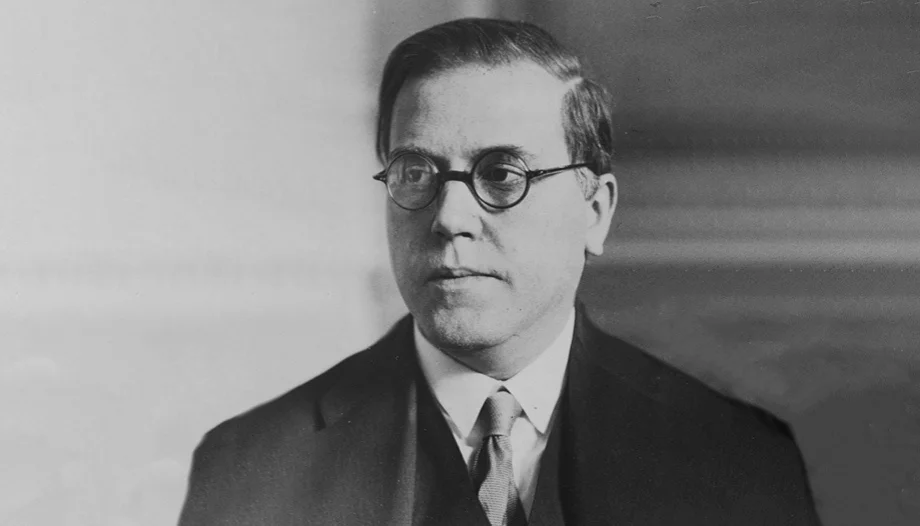
German philosopher and theologian. Converted to Catholicism in 1914, he had to flee Germany because of his firm intellectual opposition to National Socialism.




 Español
  English
  Italiano