



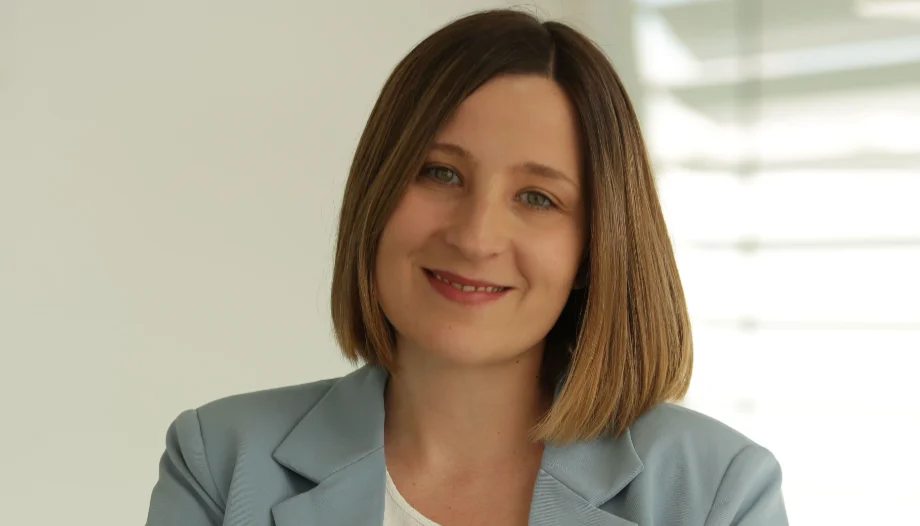
Forgiveness is neither forgetting nor automatic reconciliation, but an inner, complex and deeply human process. This is demonstrated by recent research led by psychologist Agata Kasprzak and Maria Pilar Martinez-Diaz, which has just been published in Journal of Marital and Family Therapy, a scientific journal of international reference in family and couple therapy.
The study validates in the Spanish population the Marital Offense-Specific Forgiveness Scale (MOFS), an international instrument that allows rigorous measurement of how people deal with forgiveness after a specific offense within a couple's relationship. The work has been carried out by researchers from the Universidad Francisco de Vitoria and the Universidad Pontificia Comillas, and represents a relevant advance for both psychological research and clinical practice.
Measuring forgiveness to better understand it
Far from reducing forgiveness to a superficial attitude or a well-intentioned formula, the validated scale makes it possible to analyze it as a profound motivational change. As Agata Kasprzak explains, “from psychology we understand forgiveness as a change in motivation towards the other: when there is forgiveness, avoidance, resentment and the desire for revenge decrease, and a different disposition towards encounter and reparation may appear”.
The tool assesses two major dimensions. On the one hand, avoidance and resentment, which reflect the tendency to withdraw emotionally, ruminate on the damage or keep the wound alive. On the other, benevolence, understood not as naivety or justification of what happened, but as “an internal willingness to look at the other without hostility, once the wound has been recognized and elaborated”.
Forgiveness is not forgetting or denying the damage
One of the main contributions of the research is to help dismantle simplistic ideas about forgiveness, which are widespread in society. “Forgiveness is not forgetting what has happened, or pretending it never happened, or automatically reconciling,” Kasprzak stresses. “Forgiveness is first and foremost a free response to the harm. It does not stem from the event itself, but from the position I take in the face of what has happened to me.”.
In this sense, the psychologist insists that forgiveness does not imply minimizing the wound: “Forgiveness does not mean denying the pain, but recognizing it without letting the wound define me. For this reason, she adds, forgiveness can occur even when the relationship does not continue: ”It is an inner act. I can forgive even when there is no reconciliation“.
A slow, cumbersome and unenforceable process
The research, supported by years of clinical work with couples, highlights that forgiveness is a long and sometimes uncomfortable process. “It's a very complex human experience,” Kasprzak explains. Against the idea that time heals everything, he warns: “Time can alleviate the intensity of the pain, but it does not replace the process of forgiveness, which is only possible from the freedom of the one who has been hurt”.
For this reason, he stresses, forgiveness cannot be demanded. “Forgiveness always belongs to the freedom of the one who has been hurt; that is why it cannot be claimed as a right, but received as a gift”. In many cases, when relationships become blocked in dynamics of silence, distance or mutual reproach, the intervention of a third party, such as a therapist, can be key to unblock the process.
Scientific rigor and clinical application
The study was conducted with more than 700 people in stable relationships, who were asked to recall a specific offense and to respond to the items of the scale based on that actual experience. In addition to statistically validating the instrument in Spain, the researchers tested its equivalence with U.S. samples, allowing international comparisons of results.
Publication in a Q1 journal (Scopus) reinforces the scientific value of the work and its impact on the field of couple psychology. But, beyond the academic indicators, the study offers a fundamental contribution: to help to better understand what forgiveness is - and what it is not - and why it is so decisive for the health of human bonds.
As Kasprzak concludes, “Forgiveness is not submission or naivety; it is an active process that allows me to decide what I do with what happened to me and how I want to continue living.




 Español
  English
  Italiano