



 Cardinal Bustillo: “Priests have to take care of health and joy”.”Erik Varden: “I think the Catholic turn is real and needs to be taken seriously”.”Increase in adult baptisms at the Easter Vigil
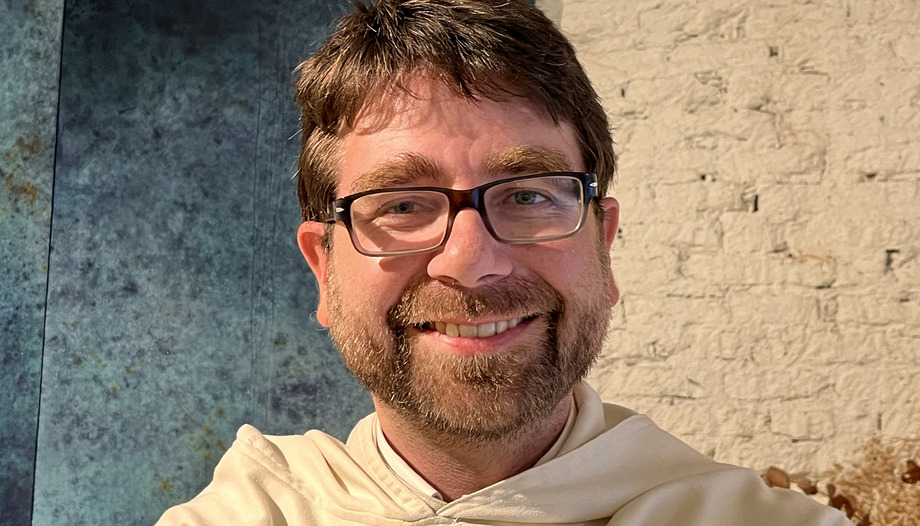
Adrien Candiard is one of the most interesting spiritual authors of our time. A Parisian by birth, this Dominican, a graduate in Political Science, History and Theology and a member of the Institute of Oriental Studies in Cairo, has been living in Egypt since 2012.
His knowledge of the world, both in its Eastern and Western spheres, and his experience as a religious man are shown in his works with great naturalness and an exceptional open-mindedness.
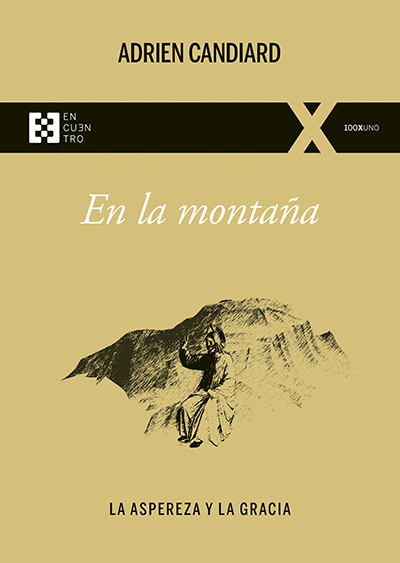
Author of books such as “A few words before the apocalypse.”, “Hope for castaways.”, “Christian Freedom: From Paul to Philemon.” o “Fanaticism: When Religion Makes Sick”.”, In this interview with Omnes, Candiard talks about God's grace as the key gift of our Christian life, freedom or the resurgence of faith in secularized Europe through the hand of «On the mountain.», his latest work published in Spanish.
Your last book, “On the Mountain” speaks of grace. Being the engine of the Christian life, why does it seem distant from daily life?
- The problem with grace is that we often believe in it “in a theoretical way”. We know it exists, that God loves us freely, unconditionally... , etc., etc. But, in practice we do not believe it because we live in a world in which there is nothing free and, although we think that yes, of course, God loves us freely, deep down, we are left with the doubt if, as in all human contracts, there are small characters that say the opposite of what they affirm. We can live our relationship with God in this way, based on duty, not on love. We often live with the idea that we have to do this and that to deserve God's salvation and love.
In the Gospel, Jesus Christ tells us that God loves us and asks of us very difficult, very demanding things. In fact, the discourse on the mountain gives us a very demanding law. And we can ask ourselves, how do we do it? Are we not asked for an impossible perfection?.
For this reason I wrote “On the mountain”, to see if we can believe this discourse of grace, if it is serious or not. If we can accept it without limit without living a servitude, a Christian life made of duties.
When we read the discourse on the mountain in a non-superficial way, we can understand that this requirement is also a gift of grace and is not contrary to it, it is not a condition for attaining the gift of God, but it is a result of God's gift. We do not have to live the Christian life in order to obtain God's love, but we can live a Christian life because God, first of all, has loved us.
Many Christians have, however, put the focus on “deserving” eternal life, perhaps with a bit of unconscious Pelagianism.
- Yes, Pope Francis has often reminded us that, on so many occasions, we are Pelagians. It is evident because, despite what it may seem, what is difficult in the Christian life is not to love one's neighbor - which is not easy - but to accept being loved. To accept that we have received everything, that it is a gift, that we do not deserve it.
We prefer to deserve things because they are ours. Whereas a gift is something that, in a certain sense, is not ours 100 % . Salvation is not just having divine life; it is receiving it as sons and daughters of God, receiving it as a gift from God and not appropriating it. Adam and Eve want to appropriate it. This is sin.
In the mountains
In fact, in the book, you state that Aphan's sin was not wanting to “be like God” but “wanting to be God without God”.
- It is a temptation that appears frequently in the Bible. We see it throughout the Bible, with Babel, for example, too: Humans want to go up in heaven without God. Meanwhile, God wants to give us his divinity. And we see it even today, when we meet transhuman movements that want to abolish death, to give humanity with technology a form of divinity always without God and we know the result of all this: It cannot work.
The heart of man will always long for the divine life because we are created for this, but not without God. For us, divinity is obtained in the fact of being sons and daughters, of divine filiation.
In fact, this reminds me a bit of another of your books, “Fanaticism” in which you explain how the fanatic is a religious person without God.
-Yes, and it's the worst thing you can do. Religion without God is a system of oppression of people. There are criticisms of religions that are perfectly valid because religion without God is meaningless.
It also happens that it is always easier to comply with a command than to be responsible for an action. How can we unite the freedom that God has given us with the faithful fulfillment of commands or rules?
- I believe that, at this point, the key concept is that of friendship. Jesus says to his disciples “I no longer call you servants: I call you friends”, in Greek, the word used is “slaves”. He says “I call you friends, for all that I have heard from my Father I have made known to you”. He tells us that he wants to live with us in a relationship of responsibility. We do not have to obey, we do not have to do what he wants, because he is stronger. This would be the relationship between master and slave. Christ does not want this. He wants to live with us in a relationship of friendship, a little strange perhaps, because it is a relationship in which we do not know everything.
In moral matters we have the elements to know what is right and what is wrong. Good makes us good, evil is what makes us bad. These are not arbitrary commandments. Walking with Christ means walking with our eyes open, knowing what we do and choosing to do it because it is right. God wants us as adult friends who walk with Him in a free way, not out of fear.
You also point out how that narrow door is so because it has our measurements. How much of us and how much of grace are balanced in the Christian life?
- It is complicated, sometimes, to live our responsibility without moralism, without falling into a moral “of merit”, because it is not about deserving anything, we do not “deserve” eternal life. Every day, at Mass, we say that we are not worthy “I am not worthy for you to enter my house...”. In general, when we say this I sense a kind of sadness, a kind of hopelessness like “how unworthy I am”. But we are going to receive Christ soon after. He is coming, and this is great. It's wonderful and we should receive Him with joy, with gladness, because He is coming, even though we don't deserve it.
The point is that we don't have to deserve that gift, because the gift is here. The question is, then, how do we want to live? What do we want to do? What's right for us? We, sons and daughters of God, what do we want to do? It is the Gospel question that Jesus asks everyone.
Although you live in Cairo, you are French. France, like other places in secularized Europe, is experiencing a moment of llegacy of young people to the Church What are those who approach you looking for, what do you find or what should you find?
- It is clear that there is a new movement and we have yet to see what it is. We should not exaggerate the numbers, for example. But it is something and it is something unplanned. This is interesting because it is not explained. In France, this arrival of people in the churches cannot be explained. This movement started in the middle of the abuse crisis. While the image of the church in the media world was terrible, people came to ask for Baptism. In these people who come, there is everything. There is also a certain prevention to the advance of Islam and perhaps, there have been those who have wondered when they have seen this, what is my religion.
For us, for Christians, I think it is important to open the doors and be able to think of the Church as truly missionary, missionary at home, and to accept that we are not God's owners. We are not “owners” of the Church even if we have been in charge of the flowers or the songs for 30 years. He asks us for a conversion. It also asks us to be able to speak about God: not to want to transmit only a Catholic “way of being”. We speak of God.
The search for meaning in life cannot be answered with an identity, it can be answered with faith. It is clear that faith alone contains an identity, but identity alone is a corpse. We must be able to propose something more than a discourse: an encounter with the living God. The challenge of the Church today is to speak of God and God alone.




 Español
  English
  Italiano