



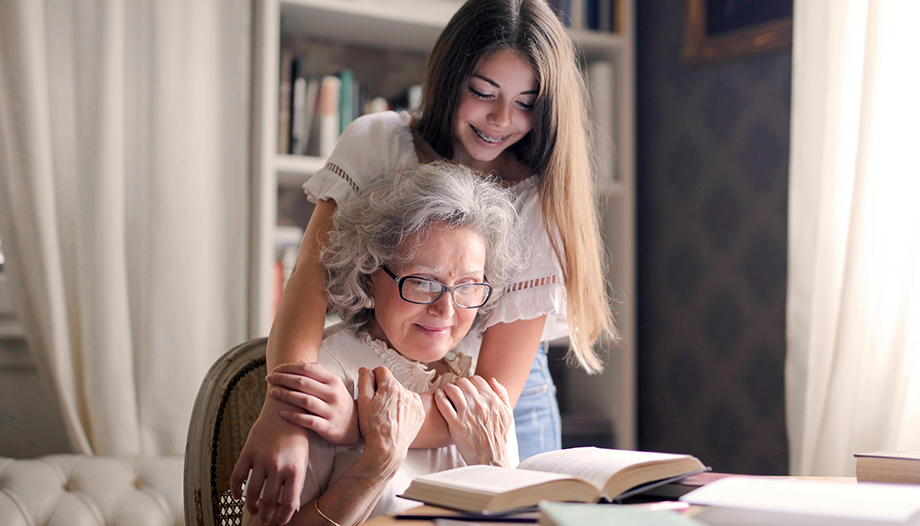
Grandparents, our friends tell us, are an endangered species. Virtually every demographic group of childbearing age, except women over 40, are having fewer children, if any at all. And let's face it: potential grandparents with children over 40 are probably rapidly aging from “fun grandparents” to “grandparents who live in a room.”.
According to the latest government statistics, our birth rate is now 1.6, below replacement level and falling to where countries like Italy used to be. Italy's birth rate has fallen even further, to 1.18, making ‘nonno’ and ‘nonna’ even more endangered than grandfathers and grandmothers.
How to address the issue
Aspiring grandparents are approaching this issue in a variety of ways. Frequently asking their children when they plan to have children is probably one of the least effective strategies.
Putting a good face on your children's decision to “breed” a pair of labradoodles (N. of ed.: dogs originating in Australia in the 1980s, the result of crossbreeding), doesn't help either, even if you put a bumper sticker on your car bragging that “my grandson has four legs”.
Politicians' measures
Politicians want to invest money in this issue, of course. After all, grandparents-to-be vote. For the last hundred years, governments have been trying to bribe prospective parents to have children.
In reality, this does not work, whether in China, France or South Korea, because an experience as transformative as parenthood is not so easily incentivized with a few thousand dollars and a tax break.
Disincentives are important. The most commonly cited are cost-of-living issues, such as childcare and education costs, but everything from school shootings to the global situation can also be cited.
Living to see your children's children
Grandparents-to-be understand this, of course. But the desire to “live to see your children's children,” as Psalm 128 says, is deeply rooted in the human heart.
We want to see the children we have so painstakingly raised give birth in turn to the next generation. It is a sign of hope and resilience that outweighs the headlines, crises and endless worries we have for our planet and our species.
I am fortunate to have a son who is now a father. My friends who are not grandparents listen to my stories with a touch of envy. We don't know when our children will have children, they say wistfully.
What it means to be a grandparent: sincerity
I'm honest with them about what it's like to be a grandparent. There are good reasons why parenting should be left to the young. Taking care of kids is exhausting! It takes us two or three days to recover from a weekend of reading books, changing diapers and negotiating meals.
At the same time, being grandparents is a kind of time-travel experience, as it reminds us of what is usually a fuzzy memory: what we did and how hard we worked when we were younger parents.
Crying in the middle of the night...
Recently, in the middle of the night, a crying one-year-old woke my son and me. I stayed in the darkened room while my son rocked the baby and fed him a bottle. It reminded me of so many nights when I did the same for him. I felt a great surge of parental affection for my son. The love I had shown him long before he could remember, he was now passing on to his son as he gently rocked him back to sleep. It is a circle of life that I am fortunate to be a part of.
Being a parent, the most rewarding job
Being a parent isn't easy, but it's the most rewarding job there is. There is probably never a perfect time to decide to have children. But, in general, we rise to the occasion and become better people for it.
Perfect time to be a grandparent: now
As for the perfect time to be a grandparent, I think it's now. For the grandparents-to-be who are still waiting for that privilege, perhaps they can pray to St. Anne and St. Joachim, who according to tradition were the grandparents of Jesus. I bet they could tell a lot of stories.
———————
Greg Erlandson is an award-winning Catholic editor and journalist. His column is published monthly in OSV News.
———————-




 Español
  English
  Italiano