



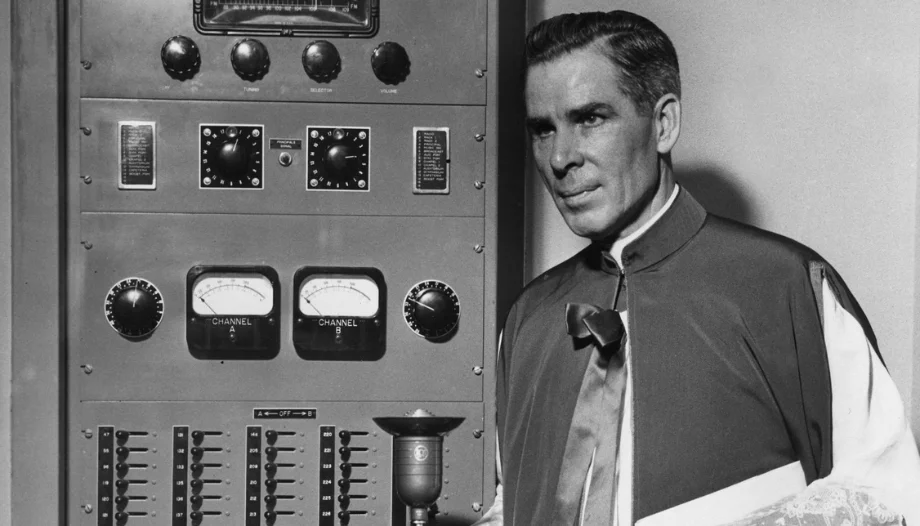
 When the FBI spied on Bishop Sheen
The figure of Fulton J. Sheen resonates in the Church. The Holy See has authorized his cause to advance towards beatification, after having been declared venerable and a miracle attributed to his intercession has been recognized, a step that will allow his public veneration and will bring his legacy even closer to new generations. Priest, bishop and pioneer of radio and television evangelization, Sheen marked the 20th century with an extraordinary ability to communicate the Gospel to the hearts of the people.
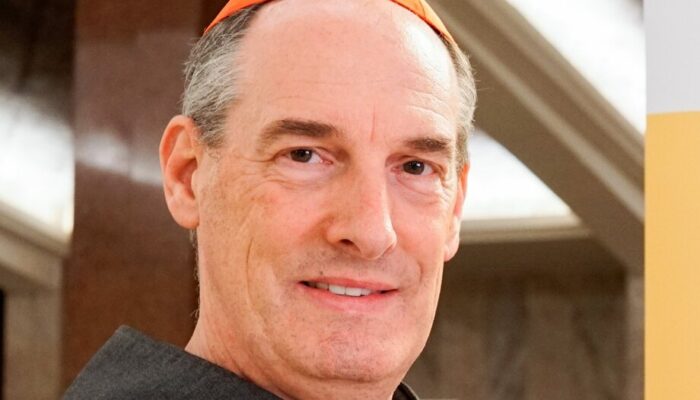
To delve deeper into his spiritual life, his pastoral impact and the significance of this historic moment, we spoke with Msgr. Jason Gray, priest of the Diocese of Peoria and executive director of the Archbishop Fulton Sheen Foundation, who closely accompanies the cause and works to keep alive the mark of one of the great communicators of the faith in the recent history of the Church.
What aspects of Bishop Sheen's spiritual and pastoral life would you highlight?
Fulton Sheen’s spiritual life revolved around prayer before the Blessed Sacrament. From his priesthood ordination in 1919, he dedicated himself to a continuous Eucharistic holy hour every day. This was so important that he called this “the hour that makes my day.” Sheen studied in some of the most prestigious Catholic institutions and had an impressive number of degrees, but it wasn’t in the lecture hall or the library that Sheen came to some of his greatest insights into the life of Jesus Christ. Sheen didn’t just know about Jesus. He knew Jesus because he spent time with Jesus in prayer.
Sheen had a great respect for the cross as part of the spiritual life. Sheen admitted that he did not always appreciate the value of the cross, but he deepened in his understanding that Jesus came both as priest and victim, and anyone who would be a true disciple of Our Blessed Lord would also have to imitate him by taking up his cross. Sheen suffered, as he said, from within the Church and from without, but he did not take time to complain about his sufferings. Sheen pointed to Jesus who suffered his trial without opening his mouth to defend himself. So why should we do differently? Sheen’s remarkable way of turning the other cheek by acting kindly to those who persecuted him is a testament to his holiness.
Sheen stood out as an evangelist on radio and television, something very innovative for his time. Do you think he can be a model for digital evangelization today? Why?
Sheen is more than a model. He was the pioneer who led the way. He made radio and television into a tool for evangelization, which makes him the perfect patron for modern media for those who continue to spread the Gospel over the Internet and social media.
However, we should not think that Sheen was effective because of his style. There is no doubt that he had a powerful presence on camera. There is no doubt that he was well spoken and incredibly intelligent. There is no doubt that he has a telegenic appearance and eyes that could pierce through the camera lens. Sheen’s effectiveness came, in my opinion, from his spiritual genuineness. Sheen really believed what he preached and lived the faith he spoke about. He was comfortable with the common and ordinary man as he was with the rich and powerful. He did not look down on people but spoke to them just as passionately about Jesus Christ. His honesty, his sincerity, and his deep faithfulness are the characteristics that made him effective on television.
Which anecdote from Sheen's life do you like best?
Fulton Sheen had a great sense of humor that was always on display when he preached and in his television programs. This is not to say that Sheen could not be serious and bold in his preaching. Rather, Sheen said that humor had an important power to warm people to listen to his preaching, especially if the humor was often at his own expense.
The joyfulness of his presentations fit well with his television program: Life is Worth Living. No one wants to live a stuffy, sad, morose life. We want to be happy with Jesus, which made the sincere joy that Sheen radiated so appealing to all.
How would you describe the importance of beatification for the Church in the United States?
Beatification and Canonization are the two steps in the Catholic Church that bestow a public honor on a person. Public honor is an official recognition by the Church that Sheen was a man of heroic virtue and proven heavenly intercession. Before his beatification, any signs of devotion to Fulton Sheen are considered private, or simply the result of a personal conviction of an individual person.
The public proclamation of Sheen’s holiness of life will raise his stature in the Church and will lead to more and more people learning about him and his virtue. Sheen’s energetic and forceful presence in the media will inspire others to also proclaim the Catholic faith with conviction. Sheen’s generous time spent instructing converts to Catholicism will inspire others who teach the faith and encourage the faithful to be bold in encouraging others to become Catholic. Sheen’s care for the poor, and especially those in missionary territories, will encourage more people to support the Pontifical Mission Societies where Sheen once worked. Through this support, the faithful in the poorest areas around the world will be cared for.
What was Bishop Sheen's prayer life or Eucharistic celebration like?
Fulton Sheen’s was centered around the Eucharistic and a daily Eucharistic holy hour. When Sheen focused on the Eucharist, he grew in the appreciation of St. John the Baptist’s saying that he must decrease and Jesus must increase. Sheen realized that Jesus gives us the perfect example of humility as he lowered himself perfectly in order to save us because of his great love. Thus, how could we not also humble ourselves to magnify the Lord?
Sheen also realized that Jesus came to us in order to die for us, making him a priest who offers sacrifice, and also the victim being offered. For Sheen, the celebration of the Eucharist is a participation in the victimhood of Jesus Christ. Since Jesus offered himself out of love, the Eucharist is the perfect expression of God’s abiding love for us and continued presence. The Eucharist also challenges us and invites us to respond in equal measure with love for him.
Sheen also expressed an important truth about the celebration of Mass when he was Bishop of Rochester. He noted how important it was that he pray in union with the Pope, since the Pope’s name is mentioned in every celebration of the Mass. He was also grateful for all the prayers for him since the clergy and faithful of his diocese prayed for him as their Bishop in every Mass. The Eucharist for Sheen was therefore a great bond of unity among the people of a diocese and the faithful throughout the world.
In an era as polarized as ours, both in the Church and in society, what lessons can we learn from Sheen to improve in this regard?
Fulton Sheen could be both bold and confrontational, strong in his positions, and courageous in his convictions. However, Sheen often had a way to slide into issues and approach them in a way that was disarming. He didn’t open his television show on the attack, but rather with a common anecdote from life that he could use to draw his audience together with him as he led them to eternal truths.
I think it’s a mistake to categorize Sheen as conservative or liberal, as right or left. He preached about social justice as necessarily connected to individual justice. While the left may want to talk about care for the poor and the right may want to talk about virtue and personal responsibility, Sheen said that we have to do both. Rather than condemn one side of the spectrum, Sheen had a way of lifting both the right and left up to God.
When Sheen was Bishop of Rochester, he tried to implement Vatican II in his diocese. He attempted to sell the property of a parish church that was superfluous to provide housing for the poor. For conservatives, he seemed to be too liberal. At the same time, Sheen was clear on Church moral teaching, the condemnation of communism, and devotion to the Eucharist and the Blessed Mother. For liberals, he seemed to be too conservative. Sheen was such a unique person with such a powerful presence, he defies categorization. We can benefit by appreciating the man for who he was.




 Español
  English
  Italiano