



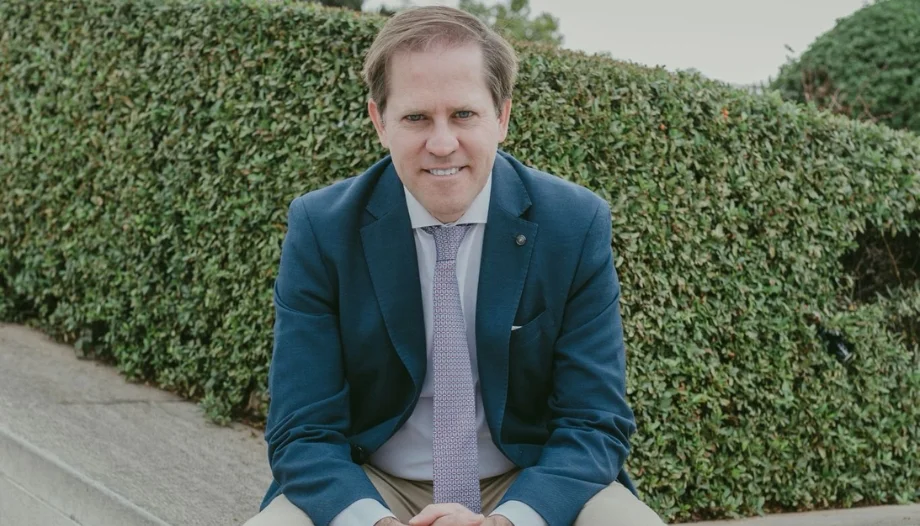
Luis Gutiérrez Rojas is a psychiatrist and author of books such as The beauty of living y Live more freely. He also stands out for his optimism and humor: he was a finalist in the Comedy Club and his talent for therapeutic monologues continues to be recognized.
For years she has been giving conferences where she offers guidelines to face life with optimism and resilience, exploring how to find happiness beyond the material. In this interview, he talks about how to transform suffering and daily worries into opportunities to grow.
Do you think that the culture of immediacy makes young people more fragile in the face of suffering? How do effort, discipline and self-control influence anxiety?
Indeed. It has been proven that people who master themselves - the term master comes from domine, which is a term that has a Christian connotation, which is to put the Lord in your life - have a much greater capacity to achieve their goals, to tolerate frustration and to have less anxiety.
The problem is that nowadays the words effort, discipline, self-control are often associated with repression, something costly, difficult, almost impossible to achieve. And perhaps we should turn it around.
We usually say that the will is to be able to postpone the reward. We must teach young people that if they are able to postpone the reward, to do what is difficult for them, to set difficult goals in order to - as they say today - get out of their comfort zone, then they will be more mature, more stable and freer. Maybe the issue is to turn it around: How to motivate young people to master themselves and achieve their goals?
You are known for highlighting the positive side of current concerns. What common worries can be turned into opportunities if viewed with optimism?
Optimism has nothing to do with a simplistic look, nor with a foolish look. Today we are also talking about toxic positivism, that which says that everything is fine, everything is wonderful, life is great and that nothing ever happens. This is too silly and quite empty of content.
Having an optimistic outlook means having the tools to change what we do not like. And if we do not have them, because they are things that do not depend on us (one cannot change the world, nor society, nor governments, nor the defects of our family or the people we love), one has to accept it as part of the way.
Not to strive for unattainable goals, because, I repeat, they do not depend on us, fills you with optimism. Because the most optimistic person is the one who fights against himself, is the one who plays the game knowing what things are in his hand. That is pure optimism.
And to give some examples of common concerns, (a bit of a joke) sometimes we see mothers anguished because their child “does not eat”. I usually say: do you know how many people died of hunger in Spain last year? None. So, even if he doesn't eat now, he will end up eating.
Something similar happens when one is young and suffers a breakup. Then you think that this person was the love of your life and that, without him or her, life has no meaning. But that vision is quite childish, because with time one understands that life takes many turns and that breakups are part of the process of emotional maturity of people.
Faced with the daily drama, with the exaggeration of a conflict or an apparently «unbearable» problem, the only thing to do is to wait a bit, look with some distance and realize that many of these concerns are unimportant.
When a person tends to think negatively, what should he or she do to change to a positive “chip”?
Perhaps the important thing is not so much to tell a person what to do or to give them guidelines or advice, which usually serve little or no purpose. People do not change because you tell them what to do, unless that person has little personality and is very dependent. They change when they realize they have to change. The art of educating and the art of treating people in psychology is to make the person realize that this mentality is hurting him or her.
As for this “negative chip”, I analyze language a lot. Human beings think through language, and it is precisely the acquisition of words that differentiates us from other living beings and allows us to understand the world in a different way.
People with greater linguistic development and a higher cultural and literary level tend to be smarter, deeper and more reflective. So one of the ways I see to change that chip is to look at the language someone uses when they speak in negative terms: “I've never been happy”, “I'll never succeed”, “I'm miserable”, “everything always happens to me”. Then I usually ask them: “Are you exaggerating or not exaggerating?.
From then on, people start to realize that he is indeed exaggerating. Sometimes they answer me: “Well, Luis, it's just a way of talking”. And I tell them that this way of speaking is very important, because words build reality. If a person is able to change his way of expressing himself, introducing elements more related to hope, to the capacity for sacrifice and to give meaning to what it costs, then that change of chip towards the positive takes place.
But, as I said at the beginning, what is really important is not to give advice, but that the person himself realizes what he has to improve.
How can we help those who suffer in an indifferent way, without looking for answers or meaning to what they are going through?
The most interesting thing is the Socratic question. You have to ask the person why. I treat people with illnesses, some with very serious and severe mental illnesses, which clearly produce a deterioration in the patient's life and change them for the worse, in the sense that it makes it very difficult for them to lead a life, sometimes even with a good personal, social or family performance. The question you have to ask him is why.
What is the reason for the depression, the schizophrenia? What is the reason for your breakup, for your job being fired, for not being able to make ends meet? In other words, why do things happen to you, what are the solutions, what is the point of this happening? And yet, sometimes there are no clear answers or solutions. I think about it now, for example, with the tragedy of Adamuz: you get on a train and suddenly you die, or your mother dies, or your sister. Tell me, what solution can something like that have? In the end, the search for the meaning of life is nothing more than the search for the meaning of what happens to us.
To answer these questions, we could turn to Victor Frankl's book of Man in search of meaning. And Friedrich Nietzsche said: «He who has a why to live for can endure almost any how.», an idea that Frankl himself rescued and turned into the axis of his reflection.
We have the need to search for meaning in what we live from our own personal experience. This search for meaning is very interesting and people find very different answers from the anthropological, philosophical and religious spheres. When someone manages to find them, I usually tell him that it is as if he had the box on which to lean the pole to jump over the fence: a support that allows him to overcome the obstacles of life.
I believe that the current conflict does not lie in the fact that there is a lot of suffering -which, in fact, is less than we sometimes think, since the world is improving in many aspects-, but in our inability to make sense of that suffering.
In fact, the people who suffer the most are not those who suffer the worst, but those who have the least tools to cope with pain. This explains why Western welfare societies suffer more than developing societies in many respects.
How would you define happiness? Where is it found and where is it not found?
I am reminded of a phrase by Miguel d’ Ors -a very good poet who may seem a bit depressive- who says that happiness consists in «not being happy and not caring«. It seems to me a very intelligent phrase.
We might think that happiness consists of obtaining everything we long for: love, money, health, success, power, traveling, doing whatever we please... But there is a popular wisdom that questions this. The gypsies, who are very intelligent, say: “May your dreams come true.”. They know that, paradoxically, when everything you wish for is fulfilled, there is a feeling of emptiness or frustration.
This explains why societies that, as I said before, are so self-centered, and people who are full of themselves -think of the achiever, the person who has attained the greatest economic, personal or professional achievements- often have few answers about the meaning of life. And, curiously, they are often frustrated by minor things. They are not always role models.
Somehow, happiness is not about filling everything or possessing everything. Happiness is much more about making sense of what we don't have. There will always be things we lack, and the key is to accept our limitations and those of others. Accepting that people are as they are, not as we would like them to be; that the world is not going to change just because we want it to; and that there are aspects of ourselves that, no matter how hard we fight, will never change, because they are linked to our personality.
When we accept that we are impatient, unstable, childish or have difficulty relating to others, and take it as part of the game of life, a curious paradox arises: acceptance makes us happier. Happiness, then, consists in recognizing ourselves as we are, accepting the way things are and understanding that, with the cards we have been dealt in this “poker” of life, there are infinite reasons to find it.
Moreover, as I said before, happiness is deeply linked to the meaning of life. Those who find a meaning close to the transcendent - understanding transcendent as realizing that there is a world beyond the material, and that our talents can be put at the service of others -, and who practice a generous love, focused on healing wounds and giving without expecting to receive, experience a much deeper happiness.
We could say that St. Teresa of Calcutta is infinitely happier than the person who appears on the cover of Hola! telling us that the important thing is to do yoga three times a week.
Could you tell us an anecdote about a patient that has marked your way of seeing things?
I couldn't point to a single anecdote, but I can say that people who tell me about their pain are much stronger and more resilient.
What I find impressive is that they are also much more tolerant. Those who have suffered a lot of pain in their own flesh understand the suffering of others better and are more empathetic towards those who are going through difficult times. This explains why those who have suffered little sometimes do not really understand the pain of others. Experiencing it firsthand or getting close to the suffering of others widens the heart.
That's why I would tell everyone who reads this interview to get involved in solidarity work. When you do things for people who are suffering, you become more fulfilled, more stable, more intelligent, more mature, and you learn to really appreciate what you have. When we have gone through a bad time in our lives, we usually say, «Now I realize what really matters.».
And if we have not had to live through a great drama, it is good to have the honesty to approach those who do suffer: they are there, just around the corner, in the street across the street or in the next town. By doing so, we discover what is worthwhile in life and we reach higher levels of well-being, mental stability and happiness.





 Español
  English
  Italiano