



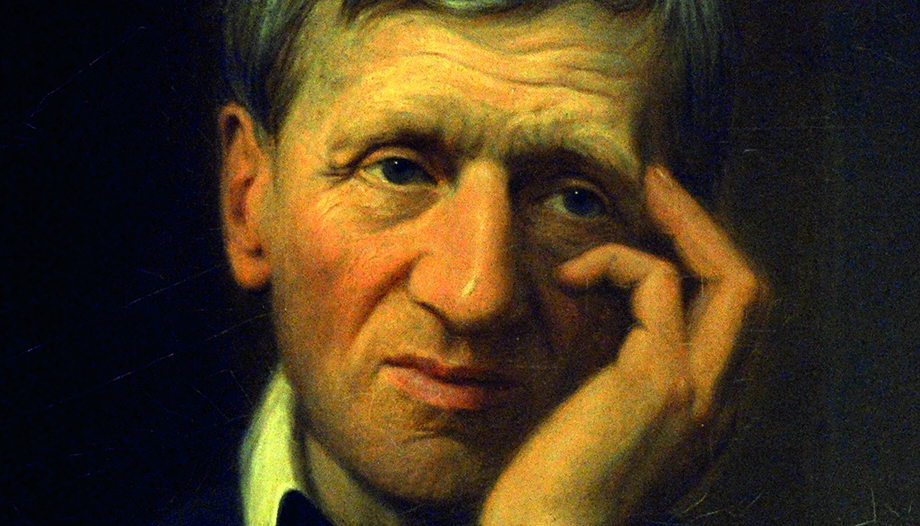
 John Henry Newman: Kindly Light in the DarknessJohn Henry Newman (1801-1890) A Saint for Our TimeVatican also has guidelines on artificial intelligence
When the Church’s newly declared doctor, St. John Henry Newman, delivered the lectures that became The idea of a universitythe steam engine was transforming work, and modern science was reshaping the imagination.
Today, artificial intelligence is doing something similar—compressing formerly time-intensive tasks to seconds, producing a dizzying array of possibilities, and tempting us to mistake speed for understanding.
Newman’s core question remains urgent: what is a university for?
Newman's proposal
Newman’s answer is disarmingly simple. A university exists to cultivate the intellect—to form the mind in the pursuit of truth. It is not chiefly a factory for credentials, nor a pipeline for labor markets, nor a vendor of “skills” detached from any wider vision of the human good. It is a place where a person learns how to think: to follow an argument, to weigh evidence, to distinguish the plausible from the true, and to see reality whole.
The education offered by the University of Dallas, and an increasingly rare number of institutions of higher learning, embraces Newman’s view of a university -- that education is not the mere acquisition of information, but the formation of what he called a “philosophical habit of mind.” In other words, an educated person is truly educated when he has the breadth of knowledge to see connections between various disciplines; the ability to rank goods rightly; the restraint to avoid fanaticism or reductionism.
Close study of special disciplines should contribute to such an education, but specialization alone does not make one educated.
The educated person’s mind is not narrow; rather it is capable of synthesizing a wide variety of knowledge and make sense of it, so it can be rightly applied to achieve good.
The study of Theology
That is why Newman insisted that a genuine university cannot exclude theology. Not because theology is a decorative add-on for religious people, but because theology speaks about God—the highest object of knowledge—and because excluding it silently deforms the whole map of understanding. A university that says, “We will consider everything except the most ultimate questions,” is not neutral. It has already taken a position, and it will educate students into that position through that omission.
This goes straight to the heart of what AI is doing to contemporary life.
AI excels at pattern recognition, summarization, prediction, and recombination. It can generate passable prose, draft code, create images, and rapidly retrieve what looks like an answer. Used well, these are real gifts. Used naïvely, they can train us into a dangerous confusion: the confusion of information with knowledge, knowledge with wisdom, and outputs with understanding.
Newman enables us to make the proper distinctions. A student can “have” many facts without possessing a formed mind. In fact, our age makes it easier than ever to collect facts while becoming less capable of judging them. AI can place an ocean of content within reach, but it cannot give us what Newman most wanted from education: the ability to discern first principles, to reason about causes, to integrate insights across domains, and to order the whole toward what is truly good.
Even more, the gravest questions in the age of AI are not technical. They are moral and metaphysical.
Fundamental questions
What is a human person, such that we may or may not replace his labor, imitate his speech, simulate his relationships, or outsource his decisions? What is dignity? What is responsibility when an algorithm mediates choices? What happens to the weak when the powerful gain new instruments of persuasion? What becomes of friendship, attention, and contemplation when every idle moment can be filled by a machine designed to keep us scrolling?
These questions cannot be answered by engineering alone. Engineering can describe what we can do, not tell us what we should do. Newman would say that the university’s task is to educate free persons—capable of self-government—so that they can live responsibly in community. That requires more than competence; it requires virtue.
Liberal arts
This is where the liberal arts matter—not as nostalgia, but as preparation for reality.
The liberal arts and their value in today’s culture has been much maligned, even at many Catholic colleges and universities. Often mistaken as only studies in the humanities, a real liberal arts education is one that embraces everything from literature to mathematics in order to train the student to see the world as it is: complex, textured, and resistant to simplification.
Philosophy teaches clarity about meaning and argument. Theology teaches wonder and humility before the ultimate. Literature cultivates moral imagination—an ability to enter another’s experience and to see the consequences of choices. History teaches that human nature persists even when technology changes, and that pride is always punished in the long run. Mathematics disciplines the mind toward precision.
The sciences teach us to be observant of the real world and to weigh evidence with great care. The liberal arts teach its willing students how to observe, how to inquire, how to argue well and how to appreciate beauty—things a machine can mimic, but not possess.
In short, the liberal arts educate people for accurate judgment. And judgment is precisely what our age lacks. We are already seeing a paradox: the more we automate, the more we need leaders who can interpret, not merely execute. The more data we have, the more we need wisdom to decide what is worth pursuing. The more persuasive our tools become, the more we need a moral compass that cannot be programmed.
Newman was not opposed to practical learning; he simply refused to reduce education to utility. He believed that knowledge pursued for its own sake enlarges the soul—a capacious view that has practical consequences more profound than vocational training alone. A formed mind becomes adaptable. It can learn new tools because it has learned how to learn. It can resist manipulation because it can detect bad reasoning. It can lead because it can see beyond the immediate to the enduring.
Catholic university
A Catholic university, then, should be a place where technology is welcomed but not worshiped; where innovation is pursued relentlessly without surrendering the question of meaning; where the student is not trained to fulfill a function, but educated to be a person. Such an institution forms not only workers, but citizens; not only producers, but stewards; not only problem-solvers, but truth-seekers.
In the age of AI, we should indeed teach students to use powerful tools. But we must also teach them to ask what those tools are for—and who they are becoming as they use them. Newman reminds us that the university’s highest task is to cultivate the whole intellect in the light of the whole truth. If we recover that vision, AI will not make the university obsolete. It will make the university necessary.
Because the future will not belong to those who can generate the most content the fastest. It will belong to those who can recognize the true, choose the good, and love the beautiful—while remaining fully, irreducibly human.
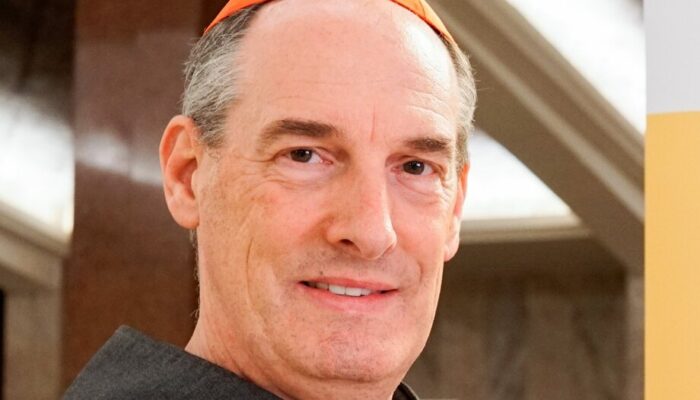
President of the University of Dallas.




 Español
  English
  Italiano