



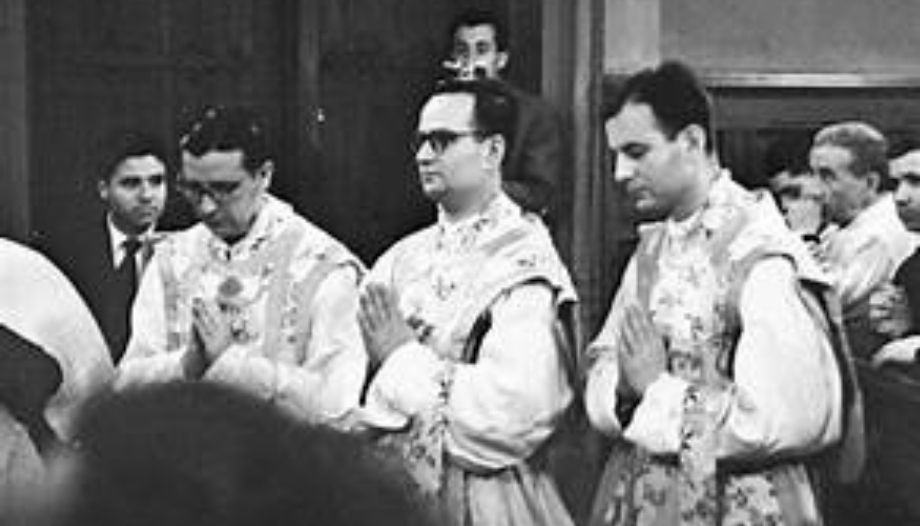
On the occasion of February 14th, a significant date in the history of Opus Dei, the Josemaría Escrivá Study Center (CEJE) of the University of Navarre and the St. Josemaría Escrivá Historical Institute (Rome) are launching a new website dedicated to the history of Opus Dei.
The site combines academic rigor, an informative narrative and digital resources. Its purpose is to offer keys to understanding the history of the Work in its various historical, social and ecclesial contexts.
The project is supported by the St. Josemaría Institute (Chicago).
Preparation for the centenary of the foundation of Opus Dei (2028-2030)
The platform proposes a progressive journey through the history of the Work, and mixes short narrative texts with documentary resources and multimedia materials.
This is a long-range project, designed to prepare for the centenary of the foundation of Opus Dei (2028-2030).
As the editorial team points out, “we offer reliable and accessible content that allows to understand and contextualize the history of Opus Dei. This project is born with the vocation of reaching a global audience. Our goal is to progressively translate these materials into different languages and to reach increasingly diverse audiences”.
The website is divided into sections of gradual and contextualized reading. A News section gathers current contents, ephemeris and new publications. A monthly section, entitled In a few lines, narrates in a synthetic and chronological way the history of the Work, reviews episodes and contexts and discovers key details in view of the centenary.
St. Josemaría: life, message and priesthood
A space on St. Josemaría Escrivá breaks down his life, message and priesthood, and goes into their successors.
Historias con nombre propio is a series of microbiographies (published monthly) with profiles of the first members of Opus Dei, which puts a face to history and shows very diverse personal and professional trajectories.
These sections are completed with interactive and multimedia content, including a timeline and an interactive map of Opus Dei's presence in different countries, as well as podcasts and audiobooks.
The platform also provides access to the Josemaría Escrivá and Opus Dei Virtual Library, an open digital repository with more than 15,000 bibliographic records and 8,000 documents in PDF format. Among them are articles from scientific journals, book chapters and publications by Josemaría Escrivá in various languages, available for consultation and free download.




 Español
  English
  Italiano