



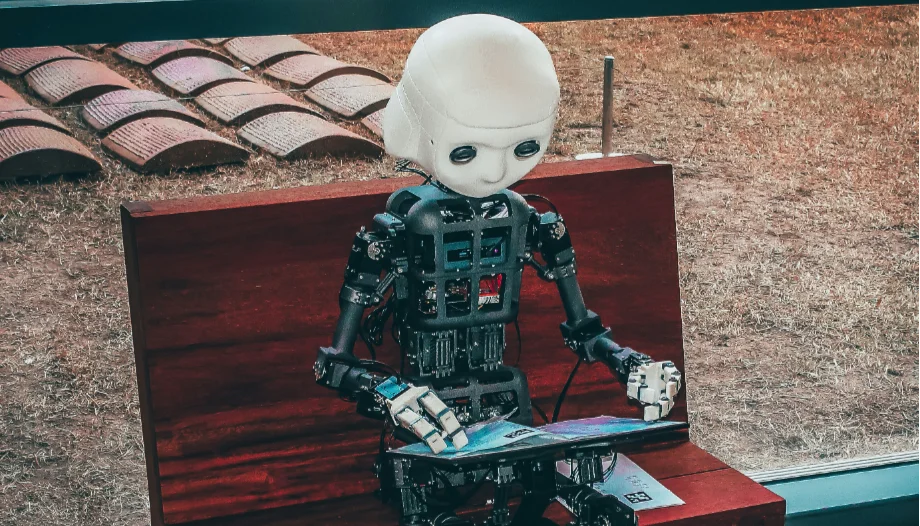
We live in a time when technology is no longer just “around” human life, but within it. Artificial Intelligence, or AI, is no longer a futuristic promise but has become a silent companion that translates texts, organizes tasks, suggests videos, and even corrects our mistakes. If we are adults, this surprises us. If we are young, this is already normal. This generational difference is key to understanding how we relate to AI and why it is urgent to know its advantages and risks.
AI is not magic. It is built on data, algorithms, and patterns. It learns from our searches, our preferences, and the collective behavior of millions of users. And it does so at great speed. That is why it fascinates us. That is also why it frightens us.
Survey results
In a study of 1,013 young people in the Salesian Inter-American region, 61.51% said they were «quite familiar» with AI Salesian Youth and AI. This reveals that the younger generations are not just hearing about the topic: they are living with it. They incorporate it into their daily lives, their schoolwork, and their digital leisure activities. And yet, when asked about their fears, the response is surprisingly mature. 47.91% express concern about the irresponsible use of AI, 46.41% fear the impact on human relationships, and 45.11% question the risk of replacing human labor. We are not dealing with a naive youth. They are restless, aware, and, above all, asking for support.
This fact opens up a debate that is not only technological, but deeply human. For centuries, progress was understood as the ability to automate. First, machines replaced arms. Then, computers sped up calculations. Today, AI learns, suggests, creates, and decides. But the question is not whether AI can do it, but whether it should. And even more so: what do we do with that power?.
The young people who participated in the study do not want AI to replace their intelligence. They imagine a tutor who explains step by step, who teaches, who inspires. They do not want answers that avoid effort, but tools that allow for better understanding. This aspiration reveals something essential: AI is not an end in itself. It is a means. Its morality will depend on how it is used.
Generational contrast
Adults, on the other hand, tend to see AI as a distant novelty. Or as a cultural threat. We find it difficult to recognize that digital technology is not an extension of youth culture: it is part of the ecosystem in which they have grown up. In a survey of 1,375 Salesian lay collaborators, 78.81% see AI as a new educational tool, while 55.61% fear technological dependence. Salesian Lay and AI v1. The tension is evident. Enthusiasm and caution coexist, because AI promises efficiency, but also raises suspicions that it may rob us of our own judgment.
This contrast between generations should not lead us to extreme positions. We should neither idolize AI as a universal solution nor demonize it as an enemy of humanity. Both paths hide the same danger: ceasing to think for ourselves. AI is powerful when it amplifies our ability to learn, discern, and create. But it impoverishes us if it accustoms us to responding without asking questions, consuming without verifying, and delegating without reflecting.
Over the last few years, I have worked alongside young people, educators, and social workers who are experiencing this transition. In many of them, I have noticed a fascinating phenomenon. When faced with complex tasks, such as solving math problems, AI can show them the procedure. When they need to understand dense texts, it can summarize them. When they need examples, it can generate them. This help is valuable, as long as it does not override the learning process. When young people stop reading because “AI has already told them what is important,” they lose more than just a grade. They lose intellectual autonomy.
How AI works
Adults run the same risk. How often do we consult digital tools to decide what to eat, where to travel, or what to think about a public debate? AI acts as a mirror of our preferences. It gives us what we think we want, but not necessarily what we need. Content recommendation platforms, for example, learn our tastes and intensify them. The result is comfortable but dangerous: we live in information bubbles that are increasingly personalized and less diverse.
To understand AI maturely, it is important to remember something simple. It has no values of its own. It does not know what is good or bad. It only knows how to correlate probabilities. It will function according to the purpose we assign to it and the ethical care with which we use it. A hammer can build a house or break a window. The tool does not define the meaning. Human intention defines it.
Some suggestions
So how do we move forward? There are three keys to the humane use of AI.
First, critical education. AI should not be presented as a substitute for effort, but as an ally of thought. Young people need to know how it works, not just how to use it. What data it collects, what biases it carries, how to verify its information. The same applies to adults. Understanding its limitations prevents disappointment and abuse.
Second, balance. If we rely on AI for everything, we will lose our ability to choose. Using it is not wrong. Depending on it is. Technology is a support, never a replacement for human interaction, dialogue, and the patience that comes from solving a problem without shortcuts.
Third, ethical responsibility. AI creates images, texts, voices. It can imitate styles or fabricate data. This requires caution. Verify sources. Cite correctly. Protect privacy. Respect the work of others. Be transparent about its use when the context requires it.
Ultimately, talking about AI means talking about humanity. The younger generations are sending us a message. They are not asking us to ban technology. They are asking us to accompany them in using it purposefully. They do not want a world without AI. They want a world in which AI does not replace what makes us human.
Technology advances. We must advance with it. But if we forget that intelligence is not just about processing data but also about loving, dialoguing, imagining, and searching for meaning, then no machine will be responsible. It will be us who have given up thinking and acting freely.
AI can be a tremendous opportunity to learn, create, and grow. It can also be a silent risk that limits autonomy and weakens coexistence. The decision does not lie with algorithms. It lies with us. Understanding its advantages and disadvantages, listening to the voices of those who already live with it, and making conscious choices will be key to ensuring that technology serves life, and not the other way around.
Executive Director of the Salesian Family Youth Center in Los Angeles.





 Español
  English
  Italiano