



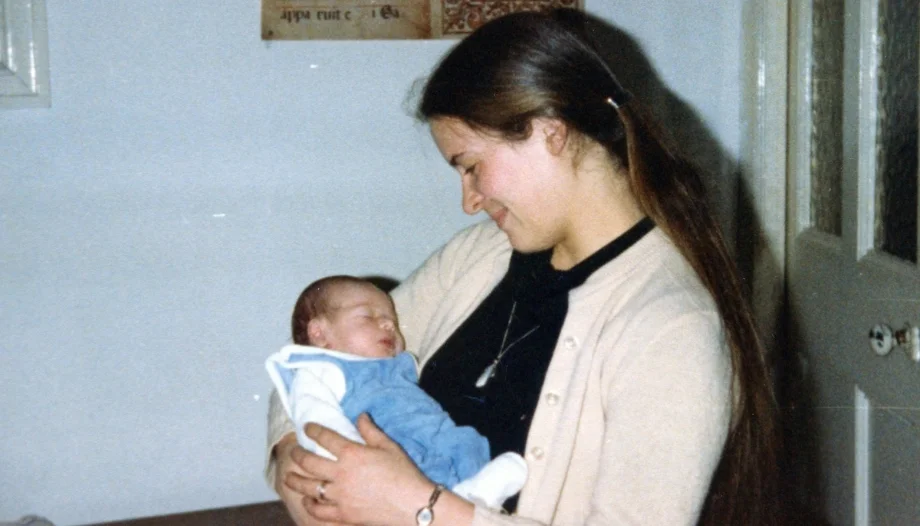
Ruth Pakaluk, born in 1957 into a Presbyterian family, went from considering herself an atheist and being a brilliant Harvard student who defended abortion to a sincere seeker of truth alongside Michael, the partner with whom she debated her existential doubts.
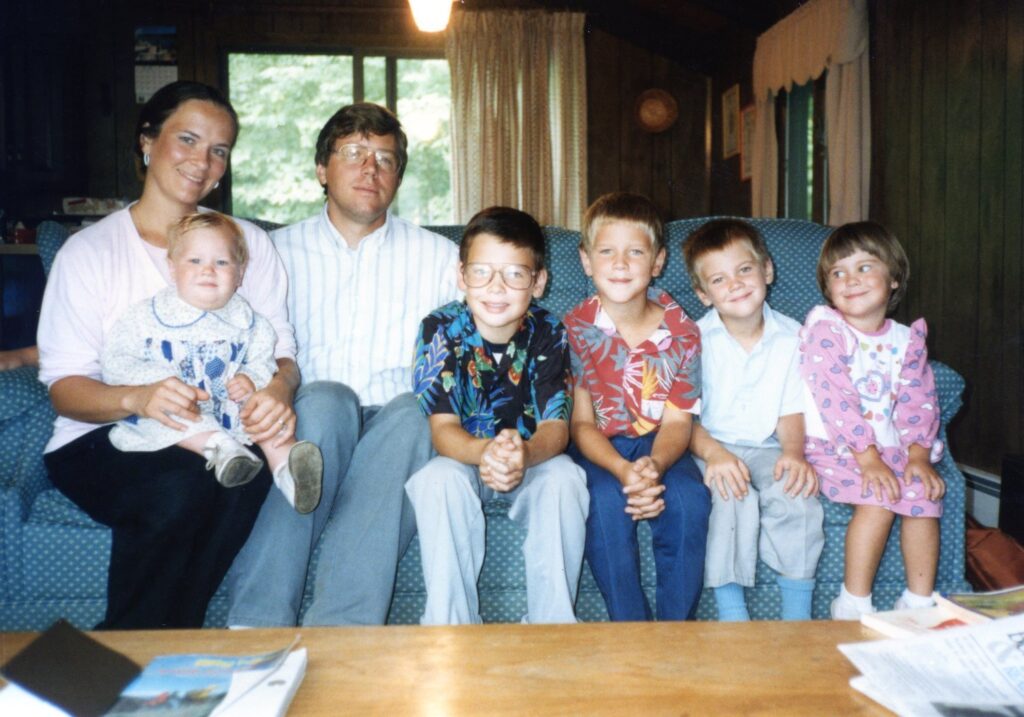
Her conversion began when she regained her certainty that God exists and understood that knowing Him should be the center of her life, which led her to embrace the Catholic faith: in 1980, Michael, who had been born into a Catholic family, returned to the Church, and Ruth was received and confirmed on Christmas Eve. Over time, both found guidance for their spiritual lives in Opus Dei. Married and the mother of seven children, Ruth became an influential pro-life advocate in Massachusetts, a testimony linked to her experience of motherhood and a simple and generous life with her community: «She was like the ‘Mother of the Neighborhood,'» her husband recalls.
Today, the name Ruth VK Pakaluk is once again being heard loudly in the Church. This fall, the Vatican granted the nihil obstat to open her cause for beatification and canonization, recognizing her as Servant of God, the first step toward a process that could one day culminate in her proclamation as a saint.
In conversation with her husband Michael Pakaluk and her close friend Mary Beth Burke, we can glimpse how Ruth lived an exemplary life. Michael recognizes the holiness of his wife Ruth especially in «her very lively and real love for Heaven; her desire to see the face of God; her ardent desire to co-redeem with Christ; her piety toward her teachers and loyalty to her friends; and her constancy in prayer.».
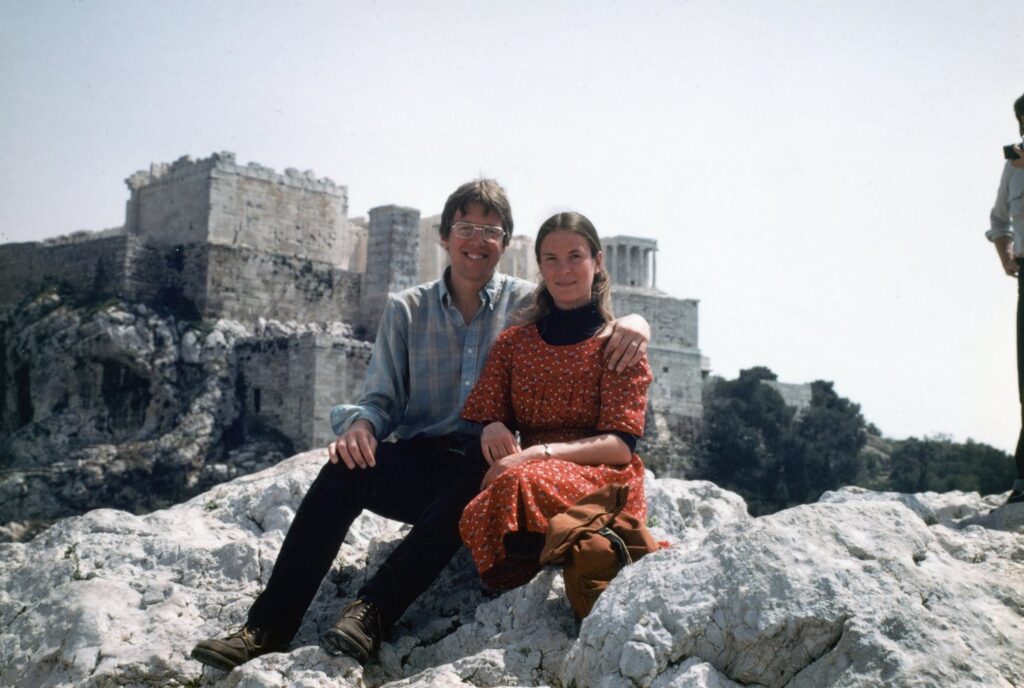
The Conversion of Ruth
From a young age, Ruth was always searching for the truth. Mary Beth remembers that this attitude made her irresistible: “She was incredibly intelligent, but never arrogant.” She enjoyed talking about everything—faith, family life, the pro-life cause—with an enthusiasm that was contagious. Michael confirms that it was this same inner drive that transformed his spiritual life: when Ruth understood a truth, she didn't let it go; she acted on it immediately. «I don't know anyone else who has acted so immediately on the truth once they understood it,» Michael says.
Her conversion, however, was not an easy path. Michael explains that it began with an understanding of her own selfishness and sins, accompanied by a keen recognition that only God's grace could free her from them. So she began to pray insistently. Mary Beth recalls that this life of prayer sustained her always, even when illness had already entered the picture: the rosary was in her hand on walks, on trips, and even on visits with friends. She herself confesses that, thanks to Ruth, she learned to love that prayer.
«The mother of the neighborhood»
Motherhood was the great stage on which Ruth lived out her vocation. Michael describes her as a mother who loved each child madly and knew how to appreciate what made each one unique. Although her life could be a whirlwind—seven children, parish catechesis, gatherings, and pro-life talks throughout New England—she found order by beginning each day in prayer. And if everything fell apart after that, she had an unshakeable conviction: if she had gone to Mass, she had “had the best day possible.”.
Mary Beth saw that blend of joy and efficiency up close. In the summer, Ruth organized trips to the lake as if it were easy: she made sandwiches, iced tea in a huge jug, and loaded all the children into the car, including those whose parents couldn't take them. Mary Beth admits that sometimes a mother feels overwhelmed, unable to organize even a simple outing, but Ruth made it look easy. While the children played, they prayed the rosary and shared friendship. For Mary Beth, those days were a school of faith disguised as a picnic.
Ruth against abortion
That love for family life also fueled Ruth's passion for defending the unborn. Michael recalls that she first tried to influence politics, supporting those who could promote Supreme Court justices willing to overturn the ruling. Roe vs. Wade. When that approach seemed to fail (although it was ultimately successful), she focused on educating young people: «In the last years of his life, she probably spoke in every parish in his diocese and in most high school classrooms, as well as participating in many university debates. She believed that debates were essential, because few people would make up their minds unless they heard both sides,» Michael says. Mary Beth remembers her as a “happy warrior”: firm, but never negative or condescending, confident that the truth would prevail.
Ruth's arguments were simple and profound. She explained that if the most basic human right—the right to life—is denied, then all others are denied. She also argued, Michael recounts, «that a woman's body, from the moment she conceives a child, protects that unborn being. Everything changes to serve this being. The state of her body reveals something about the state of her soul. Therefore, abortion goes deeply against her genuine interests as a woman. It harms her rather than helping her.» Mary Beth listened to her talks and speeches many times, and she confesses that thanks to them, she learned to better articulate the Church's teaching on pro-life and family issues with her own children and friends.
Suffering and holiness
Pain also touched Ruth's life. She lost a child, and Michael recalls that she lived through that suffering with the evangelical conviction that “blessed are those who mourn” because God himself comforts them. That same trusting outlook accompanied her until the end. Mary Beth—who only knew her when she was already ill—says that she sometimes forgot the seriousness of her condition: Ruth remained outgoing, cheerful, and active. When the time of her death came, the impact was great for everyone, because it seemed impossible that such vitality could be extinguished.
As the Church now reviews her life, Michael hopes that two essential traits will not be lost: her practicality in spiritual matters—“don’t waste grace” and «know God’s will, do God’s will,» she used to repeat—and the youthful freshness with which she lived her faith, which she saw as a fundamental note of Christian discipleship today. Mary Beth, for her part, retains a deep gratitude: «The way she faced her death, never giving up, faithfully following her vocation as a daughter of God, wife, mother, and friend to the end, taught all of us who knew her how to die as Christians. I will always be grateful to her for that.»




 Español
  English
  Italiano