



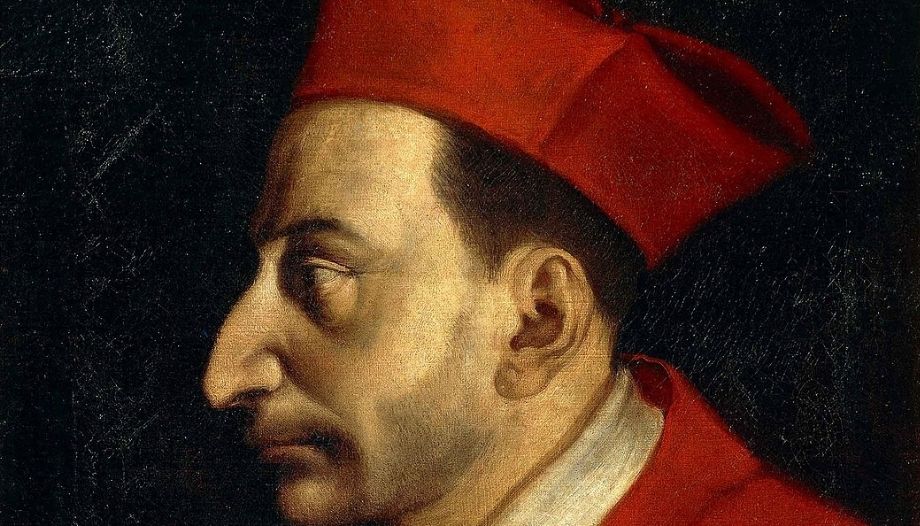
Born in the castle of Arona, near Lake Maggiore, into a noble family of Lombardy, Charles Borromeo showed great piety from a young age, and a penchant for the study of law and theology. After obtaining a doctorate in canon and civil law at the University of Pavia, his uncle, Pope Pius IV, made him a cardinal at the age of 22, entrusting him with important responsibilities in the curia and in the administration of the Church.
As a cardinal, Borromeo played a decisive role in the conclusion and implementation of the Council of Trent (1545-1563). He promoted the formation of the clergy and the Christian education of the people. In 1564 he was appointed archbishop of Milan, a diocese that had not been personally visited by its prelates for nearly eighty years.
In Milan, St. Charles undertook a profound pastoral renewal. He founded the seminary for the formation of priests, personally visited all the parishes of his diocese - even the most remote ones - and reformed customs. He promoted catechesis, sacred music, religious art and charity. During the plague of 1576, he stood out for his heroism. He remained in the city when many fled, and organized processions, prayers and aid for the sick and poor, even at the cost of his own health.
“Souls are conquered on their knees.”
His life was austere and prayerful, with pastoral dedication, according to his biographers. At the same time, according to the Vatican saints' calendar, after the schism provoked by the Lutheran Reformation, the Catholic Church was in a particularly critical period. And the young archbishop was not afraid to defend the Church against the interference of the powerful.
Borromeo encouraged priests, religious and deacons to experience the power of prayer and penance, transforming their lives on the path of holiness. “Souls,” he often repeated, “are conquered on their knees.” He died on November 3, 1584, at the age of 46, exhausted by work and fasting. He was canonized in 1610 by Pope Paul V.




 Español
  English
  Italiano