



The image of a missionary «Church on the move», promoted and popularized by Pope Francis (Evangelli Gaudium nn. 20-24), has a precise historical origin. It arose a little more than sixty years ago when the «road map» of the Second Vatican Council was being prepared. Interpreting the desire expressed by Pope St. John XXIII that the Church should be open to the world, the Belgian Cardinal Leo Suenens (1904-1996), in an applauded intervention in the Council Hall (December 4, 1962), introduced the expression «Ecclesia ad extra». He proposed that the Council «on the Church» should also deal with her mission in the world. The idea was accepted by the bishops and bore fruit, at the end of Vatican II (1965), in a single document: the Pastoral Constitution Gaudium et Spes (GS).
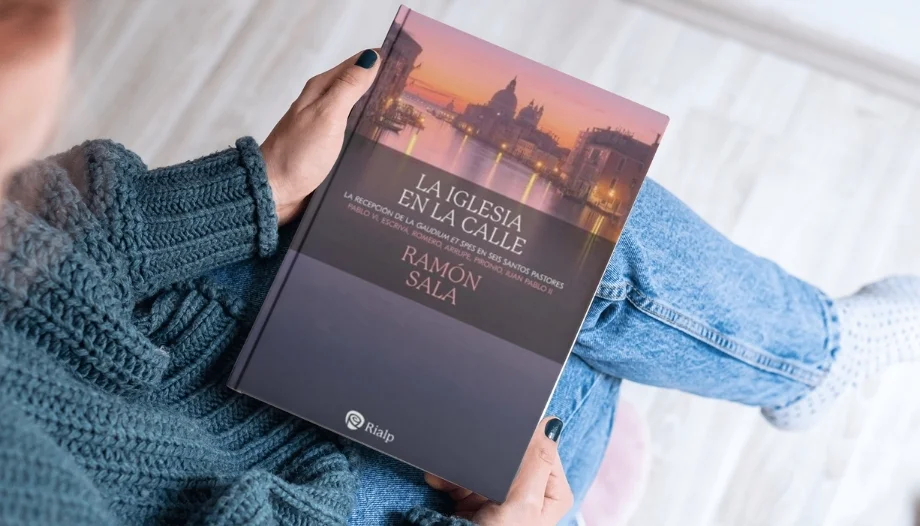
This document «on the Church in today's world»The "The example of pastors, together with the faithful and religious, shows the world the authentic face of the Church, whose witness it so badly needs" (GS 43). With these lines I would like to briefly evoke the figures of six holy pastors of the post-conciliar Church, whose life and thought are closely related to the teaching of the GS.
They are two Popes (St. Paul VI and St. John Paul II), three prelates (Saints Josemaría Escrivá and Oscar Romero, and Blessed Eduardo Pironio) and a religious superior (Father Pedro Arrupe, SJ). The latter is in the process of beatification. They are all contemporaries, most of them knew each other personally and some of them were great friends. Each one of them knew how to read the Pastoral Constitution with a personal view and to extract from it valuable orientations, always at the service of the People of God.
Paul VI and John Paul II: Popes of the Gaudium et Spes
It is true that the Pastoral Constitution is the document expressly willed by St. John XXIII. But it is due to his successor, St. Paul VI (1897-1978), the conception, gestation and birth of GS, after its long and complex elaboration process. It was not among the outlines prepared for the Council. It was decisively supported by the words of the «wise helmsman» of Vatican II (Francis) to the Council Fathers, at the beginning and end of the last two sessions. Also contributing to its promulgation from outside the Council was the encyclical Ecclesiam Suam (1964) and Paul VI's famous speech to the UN (1965).
Presenting himself as spokesman for the Church and «expert in humanity» before the representatives of all countries, in that speech the Pope conveyed to them his recognition of their work. And he extended his hand to all to collaborate together in «the paths of history and the destinies of the world» for the good of the individual and of the community of peoples. «Never more than today,» he said, "in an age of so much human progress, has it become so necessary to appeal to man's moral conscience!".
Paul VI was also the driving force behind the initial reception of the Pastoral Constitution. Since its solemn Closing message of Vatican II, In his theological anthropology, he saw in his theological anthropology the foundation of a new humanism, with which he fully identified himself. In fact, in that last message he summarized in this way what the Council had discovered:
Perhaps never as in this Synod has the Church felt the need to know the society that surrounds her, to approach it, to understand it, to penetrate it, to serve it and to transmit to it the message of the Gospel and to approach it by following it in its rapid and continuous change [cf. GS 4-8]....
The Church, gathered in the Council, has really turned her attention - besides herself and the relationship that unites her with God - towards man, man as he presents himself today... The whole of phenomenal man - to use a recent expression -, clothed in his innumerable circumstances, has presented himself before the Council Fathers, they too men....
The immediate post-conciliar years were not easy for Paul VI. Various circumstances caused him grief and worry. In spite of this, he was not the circumspect man that some have imagined. In an audience, he gave to a group of priests the book with the meditations of the retreat that one of the editors of GS (B. Häring) had preached to the Roman Curia (1964). And, he commented: «It sells very well. Everyone wants to know how to convert the Pope». Convinced of the need for the Church's dialogue with the world, in his magisterium he developed some of the main themes outlined in Part Two of the Pastoral Constitution: marriage (Humanae Vitae), culture (Evangelii Nuntiandi) and economic and social development (Populorum Progressio).
The first Polish Pope, St. John Paul II (1920-2005), was one of the most prominent protagonists of Vatican II. He actively participated in its four sessions and worked directly in the process of drafting his «particularly beloved» Pastoral Constitution. In fact, before the beginning of the last stage of the Council, Karol Wojtyla was part of the group in charge of realizing the new outline on the Church in today's world. He left his personal mark, above all, in the drafting of its «Preliminary Exposition», and in the chapter on the «mission of the Church in the world», which condenses the theme of the whole document, and with which its first part closes.
After the fleeting pontificate of John Paul I (1978), Cardinal Wojtyla was elected his successor at the age of 58. From the beginning, the teachings of GS inspired his entire Petrine ministry, as he himself had the opportunity to acknowledge on several occasions. For example, when commemorating the thirtieth anniversary of the Pastoral Constitution: «Precisely the intimate knowledge of the genesis of Gaudium et Spes has allowed me to fully appreciate its prophetic value and to assume its contents in my magisterium, already from the first encyclical, the Redemptor hominis".
In this programmatic document, taking up the legacy of the Pastoral Constitution, John Paul II closely linked the Church's mission in the world and the destiny of humanity in the light of the crucified and risen Christ the Redeemer (RH 14; GS 10).
The serious attack he suffered on May 13, 1981 in St. Peter's Square only temporarily interrupted his public presence. A group of Polish pilgrims visited him during his convalescence. They asked him to take good care of himself and not to travel so much. John Paul II commented that his mission was to be with everyone. Then a fellow countrywoman told him that they were praying for His Holiness. Smiling, the Pope replied: «I thank you very much. I am also concerned about my holiness». He soon resumed with renewed energy his daily commitments, his magisterial teaching and his continuous apostolic journeys as Pastor of the universal Church. During his long pontificate, the charismatic personality of St. John Paul II transcended the frontiers of the Church.
The themes of the defense of the dignity and rights of the human person (Evangelium Vitae), marriage and family (Familiaris Consortio), intercultural and interreligious dialogue (Faith and Reason, Redemptoris Missio), economic and social justice (Sollicitudo rei Socialis, Centesimus Annus), the building of the community of peoples and peace in the world, constituted the basic pillars of his mission to lead the Church into the new millennium. For the last year of preparation for this event (1999), St. John Paul II wrote:
A fundamental question must also be asked about the style of relations between the Church and the world. The conciliar directives - present in the Gaudium et Spes and in other documents - of an open, respectful and cordial dialogue, accompanied by careful discernment and courageous witness to the truth, are still valid and call us to a further commitment (Tertio Millennio Adveniente 36).
Msgr. Escriva and Card. Pironio: Pastors of the Apostolate in the World
A contemporary and personal friend of both Paul VI - his «helping hand» - and Card. Wojtyla, the founder and first President of Opus Dei, St. Josemaría Escrivá (1902-1975), was a fervent promoter of the active presence of the Church in the midst of temporal realities. In his memorable «Campus homily»(1967) said to the thousands of teachers and students of the University of Navarra who attended the Eucharist:
Do not doubt it, my children: for you, men and women of the world, any form of evasion of honest daily realities is opposed to the will of God. On the contrary, you must now understand - with a new clarity - that God calls you to serve him in and from the civil, material, secular tasks of human life: in a laboratory, in the operating room of a hospital, in the barracks, in the university chair, in the factory, in the workshop, in the field, in the family home and in the whole immense panorama of work, God awaits us every day.
Pope Francis has recognized him as a «precursor of Vatican II. Bishop Escrivá joyfully welcomed the convocation of the Council and closely followed its development. In a discreet way, without intervening directly in the work of Vatican II, the debates and various conciliar documents, among them the GS, echoed his spirituality. Interviewed by the newspaper The New York Times (December 7, 1966) on the meaning of the Council, St. Josemaría considered it an event of the Spirit for our times.
A «great movement of renewal» had been set in motion as a result of his life-giving action in the world. «Reading the decrees of the Second Vatican Council, it is clear that an important part of this renewal has been precisely the revaluation of ordinary work and of the dignity of the vocation of the Christian who lives and works in the world.».
Those who knew the founder of Opus Dei closely attest to the intense prayer life of this «down-to-earth» saint. When he heard that the rumor had spread that he had been seen levitating in the chapel, he limited himself to commenting with good humor that it would be a great miracle because he was too fat....
In addition to defending the dignity of the human person, many of Bishop Escrivá's writings and addresses address central questions of the Pastoral Constitution. Among the main ones are the just freedom of the person and the value of work (Part One); the dignity of marriage and the family; and the encounter between faith and culture (Part Two). On the occasion of his canonization (2002), John Paul II emphasized his passion for the world and the fruitfulness of his teachings for the Church's evangelizing mission: «Josemaría Escrivá understood more clearly that the mission of the baptized consists in raising the cross of Christ above every human reality and he felt the passionate call to evangelize all environments.
Perhaps the figure of the Blessed Card. Pironio (1920-1998) is less known outside the ecclesial sphere. However, he was surely «one of the greatest personalities of the Church at the end of the millennium» (Cardinal C. M. Martini). His compatriot and friend, Pope Francis, defined him as a «humble pastor according to the spirit of the Vatican Council». Bishop Pironio was an eyewitness to that event as an expert and conciliar father. He had an oral intervention in the discussion of the outline on the lay apostolate and worked in several commissions. In 1964 he presented a document with observations on the first text of the future GS. He proposed that it should include two fundamental themes for the mission of the Church: hope and peace.
The Church's response is found in the genuine notion of «Christian hope» and of «true and integral peace». Theological hope-an essentially dynamic and active virtue that tends toward heavenly things by building up the earthly city in a Christian way-should be at the center of the whole exposition in the scheme of things. On the Church in today's world. And then «true peace» which surpasses all meaning, and which is an internal act of charity, the effect of sanctifying grace and the fruit of the Holy Spirit who dwells in us.
Card. Pironio was also a pioneer in the reception of Vatican II by the Latin American Church, first as secretary and president of CELAM and, later, at the head of the dicasteries for religious and for the laity. In addition to being «sacrament of God» as Body of Christ and Temple of the Spirit, he called the Church «sacrament of the world»: «Distinct from the world, the Church nevertheless feels inserted in it as leaven and soul [cf. GS 40b], profoundly attuned to its earthly lot, savingly responsible for its destiny».
As stated at the beginning of the Pastoral Constitution, the Argentine Cardinal understood that the Church makes her own «the joys and hopes, the sorrows and anxieties of the people of our time, especially the poor and those who suffer» (GS 1) as the incarnation of Christ. The Church's response to the joys and hopes of humanity was the permanent stimulus of Bishop Pironio's work and ministry. He believed in the prophetic timeliness of GS and understood that the Church's mission in the world must be fully human in order to be truly religious. His attunement with young people made him one of the main inspirers of the «World Youth Days» introduced by John Paul II.
Until the end of his life he kept an affectionate and cheerful character. His personal secretary (F. Verges) tells us that shortly before his death he was visited by a young friend to whom he whispered: «This afternoon I will see your grandmother, what do you want me to tell her? As a »Witness of faith in joy« (John Paul II), Blessed Pironio enthusiastically encouraged both pastors and lay faithful to give a credible witness of hope.
Archbishop Romero and Father Arrupe: Apostles of Social Justice
The prophet and martyr of the poor, St. Oscar A. Romero (1917-1980), was canonized on October 14, 2018 at the same celebration as Pope Paul VI. He did not participate in the Council, but he perfectly embodies the figure of the Vatican II bishop. As a pastor who felt with the Church (his episcopal motto), he made a point of bringing the teachings of Vatican II to the people, especially through his Sunday homilies. Gathering the hopes and anguish of the poor, he was the «voice of the voiceless» and became the «microphone» of the Word of God for the Salvadoran Church.
Like the prophets, Archbishop Romero raised his voice against the powerful, denouncing violence and calling for justice and reconciliation. This way of proceeding provoked serious false accusations against him (getting involved in politics, promoting communism). Unforgettable are the energetic words he pronounced in the Cathedral of San Salvador, the day before his assassination, imploring in the name of God the cessation of repression. «Although I remain a voice crying in the wilderness,» he said, "I know that the Church is making the effort to fulfill its mission. He gave the supreme witness with his martyrdom, while celebrating Mass (March 24, 1980). Because of his preaching he had received continuous threats. He was well aware that his life was in danger, but he overcame his fear even with good humor.
A Mexican nun (Sister Luz Isabel Cueva), from the community of the hospital where the Archbishop was living when he was murdered, told the following anecdote. One morning, at breakfast, she confessed to them that she had hardly slept because she had heard loud footsteps, «like military boots», on the roof of the house. And he told them, «Here I have the evidence.» «We thought he was going to show us bullets or something,» the sister recalled. But he took two avocados out of his pocket. The noise had been produced when they fell from the tree onto the roof's uralite.
From the Pastoral Constitution, one of the Council documents most present in his homilies, he not only adopted the language and methodology, but also its principles and contents. The magisterium of GS, often through its reception in the documents of CELAM (Medellin and Puebla), was a constant reference for the thought of Archbishop Romero. Already at the beginning of his pastoral ministry as archbishop, in the homily of August 6, 1977, he affirmed:
The Church understood that she was living with her back turned to the world and she converted herself to dialogue with the world. At the Second Vatican Council, she wrote a beautiful Constitution entitled: The Church in Today's World. The Church is not a stranger to the world. All that is human touches her heart and she feels that she must be converted to a more evident dialogue with this world which must be of interest to her. It is you, especially the poor, those who suffer, those who are trampled upon, the marginalized, the voiceless. And the Church identifies with this suffering world, but not exclusively. With all the people who build the world.
The texts of the Pastoral Constitution were reread, meditated upon and put into practice during the years of his episcopate, in a particularly difficult socio-political and ecclesial context. In the exhortation Dilexi Te (2025) Pope Leo XIV, recalled his testimony as a living exhortation of the Church's love for the poor: «He felt as his own the drama of the great majority of his faithful and made them the center of his pastoral option...» (DT 89).
He also had to live through very hard times at the P. Pedro Arrupe (1907-1991), a former Jesuit missionary in Japan. As a young priest and doctor, he personally suffered the horror of the nuclear bombing of Hiroshima at the end of World War II. He was elected Superior General of the Society of Jesus a few months before the beginning of the last stage of Vatican II (1965).
Fr. Arrupe had a deep spirituality and an extraordinary capacity for work. He also possessed a fine sense of humor. His first biographer (Fr. M. Lamet), tells that on the very evening of his designation as successor of St. Ignatius, when asked by the sacristan about the time to celebrate Mass the following day, the newly elected Jesuit replied «very early in the morning». When the Jesuit asked if 7:30 would be good for him, he smilingly told him: «Please, brother, don't break my morning».
In spite of many misunderstandings and conflicts, Father Arrupe made his own and carried forward the option for justice, in total fidelity to the origins of the Society. According to him, this commitment was an «integral part» of the evangelizing task. On the eve of suffering the thrombosis that paralyzed him until the end of his life, he explained it in a conference at the Catholic University of Manila (1981). The commitment to «The service of faith and the promotion of justice»far from betraying the founding purpose of the Jesuits' mission (the defense and propagation of the faith), better responded «to the present needs of the Church and of humanity, to whose service we are committed by vocation».
At the end of the Council, the newly elected General of the Society addressed the bishops when discussing the outlines of the Gaudium et Spes and the Decree Ad gentes. His first intervention focused on the attitude of the Church towards the phenomenon of atheism (GS 19-21). In the last one, after evaluating positively the foundation of the outline on the missionary activity of the Church, Father Arrupe underlined the urgency of the missionary apostolate «as the main one in the Church». Among others, he made the following proposal:
May it be more clearly understood, for profound theological reasons, the very serious obligation that falls on the entire People of God and on each of its members - of whatever condition - namely, that they take as their own the missionary task in its different aspects, so that all may be moved to collaborate, the Word of God may be spread and He may be glorified (2Thess 3:1).
In addition to his participation in Vatican II, Fr. Arrupe became a «prophet of the conciliar renewal» (Fr. H. Kolvenbach) during the post-conciliar years, leading the Jesuits and the Union of Superiors General. Because of his deep-rooted spirituality and missionary experience he was convinced of the urgency of a fruitful dialogue of the Church with the contemporary world. The themes of unbelief, inculturation and commitment to justice and peace were among his constant concerns.
Towards the midpoint of the 21st century
The Second Vatican Council showed the face of a Church «that desires to open her arms to humanity, to echo the hopes and anxieties of peoples and to collaborate in the construction of a more just and fraternal society. Pope Leo XIV recalled this at the end of the Jubilee Year, during the presentation of the series of catecheses on the documents of the Council (General Audience, January 7, 2026). Now «we are called to continue to be attentive interpreters of the signs of the times, joyful heralds of the Gospel, courageous witnesses of justice and peace,» he stressed.
Without hiding the polyphony of their own accents in their approach to the GS of each of the pastors mentioned above, several convergences are also evident among all of them. In particular, the following can be highlighted:
- The openness of the Church to the world. This implies a willingness to engage in a cordial and critical dialogue, with a pastoral language, abandoning prejudices and closed or defensive positions.
- The value of each human person and his or her dignity. It is part of the Church's mission in the world to defend the sacred value of human life, especially of the most vulnerable, against any threat.
- Recognition of the rightful autonomy of temporal realities. The Church is situated in the world, not above it or in front of it. This implies a new way of being present in it: not by imposition or condemnation, but with a proposal of hope and salvation.
- Willingness to a fruitful encounter between faith and culture. In order to carry out its pastoral mission, the Church must promote both the evangelization of cultures and the transmission of the faith with the values proper to each culture.
The great common legacy of these saintly pastors of the Church is undoubtedly their condition of models of holiness. All of them personally embody the five traits described by Pope Francis in chapter 4 of the apostolic exhortation Gaudete et Exsultate (2018) «on the call to holiness in today's world.» That is to say: 1) they were men of God, faithfully leaning on Him; 2) they overflowed with joy and a sense of humor; 3) they evangelized with their lives; 4) they were aware that the road to holiness is traveled accompanied; and 5) they were men of prayer, who dealt assiduously with God. For this reason, I believe that they should rightly be venerated today as the holy fathers of the «Church on the move».
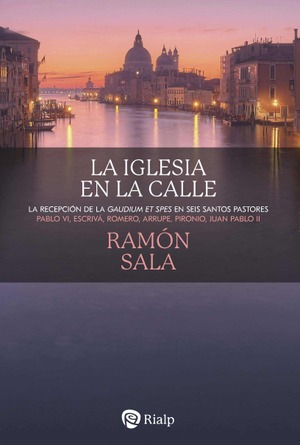
The Church in the street
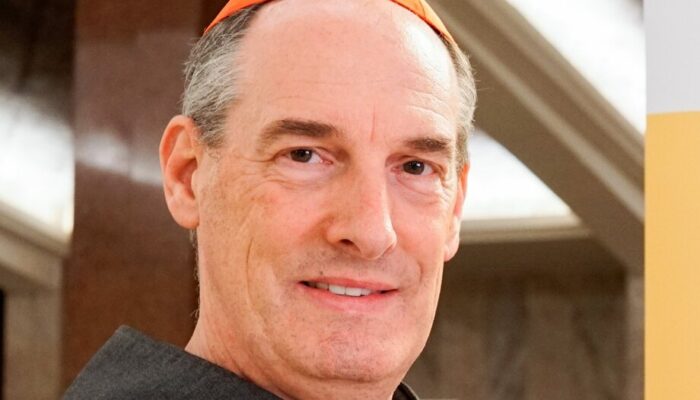
Augustinian priest and professor of theology at the Augustinian Theological Study of Valladolid.



 Español
  English
  Italiano