



- Junno Arocho Esteves and Paulina Guzik, OSV News
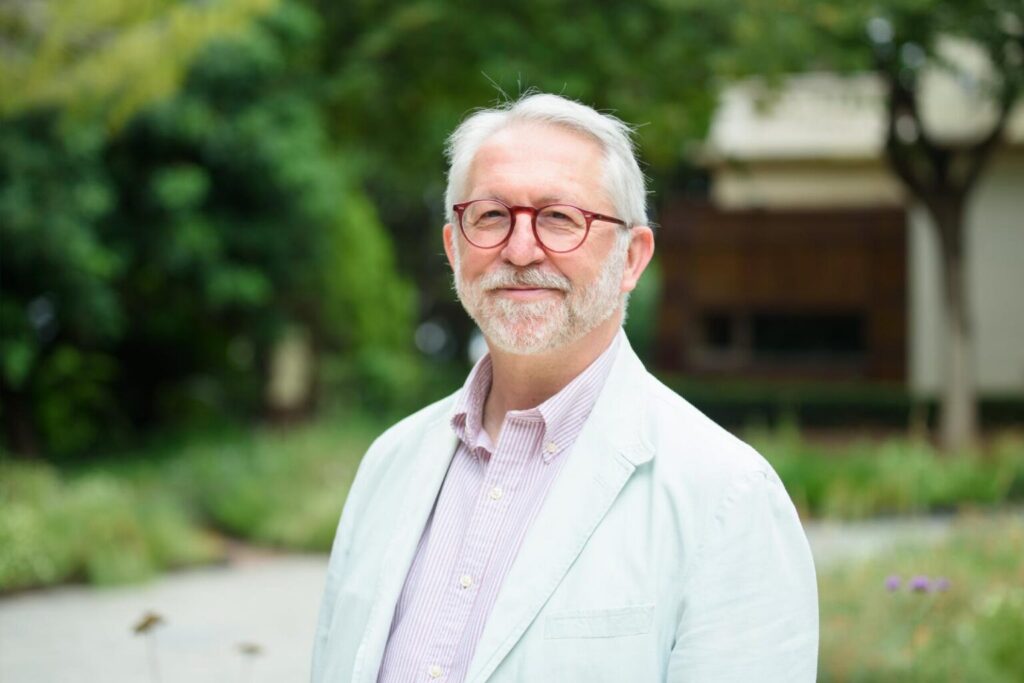
Plans for Pope Leo XIV's upcoming visit to Spain in June are moving full steam ahead, the visit's general coordinator, Yago de la Cierva, told OSV News.
Appointed by the Spanish Bishops' Conference, as stated in the official website of the visit, Yago de la Cierva said he is hopeful that, as in previous papal visits, Pope Leo will come with a powerful message that “will be a rebirth” for the Spanish people.
“I would say that the real effects of any papal visit can be measured in a spiritual change, in a spiritual rebirth, in people, in individuals, in families, in communities, in cities,” he added. “This is our hope, and we are working hard to make sure that this visit is not just superficial, but that it reaches deep into the souls of many people.”.
The Pope's visit, he commented, will also serve as “an important impetus to recover our identity as a welcoming society concerned about the disadvantaged and vulnerable”.
Encouraging unity
Acknowledging that the country faces political, economic and social tensions, de la Cierva said many hope the Pope will help heal divisions and encourage unity.
We really hope that the Pope will not only give us guidance and suggestions to improve the situation, but that he will also be a balm to heal many wounds and will be able to say to all Spaniards: “Hey, you can do better. You can work together even if you don't think alike”.
In a statement issued on February 25, the Vatican press office also said confirmed other papal visits, including to Monaco, Algeria, Cameroon, Angola and Equatorial Guinea.
Logistical challenges
Although Vatican spokesman Matteo Bruni said the program for the June 6-12 trip “will be announced in due course,” the destination cities (Madrid, Barcelona and the Canary Islands) were first confirmed in January by Cardinal Jose Cobo of Madrid, who, along with a delegation of Spanish bishops, met with the Secretariat of State to discuss initial plans for the visit.
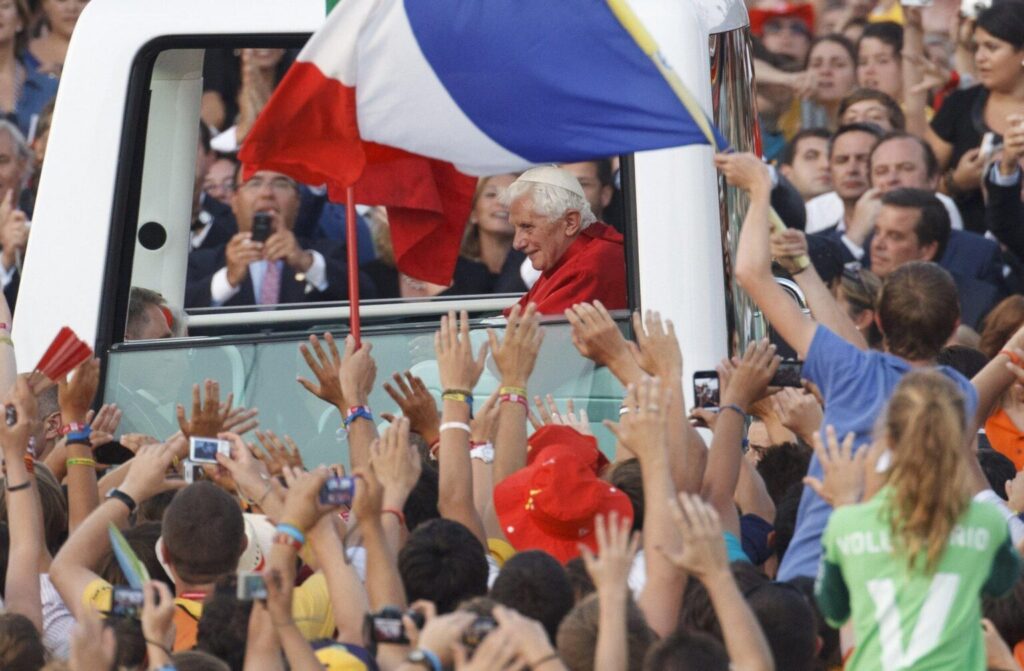
The last time a pope visited Spain was in 2011, when Pope Benedict XVI traveled to Madrid for World Youth Day, where he presided over the final mass attended by more than one million young people.
De la Cierva noted that the preparation period for Pope Leo's visit is dramatically shorter, at just over three months.
The main difficulty is that, for World Youth Day, you normally have two years to prepare for the trip. And this time there are only 100 days left (at the time of the interview), which (means) that everything is much more complicated,» he said.
Despite the logistical obstacles, de La Cierva praised the cooperation of civil servants.
“After contacting the local authorities, the mayor..., the Community of Madrid, the Ministry of Foreign Affairs, it has been a full collaboration,” he told OSV News, expressing his hope that the visit “will also be a manifestation of teamwork.”.
Madrid, an attraction for Catholics from all over Spain
Madrid, he said, is expected to attract Catholics from all over Spain because of its accessibility and central location.
“We told all the dioceses in the country that they are welcome,” De la Cierva noted. While travel to the Canary Islands or Barcelona may be more difficult, “I think Madrid will be a place where a lot of people will come from all over the country and attend the events.” “It would be a really joyful gathering,” he added.
The Bernabéu, insufficient for a vigil, but perhaps for another papal event
Initially, the iconic Bernabeu soccer stadium was to host a youth vigil, but organizers say its capacity of 85,000 is insufficient for the 300,000 young people expected, as they are working with local authorities to find a larger space. However, the Bernabeu could be used for another papal event, they told OSV News.
De la Cierva confirmed to OSV News that a Vatican delegation arrives in Madrid on Monday and will visit “places where the local bishops have asked the Pope to meet with the people.”.
A historic moment in Barcelona
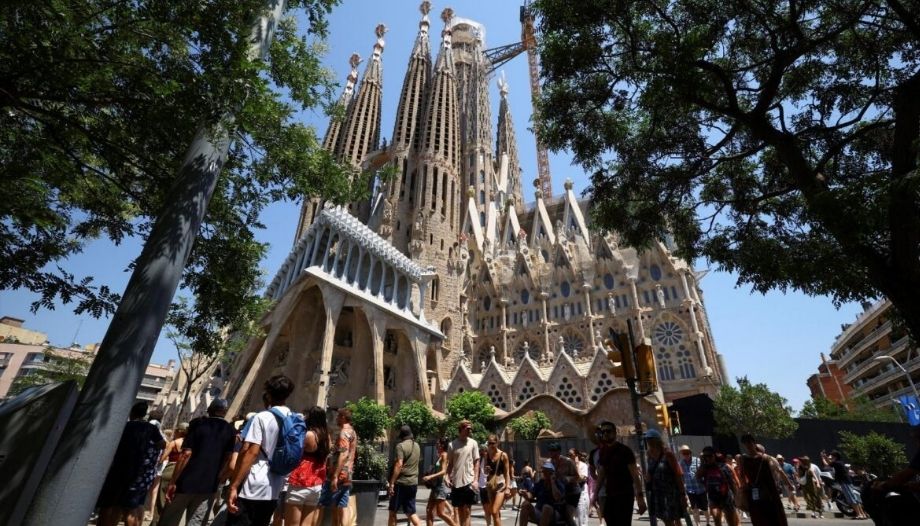
The Pope is expected to commemorate on June 10 the 100th anniversary of the death of Antoni Gaudi, the legendary architect of one of the world's most iconic churches, the Basilica of the Sagrada Familia in Barcelona.
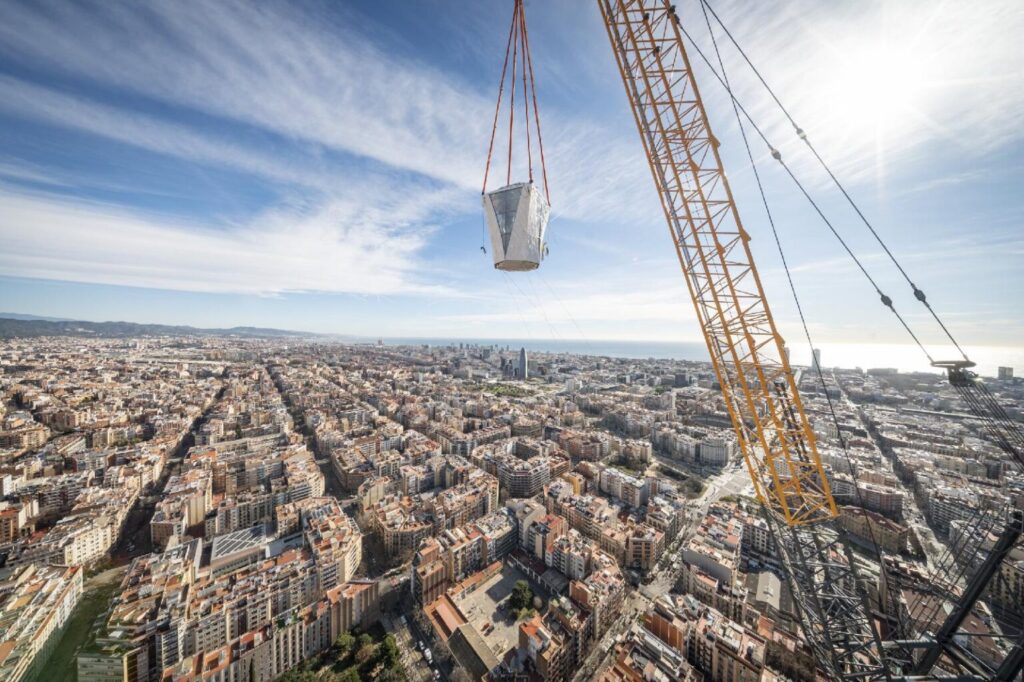
The upper arm of the cross at the top of the tower of Jesus Christ was installed on February 20. At more than 564 feet tall, the tower makes the basilica the tallest Catholic church in the world, surpassing the 518-foot Basilica of Our Lady of Peace in Yamoussoukro, Ivory Coast.
It also surpasses the 530-foot Ulmer Münster Lutheran Church in Germany, making it the tallest church of any denomination in the world.
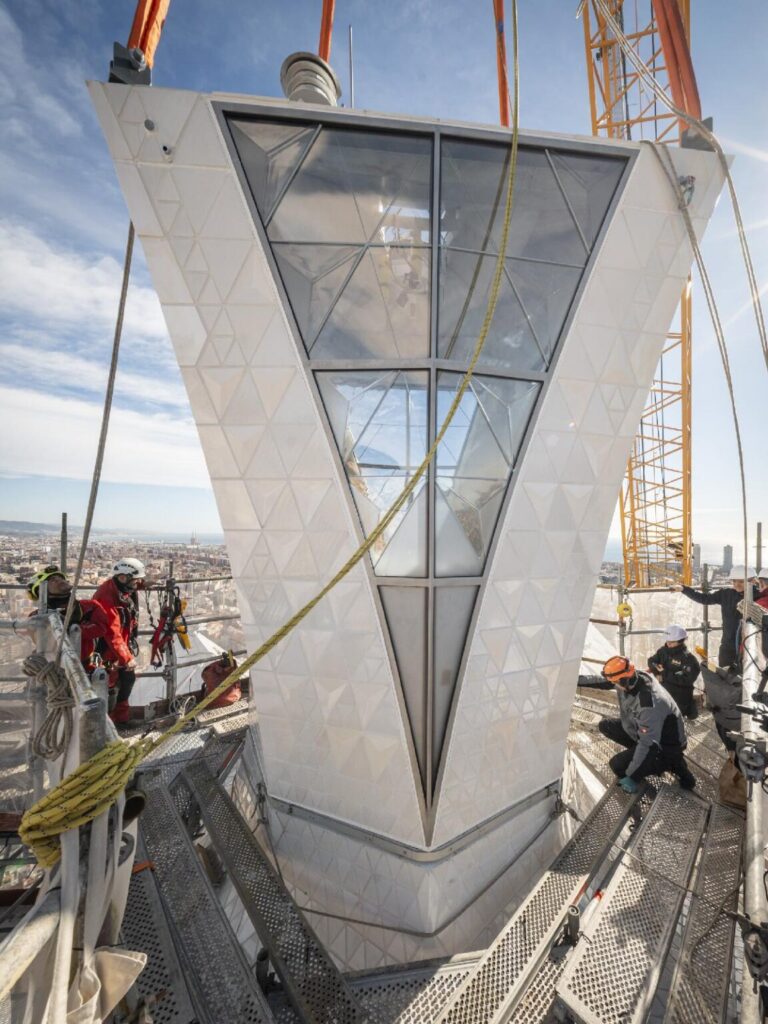
Sagrada Familia, Gaudi's masterpiece
The basilica was begun in 1882 and is considered a masterpiece of Gaudi, a Catholic whose cause for sainthood is ongoing.
Declared a UNESCO World Heritage Site, the basilica faced numerous delays and challenges in its construction that lasted more than 140 years, including the Spanish Civil War and the COVID-19 pandemic.
Although the main building is expected to be completed in 2026, coinciding with the centenary of Gaudí's death, work on the statues and other areas of the basilica is expected to continue until 2034.
De La Cierva told OSV News that the presence of Pope Leo would be a key event that would represent a closing of the circle moment.
“I think that would be one of the main events of the trip to Spain because the altar was blessed by Pope Benedict XIV in 2010. And this is like the closing of the circle with this magnificent basilica,” he said.
In the footsteps of Pope Francis
Another key moment, according to de La Cierva, would be Pope Leo's visit to the Canary Islands, a trip that his predecessor, Pope Francis, had wanted to make.
The archipelago, geographically located in Africa, is the destination every year for thousands of sub-Saharan migrants seeking a better future. They arrive in precarious and fragile boats called “cayucos”, and many die on the way.
Pope Leo, he said, continues “the legacy of Pope Francis,” who, he said, had “expressed his desire to go there because he has been at the center of an important element in immigration.”.
“I think Pope Leo is trying to continue the path of Pope Francis when he made his historic trip to Lampedusa,” de la Cierva said.
Treating people as human beings
And this is probably his intention, to put to Europe the need to be a welcoming society that accepts people as human beings and not as a threat. That we should treat each of them as people, not as a threat, he said.
“I think that's why the Pope is visiting the Canary Islands for the first time in history,” he said, adding that “everyone” in Spain is “very happy” with the trip.
“We had been waiting 15 years for a papal visit. And for a Catholic country that's a lot,” he said, emphasizing that many generous donors are willing to support the trip, financed entirely by “the Church, the faithful and people of good will.”.
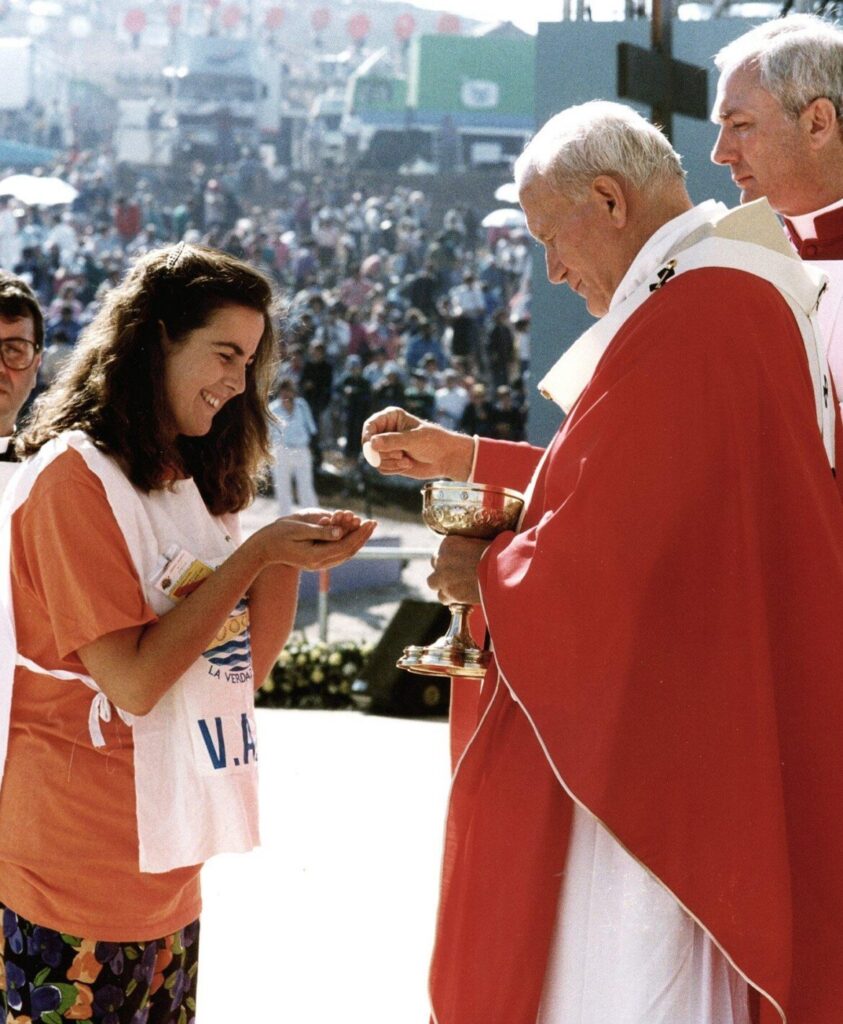
St. John Paul II, 5 times, and Pope Benedict, three times.
St. John Paul II visited Spain five times, including the emblematic World Youth Day in Santiago de Compostela in 1989.
Pope Benedict XVI came to Spain three times: in 2006, for the World Meeting of Families in Valencia. In 2010, to Santiago de Compostela and Barcelona, and in 2011 for the World Youth Day (WYD) in Madrid.
--------
Junno Arocho Esteves is an international correspondent for OSV News. Follow him at @jae_journalist. Paulina Guzik is international editor of OSV News. Follow her at @Guzik_Paulina.
——————-




 Español
  English
  Italiano