



On December 8, we celebrate the dogma of the Immaculate Conception. On that same day in 1854, Pope Pius IX (Pius IX) declared the dogma of the Immaculate Conception of the Virgin Mary with the bull ‘Ineffabilis Deus.’ The Immaculate Conception is one of the four Marian dogmas: divine motherhood, perpetual virginity, and assumption into heaven in body and soul.
Immaculate comes from without blemish, without stain of sin. In Spain, there is the privilege of blue vestments on this day.
But very few people know that the reason it is December 8 and not March 27 or April 3 is because of the miracle of Empel.
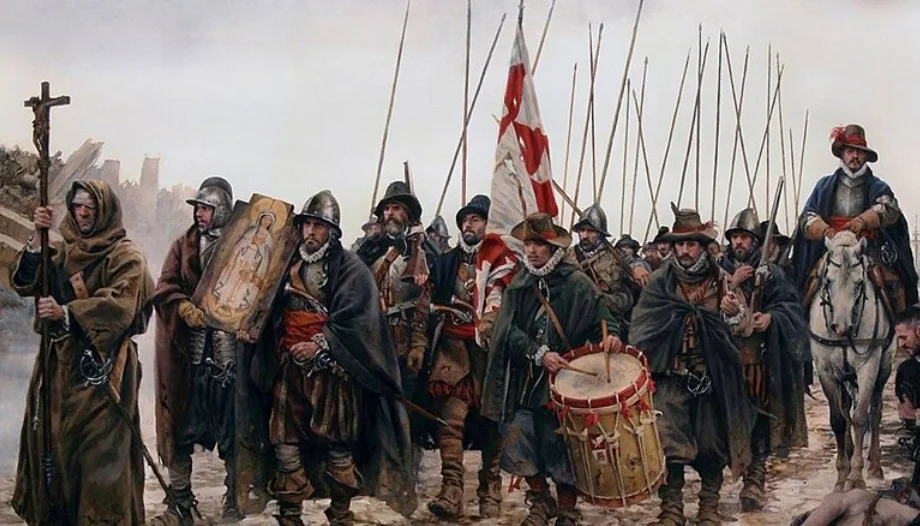
This miracle took place on the night of December 7 and 8, 1585, during the reign of Philip II. During the Eighty Years' War in the Netherlands (known in Spain as the War of Flanders and in the Netherlands as the Dutch War of Independence). Specifically, the Tercio Viejo de Zamora, a 5,000-strong army commanded by Field Master Francisco Arias de Bobadilla, was stationed on the island of Bommel, located between the Meuse and Waal rivers.
They were outnumbered and short of supplies against Admiral Holak's troops. On top of that, they were surrounded on Mount Empel. There, while digging trenches to prepare for battle, they found a Flemish painting of the Immaculate Conception. They placed the image on a makeshift altar, and Master Bobadilla, who had a deep devotion to the Virgin, asked his soldiers to pray to the Immaculate Virgin for victory.
During the night, the following miracle occurred. An icy wind blew in and froze the waters. When the Spanish troops realized this, they were able to cross the rivers on foot and take their adversaries by surprise. They won such a resounding victory that Admiral Holak went so far as to say: «It seems that God is Spanish, to have worked such a great miracle for me.» That same day, the Immaculate Conception was proclaimed patron saint of the Spanish Tercios in Flanders and Italy.
Since then, she has been considered the patron saint of Spain and the army. It was first celebrated in Spain in 1644, but it was declared a public holiday and dogma, as we have said, on December 8, 1854, by Pope Pius IX.
To celebrate the festival, nine masses are held, beginning on Saint Andrew's Day and continuing until the day of the festival.




 Español
  English
  Italiano