



 The EEC instruction on sexual abuse. A reflection
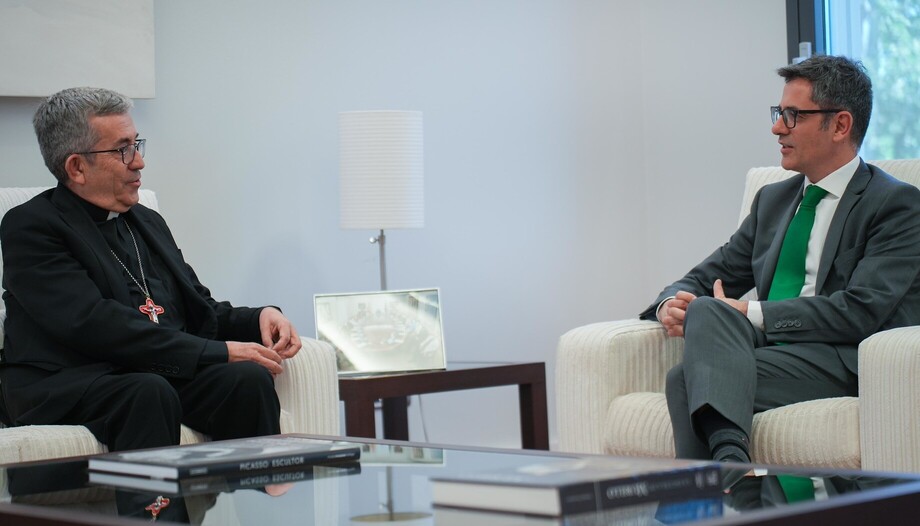
A “new avenue” for “those victims of sexual abuse who do not wish to go directly to the PRIVA Commission established by the Church” and whose cases may not have a judicial route. This is how the note sent by the Spanish Episcopal Conference describes the object of the agreement that will be signed by Felix Bolaños, Minister of the Presidency, Justice and Relations with the Courts; Mons. Luis Argüello, president of the EEC, and Jesus Diaz Sariego, president of the CONFER.
Comprehensive redress for all minors abused in any area of public life.
The agreement has achieved the approval of all parties once “the Government has committed itself, as requested by the Church, to address the integral reparation of all minors who are victims of sexual abuse in any area of public life”. The agreement determines that it will be the Ombudsman who will fix, in the case of economic reparation, the amount that the victim will receive and it will be the Church who will pay it.
According to the note issued by the Spanish bishops, the system “will have the technical criterion of the Ombudsman's Office, the evaluation of the PRIVA Commission, The agreement is based on the consensus between the Catholic Church and the State and the participation of the victims”. For the time being, the agreement is limited to one year (extendable for another year), “for those cases that have not had and cannot have a judicial course either due to the statute of limitations of the crime or due to the death of the victimizer”.
Unity of criteria
Based on this new agreement, “the Ombudsman's Office will study the cases presented” -those that do not wish to be dealt with by the PRIVA commission directly- “and will propose a channel of redress that will be studied and evaluated by the PRIVA Commission established by the Church”.
One of the key points of this agreement is the unity of criteria for the “evaluation of the cases and the assessment of the reparation of the Ombudsman's Office and the PRIVA Commission. In case of discrepancy in the evaluation, a mixed commission will study the case which, in the last instance, will be established by the Ombudsman after listening to the president of the EEC or of the CONFER, as the case may be”.
Another key point is that financial compensation will be exempt from taxation, especially income tax.
First joint agreement
This is the first step of joint collaboration between the Government and the Church in Spain in this field, since the Government has systematically defended that the reparation to the victims must be guaranteed by a public, mandatory, effective and supervised system by the State, while the Church implemented its own reparation system through the PRIVA commission.
In its first year of operation, this commission has handled a total of 89 requests for integral reparations (as of September 2025), of which 32 belong to cases in dioceses and 57 to cases within religious congregations.
Of these, “almost half were resolved with a proposal for comprehensive reparations of between 3,000 and 100,000 euros, in addition to a series of other in-kind reparation concepts and commitments on the part of the institutions”.
Minister Bolaños himself had warned the EEC that the government would not accept a reparation formula for the Church without state control.
The successive conversations between the Government and the Church have been marked at various times by the difference of criteria until reaching today's agreement which, according to the EEC note, is not based on “the imposition of a legal obligation, but on the moral commitment of the Church and the mutual agreement of the parties”.



 Español
  English
  Italiano