



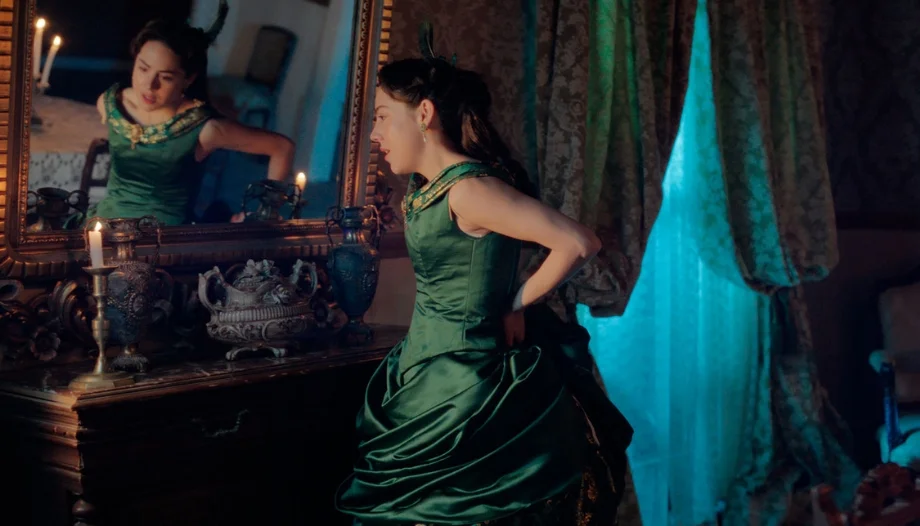
On March 13, the following will be released in Spain Las Locas del Obelisco, a film that deals with a delicate reality that few dare to explore. In Madrid in 1885, the Lord prompted Mariana Allsopp and Father Francisco de Asís Méndez to create a shelter open day and night to house those fleeing sexual exploitation, thus founding the Congregation of the Trinitarian Sisters.
Human trafficking, prostitution and abuses are particularly exposed with special sensitivity in Las Locas del Obelisco. The founder of the Trinitarias, played by Paula Iglesias, did not look the other way, but tried to rescue these women despite social and media pressure.
The story of this brave woman leaves no one indifferent. It is a story that invites to action and puts on the table the existence of a drama that many live oblivious to. Pablo Moreno, director of other films such as A forbidden God (2013) o Claret (2020), explains in Omnes why he believes it is vital to be aware of this reality.
Is the film called Locas del Obelisco Do you want to convey something with that “crazy”?
-Yes. The first thing is that this was what they called them, the Trinitarians. It was an insult that was used against them.
When we thought of the title, we wanted it to be transgressive. That's why we decided to use that insult. In the end, they themselves reinterpreted it: that “crazy” that appeared in the media, they assumed it by saying: “Okay, they call us crazy, but we are Christ's crazy”. It is a madness of love, something that goes beyond madness itself, something more transcendental. And that seemed very interesting to us.
Then there is the issue of the Obelisco. In the beginning they were in a house in the Paseo del Obelisco and that is how they were known in Madrid. Sometimes to their regret, but it also ended up being something positive, because the media attention -even though it was often against them- gave them a lot of visibility and, in the end, helped them to prosper.
This story invites action, to not look the other way. How do you intend this film to translate into that action?
-The first thing is to show a problem that existed in Madrid and still exists today, not only in Madrid but, unfortunately, in many other places.
We have talked to people who were not aware that in Madrid at the end of the 19th century there was so much prostitution, so much trafficking and so many situations of deprivation of freedom. Sometimes we think that we live in a very developed or balanced society, but in the back rooms, in the darkest corners, there are hidden realities that we prefer not to look at head on.
These are problems that are still there. There are thousands of women who suffer: not only from trafficking or prostitution, but also from labor situations that border on slavery, from abuse in its different forms or from different types of violence.
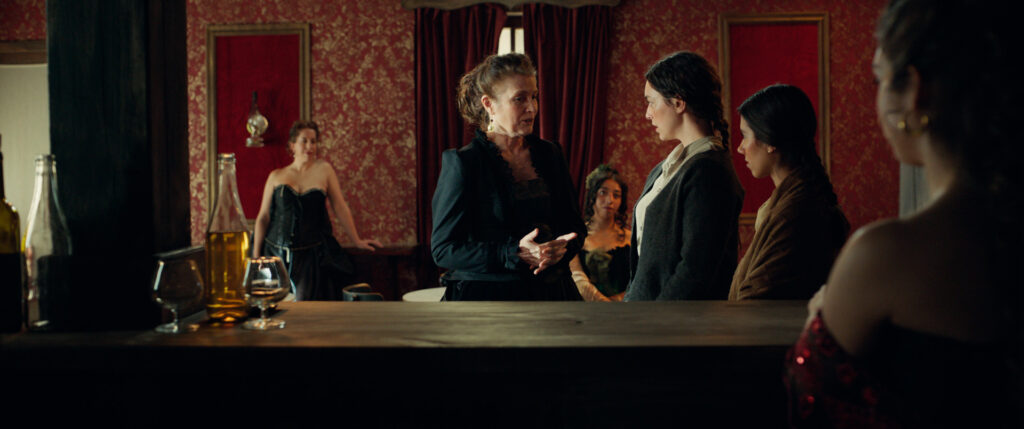
These women dedicated their lives, above all, to rescuing these girls and giving them back their dignity and freedom. For them, freedom was fundamental. Most significantly, they have been doing this work for 141 years. Their mission remains vital.
What can an ordinary Christian do?
-Just not looking away is enough. A colleague from the film project, who was part of the technical team, was walking down the street one day and came across a girl who was begging. She approached her, talked to her and immediately referred her to the Trinitarian Sisters, who were finally able to help her.
It may seem that simply knowing about these realities is not enough, but in reality it is a lot, because we are already predisposed to bring about a change. And, evidently, as Christians we are called to denounce apostolically the injustices and situations that deprive so many human beings, so many women, of their freedom. Many times we do not adopt this attitude simply out of ignorance, so if we knew about it, we would be able to make things a little different.
How did you come to know this story of the Trinitarias? How did you come up with the idea of making this film?
-It didn't really occur to me, which is the best thing of all. The Trinitarian Sisters wanted to make a film and we had sent to different congregations an advertisement for the work we do.
And it was by providence that this publicity, this letter that we sent, landed on the desk of the office of the Superior General of the Trinitarian Sisters, who at that very moment were planning to make a film to talk about their charism and their founders, because it was the 100th anniversary of the death of their founder. It was curious that they called us and we immediately fell in love with their story.
We saw that it was necessary to tell it. And so we began a period of documentation, where we met María Ana Allsopp and Father Francisco de Asís Méndez, two great figures of the late nineteenth century. I was totally unaware of them, but I found them to be very advanced and with a very high social and ecclesial sensitivity.
During that process, what aspects of the characters have struck you the most or particularly moved you?
-I am moved by the fact that they are human beings, like you and me, who had a very hard time because at the beginning it was difficult for them to find a way to carry out what the Lord was asking them to do.
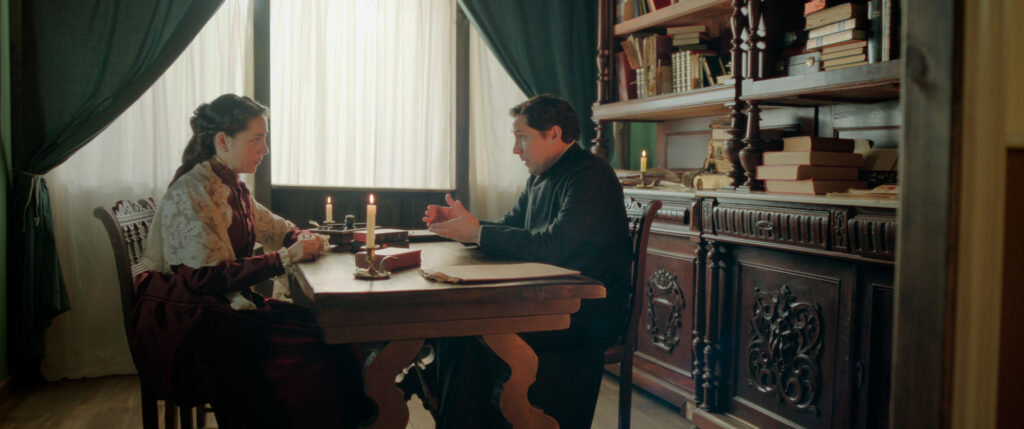
Father Francisco wanted to help the girls because he was a confessor at Encarnación and many women came to him to tell him everything they were experiencing. However, he did not know what to do or where to start. He felt an enormous desire to help them, but also the helplessness of not finding a way.
Something similar was happening to Mariana. She felt the desire to do something for the world and not just to comply with what was expected of a woman of her time: to achieve an “honorable status” and follow the marked path.
These two tremendously human sensibilities make me think and challenge me about what I can do for the world. I realized that we are not so different from those great figures of the 19th century. It is simply a matter of taking a step in one direction and having the courage to decide whether we want to take it or not.
Do you think that, somehow, there is a constraint on Christians or on society in general, so that those who act in truth can be seen as “crazy”? Is this also an invitation to live that radicality?
-No doubt. In fact, you said a word that seems to me to define it very well: the constriction. In the film, there is a moment when Mariana decides to break with all that. She arrives home and with a letter opener she breaks her corset. And she just takes the handkerchief from behind the corset and finds a sacred heart. So, in a way, semiotically we are talking all the time about the same thing.
We have to get out of the corset, we have to get out of political correctness, out of what we are expected to do because it is socially acceptable.
Sometimes you have to let yourself be seized by this “madness” and go a step further, because there are many injustices. Whoever wants to help others has to get down in the mud, even if we don't like to get dirty. I like very much a story of St. Vincent: he says that if a priest goes to celebrate Mass and finds a man stuck in the mud, and he gets dirty helping him and does not get to celebrate Mass, he is not really abandoning God, but serving God (abandoning God for God).
Making a film like this implies breaking out of that social corset: it's a risky subject. How has this influenced your experience of faith?
-I sometimes jokingly say that it is time for Catholics to «come out of the closet» and express who we are in freedom, with commitment and respect.
I have been making films on this subject for 20 years and sometimes the stories go down well and sometimes badly, and the media repercussions can be very harsh. For example, with the film A forbidden God We received quite a lot of criticism. It was very difficult for us to take two steps in a row without receiving harsh criticism.
In this case, obviously, it is a transcendent film. There is an iconography and a semiotics. Christ himself appears. It cannot be avoided. But we want it to be a film that anyone, believer or non-believer, can see and enjoy.
I believe that in the Church it is difficult for us to make known the good that we do and that the tree that falls sounds more than the billion trees that grow. But we have the obligation to share with the world that we are part of it and that together, believers and non-believers, if we add up, we build.
We do not have a dogmatizing or indoctrinating commitment. What we want is to share how we Catholics see life, to share the Good News, to share the hope and joy of the Gospel with believers and non-believers alike.
Prostitutes are generally judged, does this film aim to dismantle prejudices and «take away their guilt»?
-The case of prostitution is seen as a very big scourge and there are people who obviously judge without knowing. That is to say, they are seen as bad women when one does not know the circumstances.
Most of them are extorted, have been kidnapped or entered into it in the hope of being able to support their families. And there is something very hard about that. Understanding it is not easy either. It's easier to judge than to understand the reasons.
It seems to us that, as Sartre said, «hell is the other». But do we stop to think who the other is? The Gospel tells us that salvation is in the other. And I believe that we have to make a social leap in this sense and try to know.
Knowledge engages, and if you commit to a cause, you may even come to love it. And what you love doesn't go away. It has to do with that empathy. Why are they there? What is their suffering? As Christians, we must carry the cross. And not just our own, but also the cross of others.




 Español
  English
  Italiano