



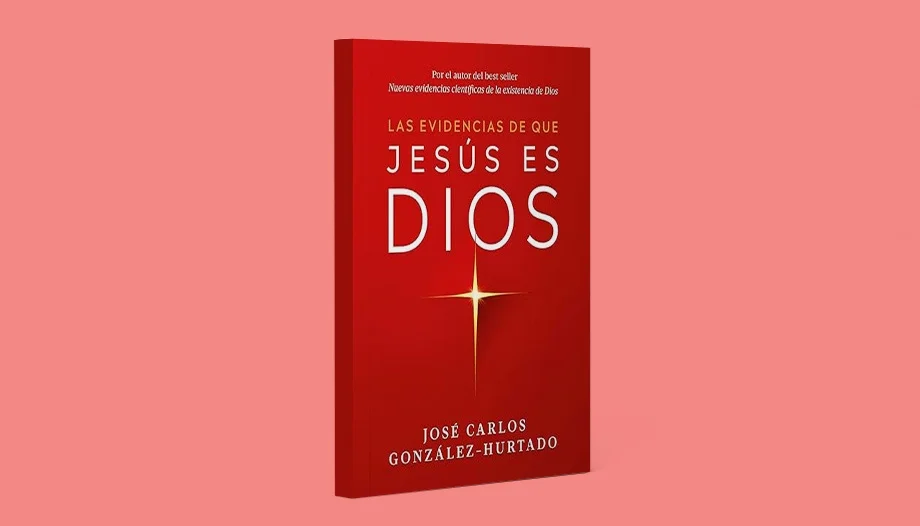
As the old medieval adage states: “Intelligo quia volo et non intelligo quia non volo,” meaning: “I understand because I want to, and I don't understand because I don't want to.” Therefore, it seems that it is not usually worth spending time arguing with agnostics and atheists about the divinity of Jesus Christ.
In this regard, it should be clarified that José Carlos González-Hurtado's work is not controversial, nor is it the result of discussions with argumentative people or those who seek debate for debate's sake.
Really, it is not worth reasoning about the figure of Jesus and the scope of revealed truth when the person in front of us is not interested and does not have the slightest curiosity. It is preferable to wait until a loved one dies, or they suffer from depression, financial ruin, or colon cancer. That is, when they rethink their way of life and their value system is in crisis, then you can ask them if they are interested in knowing Jesus Christ and entrusting their material and spiritual needs to Him, because this is certainly a question that essentially affects the core of the soul. It is only worthwhile to speak directly and propose who Jesus was so that by knowing Him, they can relate to Him and, by relating to Him, grow fond of Him.
Faith and the path of the heart
Cold reasoning can multiply in front of the skeptic who neither wants to believe nor is interested in believing, and who is comfortably settled into a selfish way of life. The path to God is the path of the heart, simply because God is love.
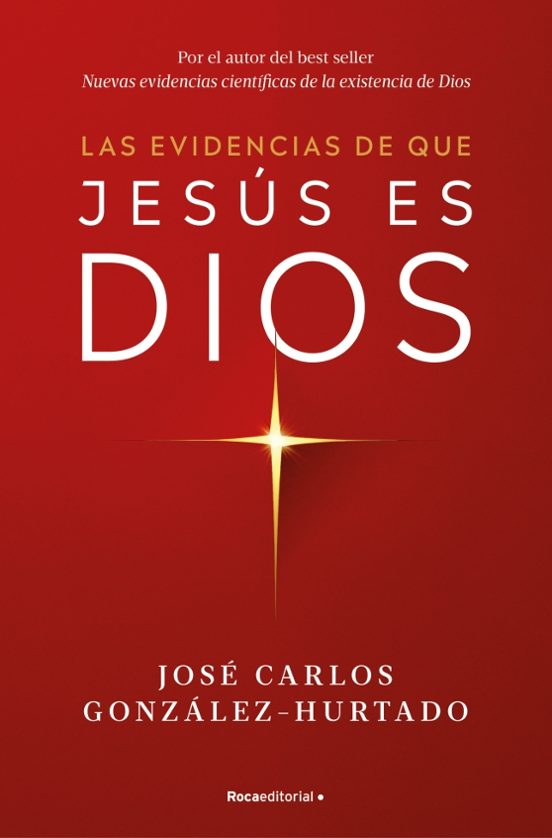
This is what I was thinking about when I began to read José Carlos González-Hurtado's book, which brings together many indications of the divinity of Jesus Christ that will not leave those who have never considered the opportunity to know Jesus intimately unmoved.
The table of truths about Jesus, which are fully supported by numerous sources outside the Church and preserved almost miraculously, is very cleverly put together (64).
Historical and external evidence of Jesus
We must now turn to a very interesting chapter that has given rise to the most serious insinuation in recent years: “whether Christianity was an invention of the early Christian community.” If this were the case, as some authors insisted at the beginning of the 20th century, then the Church could continue its work until the end of time simply by adapting it to the times, as some schools of thought claimed at the end of the Second Vatican Council (69).
Before concluding the first part of this interesting work, our author will focus on two key figures. The first is Feuerbach, who in his book The Essence of Christianity presented one of the most important critiques ever made throughout history: “Did God create man, or did man create God?” Certainly, here is the question in its rawest form: do we or do we not have faith in the existence of God, and of a God who has revealed himself and invites me to know his revelation?.
The second key author in this final section is Nietzsche, who, dissatisfied with the doubts raised by Feuerbach, encourages Western culture to be consistent and kill God, that is, the false God that men have created and continue to worship out of inertia and superficiality (155).
In seeking arguments in favor of the evidence that Jesus is God, our author will begin by explaining the origin, consolidation, and dissemination of the oral revelation of Jesus and subsequently the written revelation in the New Testament and in the writings of the Church Fathers, all of which has been preserved, conserved, and transmitted by the magisterium of the Church to the present day.
The transmission of revelation in the Church
Certainly, after twenty centuries, we can affirm that we believe the same as the early Christians, for the Holy Spirit has watched over us throughout history so that the treasure of revelation would not be lost. At the same time, we know more about Jesus Christ than the early Christians did, for we have spent centuries passing on to one another what we have learned about Him in our personal relationship with Jesus Christ Himself.
Thus, the central argument of this work is to focus on the figure of Jesus Christ, alpha and omega, lord of history and father of this supernatural and human family that is the Church, universal sacrament of salvation.
The first thing our author does is review the scene of the discouraged disciples of Emmaus, when Jesus Christ himself ignites their hearts simply by demonstrating how He himself had fulfilled all the messianic promises contained in the Scriptures (272-284).
At this point, you may wonder why most Jews did not convert to Christianity (285). This question is logical and very easy to answer, because they have not responded to God's grace. In other words, for a Jew to believe in the divinity of Jesus Christ, the grace of faith and the response of the person are necessary (288).
Evidence of Jesus' Divinity
Next, he will bring up the archaeological argument, as he will indeed provide much scientific evidence that speaks to the divinity of Jesus Christ, reflected in burials and especially around holy sites in the Holy Land such as the Pool of Bethesda, and so many other proven miracles, such as the miracle of the resurrection and the “empty tomb” (313).
He will immediately address the sum of Eucharistic miracles throughout history, for example, those collected by St. Carlo Acutis and others that continue to occur today (353). He will also provide the latest data on the testing of the Shroud of Turin, despite the difficulties of Carbon 14 and Carbon 16 after the atomic bombs (341), and the Holy Face of Oviedo (343).
The evidence that Jesus is God





 Español
  English
  Italiano