



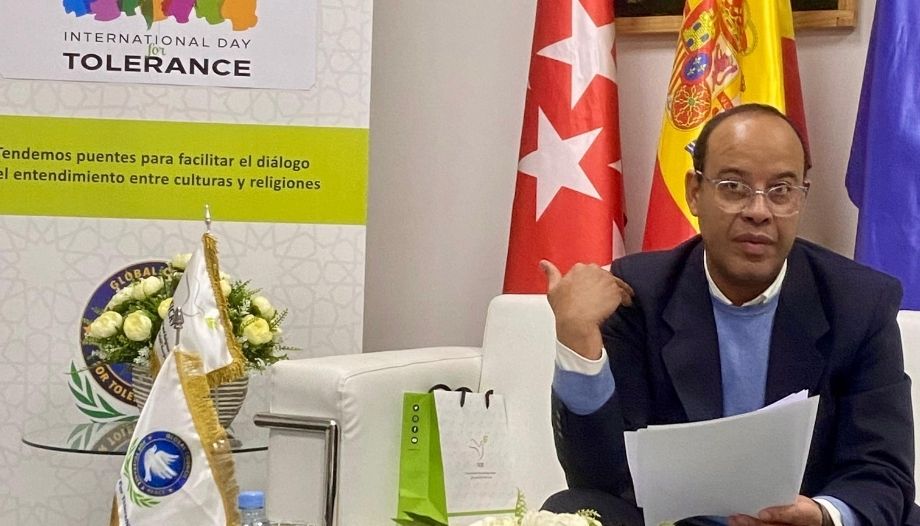
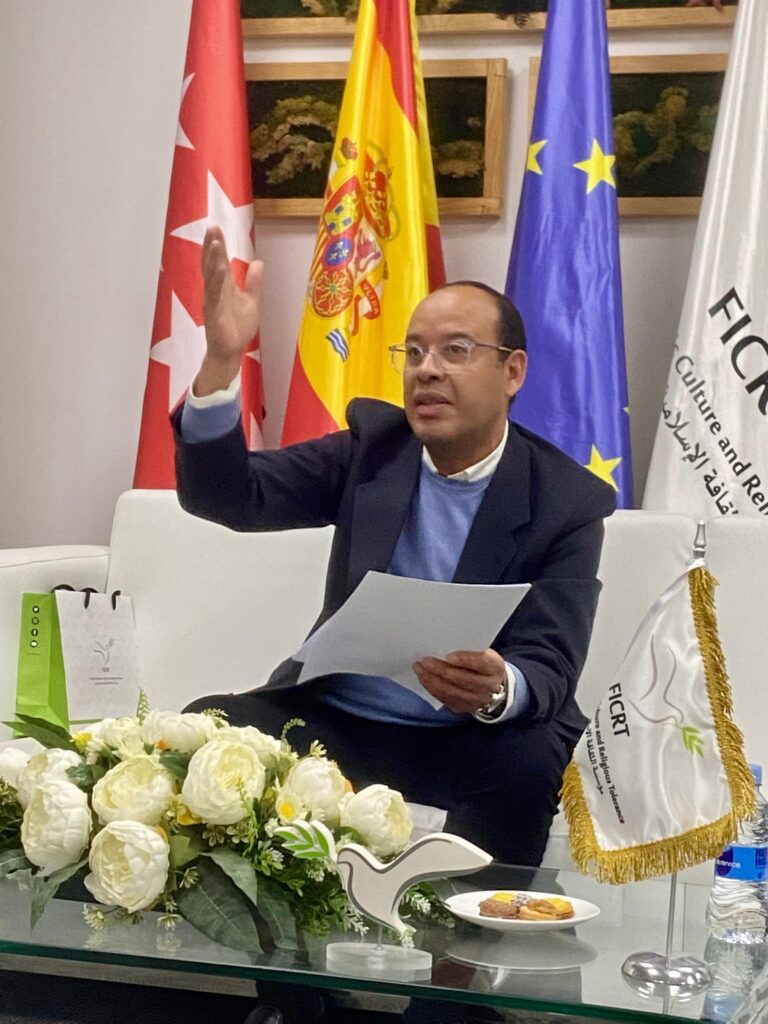
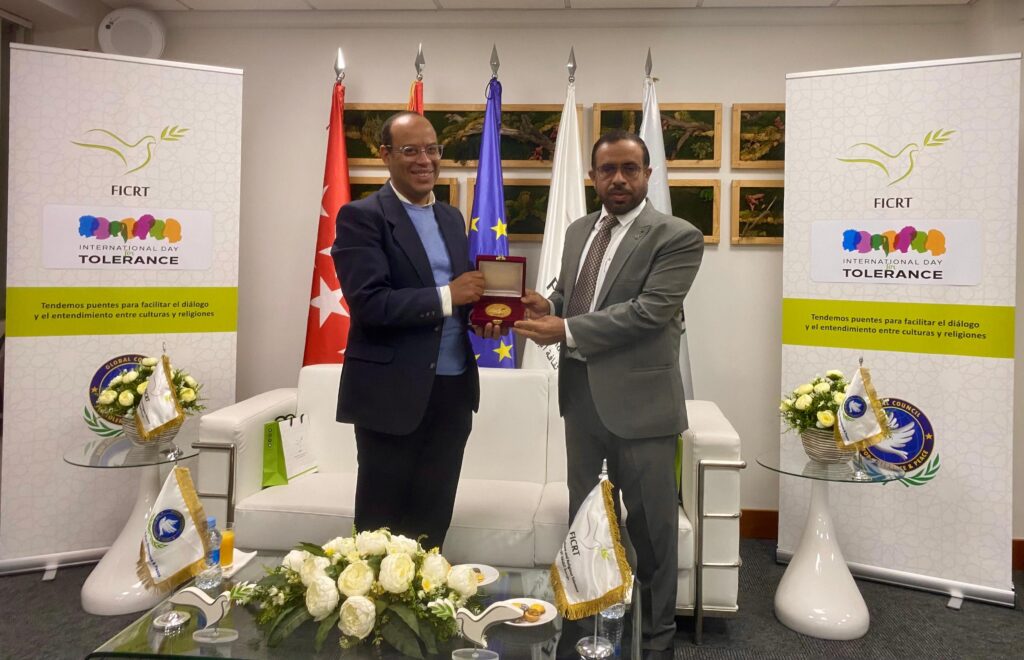
A lecture by Dr. Saif El Islam Benabdennour (Mequinez, Morocco), president of the Abraham Forum, at the Foundation for Islamic Culture and Religious Tolerance (FICTR) in Madrid, and Pope Leo XIV's recent visit to Turkey and Lebanon, have led to this interview.
In the conversation, Dr. Benabdennour mentions some of the challenges facing the world, such as wars and waves of mass displacement. He believes that, given this situation, “intercultural dialogue and international cooperation are not optional, but urgent necessities for addressing the challenges of the 21st century.”.
He also points out that “the interreligious dialogue is more necessary today than ever, but it requires realism, patience, and a pedagogy of listening.
Finally, we discussed Pope Leo XIV's trip to Turkey and Lebanon, a visit that the professor has followed with interest as a Muslim.
Regarding your lecture on tolerance and dialogue, what was the context and reason behind it?
- The conference took place in a context of promoting understanding between cultures and religions, organized by an institution committed to dialogue and respect (FCTR in Madrid). It is an effort by Foro Abraham to build bridges. The main purpose of the conference was to reflect on the importance of education and culture in strengthening relationships between people from different backgrounds.
You mentioned the crisis and the collapse of the myth of inevitable progress. Could you explain your thoughts a little more?
– When we talk about the “crises of our time” and the fall of the myth of inevitable progress, we are referring to the idea, widespread during the 19th and 20th centuries, that humanity is always moving toward a better future thanks to science, technology, and economic growth. According to this myth, each generation would live better than the previous one, and history would have a clearly upward trajectory.
However, we note that this optimistic view no longer holds true. The current crises—social, economic, ecological, cultural, and technological—show that progress is neither automatic nor guaranteed. Humanity is advancing in some areas, but regressing in others: inequality is increasing, social polarization is growing, human bonds are weakening, and new forms of symbolic and cultural violence are emerging. Furthermore, technological development, which was supposed to liberate us, is part of the problem. Many use it as a tool for disinformation or control.
In this context, we must rethink progress, not as something inevitable, but as a human task that requires responsibility, commitment, and constant vigilance. Progress does not happen on its own: it is built through dialogue, cooperation, education, and the ability to correct our own mistakes. Only by understanding this complexity can we face the crises of our time.
In what sense have you quoted Walter Benjamin, Hannah Arendt, and Michel Foucault?
– I have quoted Walter Benjamin, Hannah Arendt, and Michel Foucault to shed light on different aspects of contemporary crises and to show that today's challenges cannot be understood solely in terms of economics or politics, but require deep reflection on culture, power, and the human condition.
In short, we cite these three thinkers because each one offers a key to understanding our times.
Benjamin criticizes the myth of progress. Arendt highlights the dangers of dehumanization. Foucault, meanwhile, criticizes the new forms of power and control in contemporary society.
In the same vein, we can mention the Spanish thinker Jovellanos, whose analysis remains valid when he states that an ignorant people is a blind instrument of its own destruction. Taken together, they allow us to understand why knowledge and dialogue are not only ideals, but necessary responses to the current crises.
Is it correct to say that you have reviewed the global landscape and mentioned issues such as migration caused by climate and human crises?
– Yes, that is absolutely correct. The world is facing challenges that affect societies across five continents. Among the most significant phenomena, we can highlight wars and waves of displacement, which are not only the result of political or economic conflicts, but also of increasingly serious climate crises. These mass displacements are not isolated events, but a global symptom of an interconnected yet deeply unequal world.
Given this situation, intercultural dialogue and international cooperation are not optional, but urgent necessities for facing the challenges of the 21st century.
What does it mean to move from passive tolerance to active tolerance?
– Here we propose moving beyond the traditional view of tolerance as a merely passive attitude, understood as “allowing” or “putting up with” what is different. This form of tolerance does not generate real coexistence or relationships of genuine respect. It is a fragile tolerance that can easily break down in situations of tension.
Contemporary society needs to move towards active tolerance, which involves recognizing others as others; it is about recognizing their dignity, their rights, their worldview, and their contribution to the community. Difference is not a problem, but a value. In this sense, we recall the statement by José Cadalso, the 18th-century Spanish thinker: “True patriotism does not consist in praising everything that is one's own and condemning everything that is foreign.”.
Active tolerance requires speaking and listening, participating in real conversations. It is not silence or indifference, but communication and openness. It is not just about avoiding conflict, but working toward coexistence, toward a shared space where people can live together with justice, equality, and mutual respect.
Active tolerance means intervening when injustices are detected. It is an ethical stance: it is not enough to refrain from being unfair; it is necessary to oppose injustice.
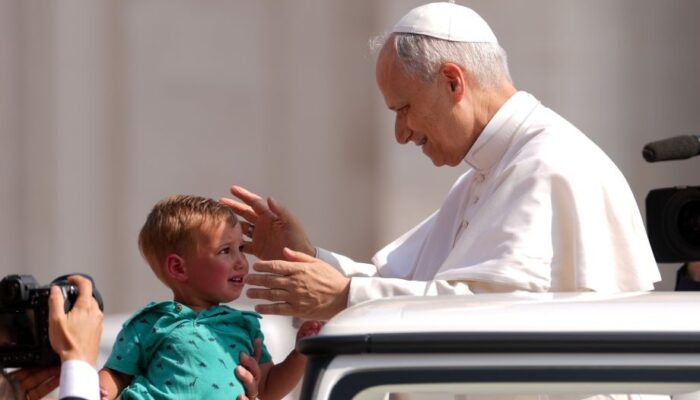
Have you been able to follow Pope Leo XIV's recent trip?
– Here we must emphasize the significance of a Pope visiting countries with Muslim majorities. The visit has clear symbolic value, because it shows that trust between religions is possible, and sends a message of normality in the face of discourses that associate Islam, Christianity, and conflict. I could interpret it as another step in the “normalization of the Other.”.
The Pope spoke specifically about welcome, dignity, and solidarity. This could be related to the idea that religions should be bridges for building shared humanity, not barriers.
How do you view interfaith dialogue now?
As for the state of dialogue today, it can be said that progress has been made. There are Muslim-majority countries that promote dialogue, such as Morocco, Qatar, Saudi Arabia, and the United Arab Emirates. We can cite the meeting of religious leaders in Astana, Kazakhstan, which has been a benchmark for years.
But we must not forget the risks of political polarization, the exploitation of religions, and extremist rhetoric on both sides. We have to bring genuine dialogue into the realm of practice.
As a Muslim, I have followed the Pope's trip with interest. The visit is an important gesture toward coexistence and respect between religions. Interreligious dialogue is more necessary today than ever, but it requires realism, patience, and a pedagogy of listening.




 Español
  English
  Italiano