



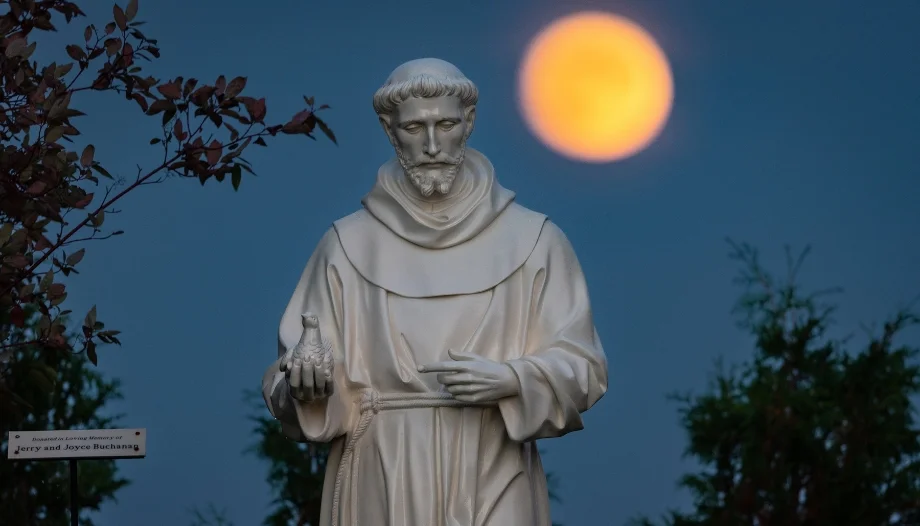
From February 22 to March 22, 2026, the body of St. Francis of Assisi will be transferred from his tomb, located in the crypt of the Franciscan basilica, to the foot of the papal altar in the lower church. This public exposition of the remains of the “poverello” of Assisi will allow his veneration by people from all over the world.
Lent 2026 will have a special significance in Assisi. There, the basilica that houses the remains of one of the most important saints in the history of the Church, St. Francis of Assisi, will experience historic days with the public exhibition of the saint's remains for veneration.
It will be the first time that the faithful will be able to see the mortal remains of the poor man of Assisi in 8 centuries since, although he has been studied and seen by specialists, his remains have never been exposed in this way.
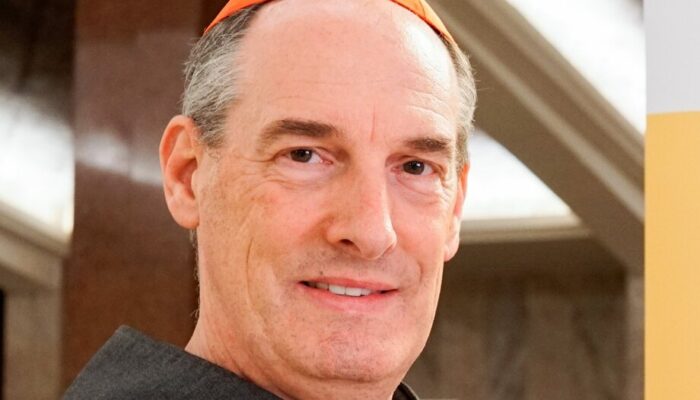
On this occasion, Omnes was able to speak with the Director of the Communications Office of the Holy Convent of St. Francis, Friar Giulio Cesareo, OFMConv, who emphasized the topicality of the saint of Assisi and his desire that Leo XIV could be one of the people who come to pray before the remains of St. Francis.
In the coming weeks, we will witness a historic moment with the public exposition and veneration of the remains of St. Francis of Assisi. Why did you decide to organize this public veneration?
-There are two fundamental reasons: the veneration of the relics of the saints is a constant in the history of Christianity, at least in Roman Catholicism and Orthodoxy. In fact, in Christian theology, the life of a saint is not the result of an extraordinary commitment of a hero of the spirit, but the fruit of docility to the Holy Spirit who, according to the letter to the Romans of the Apostle Paul (Rom 5:5), pours into us the love of the Father and thus makes us his children in dignity and conduct of life.
In this sense, the veneration of the relics of the saints is veneration of the Holy Spirit, who has filled with his grace and action the life of that man or woman of God. In other words, the holy man or woman is a miracle of God and not of human effort. To venerate these relics, so poor and worn out, means to recognize that true life is that which is received from God himself and which is manifested in our life in the love received and shared.
Secondly, we believe that this logic of veneration of relics can also be a cultural contribution in a broad sense, if properly understood, both among believers and among those who do not share our faith. In fact, what remains of the body of St. Francis, a few bones, testifies to the life of a man who spared nothing and gave himself completely, following the logic I mentioned before: by welcoming the love of God, “we become imitators of his goodness.” (says the ancient patristic text of the Letter to Diognetus). Jesus, in the Gospel, expresses this logic of the gift of self in the parable of the seed: “If the seed that falls to the ground does not die, it remains alone; but if it dies, it bears much fruit.” (Jn 12:24).
The 800 years of the history of Franciscan life after the death of St. Francis are, in our opinion, an eloquent sign that in him this parable of Christ was truly fulfilled: precisely because Francis died for love, giving himself and spending himself completely, he lives and bears fruit. In fact, he is alive among all of us, who recognize him as teacher, friend, brother and father. Here is the cultural contribution of which I spoke earlier: given that we find ourselves in a cultural context - at least the Western one - in which in many ways we are told and we are told that we must spare ourselves, that we must not love too much because otherwise we will be consumed, St. Francis gives us witness to exactly the opposite: that in loving we die, yes, but that this death is in fact the cradle of true life, that of the communion of those who truly bear fruit.
What can we learn today from the poverello of Assisi?
-For us friars of Assisi, the most synthetic and profound heart of the Franciscan experience is this life totally involved in an experience of benevolence - that of God, which manifests itself not in an abstract form, but in the concrete relationships with the people he met every day - which led him to live according to the same dynamic, that of the gift of self. To live in this way means to spend oneself, to consume oneself, to give oneself precisely.
The life of Francis is summarized by Giotto in four images that stand out just above the altar of the lower church, and therefore on his tomb: Francis lives in poverty (he shares with the needy), in obedience (he listens to the other, so much...) and in chastity (he is faithful to relationships, he does not betray). He who lives this way, in the eyes of our mentality, is a loser, is someone who deprives himself of the taste for life, is a little deluded; in the eyes of God, instead, he who lives this way, as Giotto shows us, is seated on the throne, he reigns. To love, that is, to give oneself, is not a defeat, but our true greatness. And I believe that to all, to all without exception, believers and non-believers, friars and non-friars, Franciscans and non-Franciscans, this testimony of St. Francis is good for us.
Love for the poor, care for creation... in recent years these have been fundamental themes in the preaching of the Church. Is St. Francis of Assisi a saint who is always relevant? How do the Franciscan friars bring this message up to date?
-Francis is this - love for the poor, care for creation - but also much more: I like to define him as a kind of «positive» Pandora's box. What I want to say, however, is that Francis is not alone and does not communicate only what seems urgent and/or current to us today.
Francis is a mystic, a man of prayer, a person full of mercy and patience with those who make mistakes, he is an itinerant preacher, he is a promoter and mediator of peace, he is a man of dialogue with everyone, he is an artist, a poet, but also a great educator, etc.
We friars, without being in any way at his level, try to share his testimony (which, in my opinion, is much more than a simple message), sharing above all the root of his human and spiritual depth, which for us is the bond with Christ, Love made man.
From this, in every context, in every fraternity, in the actions of every friar, we seek to share his person, his intuitions, so that they may become an inspiration for those who enter into relationship with us. I, for example, am entrusted by the fraternity to deal mainly with cultural activities: in this way I try to reveal the cultural implications of the charism of Francis.
It is not for nothing that the cultural festival we organize every year in Assisi, the Cortile di Francesco, The event is conceived as a cultural expression of fraternity, the heritage of Francis: the event is conceived and oriented as an experience of mutual enrichment around the themes that are addressed or celebrated, because there is no one who does not have something to contribute to others, nor who does not have something to learn from others, regardless of whether he or she is an expert or a simple person. Y mutatis mutandis, similar dynamics exist in the various contexts in which the friars operate, to share solidarity with those in difficulty, to promote the rights of those whose rights are trampled upon and denied, to promote peace, to invite them to be our guardians of creation, and so on.
How was this exposition and veneration of the body of St. Francis prepared? How can those who visit Assisi venerate and pray before it?
-The veneration of the remains of Francis was prepared with much reflection, exchange of opinions and seeking the experience and expertise of many people, ecclesiastical and otherwise, because we realize that it will be a truly special event, unique in its kind. We have also reflected on the meaning of the legacy of Francis and on the intuitions that his companions of the first Franciscan century had about him from the beginning. There are people who have prayed especially for this, we have dialogued with the authorities of the local Church - the Bishop of Assisi - and with the other Franciscans of the city, with our superiors, as well as with the Holy Father, first Francis and then Leo XIV.
To participate in the veneration it is necessary to make a reservation on the following website www.sanfrancescovive.org or, for Spanish-speaking persons, at www.sanfranciscovive.org, The texts on the website are only in Italian or English. Reservations are required, free of charge, for security reasons and to ensure peace of mind for everyone. There are two possible itineraries: option A, aimed at small groups and accompanied by a friar; and option B, designed to make the tour autonomously.
All information and clarifications are available on the website. From the website you can also contact customer service by e-mail, after booking or to assist you in the booking process.
The Pope signed his first Apostolic Exhortation on the feast of St. Francis of Assisi. Is Pope Leo XIV expected to participate in this historic moment?
-We wish it with all our might. But, apart from this wish, I cannot tell you anything else for the moment.




 Español
  English
  Italiano