



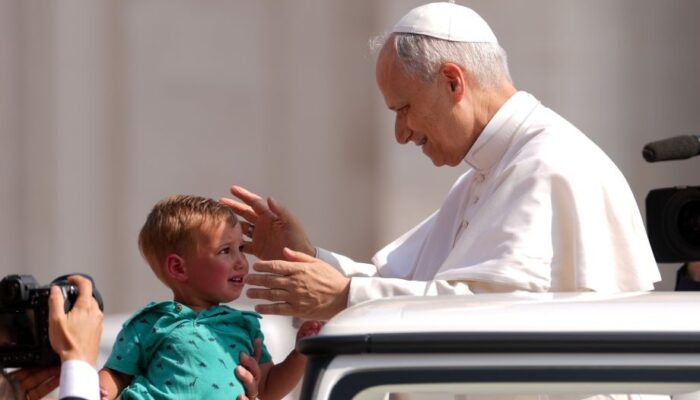
The speech of the Holy Father Leo XIV on the first Christmas in the Chair of St. Peter followed the line of his predecessors with a clear and forceful content in favor of true peace in the world.
Precisely, in this new year of 2026 we will celebrate the V Centenary of the beginning of the teaching of Francisco de Vitoria (1483-1546) at the University of Salamanca and, therefore, of the beginning of the fruitful School of Salamanca that promoted peace in the world and whose principles are behind the statement of the Declaration of Human Rights of 1948 that has marked the path of peace in the world since the end of the “Second World War”.
It is a good time to reread, with the impulse of Pope Leo XIV, the great theological and juridical Relecciones that Francisco de Vitoria pronounced between 1528 and 1539 in Salamanca and that changed the course of the government of the empire of Charles V and of the Christian kingdoms and its principles ended up being collected in the new international law that enriched the law of nations.
Francisco Vitoria and the birth of international law
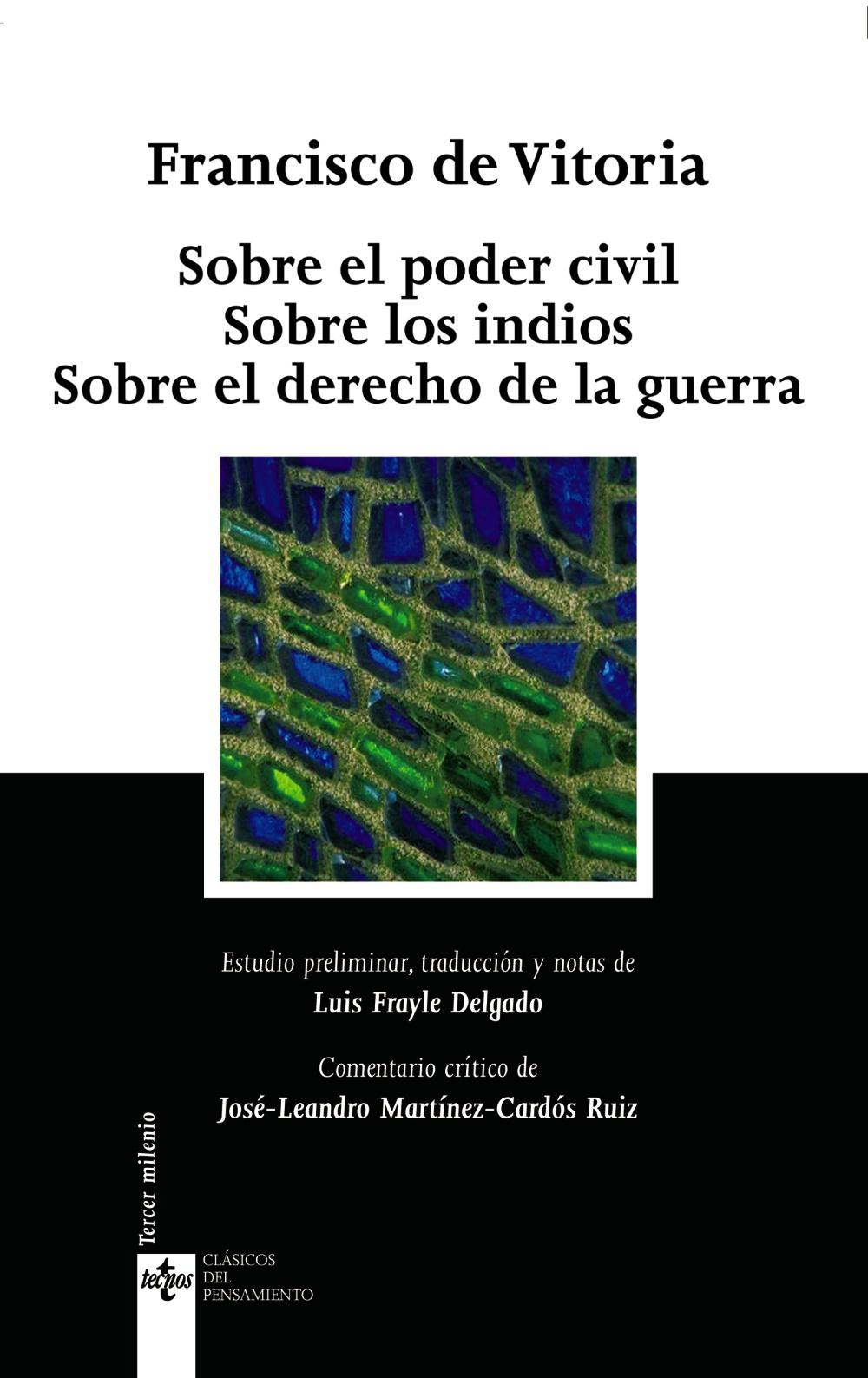
The professor, lecturer and researcher Luis Frayle Delgado (Salamanca 1931) collected in the volume published by Tecnos, which we will comment below, the three great relections of Francisco de Vitoria on the law of nations that originated the international law and marked a brake on the just war until trying to make it disappear: “so that one arrives at war by obligation only in case of necessity and against one's own will” (Sobre el derecho a la guerra n. 60, p. 212).
These three relections, “The civil power”, “on the Indians” and “on the right to war” were delivered at the University of Salamanca before the cloister and the students of all the university faculties between 1528 and 1539 and are already included in the first edition of the Relecciones of Master Vitoria, published after his death in Lyon by Jacques Boyer in 1557.
These relections deal with the new international order created by the Lutheran rupture and the beginning of the wars of religion and, therefore, the disappearance, de facto, of the concept of Christianity to enter fully into the system of balances between nations.
The dignity of the person as the basis of the legal order
Certainly, the great success of Francisco de Vitoria was to have contributed with his teaching and the plethora of disciples who took his ideas and the theological method promoted by him to all the European universities and to the incipient ones in America, Africa and Asia.
Vitoria and the School of Salamanca moved quite naturally from theology to law and from there to economics, simply because they had an anthropology based on the dignity of the person.
Let us remember that both Roman law and the Christian faith that the Salamancan masters handled was based on the dignity of the human person and, especially, on the fact that man was considered as “the image and likeness of God” (cf. Gen 1:26). This conviction produced the shift from pagan humanism to Christian humanism that has lasted until the present day.
Certainly, Francisco de Vitoria will be, centuries later, at the basis of the declaration of human rights of 1948, which has underpinned Western democratic society ever since and, especially, has provided the legal basis for global law. Human rights are based on the fact that man is a person and has been created in the image and likeness of God, otherwise we would be dealing with human rights that would be based on human rights themselves.
Authority, just law and the common good
In the first place, Master Vitoria recalls the importance of harmony between civil and ecclesiastical power and the concert of nations in the search for the common good and in the task of facilitating the path to eternal beatitude of the Christian faithful.
Immediately, he will emphasize the importance of personal freedom and the responsibility to collaborate and obey just laws so that society may develop in the peace of the children of God. Logically, since the Indians were “in partibus infidelium” owners of their lands and possessions and governed by their legitimate lords, there was no place to deprive them of their dominion or to make war against them.
God is the one who possesses the civil authority, who delivers it to the people, who, through the oath of fidelity, delivers it to the monarchs who must provide for the civil society to be governed in order to the peace of consciences and eternal bliss, as the book of the Partidas of Alfonso X the Wise points out in the first Partida, first title and first law.
The civil laws in consonance with the natural law and the eternal law are of obligatory fulfillment and therefore the harmony between the natural and supernatural order must be observed. Vitoria will also point out the importance of a just fiscal order so as not to stifle families in their economic development and maintenance of their dignity.
International equilibrium, freedom and peace among nations
It is very interesting that Francisco de Vitoria has assumed the end of Christianity, both by the Lutheran rupture of the unity of the Christian faith and the atomization of the Reformed communities that will lead to a new world order in the Peace of Westphalia in 1648.
Vitoria also stressed the impossibility of the constitution of a single empire or the rule of one nation over the others. Therefore, the new world order since Westphalia should be based on the balance between nations and international law.
The principles of personal freedom and the dignity of the human person will be behind the need to respect free trade and freedom of movement, always respecting the legislative and administrative order of the various nations of the world. Vitoria will anticipate the Second Vatican Council by promoting the principle of religious freedom and the call to evangelical preaching under the respect for freedom and through evangelical persuasion and respect for consciences.
About civil power. About the Indians. On the right to war.




 Español
  English
  Italiano