



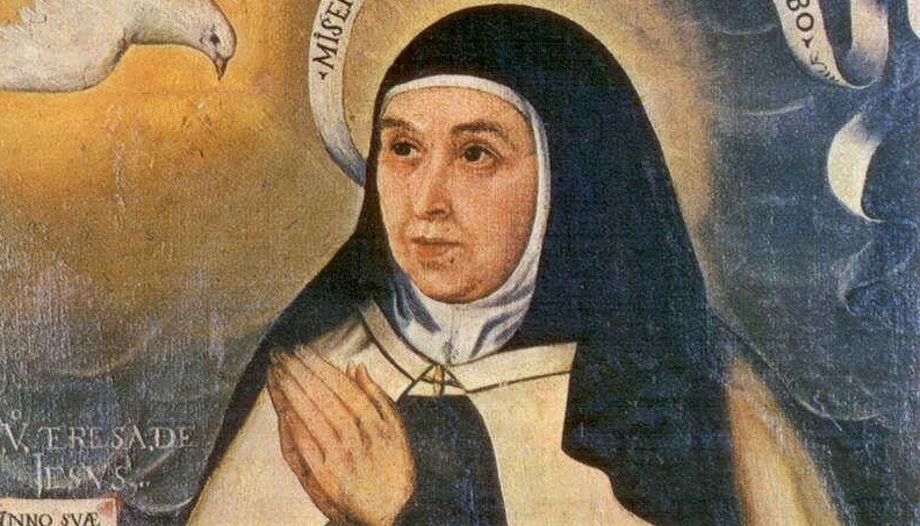
One of the contributions of the works of Saint Teresa of Jesus (1515-1582) to the history of spirituality and to the history of Christian morality is, undoubtedly, the anthropological background they contain, since, in contrast to Lutheran negativism and pessimism -for whom man was condemned to hell and sin, since his nature was completely corrupted by original sin-, Teresa of Jesus will show an optimistic vision of man, called to holiness of life and, even more, to a life of contemplation in daily life and ordinary tasks.
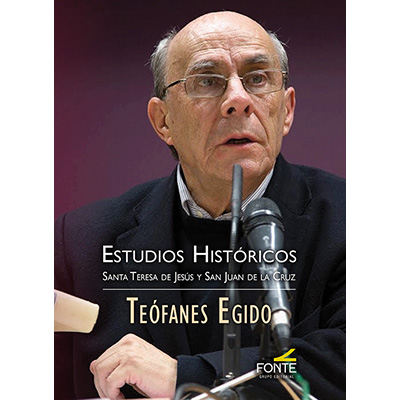
The spirituality publishing house Fonte has decided to select 24 articles (15 on St. Teresa and 9 on St. John of the Cross), published in specialized journals, as a tribute to their author, Professor Teofanes Egido (1936-2024), an illustrious professor who did so much to raise awareness of two key figures of the Castilian mysticism of the Golden Age. The coordinators of the edition were Professors Salvador Ros García and Luis J. Fernández Frontela.
We would like to dwell on one of these articles, entitled “My merchant friends: common people, collaborators in the foundations of St. Teresa”, which will help us to understand the vision of the economy and its people that the saint had in the sixteenth century.
The author will stick to the years between 1562 and 1582, the time of the foundations of the saint in the lands, above all, of Castile, and will use as his main source the “Libro de las fundaciones”, referring to the specific bibliography for the rest of the questions (253).
In the first place, the saint would refer to the lack of interior freedom of the members of the nobility and of the nobility in general and of their servants, all of them slaves of the world, of forms and customs, and given over to “what they will say” (254). She would direct the saint's prayer to them, for on the piety and holiness of life of the nobility depended many thousands of people and the good morals of the people (255-256).
Likewise, Teófanes Egido will refer to the concept of beauty that prevailed at the time and to the hoax that if women were beautiful, they should not enter the cloister or be for the Lord, as if beauty were an impediment (257).
Next, he will also deal with the poor, especially the so-called “shameful poor”, that is, those who had suffered a financial loss, had been left on the street and were ashamed to have their condition known (257).
Of particular interest is the relationship of the saint with the guild of builders, bricklayers and quantity surveyors, who often worked on credit, relying on the credit and the reputation of the saint as a miracle worker; however, they are shown as good-hearted men, concerned about their family and honest to a fault (263).
Likewise, the world of transportation will be described -diligencias, carters, stable hands, beasts and modes of traction- (267). The encounters with the people of this guild show both the uneducated nature of the people and their good faith. As for the state of the roads, they were certainly very backward (269).
In the field of communication, St. Teresa discovered the efficiency of the carriers and the post offices in sending letters, for they were as diligent or more so than the postal service, which was already functioning (271).
Focusing on the merchants, first of all, Teófanes Egido will emphasize that the Mother was a woman who had lived all her life in an important city, such as Ávila, and not so much in the countryside; for this reason, her projects were centered on large villas where there was the possibility of alms and protection for her daughters (272).
Theophanes also comments that the saint came from a family of merchants, both on her father's and grandparents' side; therefore, this was the environment in which her family and the families she had to deal with lived.
The alms that could arrive from the Indies brought her into contact with the world of the Casa de Contratación of Seville and with that of navigation, where contracts were the order of the day and where one can observe the naturalness with which the so-called precarious loans were made, which had replaced usurious loans after the expulsion of the Jews from Spain in 1492 (273). These questions, elucidated by the School of Salamanca, can be studied in more detail in the book by Bartolomé de Albornoz, published in Valencia in 1573.
Certainly, the other great source of alms came from the wool merchants who were active in the great fairs, both in Medina del Campo and in Burgos. There the saint looked for honest, good-hearted merchants, concerned for the salvation of their family, the nation and their soul. Saint Teresa witnessed some serious economic setbacks in the wool trade, and she even commented, according to Teofanes: «Burgos was not what it had been» (273).
Indeed, Professor José Antonio Álvarez Vázquez wrote an interesting paper on this subject in the collective volume Teresa of Jesus and the 16th century economy (Trotta, Madrid, 2000, pp. 182-184), in which he narrates some of the economic vicissitudes and famines in the Castile of the time (274).
Undoubtedly, St. Teresa “spares no praise for the behavior of the merchants [...]. Not only does she extol their virtues, but she also does not mince her words when proclaiming her friendship with them, and the “my friend” is almost inevitable when the merchant appears: ‘a merchant, my friend of the same place, who has never wanted to marry nor does he understand anything but doing good works with the prisoners in jail and many other good works he does’ (Foundations 15, 6)” (275).
We cannot end this brief review without mentioning some comments of the saint about the merchants that indicate the fineness of her soul and the good heart of those men: “the merchants are sensitive, capable of being moved and weeping at the spectacle of the extreme poverty of virtue that the friars live”.
Historical Studies: St. Teresa of Jesus and St. John of the Cross





 Español
  English
  Italiano