



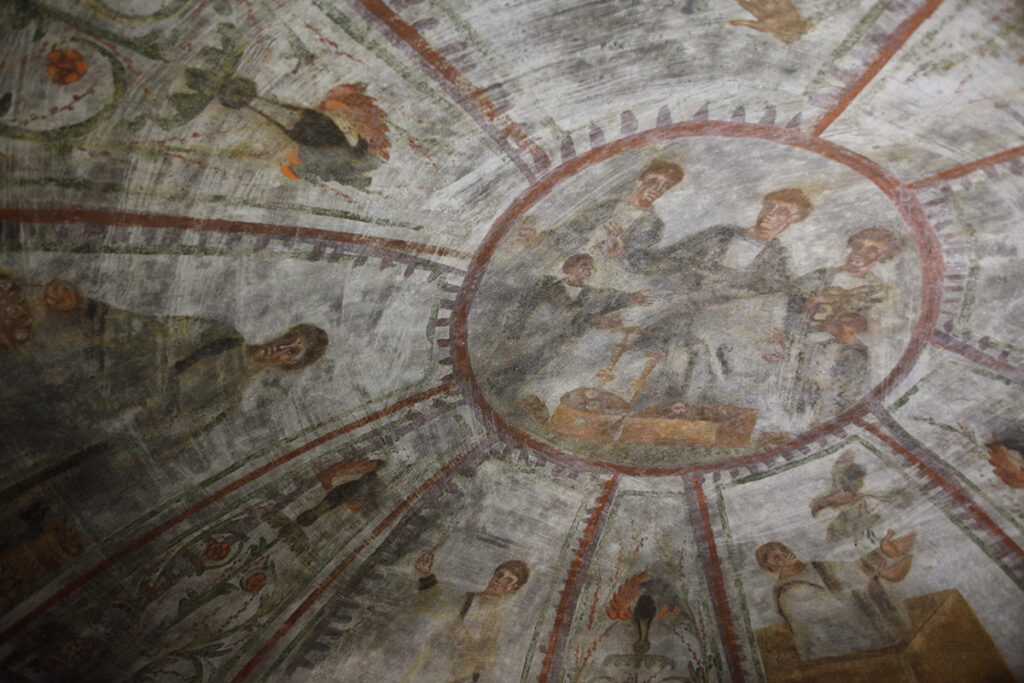
In a profound reflection marking the centenary of the Pontifical Institute of Christian Archaeology, Pope Leo XIV has published a Apostolic letter which repositions Christian archaeology as an essential discipline for understanding the faith and evangelizing mission of the Church in the 21st century.
A centenary that unites two jubilees of hope
– Supernatural letter, dated December 11, 2025, draws a significant parallel between the ’Jubilee of Peace’ of 1925—called after the wounds of World War I—and the current Jubilee, which seeks to “offer horizons of hope to humanity, afflicted by numerous wars.”.
Leo XIV emphasizes that archaeology “is an essential component of the interpretation of Christianity and, consequently, of catechetical and theological formation,” moving away from the perception of it being “only a specialized discipline, reserved for a few experts.”.
Archeology as “theology of the senses”
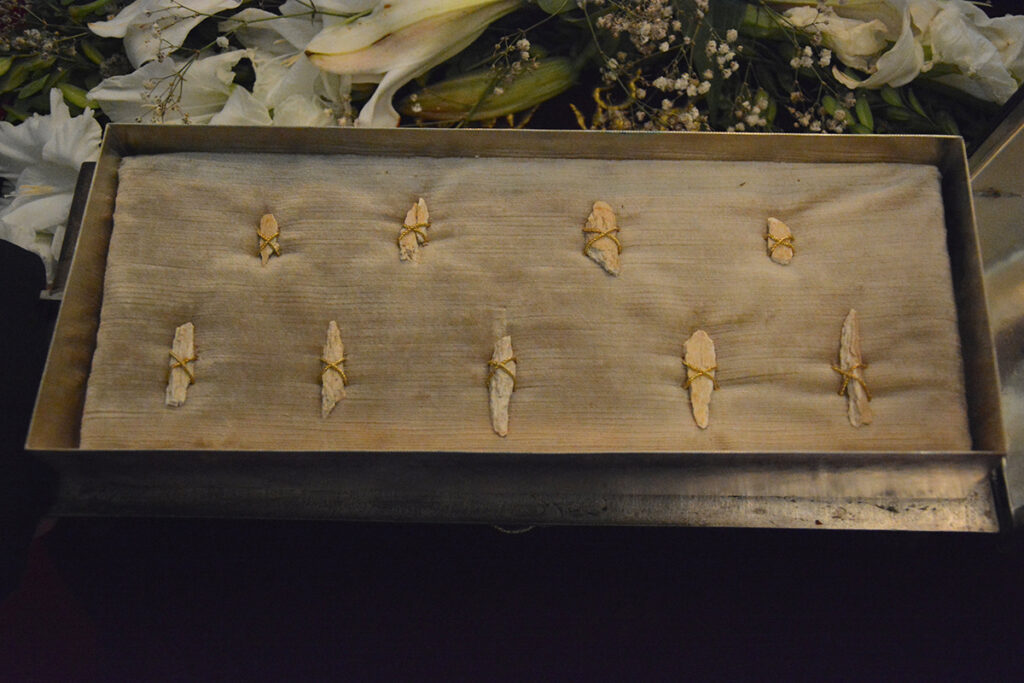
One of the most innovative concepts in the letter is the definition of Christian archaeology as a “theology of the senses,” which “educates in this sensitivity” and “teaches that nothing touched by faith is insignificant.”.
“Christian theology cannot be fully understood without an understanding of the places and material traces that bear witness to the faith of the early centuries,” says the Pontiff, quoting the words of the evangelist John: “What we have heard, what we have seen with our eyes, what we have contemplated and what we have touched with our hands concerning the Word of Life.”.
Paradigm shift
I believe that this is the most revolutionary and significant idea in Leo XIV's apostolic letter: the concept of Christian archaeology as a “school of incarnation” and “theology of the senses.” A paradigm shift is being proposed in how theological knowledge is understood.
Traditionally, archaeology has been viewed as an auxiliary discipline, useful but not essential. In this document, the Pope elevates it to the rank of an indispensable component of the interpretation of Christianity, equating it in importance with Scripture and Tradition.
A response to the throwaway culture
In a world where “use and consumption have prevailed over conservation and respect,” Leo XIV presents archaeology as «a school of cultural sustainability and spiritual ecology.“ The Pope emphasizes that this discipline teaches that ”even the smallest testimony deserves attention," contrasting with the contemporary tendency to discard.
“The archaeologist does not discard anything, but rather preserves it. He does not consume, but rather contemplates. They do not destroy, but decipher,” he explains, defining this approach as “patient, precise, respectful,” capable of capturing “in a piece of pottery, a corroded coin, or a worn engraving, the breath of an era, the meaning of a faith, and the silence of a prayer.”.
Tool for evangelism
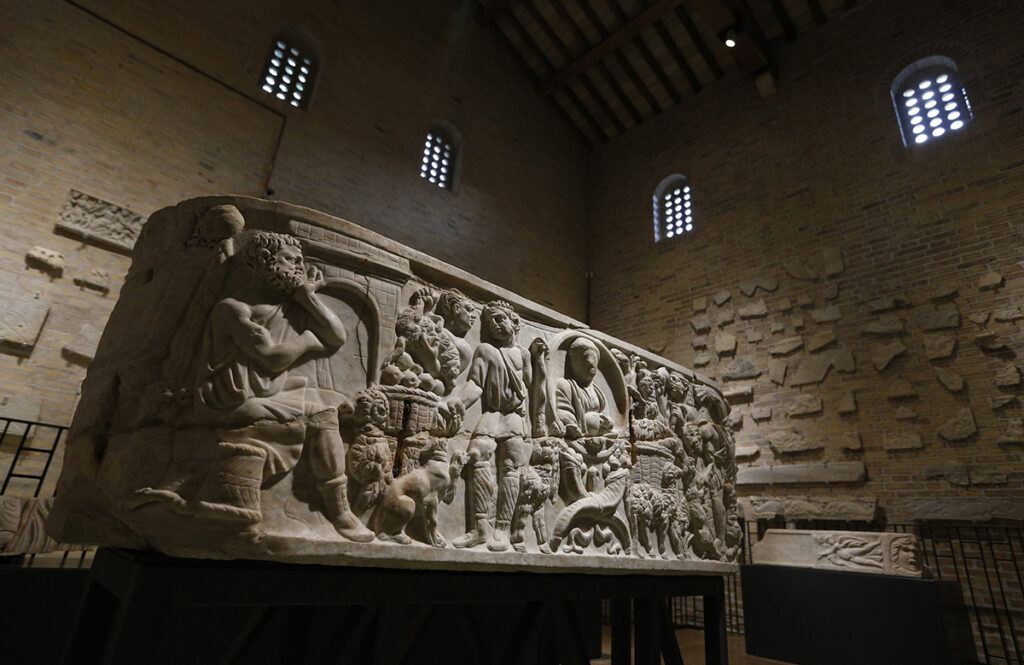
León XIV connects Christian archaeology with the evangelizing mission to the peripheries, both geographical and existential. The discipline can be “a powerful instrument of dialogue,” contributing to “building bridges between distant worlds, between different cultures, between generations.”.
The Pope quotes Francis“ words about the catacombs, where ”everything speaks of hope,“ recalling that these ancient places remain a living testimony that ”God had truly entered history and that faith was not a philosophy, but a concrete path in the flesh of the world.".
A call for academic training
The letter makes a specific appeal to bishops and those responsible for culture and education to “encourage young people, lay people, and priests to study archaeology,” highlighting the “many educational and professional opportunities” it offers.
Leo XIV also emphasizes the importance of collaboration between the various Vatican institutions dedicated to archaeology: “The Pontifical Roman Academy of Archaeology, the Pontifical Commission for Sacred Archaeology, the Pontifical Academy Cultorum Martyrum, the Pontifical Institute of Christian Archaeology: each with its own specificity, all sharing the same mission.”.
Archeology as “living memory”
The document concludes with a reflection on the role of memory in times of rapid change. “True Christian archaeology is not sterile conservation, but living memory,” says Leo XIV. “It is the ability to make the past speak to the present. It is wisdom to discern what the Holy Spirit has brought forth in history.”.
For the Pontiff, those who know their own history «know who they are, know where to go, know whose children they are and to what hope they are called.” In this sense, Christian archaeology becomes “a ministry of hope” that shows how “the Gospel has always had a generative force.»
A legacy for the future
With this apostolic letter, Leo XIV not only celebrates the centenary of an institution, but also redefines the role of Christian archaeology in the contemporary world. The discipline emerges not as a nostalgic exercise, but as a living tool for understanding the faith, theological formation, and evangelizing mission of the Church in the 21st century.
The letter concludes with a blessing that encapsulates the spirit of the document: “May you be inspired by the light of the Holy Spirit, who is living memory and inexhaustible creativity. And may you be protected by the Virgin Mary, who knew how to meditate on everything in her heart, uniting the past and the future in the gaze of faith.”.
Doctor of Canon Law




 Español
  English
  Italiano