



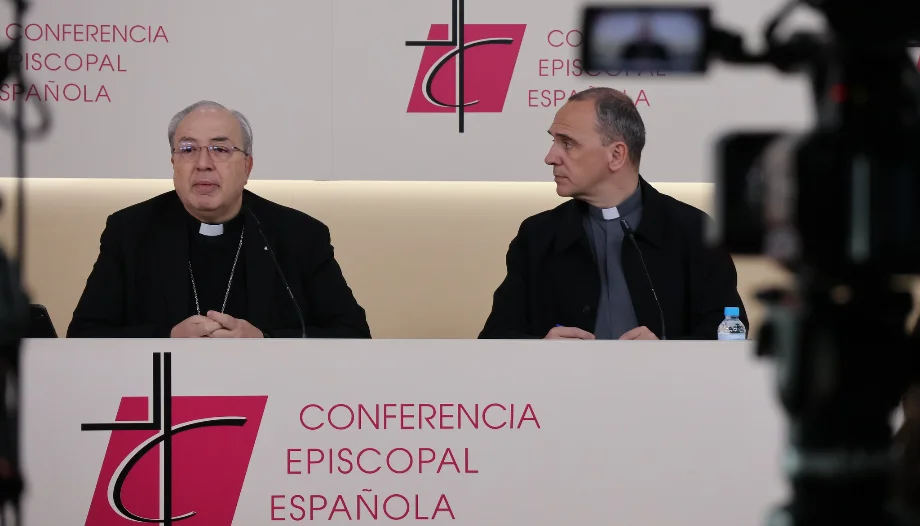
The Spanish Episcopal Conference (CEE) gave the green light to the document prepared by the Commission for the Doctrine of the Faith, presided over by Bishop Francisco Conesa. According to the secretary general and spokesman of the EEC, Bishop César García Magán, the document on emotivism in the living of the faith “does not go against anyone” nor does it intend to condemn specific movements or initiatives.
The concern of the bishops arises from the observation of a “proliferation of the affective dimension” in religious experience. Magán stressed that the emotional dimension is constitutive of the person and is not negative in itself, but warned against the risk of reducing faith to the merely sentimental.
The reflection seeks to help the faithful understand that the Christian faith must also be translated into concrete works and commitments, such as almsgiving, attention to the needy and other practical manifestations of charity. The text will be published soon, after incorporating some modifications made at the meeting of the Permanent Commission of the EEC that met this week in Madrid.
Pastoral guidelines 2026-2030: “Get on the road”.”
The Standing Commission also approved the new Pastoral Guidelines for the four-year period 2026-2030, entitled “Be on your way” (Lk 10:3). The basic text had already been endorsed at the Plenary Assembly of November 2025, pending a final revision.
In the absence of a few final changes before its publication, for the moment the contents have hardly been detailed. It has only been indicated that the document will address priorities related to evangelization, the celebration of Sunday and a reflection on the presence of the Church in the territory. The final text will be published soon on the CEE website.
New department for relations with Islam
The Standing Commission also approved the creation of a department for relations with Islam, within the Episcopal Subcommission for Interconfessional Relations and Interreligious Dialogue.
This sub-commission is chaired by Bishop Ramón Darío Valdivia and the new department aims to respond to the challenges arising from the growth of the Muslim presence in Spain. Among its objectives are:
- Accompany families with religious disparity.
- To train priests, seminarians, religious and lay people in the dialogue between Islam and Christianity.
- Develop catechetical materials for catechumens coming from Islam.
- Strengthen institutional relations with Islamic associations.
- Advise bishops and interreligious dialogue delegations in the dioceses.
Summer School and educational pastoral care
The Standing Committee also studied the implementation of a “Summer School” of the EEC, conceived as a space for formation and meeting for lay people, religious, seminarians and priests, on issues relevant to the Church and society.
For its part, the Episcopal Commission for Education and Culture, presided over by Bishop Alfonso Carrasco, presented a plan to promote the Pastoral Care of Sports in the dioceses and a work program of the General Council of the Church in Education for the next two years.




 Español
  English
  Italiano